I have stood in the beer aisle and watched people turn a bottle back and forth as if the label were written in a foreign language. It actually is – it's just that nobody taught you the alphabet. A brewer doesn't read the style name and stop there. They read ABV, IBU, yeast type and date marking as a whole recipe, and can almost taste the beer before the cap is even off.
Here's the key, so you can do the same next time you're standing in front of Systembolaget's fridge, hesitating.
The style name is just the headline
"India Pale Ale", "Extra Special Bitter", "smoked beer" – that's not marketing, it's a technical declaration. The style name tells you about yeast family (top-fermented or bottom-fermented), hops level and sometimes even malt-drying method. A smoked beer like Aecht Schlenkerla Urbock (6.5% ABV) already tells you in the name that the malt is smoked over beechwood, a tradition from Bamberg in Bavaria that gives that typical ham-and-campfire character. You don't need to taste it to know it'll be smoky – the name has already said so.
ABV: the temperature of the engine
Alcohol content says more than just "how drunk will I get". Below 4.5% the beer tends to be light, thirst-quenching and thin in body – perfect for a weeknight dinner. Between 5 and 7% you get more full-bodied beer and often more sweetness from the malt balancing it out. Above 8% the beer is made for sipping, not gulping. Humlebomb Citra Trippel IPA from Kullens Bryggeri lands at a full 9.8%, which signals a beer built for smaller glasses, slow drinking, preferably after the meal rather than with it.
IBU: how loudly the hops are shouting
IBU measures bitterness units, but the number alone will fool you if you don't weigh it against the sweetness. A beer at 60 IBU can feel balanced if the malt sweetness is high, but brutally bitter if it's dry. The rule of thumb I use: compare IBU to ABV. If they're close together (say 40 IBU against 4% ABV), the beer becomes aggressively bitter relative to its body. If the IBU is clearly lower than the ABV number, as in a rounded extra special bitter, you get more caramel and nuttiness than bitterness.
Stålbrands Ölbryggning Stålbrands Ale is an extra special bitter at 6.3% – a style that traditionally balances moderate hops against strong malt caramel, rather than chasing bitterness records.
The label is the recipe, the glass is the proof.
The yeast decides the aroma, not just the alcohol
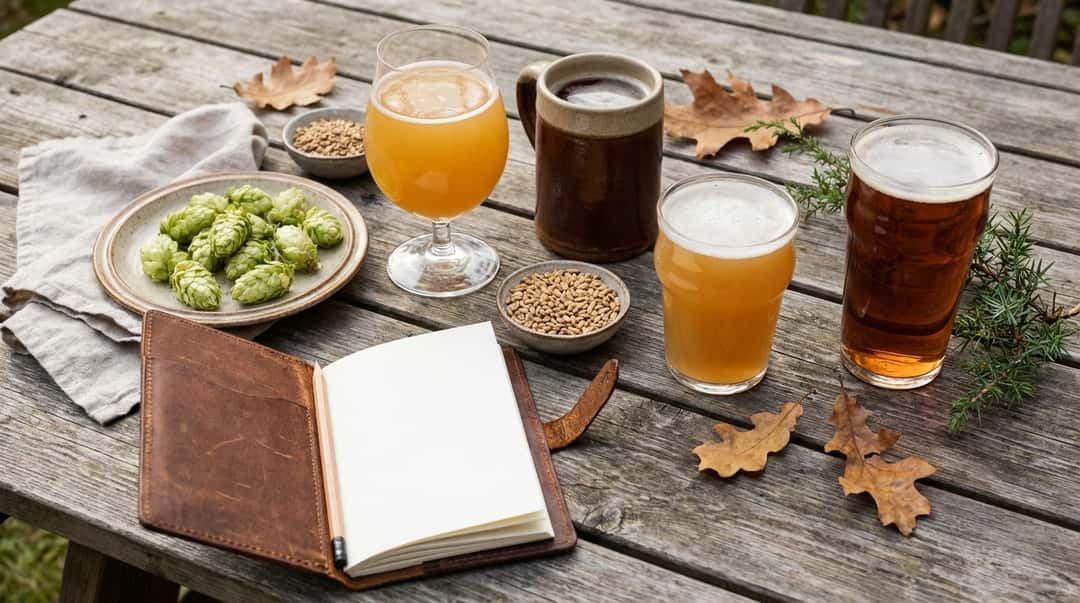
Top-fermenting yeast (ale yeast) works warm and fast, leaving behind fruity esters – banana, pear, sometimes clove depending on the strain. Bottom-fermenting yeast (lager yeast) works cold and slow, giving a cleaner, more neutral profile where malt and hops take centre stage without the yeast's own flavour contributions. If the style name says "ale", expect more character from the yeast itself. An English pale ale like St Austell Tribute Pale Ale (4.2%) is built, for example, on a yeast strain known for subtle fruitiness meeting a golden, lightly biscuity malt – more interplay than hop bomb.
The date marking isn't bureaucracy
For hop-forward beers, like IPA, the best-before date is a flavour guarantee, not just a shelf-life requirement. The hops' aromatic oils break down quickly – after just a few months a fresh IPA loses its citrus and tropical fruit and becomes more papery and joylessly bitter. A smoked beer or a strong Belgian ale, on the other hand, can handle longer storage without losing as much, since the malt and yeast character is more stable than volatile hop oils.
So next time you're holding a bottle: read the ABV against the IBU, check whether it says ale or lager, and look at the date if it's a hoppy beer. Then you'll know roughly what awaits you – before you've even heard the hiss from the cap.