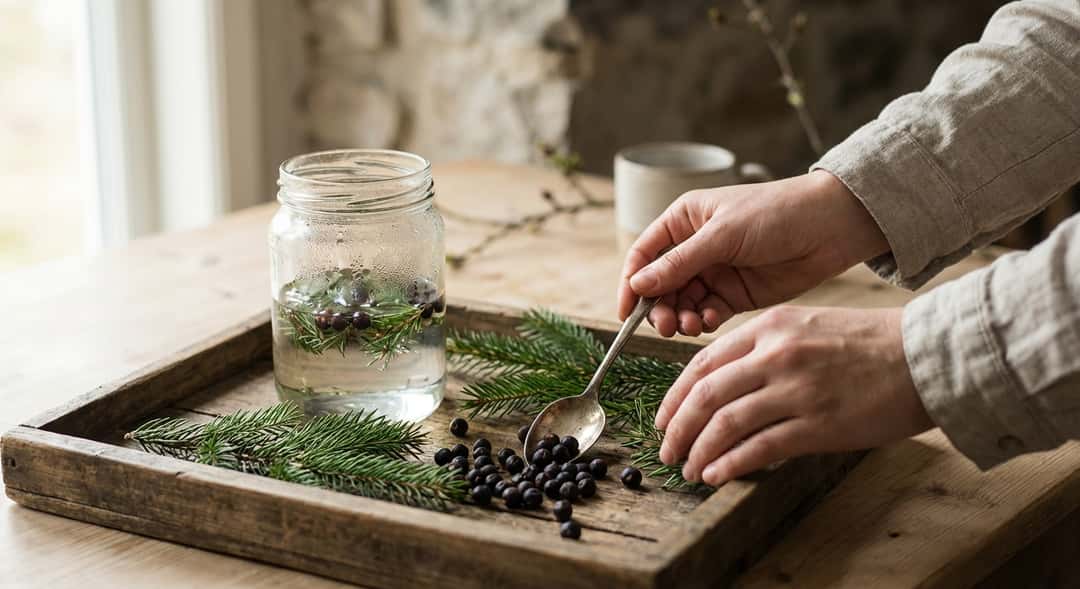

I still remember the smell of spruce tips that December evening I visited a small microbrewery outside Trondheim. The brewmaster had placed a basket full of fresh spruce branches on the counter, and the air was filled with that clean, resinous scent that makes me think of skiing and winter forests. "This," he said, lifting a bottle of homemade spruce tip gin, "is the Norwegian winter landscape in a bottle."
And he was right. Because while we have spent years chasing exotic botanicals from Southeast Asia and the Mediterranean, we have forgotten that we are literally walking through a winter ingredient catalogue every time we take a walk in the woods. Spruce tips, juniper, birch, angelica – these are the flavors that define our climate, and they give gin a depth and character that turns every drink into a little winter adventure.
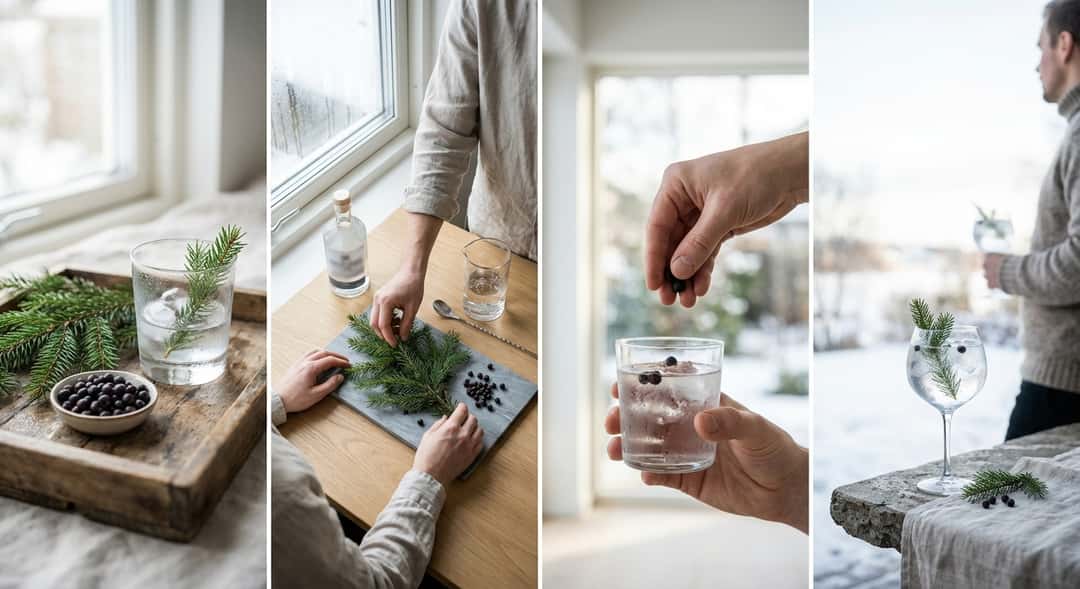
Why infusion is the bartending answer to winter sports
Infusion is simply letting gin (or another neutral spirit) steep with herbs, berries, or bark over time. This has become something of a mass movement among home bartenders – not least because it is incredibly easy, requires minimal equipment, and gives you the opportunity to create something entirely unique. You need no distillation equipment, no fancy technique. Just patience and curiosity.
And the timing could not be better. Nordic ingredients are hot right now, both in the restaurant and bar scene. It is about sustainability, locally sourced food and drink, and above all celebrating what we have right outside our door. When the snow lies thick and the forest is quiet, there is something magical about picking fresh spruce needles and knowing that in a few days they will add flavor to your gin and tonic.
I have experimented with this myself for several years, ever since I visited a small distillery on the west coast of Norway that used local herbs in production. They showed me how even small amounts of spruce tips could transform a completely ordinary gin into something that tasted of forest and adventure. Since then I have had at least three or four jars sitting on the kitchen counter at any given time.
The basic principles – how to get started
Before you head into the forest with a plastic bag, there are some ground rules you should know.
Choose the right base
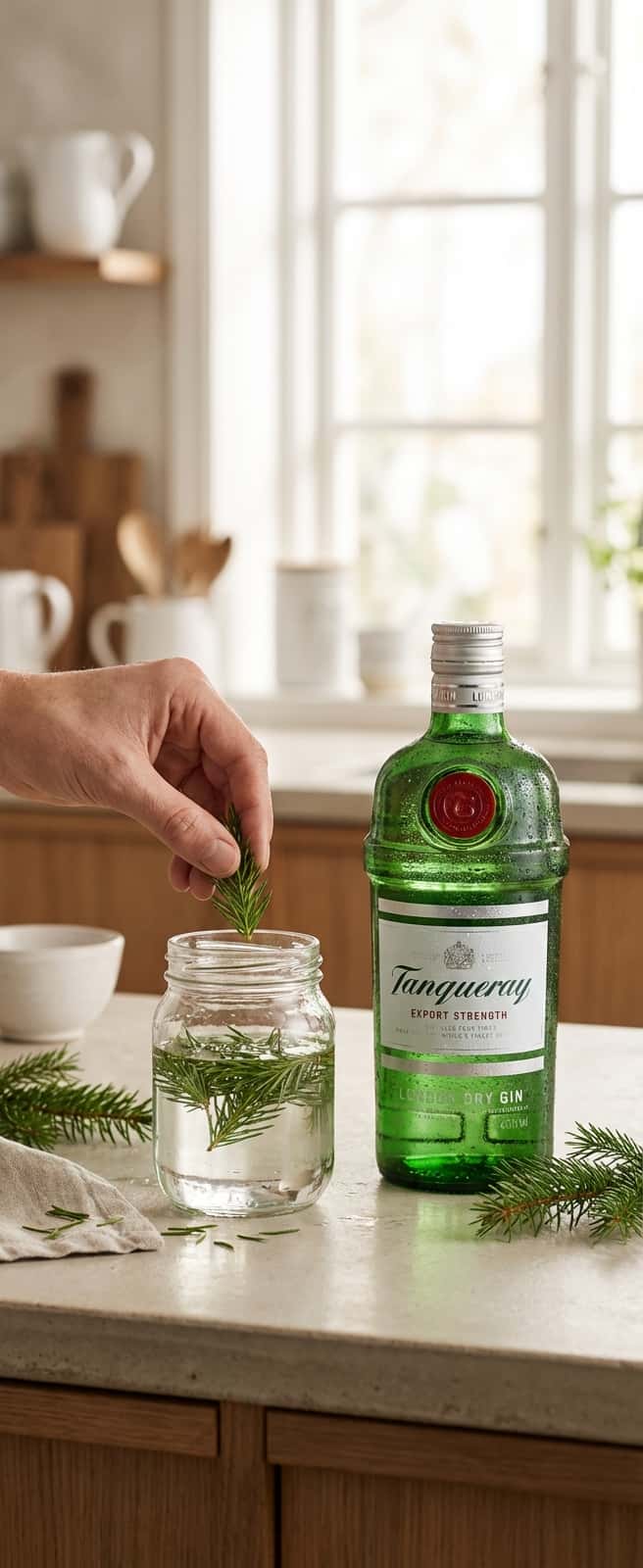
You need a good, neutral gin that does not fight against the new flavors you are adding. A classic London Dry works excellently, for example Tanqueray London Dry Gin (43%, 70 cl) – it has a clean, clear juniper profile that plays well with Nordic botanicals without dominating.
Alternatively, you can go for a Norwegian gin that already has a certain understanding of our flavors. Harahorn Gin (46%, 50 cl) is made with Scandinavian herbs, and works well as a base if you want to amplify the Nordic tones further. It already has juniper and birch in its profile, so you are building on something that is already there.
I usually recommend starting with a London Dry the first time – it gives you a clean canvas to work on, and you quickly learn how the Nordic ingredients actually taste without too much noise from the base.
Pick right, pick clean
Spruce tips: Pick fresh, light-green needles from spruce (not pine – it is more bitter and resinous). Avoid trees growing near busy roads. The best spruce needles are found on young branches, preferably on trees that stand in sunlight.
Juniper: The blue, ripe berries are best. Find them in dry, sunny spots. Juniper berries can be a little difficult to find in winter, but they often remain on the bushes right through to spring.
Birch: Young leaves in spring, or dried bark (sparingly!) in winter. Birch bark can become very bitter, so tread carefully.
Angelica: Dried angelica flowers give a fresh, citrusy note. You need to pick these in summer and dry them yourself, or buy them at a health food store.
Use only positively identified edible plants. If unsure, buy food-grade ingredients; this recipe is not a plant identification guide. Rinse ingredients before use.
Recipe: Classic spruce tip gin
This is my base recipe, the one I always come back to. I have tweaked it over the years, and this is the version that works best for me.
You will need:
- 70 cl good gin (preferably 43–46%)
- 2–3 tablespoons fresh spruce needles, loosely packed
- 1 teaspoon juniper berries, lightly crushed
- 1 small piece of dried birch bark (optional)
- 1 teaspoon honey (optional, to soften the bitterness)
Here is how you do it:
- Place all the ingredients in a clean glass jar with a lid. I often use old jam jars – they are perfect.
- Pour the gin over.
- Close the jar and leave it in a dark, cool place for 3–5 days. Taste daily – spruce tips can turn bitter if they steep too long. This is the most important tip: be patient, but not too patient.
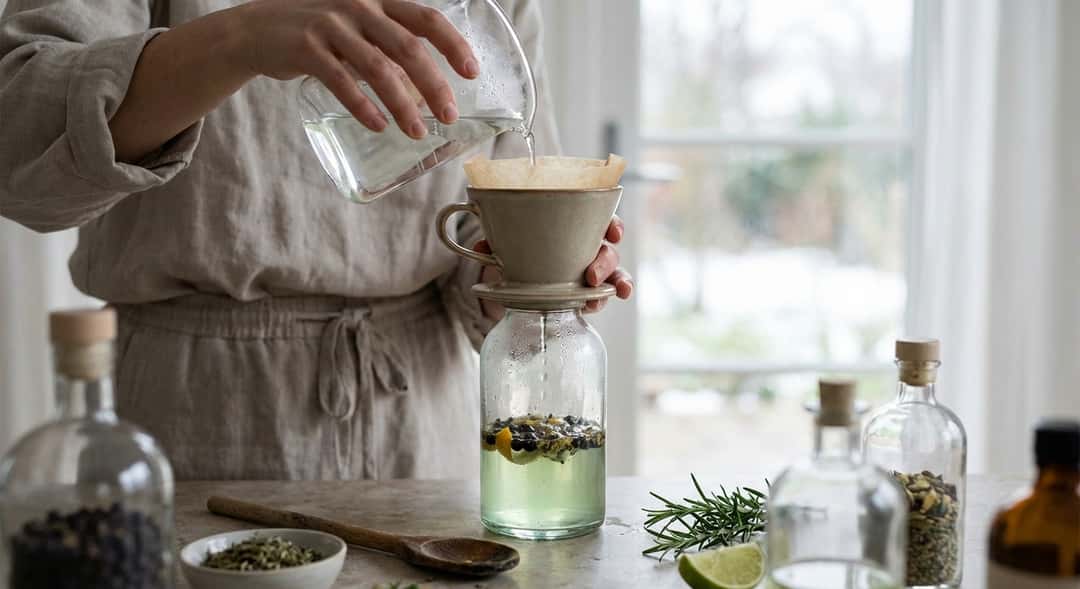
- Strain through a fine sieve or coffee filter. I often use both – first a coarse sieve, then a coffee filter to remove all the small particles.
- Pour back into a bottle and let it rest for a couple of days before serving. This settles the flavors and lets everything marry properly.
The first time I made this, I let it sit for seven days. That was a mistake. The gin became so bitter that I had to blend it with more neutral gin. So learn from my mistakes: taste often, and be conservative with the time.
Serve it right
A spruce tip infusion deserves a simple, elegant format. I like it best in a classic gin & tonic with Fever-Tree or Thomas Henry tonic, garnished with a fresh spruce sprig and a few juniper berries. Ice cubes made from filtered water are important – chlorinated water ruins the delicate flavors.
Let the gin take center stage. Do not drown it in tonic – I usually use a ratio of 1:2 (gin:tonic) instead of the usual 1:3. This is a gin you want to taste.
Or try a Negroni – the resinous spruce actually balances surprisingly well against Campari's bitterness. The first time I served a spruce tip Negroni to friends, they thought I had bought a fancy Italian bitters. No, I said, that is Norwegian forest in the glass.
Another favorite is a simple Martini. Spruce tip gin, a drop of dry vermouth, and a spruce sprig as garnish. Clean, cold, perfect.
Experiment further
Once you have mastered the spruce tip gin, a universe of possibilities opens up.
Birch sap gin: Combine birch sap (the fresh kind, not the fizzy drink!) with gin and let it steep with dried birch bark. Incredibly delicate and perfect for spring's first outdoor drinks. I made this for the first time after a visit to a distiller in Finland who swore by birch in everything.
Angelica and lemon zest: Make a Nordic version of a citrus gin. Perfect for summer gin cocktails. Angelica has a natural citrus note that is beautifully amplified by real lemon zest.
Lingonberry and juniper: Infuse with frozen lingonberries and extra juniper for a deep red, tart variant. This is fantastic in a Bramble or simply with tonic and ice.
Cloudberry and honey: For those who want to go all in on Nordic luxury. Use frozen cloudberries (the fresh ones are too expensive and too rare) and let them steep with a little honey. The result is golden, sweet, and complex.
Patience is a virtue
The finest thing about infusion is that it forces you to slow down. In a world where we are used to getting everything with a single click, there is something wonderfully meditative about waiting three or four days for the flavors to marry. Each day you lift the jar, hold it up to the light, swirl it gently. The smell changes – from raw and green to deep and complex.
And when you finally strain and taste, you know that this is something entirely unique. This is your gin, made with your hands, with ingredients from your forest. It is bartending as a craft, and it is one of the finest things I know.
I have a friend who works at a microbrewery in Bergen, and he always says the same thing: "The best beer is the one you have waited for." The same applies to gin. The patience is part of the flavor.
Tips on storage and shelf life
Infused gin keeps well for a long time – often a year or more – as long as it is stored in a dark, cool place. I usually label my bottles with a small tag, both to remember when I made them and to be able to compare different batches.
And do not throw away the ingredients after straining! The spruce needles can be used to make a simple syrup (simmer them with sugar and water), and the juniper berries can be dried and used in cooking.
So, what are you waiting for?
The next time you are out skiing and stop to breathe in the winter air, bring a small bag of spruce tips home. Your winter garden is waiting – and it tastes better than you think.
I promise you: the first time you serve a spruce tip gin & tonic to friends and tell them you made it yourself, with ingredients from the forest, you will feel like an alchemist. And that is exactly what you are. A modern alchemist transforming Norwegian nature into liquid gold.
Cheers, and happy infusing!