
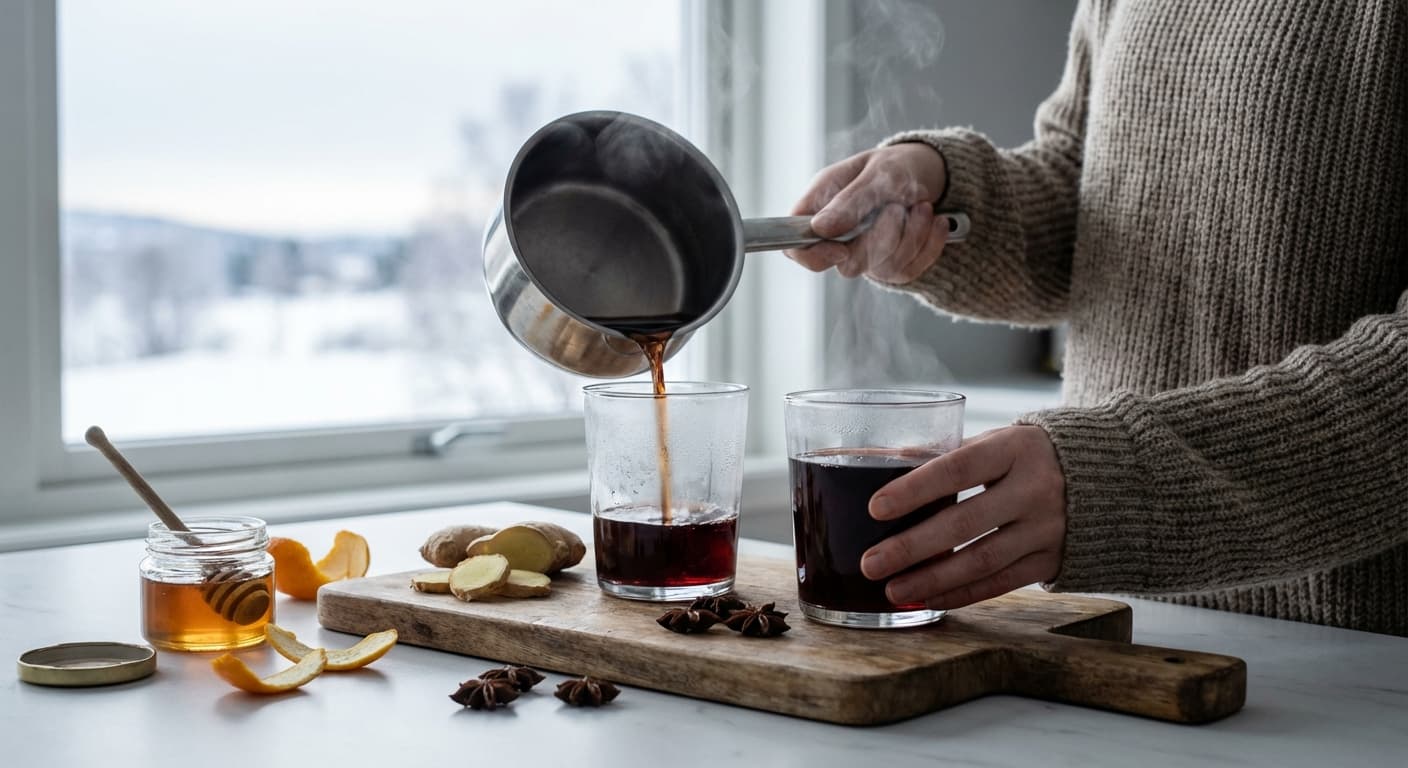

When the calendar shows January and the thermometer creeps downward, it's easy to think that glögg season is over. But why should it be? Warm, spiced wine isn't just something you drink during Advent – it's a fantastic way to warm up a winter evening, whether you have friends over or just want to make Friday night a little extra special.
The problem with traditional glögg is that it's often … predictable. Cinnamon, cloves, raisins. We know it. We love it. But after four weeks in December, it can be nice to have something completely different. So this year I challenge you: let the Christmas glögg rest until next Advent, and explore some wilder variations that work just as well with cheese, tapas, or a simple soup.

Yuzu and ginger – the Japanese-inspired one
Start with a dry red wine – something fruity like a simple Côtes du Rhône or a Spanish Garnacha works well. Pour into a saucepan and add freshly sliced ginger (about 40 grams), the juice of two yuzu (or lime if yuzu is hard to find), a couple of star anise, and a good dollop of honey. Heat gently to around 70 degrees – do not boil. Let it steep for ten minutes, strain, and serve with a thin slice of ginger in the glass.
Yuzu gives a tart, almost floral citrus character that cuts through the wine's weight, while the ginger lifts the warmth. Perfect with Asian-inspired food – try it with dumplings or a simple miso soup.
Why it works: The combination of citrus and ginger is a classic in Asian food culture, and when you transfer it to warm wine, you get something that feels both familiar and completely new. The ginger provides a clean, sharp warmth that is entirely different from the sweet, rounded warmth of cinnamon.
Chai-spiced port wine – the sweet and intense one
Take a reasonably priced ruby port (you don't need to use the top shelf here) and mix with equal parts strongly brewed chai tea. Add cardamom, a whole cinnamon stick, a little malt sugar, and perhaps a small splash of vanilla. Heat slowly and let it steep for a quarter of an hour. Strain and serve in small glasses.
This variation is rich and sweet, almost like a liquid dessert. It works absolutely fantastically with chocolate, caramelised nuts, or as a finish to dinner. If you want an extra kick, you can add a small squeeze of orange juice just before serving.
Pro tip: Use loose-leaf chai tea of good quality, not tea bags. The difference in flavour is significant, and you get a much more complex spice profile. Let the tea steep for a long time – at least five minutes – before mixing it with the port wine.

Mezcal glögg with smoke and chili – the dramatic one
Here we leave pure wine behind and mix in something a little more exciting. Take half a bottle of robust red wine (something with a bit of pepper and spice, like a Syrah, works well), mix with 2 dl mezcal, a handful of dried chipotle chili, dark syrup (agave works well) and the zest of two oranges. Heat gently, taste as you go, and adjust the sweetness.
The mezcal gives a smoky, almost earthy character that is completely different from traditional glögg. This drink is not for everyone – but those who like it will love it. Serve with grilled food, chili con carne, or a good, salty cheese.
Warning: Start with less chili than you think you need. The heat intensifies as the drink sits and steeps, and it's easier to add more than to rescue a batch that's too strong. If you go overboard, you can balance it with a little extra agave syrup and a squeeze of lime.
White wine with apple and thyme – the light and fresh one
Who says warm wine has to be red? Take a dry white wine with good acidity – Sauvignon Blanc or a simple Pinot Grigio works perfectly. Heat with fresh apple cider (not sweet), fresh sprigs of thyme, a pinch of white pepper, and a little honey. Serve in teacups with a thin apple slice.
This variation is far lighter and more aromatic than traditional glögg, and works perfectly at a lunch table, with fish, or with a light vegetarian dish. It's also a good option for those who find red wine too heavy.
Seasonal variation: If you want to make this even more wintry, you can add a small piece of fresh rosemary alongside the thyme. This gives a slightly more resinous, Nordic character that fits perfectly on a cold January evening.

Amaretto and cherry – the sweet Italian one
Finally, a variation that resembles more of a warm after-dinner drink. Use an Italian red wine – a simple Montepulciano works well – and add a generous amount of amaretto, dried cherries, a little vanilla pod, and almond flakes. Heat, let it steep, and serve in small glasses with a couple of cherries at the bottom.
This drink is sweet, nutty, and intense. It almost replaces dessert, and is absolutely perfect for a quiet evening by the fireplace with friends who like to take it easy.
Extra touch: Lightly toast the almond flakes in a dry pan before adding them. This gives a deeper, nuttier flavour that elevates the whole drink. And if you really want to impress, flambé the amaretto before mixing it in – it burns off some of the alcohol and gives a caramelised depth.
Some practical tips before you get started
Warm, don't boil: Alcohol evaporates quickly above 78 degrees, so keep the temperature around 65–75 degrees. Use a digital thermometer if you want to be precise. If you don't have a thermometer, it should be steaming well, but never bubbling.
Use affordable wine: You don't need to use expensive stuff. When you heat and spice, many of the nuances disappear anyway. Choose something simple, fruity, and without too many tannins. A good rule of thumb: if you wouldn't drink it cold, you won't like it warm either.
Always strain: Nobody wants a piece of cinnamon or a whole clove in their glass. Use a fine sieve or a coffee filter. I like to use a small tea strainer that I can hang over the edge of the saucepan – that way I can easily lift out the spices when the flavour is perfect.
Taste as you go: Everyone has a different sense of sweetness. Start with less sugar or honey than the recipe says, and adjust as you go. Remember that the sweetness becomes more prominent as the drink cools slightly, so taste at serving temperature, not when it's boiling.
Serve correctly: Small glasses (about 10–15 cl) work best. Warm wine is concentrated, and you rarely drink more than one or two glasses. I like to use small teacups or Irish coffee glasses – they retain the heat well and look great.
Don't wait for Christmas
The great thing about warm, spiced wine is that it suits so many occasions. A cool Saturday afternoon. An informal dinner where you want to give guests something warm when they come in from the cold. Or just a Tuesday evening when you fancy something other than your usual wine.
I've started thinking of warm wine as a kind of winter cocktail – something you can experiment with, adapt to taste and occasion, and serve when it feels right. Not just during Advent, not just at Christmas, but throughout the whole winter.
So next time you're standing in front of the wine rack wondering what to make for the weekend dinner with friends, remember that glögg isn't reserved for Advent. With a little creativity, some simple spices, and an inexpensive bottle of wine, you can create something completely unique that both warms and surprises.
And who knows – maybe it's your yuzu glögg that becomes the talking point around the table, not the boring Christmas glögg from December. For me, it's about keeping winter interesting, one steaming cup at a time.