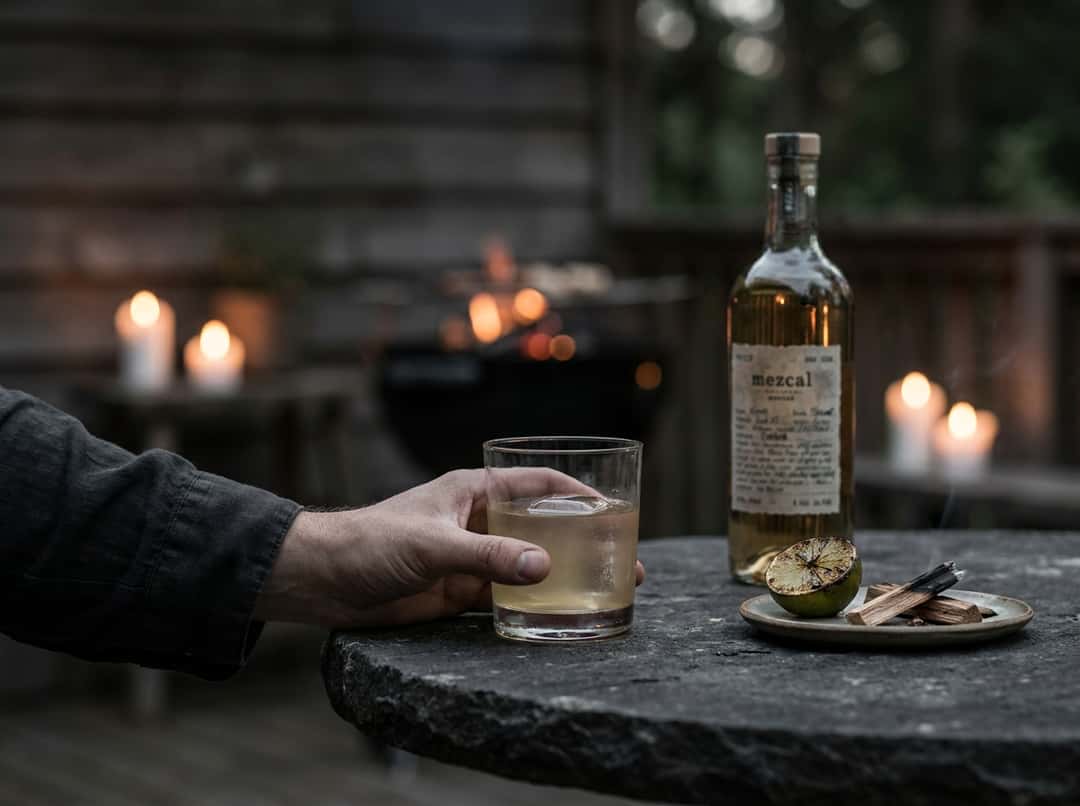

There is something about the smoke. The first sip of a good mezcal hits you in a way that is hard to explain – a bit like opening a letter in a foreign language you somehow understand intuitively. Smoky, yet fruity. Powerful, yet smooth. And on a mild Norwegian summer evening, with the grill going and lime wedges at the ready, mezcal can turn out to be the most fascinating thing in your glass.
Mezcal vs. tequila – what is actually the difference?
Many people think mezcal is tequila with a smoky flavour. That is a bit like saying all champagne is just sparkling wine with bubbles – technically not entirely wrong, but completely misleading.
Both tequila and mezcal are made from agave, but the similarities end there quickly. Tequila is produced exclusively from blue agave (Agave tequilana Weber) in a limited geographical area of Mexico, primarily Jalisco. Mezcal, on the other hand, can be made from over 30 different agave varieties and is produced in several Mexican states – with Oaxaca as the undisputed heart.
The most important production difference is the cooking step itself. While tequila producers use large industrial ovens or autoclave pressure to cook the agave heart (the piña), mezcal producers use underground earth pits filled with glowing coals and stones. The piñas – which can weigh anything from a few kilos to over a hundred – are packed in, covered with earth, and smoked for several days. This is where the characteristic smoke comes from.
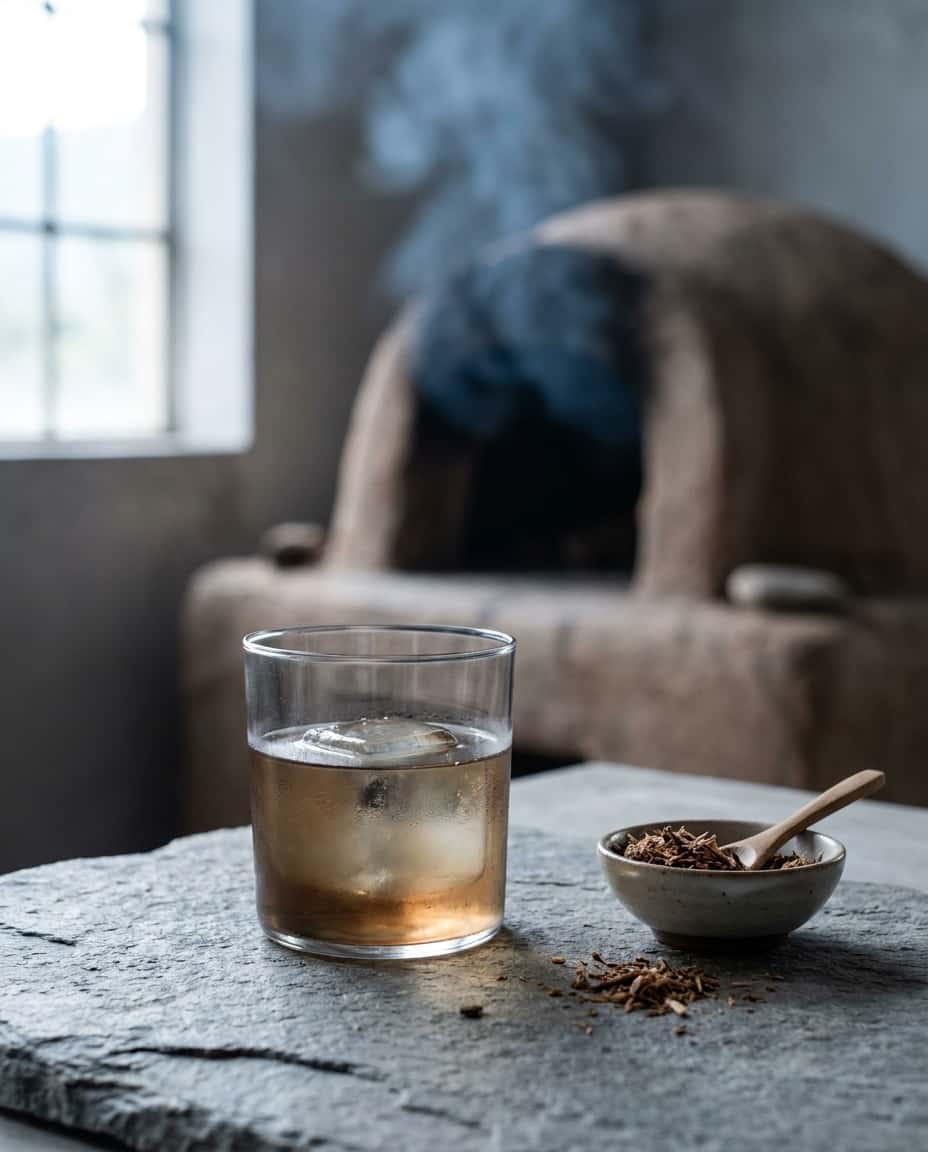
The result is a spirits with far more complexity and variation than tequila. Depending on the agave variety, terroir, fermentation method, and producer, mezcal can taste of anything from grilled pepper and dark chocolate to tropical fruit, minerals, and herbs.
Three mezcal styles you should know
Joven (young and unaged) is the most common style and the one best suited for summer use. Fresh, approachable, and full of agave character without too much oak complexity.
Reposado and añejo are aged in barrels and develop more vanilla richness and tannin structure – more whisky-like in style, and perhaps a little heavy for a grill night in June.
Ancestral mezcal is the most traditional category, produced using ancient methods and often from wild agave varieties. Intense, complex, and exciting – but best enjoyed on its own or with very simple accompaniments.
For summer use, I recommend starting with a good joven espadín. Espadín is the most common agave variety in mezcal production and delivers a balanced smokiness with clear fruitiness – perfect as a base for simple summer drinks.
Three serving suggestions for the grill night
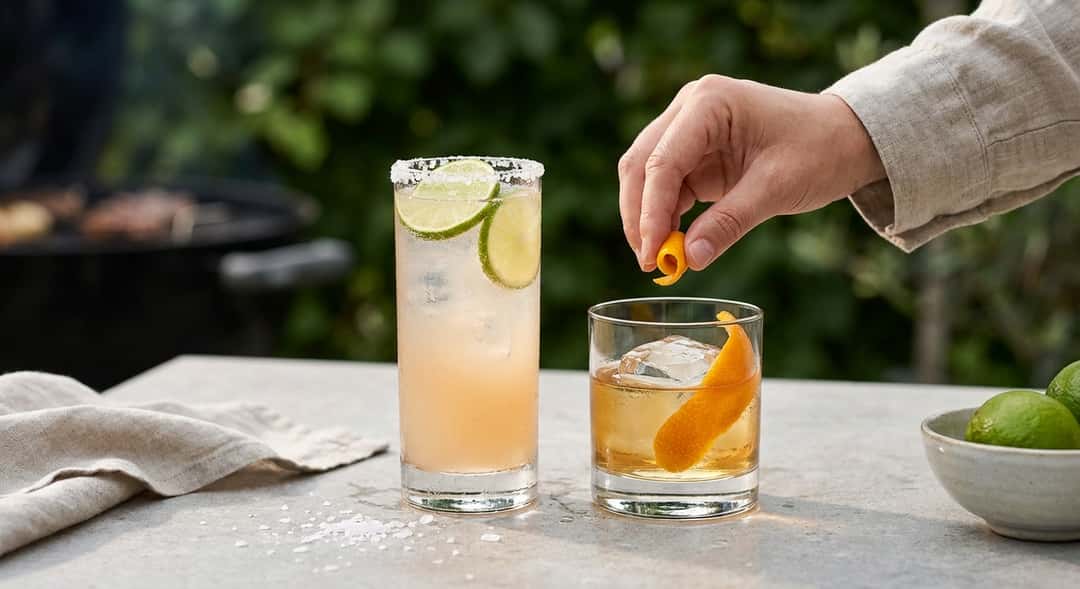
1. Mezcal Paloma
Paloma is Mexico's most beloved cocktail, and with mezcal instead of tequila it takes on a whole new life.
Ingredients:
- 5 cl mezcal (joven espadín)
- 1 cl freshly squeezed lime juice
- 10–12 cl grapefruit soda (preferably a good quality one)
- Ice
- Sea salt and lime zest for garnish
Method:
- Rub the rim of a tall glass with lime zest and dip in sea salt.
- Fill the glass with plenty of ice.
- Pour in the mezcal and lime juice.
- Top up with grapefruit soda and stir gently.
- Garnish with a lime slice and serve immediately.
The smoke in the mezcal meets the acidity of the grapefruit in a way that is almost absurdly refreshing. This is the grill night's drink.
2. Mezcal on ice with orange peel
This is not even a recipe – it is a philosophy. Mezcal is actually good enough to be drunk straight over ice with just one single aromatic element.
Ingredients:
- 5–6 cl mezcal
- Large piece of clear ice (or regular ice cubes)
- A wide strip of orange peel (not the white pith)
Method:
- Place ice in a low whisky glass (rocks glass).
- Pour over the mezcal.
- Squeeze the orange peel over the glass so the oils spray out, wipe it along the rim, and drop it into the glass.
It is tempting to complicate things. Don't. The orange peel opens up the fruit levels in the mezcal and softens the smoke just enough to make it irresistibly simple.
3. Spicy Mezcal Margarita
A classic that deserves its place at any grill night.
Ingredients:
- 5 cl mezcal
- 2.5 cl triple sec (Cointreau or equivalent)
- 2 cl freshly squeezed lime juice
- 2–3 slices of jalapeño
- Ice
- Sea salt and dried chilli for the rim
Method:
- Muddle (gently crush) the jalapeño slices in a shaker.
- Add ice, mezcal, triple sec, and lime juice.
- Shake vigorously for 12–15 seconds.
- Strain over a salt-chilli-rimmed glass filled with fresh ice.
- Garnish with a jalapeño slice.
The heat from the jalapeño and the smoke from the mezcal are a pair made for each other – and with grilled corn cobs or chicken wings, this is the combination you didn't know you needed.
Which bottle should you choose?
When it comes to specific bottles for the grill night, there is fortunately good availability of mezcal in Norway.
Del Maguey Vida Mezcal Artesanal is a classic from San Luis del Rio in Oaxaca – produced by Zapotec farmers following traditions stretching back hundreds of years. Fermentation takes place in open wooden vats with wild yeast, and distillation is carried out in wood-fired copper stills. The result is a mezcal with a smokiness that is present without dominating, with notes of tropical fruit, a touch of citrus, and a fine mineral finish. Perfect for all three serving suggestions above.
Picaflor Mezcal Artesanal Espadin 100% Agave is a readily available option for those who want to explore the category without investing too much. Pure espadín character with balanced smoke, hints of green pepper, and ripe fruit – exactly what you want in a Paloma or Margarita.
For the more adventurous, Koch Mezcal Ancestral Jabali offers something entirely different. Jabali is a rare and wild agave variety that grows in the highlands and is notoriously difficult to ferment – it has a naturally high inulin content that can produce unpredictable fermentation results. This yields a mezcal with intense, almost metallic minerality, a hefty fruit character, and a long, complex finish. It is stronger and more demanding, and is best enjoyed on its own over ice – not as a cocktail base.
A couple of practical tips
Skip the worm hole. The white powder or worm in some bottles is a marketing gimmick with no historical roots in the mezcal tradition. Serious producers consistently leave it out.
Temperature matters. Mezcal should not be drunk straight from the fridge – the aromas stiffen and the smoke flattens out. Let the bottle stand at room temperature, and use ice in the glass rather than chilling the spirits.
Start simple. First time with mezcal? Have it on ice with an orange peel. No soda, no syrup. Just agave, smoke, and time.
Choose the right agave variety for the right occasion. Espadín is the entry point – approachable, balanced, and versatile. When you are ready for more, there is a whole world of tobalá, tepeztate, jabali, and arroqueño waiting.
Mezcal is not for everyone, and that is not the point either. But for those who are curious about something that tastes of craftsmanship, of the character of the soil, and of a culture that takes time and tradition seriously – yes, then a Norwegian summer evening with lime wedges and glowing coals in the grill might be exactly the right moment to begin.