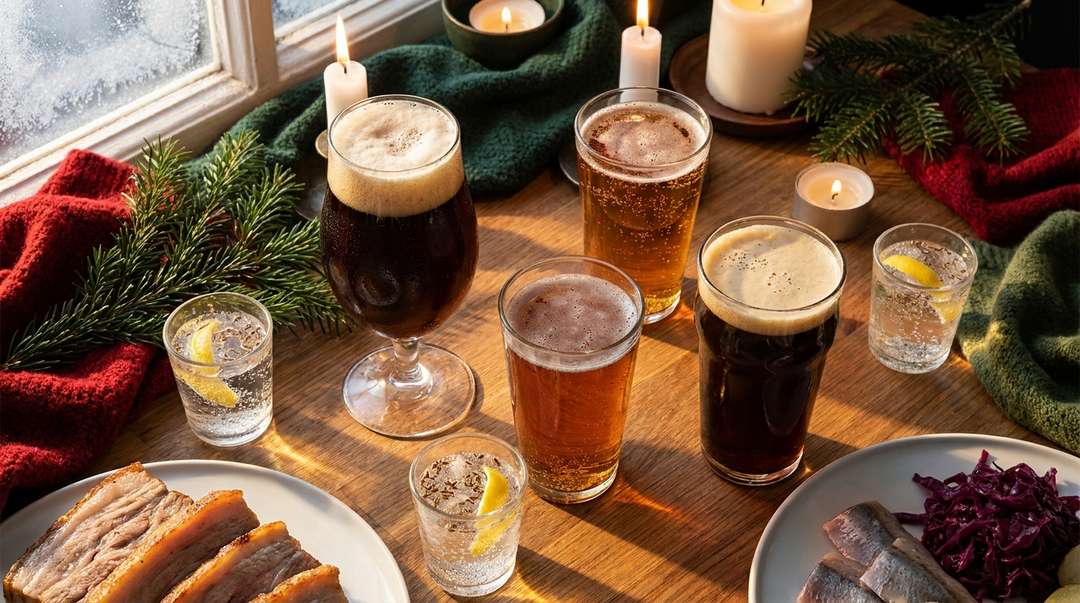
The Christmas dinner has an unwritten rule: every glass has a job. The gløgg warms, the juleøl cuts through the fat, the aquavit clears the palate between bites, and the julebrus is the one the children are waiting for. Take away the alcohol, and the jobs don't disappear. You just have to replace them on purpose.
That's why I don't start with "what should I buy?", but with four questions. Answer them, and the non-alcoholic Christmas is no consolation prize, but a table where every glass has a reason to be there. I'm writing from the Norwegian Christmas tradition of ribbe, pinnekjøtt and herring. In Sweden and Finland the table is set differently, and the drinks have other roles.

1. Should the glass warm?
That's the gløgg's job. And it's easy to miss here: many non-alcoholic gløgg drinks end up as nothing more than warm, sweet juice. What's missing is what wine usually provides: acidity and a little bitterness.
Make it yourself instead. Gently warm dark grape juice or blackcurrant juice together with whole spices: cinnamon stick, cloves, cardamom and a slice of orange. Don't let it boil hard. At the end come two things that make the difference: a splash of lemon juice and a small pinch of salt. The acidity replaces the freshness of the wine, and the salt rounds off the sweetness.
Let the spices infuse for about half an hour over low heat. It gives more depth than a quick pot at the last minute.
2. Do you need sweetness or a fresh counterweight?
Julebrus is the sweetness. It's the party drink for the children and for everyone who likes the drink to be part of the celebration. But with ribbe, pinnekjøtt and sweet-and-sour red cabbage, something drier and tarter often works better.
Try sparkling water with a squeeze of lemon and a splash of apple must. Or apple must topped up with sparkling water, served ice cold. The fat in the crackling and the ribbe needs something that cuts through, not something that sits on top.
My rule of thumb: the fattier the food, the less sugar in the glass.
3. What should replace the juleøl?
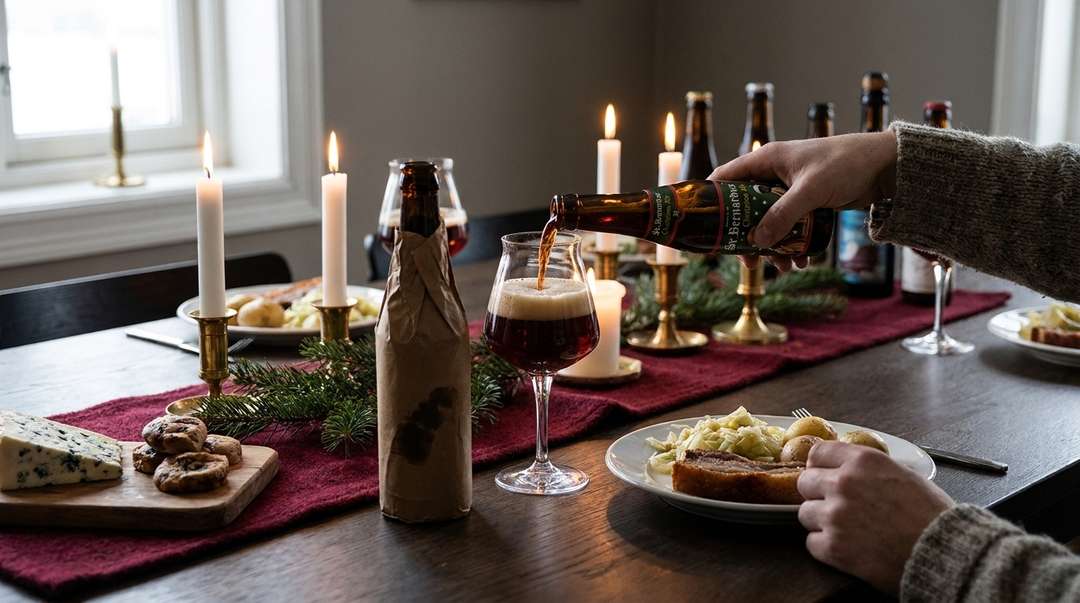
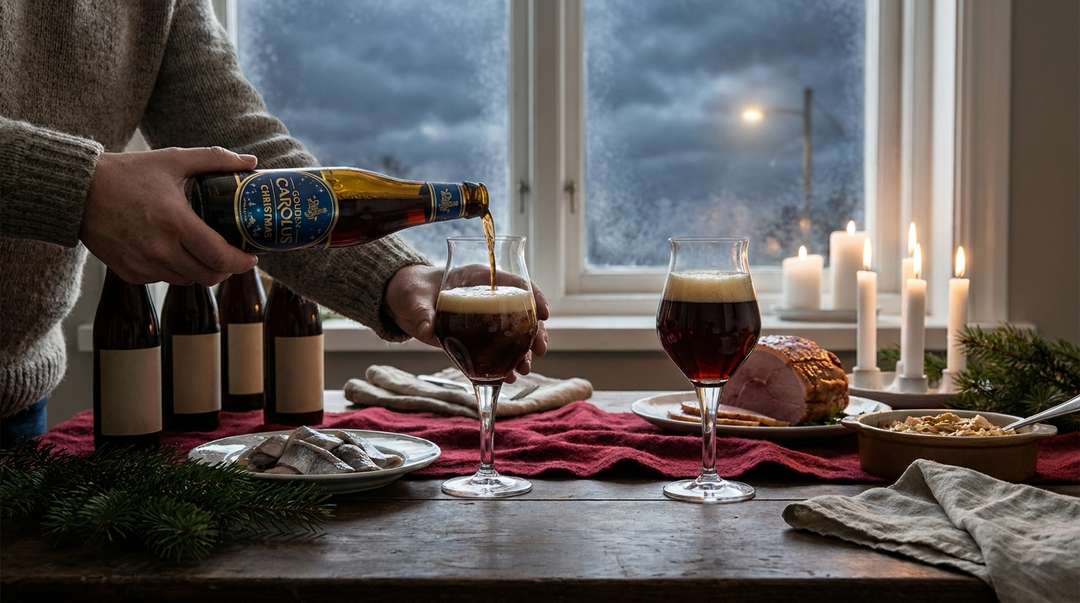
Juleøl contributes malt sweetness, a little bitterness, spice and carbonation. Non-alcoholic beer in a dark style, such as bokk or porter, hits much of this. Roasted malt gives caramel and bread crust, and it goes well with pinnekjøtt and medisterkaker.
If you want something without beer, you can make a version of cold, strong black tea with a slice of orange and a hint of ginger. It turns out dark, slightly bitter and surprisingly food-friendly.
Check the label: non-alcoholic beer can contain small amounts of alcohol. In pregnancy and in other cases where alcohol must be avoided completely, it's safest to choose drinks that contain none at all.
4. What do you do without the aquavit?
Aquavit is the most special glass on the table. It's strong, spiced with caraway among other things, and works as a small dry cleanse between fatty bites. In Norway it's common with herring, ribbe and pinnekjøtt.
That job is the hardest to replace, but possible. You need cold, spice and bitterness. Try a small glass of ice-cold sparkling water with a few drops of lemon and a few crushed caraway seeds. Or a strong, chilled herbal tea with fennel and caraway. Serve in small glasses, not large ones, so it feels like a moment of its own at the table.

How to put it together
Don't make four drinks for everyone. Pick two, maybe three.
- On arrival: warm, spiced gløgg without too much sweetness.
- With the main course: a dry, tart drink or dark non-alcoholic beer.
- For the children and dessert: julebrus or apple must.
- With herring and pinnekjøtt: a small, ice-cold, spiced glass as the aquavit's stand-in.
Christmas spirit doesn't come from the alcohol. It comes from someone having thought about what the glass should do, and from it being there at the right temperature at the right time. Guests notice that, whatever they're drinking.