Drinks for pizza: the sauce and the sweetness decide
Acid against acid, salt that calls for bubbles, sweetness that pushes the drink in a sweeter direction – here's the practical logic behind drink choices for pizza, with an equally good non-alcoholic path.
Pizza is really four or five different drink challenges disguised as a single dish. The tomato sauce is sour, the cheese is salty and fatty, the toppings can be spicy, smoky or sweetish. It's the interplay between these elements – not the pizza as such – that decides what ends up in the glass.
The tomato sauce demands its own acidity
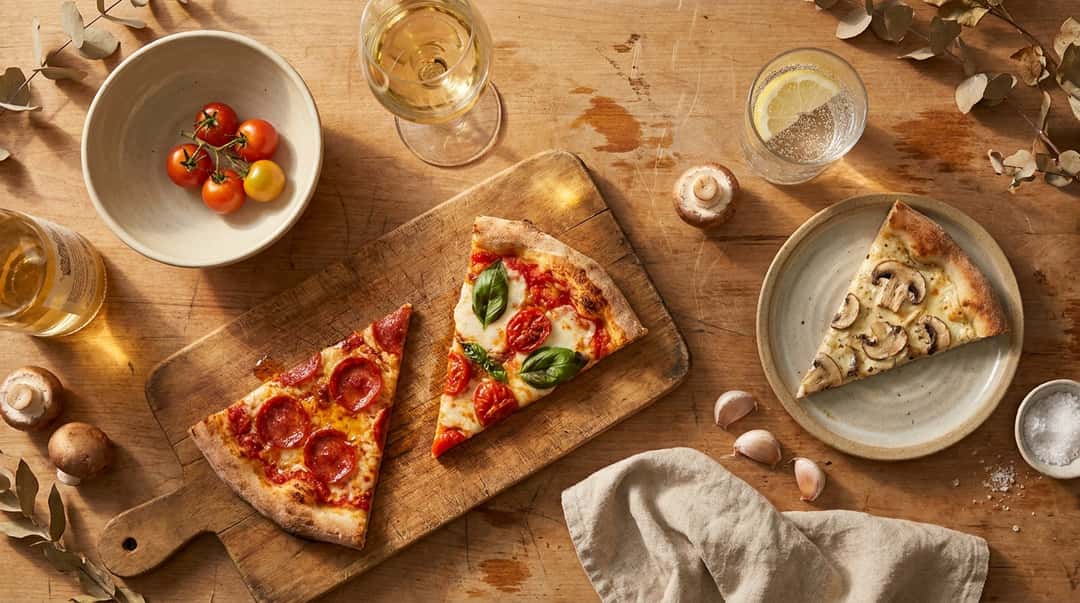
Margherita is in many ways pizza's baseline test. Here it's the tomato sauce, not the cheese, that sets the agenda: tart, concentrated and often a little sweet from the tomatoes themselves. Tomato-based dishes are among the most acidic things we eat, and therefore need a drink with matching freshness – otherwise the wine can come across as flat and lifeless against the sauce.
That's why drinks with their own freshness work best with tomato-based pizzas. Switching from a heavy, round wine to something with clear acidity makes all the difference. Papagiannakos Savatiano Vientzi 2021 is made from Savatiano, Greece's most planted grape and a classic from the Attica region around Athens. The grape is often used for retsina, but here it's vinified fresh and unoaked, which typically gives a light, citrus-toned style with good acidity – exactly the freshness tomato sauce asks for.
For the non-alcoholic path, the logic is identical: a glass with good acidity – think homemade lemon water, or a bought mineral water with citrus – matches the tomato sauce's sourness better than anything sweet and flat.
Salty cheese calls for contrast or bubbles
Pepperoni and salami pizza add a new layer: salt. Mozzarella is already salty, and the cured sausage doubles down. Salt can soften acidity and tannins in a wine, but it also requires something that can cut through the layer of fat the cheese leaves on the tongue.
Two strategies work here: either a drink with clear acidity that cuts through the fat, or something with bubbles that physically "shakes" the palate clean between bites.
Illustration: AI
A light, tart alternative like Santa Margherita Valdadige Pinot Grigio 2025 handles both the salt and the fat without being overwhelmed. Santa Margherita is one of Italy's best-known Pinot Grigio producers, and the style from Valdadige in northern Italy is typically pale, dry and easy-drinking, with enough acidity to do the job without stealing attention from the pizza. Non-alcoholic: a dry, bubbly non-alcoholic cider or plain sparkling water with a splash of lime gives the same palate-cleansing effect.
White pizza with mushrooms calls for something rounder
Without tomato sauce, the equation changes completely. White pizza with mushrooms, cream or crème fraîche and often garlic is more umami than tart – and umami is known for making wine taste sharper and more bitter than it actually is.
Without the tomato sauce's acidity, the palate needs something else to play against – preferably a bit of body and minerality.
Lars Lansen
For this type of pizza, it's often better to choose something with more body and mineral length than very high acidity. Samuel Billaud Chablis Premier Cru Montée de Tonnerre 2024 comes from the chalky, fossil-rich soil of the Chablis district, and the premier cru level typically gives more depth and mineral weight than ordinary Chablis without leaning heavily on oak. It's a wine style with enough substance to meet mushrooms and cream without being dominated. A fuller-bodied Riesling, such as Knoll Riesling Loibner Smaragd 2024, can also work well – Smaragd is the ripest and most concentrated category in the Wachau valley in Austria, and the combination of high acidity and body makes it surprisingly good with umami-rich, creamy dishes.
Non-alcoholic: a cup of light herbal tea or a fuller-bodied non-alcoholic white "wine" mirrors the same principle – something with body, not just freshness.
Sweetish toppings shift the whole balance
BBQ pizza with caramelized onion, sweet BBQ sauce or even pineapple is the variant that differs most from the margherita logic. Sweetness in food makes dry, tart drinks taste tighter and more bitter than they are on their own – the same mechanism that makes a dry wine taste sourer after a bite of cake.
The solution isn't necessarily a sweet drink, but something with a bit of residual sweetness or fruity body that meets the food on an equal level instead of clashing with it. Martin Müllen Kröver Letterlay Riesling Spätlese 2005 comes from the Mosel in Germany, where the slate soil gives Riesling a characteristic stony minerality. Spätlese is a late-harvest category that typically gives an off-dry to sweetish style with enough acidity to keep balance, even after several years in bottle – a style built precisely to meet sweetish or spicy dishes without the acidity becoming too sharp.
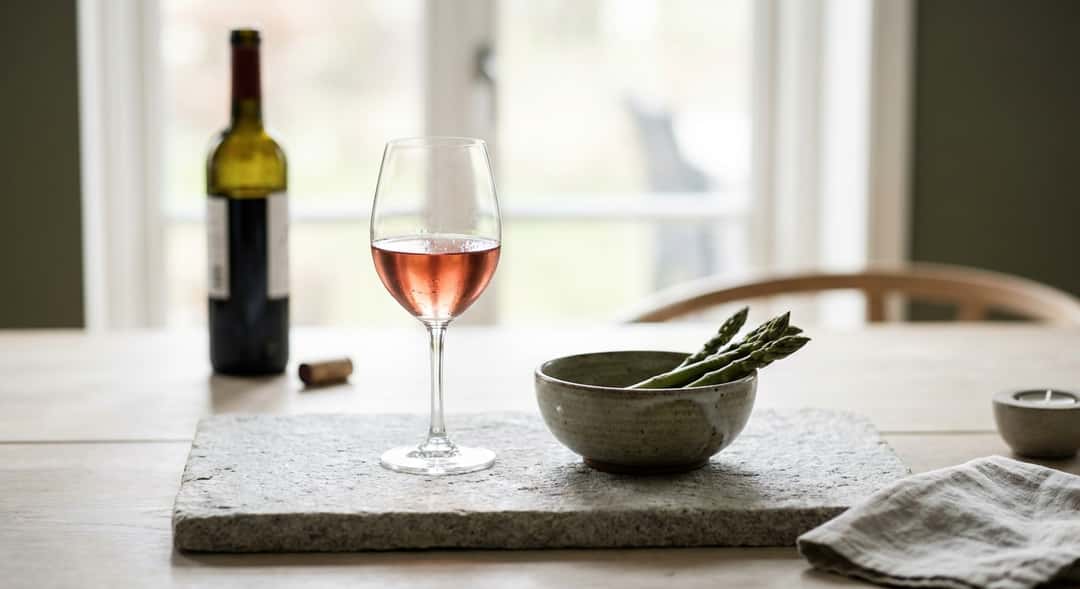
For rosé wine lovers, a light, fruity style like Dom. de Cantarelle Triplette Côtes de Provence can also work with BBQ pizza. Provence rosés are known for their pale color and dry, fresh style with notes of red berries and citrus – the fruitiness mirrors the sweetness in the sauce without becoming cloying itself.
Illustration: AI
Non-alcoholic: a lightly sweet non-alcoholic cider or homemade iced tea with a bit of honey gives the same balance between fruit and sweetness.
When beer is the right answer
Beer is often underestimated with pizza, but many styles handle salt, fat and spice better than wine does. A farmhouse ale/Saison, such as Great Divide Colette Farmhouse Ale from the Colorado-based brewery Great Divide, has the typical Saison character of citrus, spice and a dry, peppery finish from the yeast. That gives enough spice and citrus character to stand up to both pepperoni and spicy toppings, while the carbonation cleans the palate between bites, just like bubbles in wine.
The simple main rule
Think of pizza as an interplay, not a category. Tart sauce calls for acidity in the glass. Salt and fat call for contrast or bubbles. Umami without acidity calls for more body and minerality. Sweetness calls for a drink that meets it instead of resisting it. This applies whether the glass contains wine, beer or something entirely non-alcoholic – the principle of acidity, salt, fat and sweetness is the same.
Choose your store to see prices and whether the bottles are on the shelf.
Q&A
Why does dry wine taste sourer alongside sweetish pizza?
Sweetness in food makes dry, tart drinks taste tighter and more bitter than they are on their own. That's why a drink with a bit of residual sweetness or fruity body often works better with BBQ pizza and sweetish toppings.
What's a good non-alcoholic alternative for pepperoni pizza?
A dry, bubbly non-alcoholic cider or plain sparkling water with a splash of lime gives the same palate-cleansing effect against salt and fat that bubbles or tart wine do.