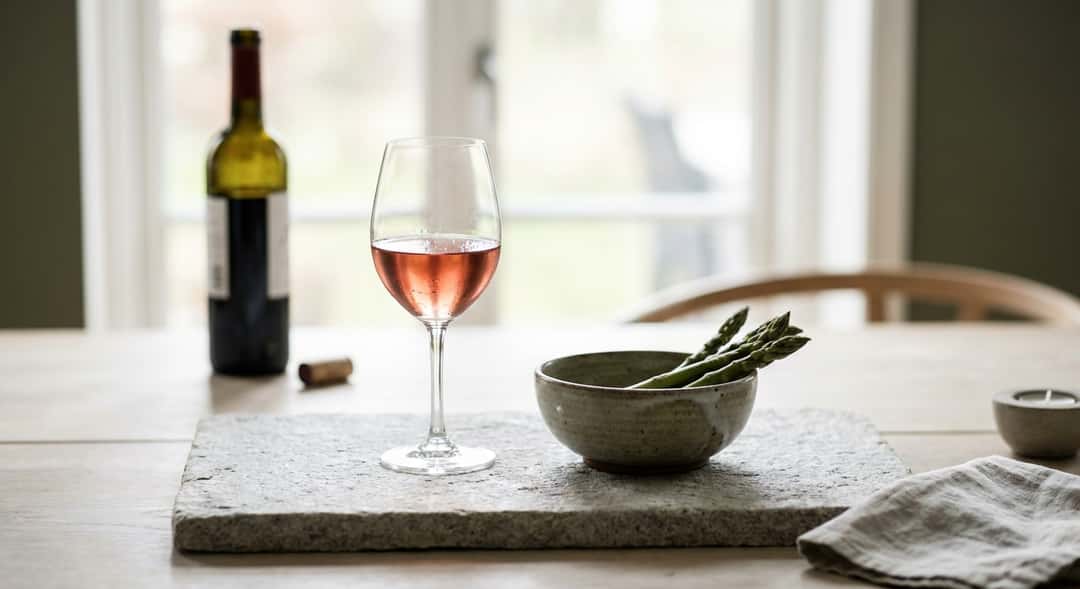

There is something almost ritualistic about the first bunch of green asparagus in May. It appears at the market, often with soil still visible on the stems, and signals that something new and fresh is on its way. In kitchens across Norway, white wine glasses are reached for out of old habit – a Grüner Veltliner perhaps, or a mineral Muscadet. And that is of course not wrong.
But what if we challenged that reflex a little?
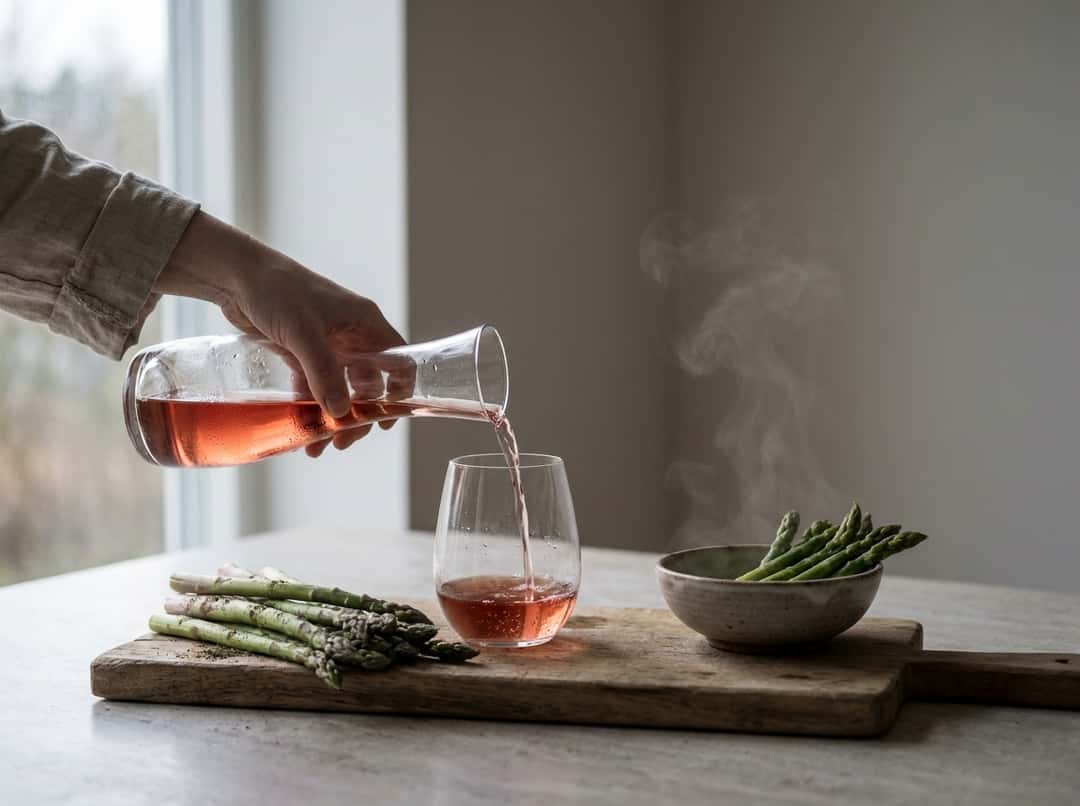
Why does everyone say white wine with asparagus?
Asparagus – particularly the white variety – contains sulphur compounds and bitter-green flavour substances that have historically clashed with tannins in red wine. The result can be metallic and unpleasant. This experience has become entrenched as a universal rule, and it is not entirely wrong – for powerful, tannin-rich red wines.
But green asparagus is a different matter. The preparation – often grilled or pan-fried with a little butter and lemon – brings out the sweet, nutty tones and softens the most bitter sulphur notes. That opens the door a crack for something red in the glass, provided you choose the right type.
This is not about breaking rules for the sake of it. It is about understanding what actually happens in the glass and on the plate – and letting curiosity guide you just as much as convention.
What characterises a red wine that works with green asparagus?
The ideal red wine for green asparagus is light, fruit-driven and low in tannins, ideally with good acidity and served slightly chilled – around 14–16 degrees. Tannins are the enemy here; they draw out bitterness in the asparagus and create a metallic aftertaste that nobody wants.
The most important criteria:
- Low to medium tannin structure – no powerful Cabernets or Amarone
- Good freshness and acidity – lifts the dish and cleanses the palate
- Fruitiness that dominates over oak – young wines without much barrel aging
- Served chilled – think closer to rosé temperature than room temperature
This points towards grape varieties such as Pinot Noir, Gamay, Cabernet Franc and occasionally Barbera – all with acidity as one of their foremost characteristics.
Cabernet Franc from the Loire – the quiet favourite pairing
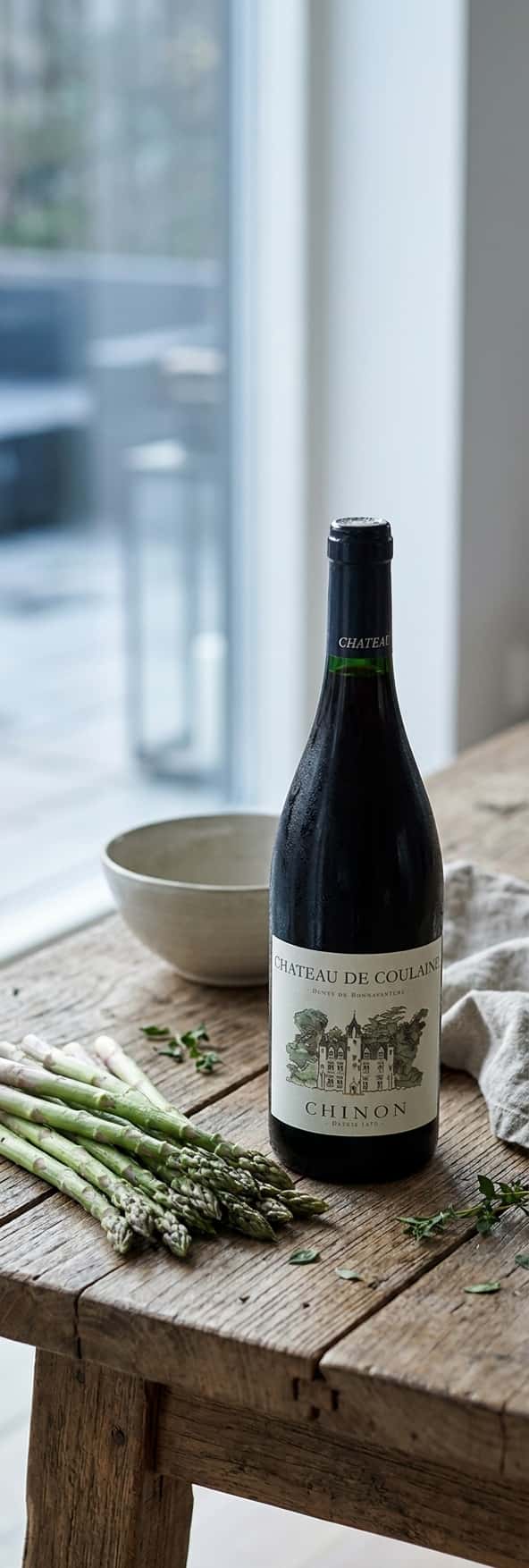
Few combinations surprise more pleasantly than a chilled Chinon from the Loire Valley with grilled asparagus. Ch. de Coulaine Chinon 2023 is a fine example of the style: herbally fresh, with red cherry, a touch of pepper and an aroma that almost recalls a flower garden after rain. There is something botanical about Cabernet Franc from Chinon – a green, twiggy element – that mirrors the asparagus rather than fighting it.
Chinon is an appellation in the Indre Loire, where Cabernet Franc is grown on a mix of tuffeau and gravel. The soil gives the wines a characteristic minerality and a light, almost weightless body. Ch. de Coulaine is a family-run estate with roots going back to the 15th century, and they farm according to biodynamic principles – which often results in precision and lively acidity in the glass.
The tannins are soft enough for the pairing to work, and the acidity is just sufficient to cut through a butter-fried accompaniment. Serve it at around 14 degrees and you have perhaps spring's most underrated food-and-wine pairing.
Pinot Noir – the classic that also handles green
Pinot Noir is the obvious alternative, and with good reason. The grape's natural elegance, its red berry fruit and silky tannins make it a generous partner at the table – even with slightly challenging vegetables.
From Burgundy, Pierrick Bouley Monthélie Aux Fournereaux 2023 is worth mentioning: a wine from a small, little-known appellation right next to Volnay, defined by terroir and finesse rather than power. Monthélie is one of the Côte de Beaune's more modest communes, but that is precisely what makes it interesting – here it is not prestige that drives the price, but craftsmanship and terroir. The wine has the characteristic Burgundy balance between earthy depth and bright, precise berries that makes it flexible with food.
For those who want something a little more accessible in style, Birichino Saint Georges Pinot Noir from California is an interesting choice. Birichino is a small producer project run by John Locke and Alex Krause, known for making wines in a European, light style that differs markedly from the more buttery, sun-ripened California tradition. Fresh, lively and with an almost Loire-like nervousness – this is California seen through a Burgundian lens.
Barbera – a masterclass in acidity
For the more adventurous, there is a surprising candidate from Piedmont: Barbera. The grape is known for its high natural acidity and relatively low tannins – an unusual combination that makes it one of Italy's most food-friendly grape varieties.
Malvirà Barbera d'Alba 2023 is a fruity and lively Barbera with cherry, a touch of lavender and a razor-sharp acidity. Malvirà is a family-run estate in Canale, in the Roero area just across the Tanaro river from the Langhe, and they are known for nurturing their wines with respect for the Piedmontese tradition without becoming heavy or overripe. This is no dull wine – it has character and drive.
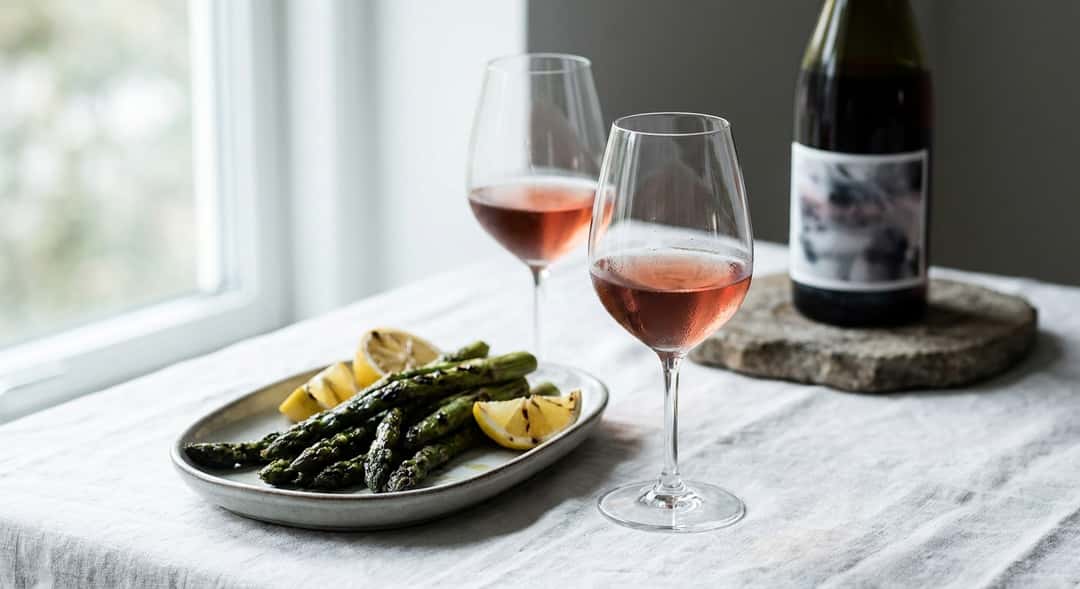
But with green asparagus pan-fried with garlic and shaved Parmesan? It sings. The acidity does the job that white wine normally does, while the soft tannins stay in the background and let the dish take centre stage.
| Wine | Grape variety | ABV | Style with asparagus |
|---|---|---|---|
| Ch. de Coulaine Chinon 2023 | Cabernet Franc | 12% | Herbally fresh, botanical |
| Pierrick Bouley Monthélie 2023 | Pinot Noir | 13% | Elegant, earthy |
| Birichino Saint Georges Pinot Noir | Pinot Noir | 13% | Light, fresh, European style |
| Malvirà Barbera d'Alba 2023 | Barbera | 14% | Fruity, tart, lively |
Which preparation methods open the door most to red wine?
Preparation is decisive. Raw or steamed asparagus retains most of the bitter, sulphurous tones – and in that case white wine is still the safest choice. But give the asparagus a little heat and browning, and everything changes.
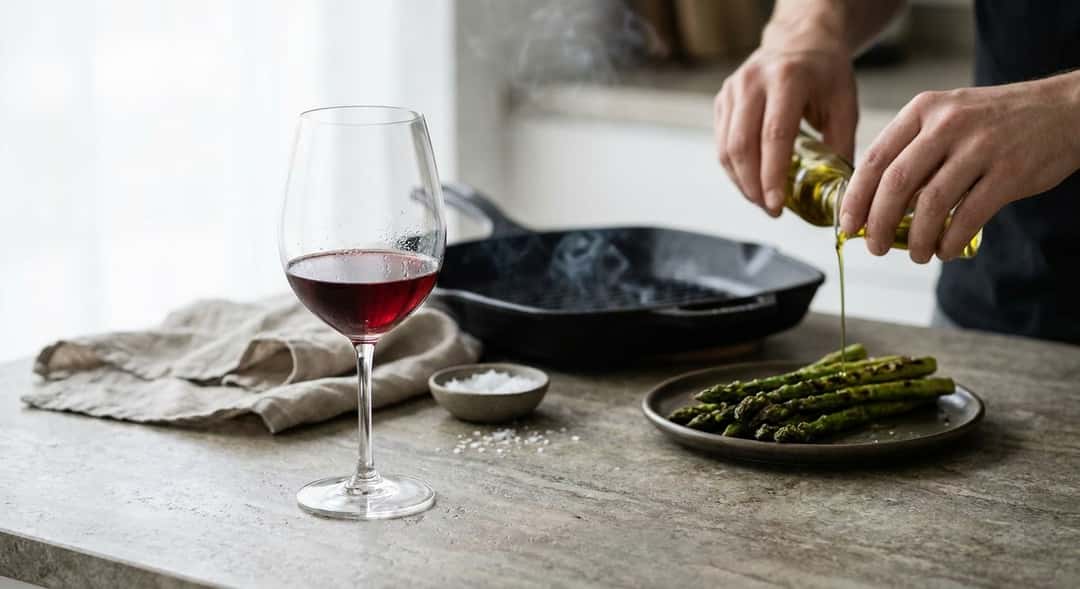
- Grilled asparagus with olive oil and sea salt: brings out sweetness and nutty notes – perfect for Pinot Noir
- Pan-fried in butter with lemon zest: pairs beautifully with Chinon's botanical character
- Asparagus with egg (classic hollandaise or poached): white wine is still king here, but a very light Pinot Noir can work
- Asparagus in pasta dishes with pancetta or mushrooms: Barbera is almost unbeatable
A small practical detail that makes a big difference: place ice cubes in the red wine glass for one minute before pouring, or put the bottle in the fridge for 20–30 minutes. That is not cheating – it is knowledge.
Is white wine really no longer the best match?
White wine remains an excellent partner for asparagus – there is no doubt about that. Grüner Veltliner, Vermentino and Muscadet are all brilliant choices, and they will never disappoint. But dismissing red wine categorically is to miss out on some of spring's most surprising and delightful taste experiences.
The key is not what colour the wine is, but what style it is. Light, chilled, fresh and low in tannins – that is the mantra. And within those parameters there is an entire universe of exciting red wines just waiting to meet the season's first asparagus on the plate.
So next time you spot that green bunch in the store: feel free to pick up a bottle of Chinon or an elegant Pinot Noir. It is spring's most liberating surprise in the glass – and proof that the best food-and-wine pairings often arise where convention ends and curiosity begins.