
I remember the first time I poured sake into a proper glass – not a warm plastic cup at a worn-down Japanese restaurant, but chilled, in a white wine glass, alongside lightly grilled sea trout. It was one of those small revelations that makes you think: why has nobody told me this before?
Because sake is a drink that deserves far more attention than it gets in Scandinavia. It is neither wine nor beer, but has something of both worlds in it – the fermented complexity of wine, the grainy purity of a good craft beer. And right now, in the middle of the Norwegian spring with fresh fish, white asparagus, and herbs sprouting up everywhere, sake is one of the best companions you can have at the table.
Three style types you should know
The world of sake can seem overwhelming, but you really only need to relate to three basic style types to find your footing.
Daiginjo – the elegant and aromatic
Daiginjo is sake in its finest form. The rice grains are polished down to 50% or less of their original weight, which gives a cleaner, more perfumed profile. Think white flowers, peach, melon, and a lingering, silky-smooth finish. This is the sake you open when you want to impress – or simply treat yourself to something truly beautiful alongside a light starter.
Junmai Ginjo – the balanced everyday sake
Junmai means pure rice – no added alcohol. The Ginjo level of polishing gives freshness and fruity notes, while the junmai style adds a little more body and depth. This is the workhorse type in the sake world: versatile, food-friendly, and unfussy. It works just as well as an aperitif as it does throughout an entire dinner.
Yamahai and Kimoto – the natural and complex
These two traditional brewing styles use a slower, more spontaneous starter process for fermentation – a little like natural wine versus conventional wine. The result is sake with more texture, a certain umami weight, and often a touch of lactic freshness. They can handle food with more character: pickled fish, robust sauces, blue cheese.
Sake and Norwegian ingredients – three concrete pairings
Fresh fish and seafood
This is where sake is in its element. The purity of a good junmai ginjo cuts through the fat content of raw salmon or halibut without overpowering the delicate fish flavour. Where white wine can become a little sharp against raw seafood, sake slides in as if it were meant to fit. Try it with a simple ceviche made from Norwegian ingredients, or simply with fresh fish fillet with a little lemon and dill.
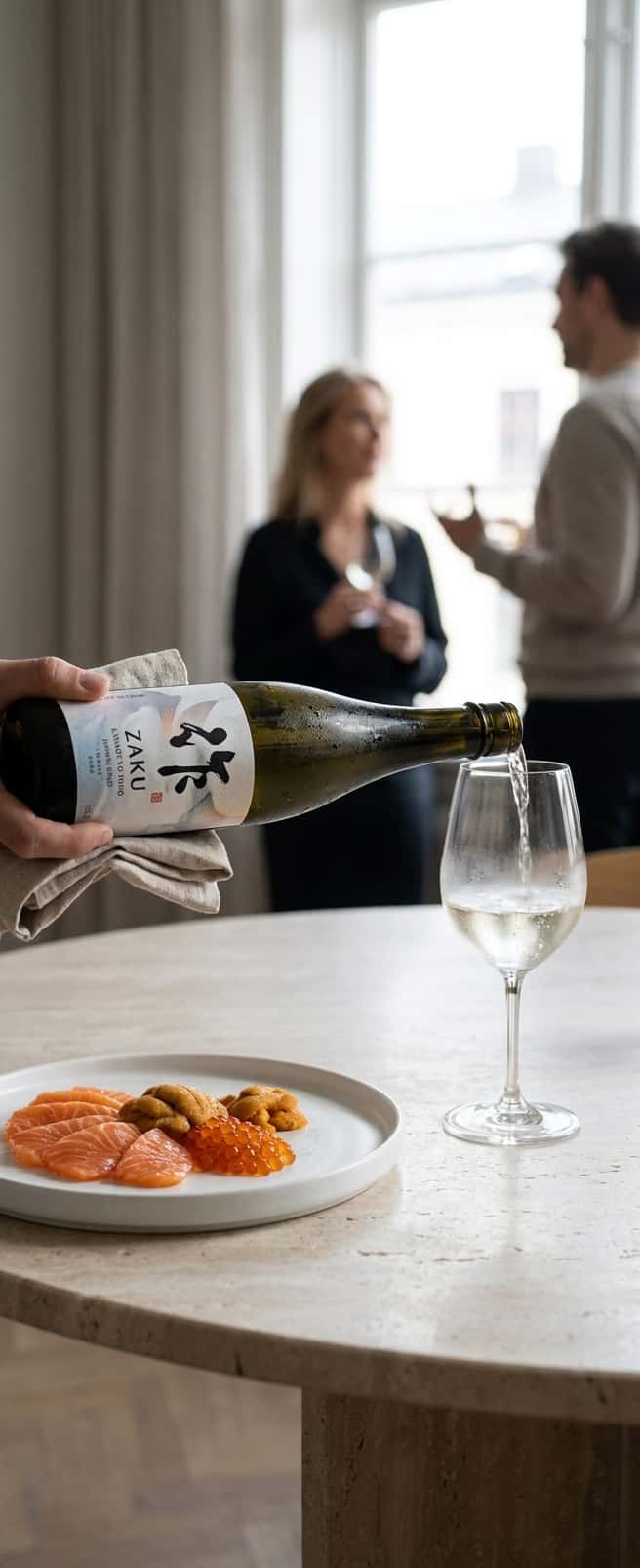
A sake I think works well here is Zaku Kanade no Tomo Junmai Ginjo – it has a fresh, melon-like fruit note and a delicate, long-lasting aftertaste that sits perfectly with light, raw fish. It is brewed by Shimizu Seikichi Shoten in Mie Prefecture, known for producing sakes with a particularly food-friendly character.
White asparagus
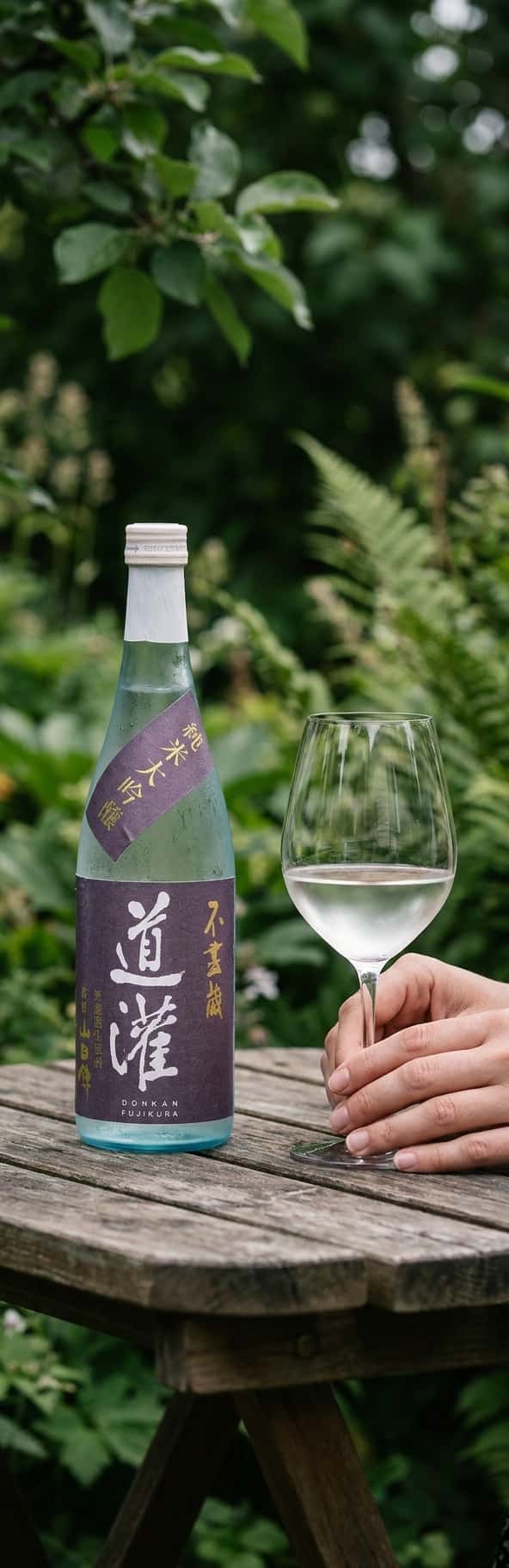
White asparagus is notoriously difficult to match with wine – the bitterness can clash with the acidity in many white wines. But sake? It works surprisingly well. A light Daiginjo with its floral, almost sweet notes complements the asparagus's natural sweetness without becoming sentimental. Dokan Daiginjo is a fine example – light, clean, and discreetly fruity, with a finish that does not trample over the ingredient.
Herb-based dishes – from green salad to herb butter
This is where the junmai style really shows itself off. The bitterness and freshness of herbs need something with a little more substance to lean against. Zaku Gen no Tomo Junmai from the same brewery as Kanade is a little heavier and more earthy in expression – it has a nutty, lightly umami-tinged base that marries well with dishes where tarragon, chives, and parsley get to play.
Sake as an aperitif – a small revolution
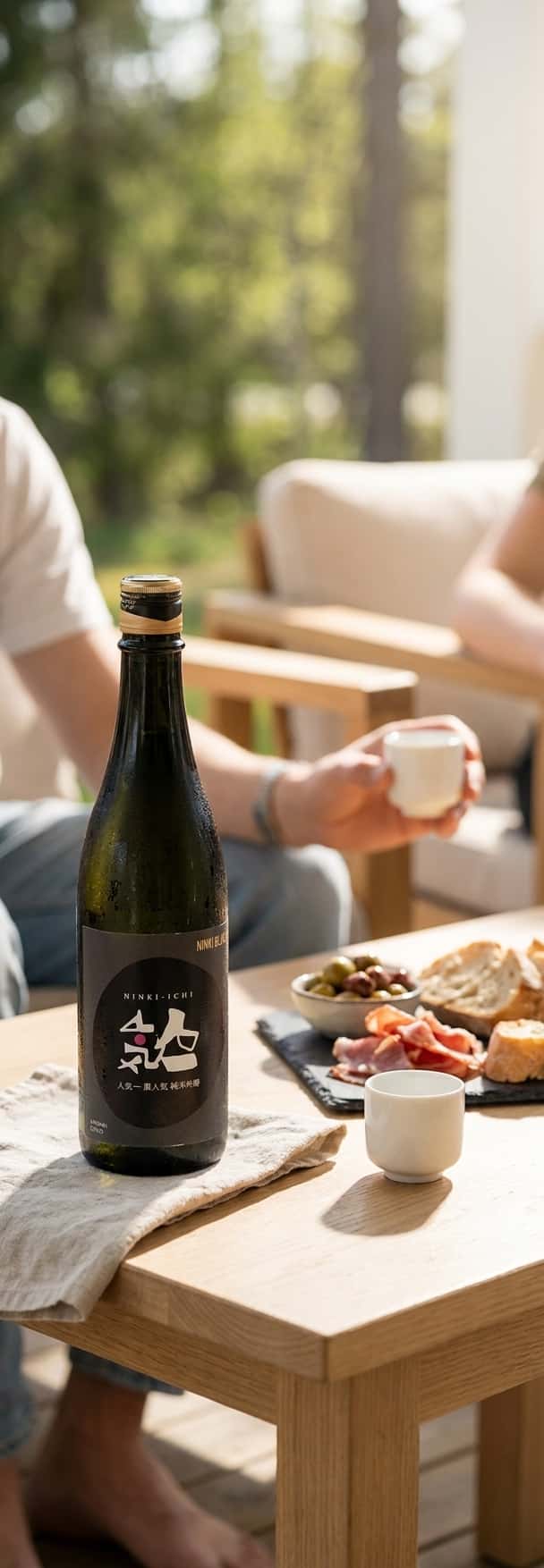
One of my favourite uses for sake is as an aperitif. Chilled down to around 10–12 degrees, served in a small white wine glass with perhaps a piece of ripe brie or a handful of salted nuts – it is hard to go wrong. It is neither as heavy as a sherry nor as tart as a white wine before the meal. Sake sits in the perfect middle zone.
If you want something more relaxed and accessible, Ninki-Ichi Black Ninki Junmai Ginjo is a good option to have on hand. It is attractive in the glass, with red fruit notes and a dry, tidy finish – not demanding, but not boring either.
What you'll find at Vinmonopolet now
There is actually quite a good selection of sake on the Norwegian Vinmonopolet shelf, and it varies a little from store to store. But the bottles mentioned – Dokan Daiginjo, Zaku Kanade no Tomo Junmai Ginjo, and Zaku Gen no Tomo Junmai – are all available in selected stores and online. If you want something a little more rustic and nature-oriented, Tamagawa Kimoto from the Kinoshita brewery is worth seeking out – it is brewed using the kimoto method and has a distinct texture and umami character that is entirely different from the more elegant daiginjo styles.
There are also more experimental varieties such as IWA Sake Assemblage 5 – a modern sake that blends different brewing styles and prefectures in one bottle. It has a complexity that is more reminiscent of a good champagne than traditional sake, and it works excellently as an aperitif or throughout an entire dinner where you want one drink to accompany the whole way.
Temperature and glass – two things that make all the difference
One final piece of advice: do not serve sake too cold. Many sake newcomers chill it down to near freezing and wonder why the flavour disappears. Around 10–12 degrees for light, aromatic sakes. Some of the more robust kimoto and yamahai styles are actually good a little warmer – around 15 degrees.
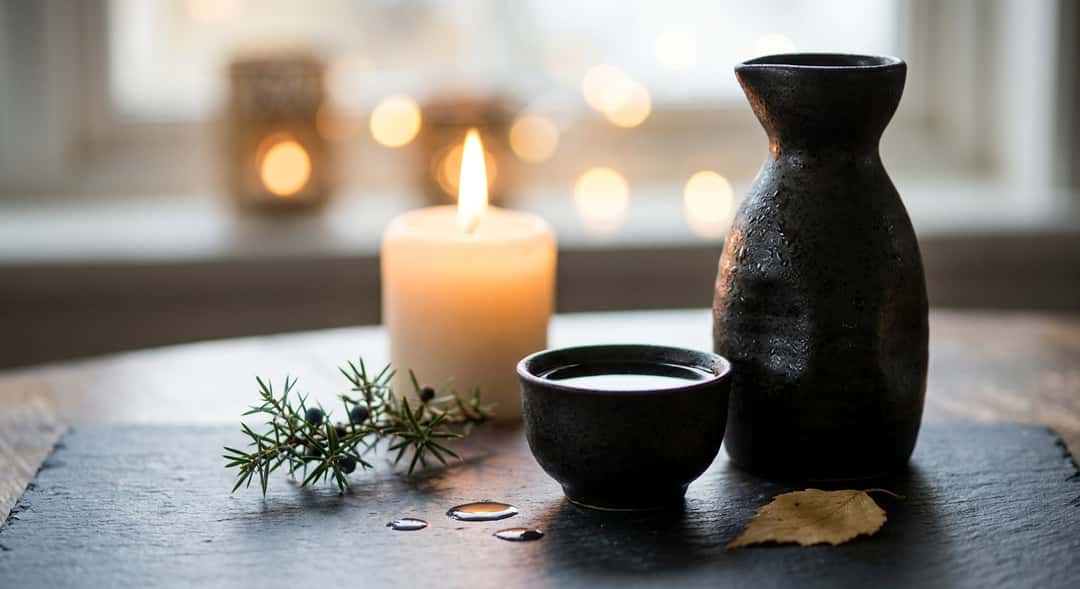
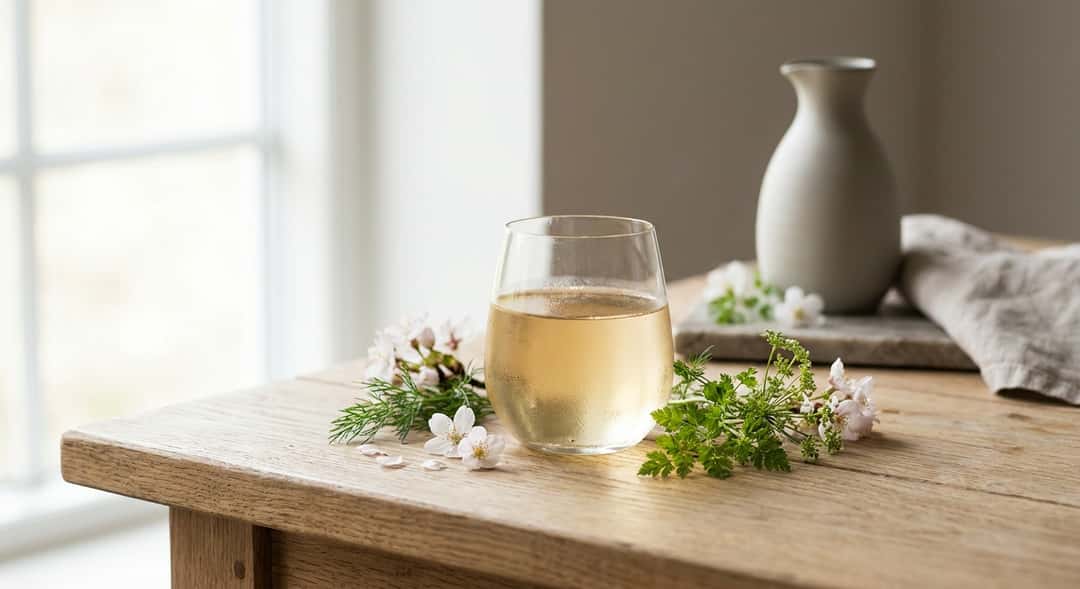
And glass? A simple white wine glass works perfectly. There is no need to buy special sake cups, even though they are aesthetically pleasing. What matters is that the glass gives the aromas room to open up – and then shape is more important than tradition.
Sake is no longer exotic. It is simply a drink waiting to be discovered by the Norwegian kitchen table. And with spring's ingredients in season right now, there is no better time than this weekend.