
Most people plan dinner-party drinks the way they shop: one bottle for now, one for later, grab whatever looks festive. Then the evening arrives, the aperitif runs dry before the starter's cleared, and the good red gets opened far too early — lukewarm and half gone by the time the cheese comes out.
The fix isn't more bottles. It's thinking in an arc rather than a list — treating the whole evening as a single curve of energy that rises at the door, settles through the meal, and winds down at the end.
Start with energy, not alcohol percentage
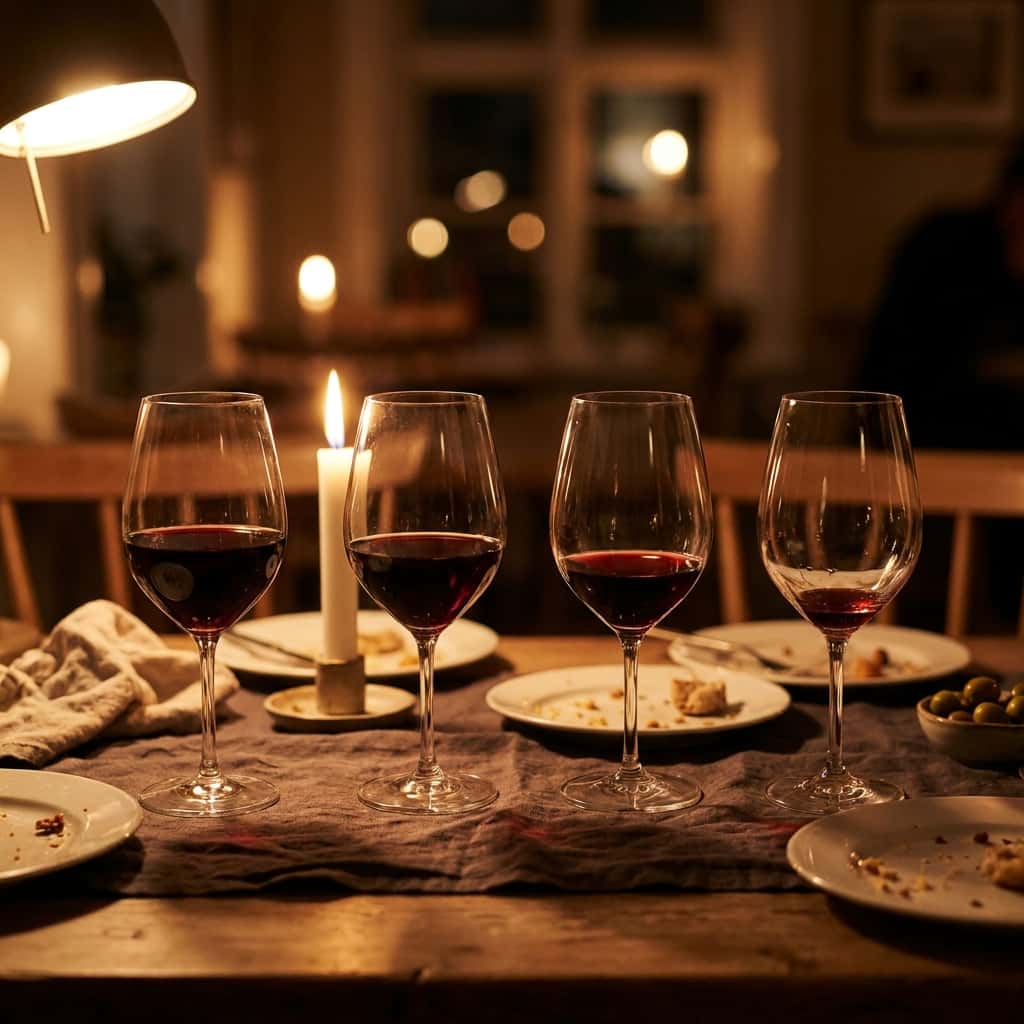
The aperitif's job is to wake people up and get the conversation moving before anyone sits down. That means something bright, a little assertive, served cold: a dry sparkling wine, a glass of something bitter and herbal, or a sharp citrus-forward spritz. The common mistake is reaching for whatever's heaviest in the cupboard because it feels generous — a big, warm red at the door does the exact opposite of what an aperitif is for.
The opening drink should raise an eyebrow, not settle the evening down.— LARS LANSEN
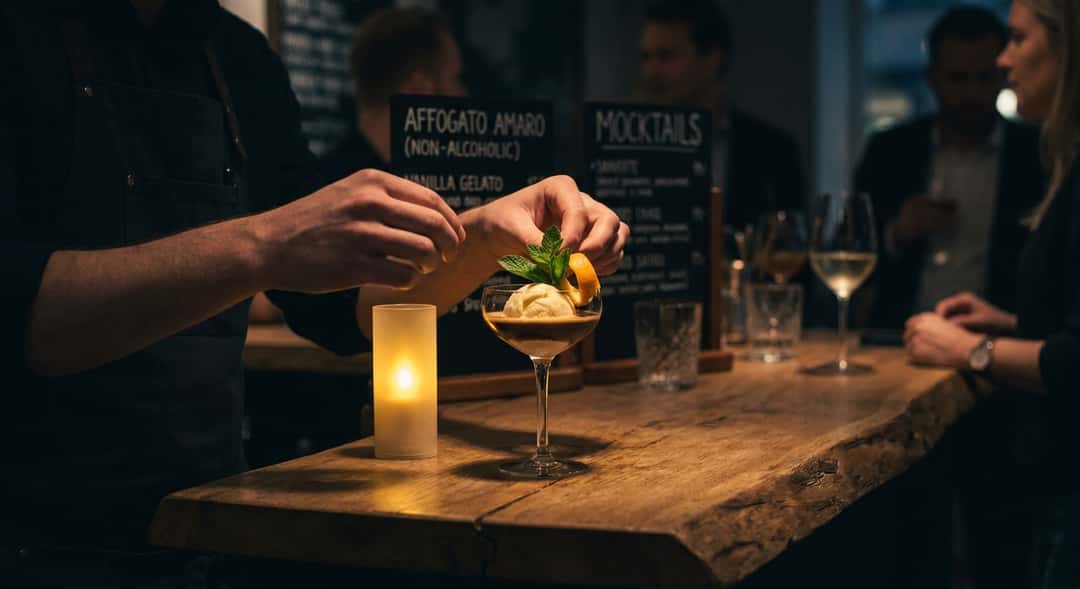
For an alcohol-free version, don't just pour juice. A dry sparkling tea, a shrub-style vinegar cordial topped with soda, or a bitter alcohol-free aperitif over ice gives the same jolt of acidity and fizz without alcohol pretending to be the whole point.
Match the main course, don't fight it
This is the course people obsess over matching — and it's actually the easiest to get right once you stop thinking bottle-first and start thinking component-first. What's doing the work on the plate: fat, acid, spice, smoke, umami?
A useful habit from formal wine training is to treat the drink as seasoning rather than decoration. Get it right and the whole plate tastes more like itself; get it wrong and everything goes a little flat. Three components matter most:
- Acidity lifts rich or creamy dishes and keeps them from feeling heavy by the second bite.
- Sweetness — even a touch — calms chilli heat and echoes the sweetness already in warming spices like cinnamon or clove.
- Tannin and alcohol strength both intensify the burn of chilli, so a lighter, lower-alcohol pour is usually the safer bet with anything genuinely hot.
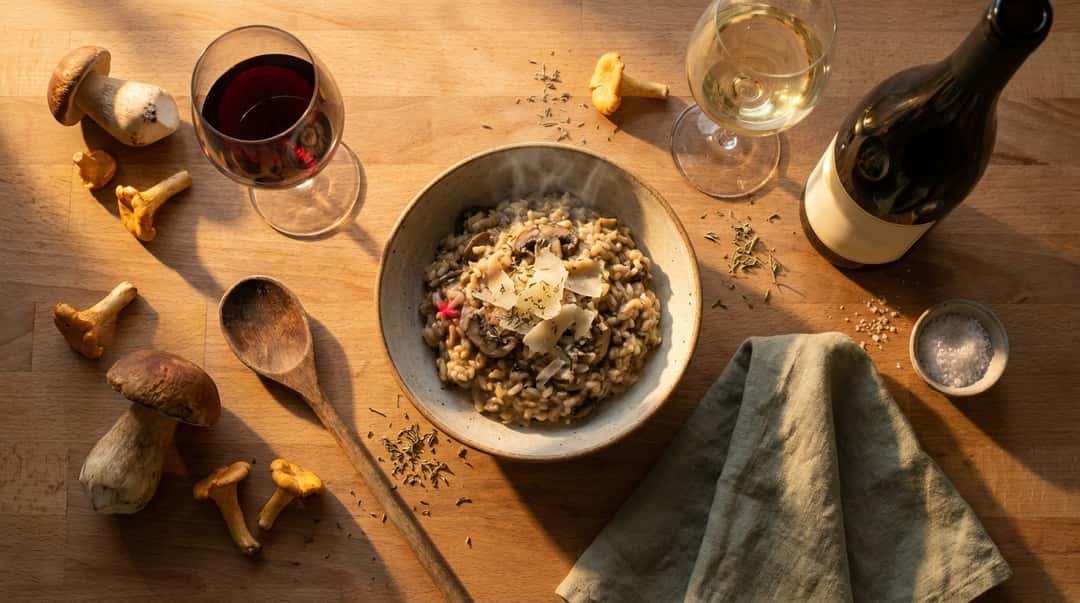
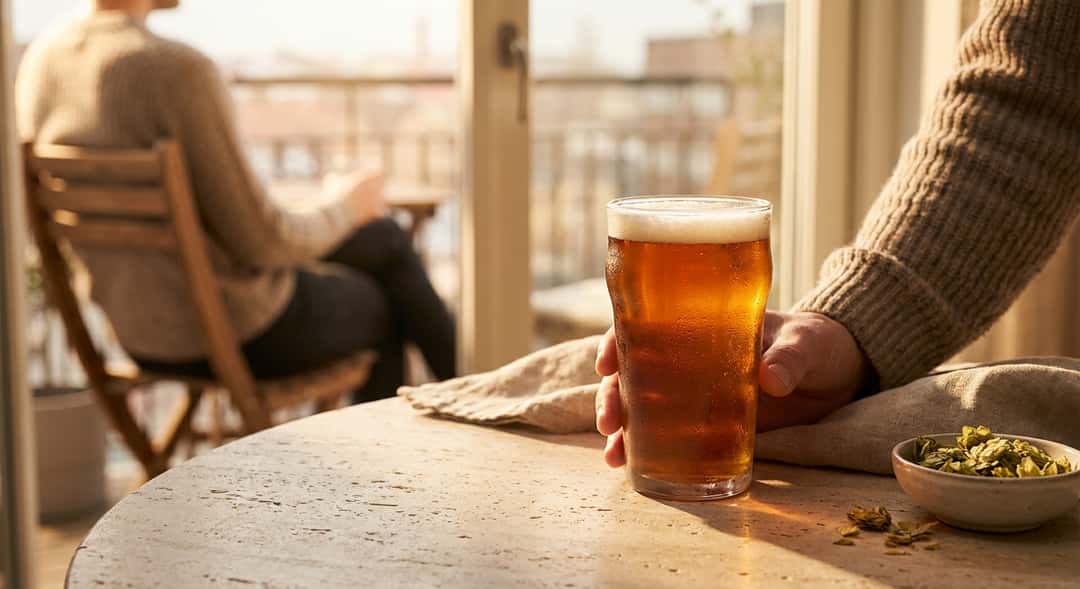
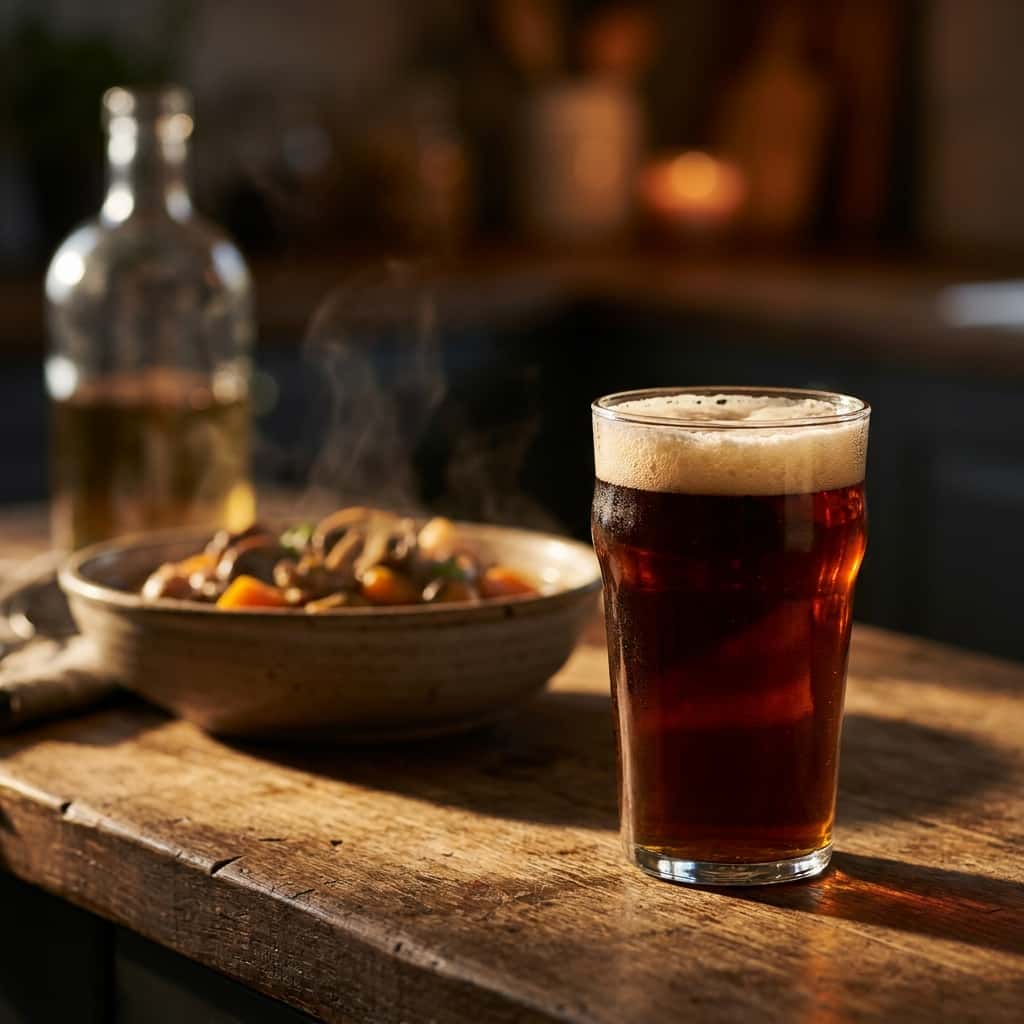
Autumn cooking earns its own logic here. Root vegetables, mushrooms and slow-braised meat lean toward earthy, savoury depth rather than heat, so the main-course pour can afford more weight — a fuller-bodied red, an amber beer, or, for the alcohol-free table, a dark, slightly bitter non-alcoholic beer or a tannic cold-brewed tea has enough backbone to sit next to a mushroom stew without disappearing into it.
The quiet pause between courses
Hosts often forget this stretch exists, but there's a real lull between the main course and dessert — plates are cleared, someone refills water, conversation dips for a minute. You don't need a dedicated drink here, but if the table is lingering, something lower-key than the main pour works well: still water with citrus, a small pour of something herbal, or simply letting the main-course glass carry through.
Closing the evening without overshooting
Dessert and the digestif are where a lot of dinner parties lose the plot, usually by pouring the same heavy red straight through to the cheese board. Sweetness in the glass should roughly match or exceed the sweetness on the plate — a dry wine next to a sweet dessert will taste thin and sour by comparison.
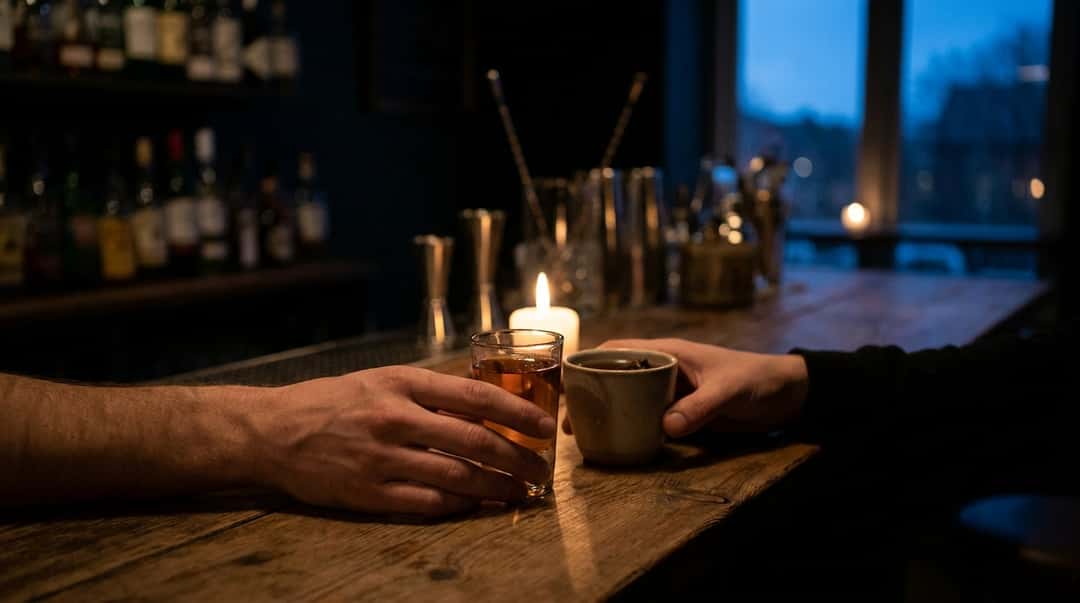
For a digestif proper, the tradition in much of continental Europe closes a meal with something small, strong and aromatic rather than another full pour: a short glass of a digestif-style spirit, or, if cognac is in the house, a small measure served slowly without ice, the kind of thing meant to be nosed and sipped rather than knocked back. The point isn't quantity — it's a deliberate full stop to the meal.
Alcohol-free doesn't have to mean an afterthought here either: a short espresso, a cup of dark spiced tea, or a small glass of chilled fruit cordial undiluted gives the same sense of a deliberate ending.
Building your own four-drink arc
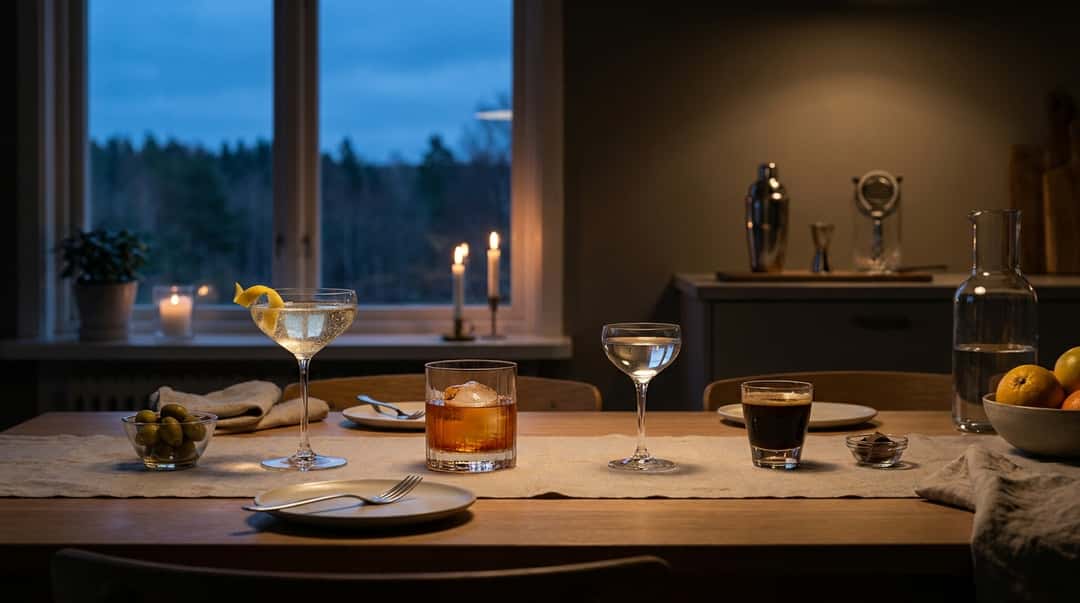
You don't need four bottles bought specifically for the occasion — you need four roles filled, and you can fill them with whatever is already in the house as long as each one does its job.
| Moment | Job | Alcohol-free swap |
|---|---|---|
| Aperitif | Bright, sharp, wakes the palate | Dry sparkling tea or bitter soda |
| Main course | Matches weight and spice of the dish | Dark non-alcoholic beer or cold-brew tea |
| Dessert | Matches or exceeds the sweetness on the plate | Chilled fruit cordial, undiluted |
| Digestif | Small, strong, deliberate close | Espresso or dark spiced tea |
Once you think in roles rather than labels, the whole evening gets easier to plan — and cheaper too, since you're reaching for what fits the course rather than restocking a bar cart you don't actually need.
Further reading: WSET's guide to pairing drinks with spice goes deeper into how sweetness, acidity and tannin behave against heat.