
Autumn cooking has a smell to it — damp forest floor, roasted chestnuts, the deep savory funk of mushrooms sweating slowly in butter until the whole kitchen smells like something worth waiting for. It's the season when we all lean into umami, that fifth taste that makes a dish feel round and satisfying instead of sharp or sweet. But umami is also the flavor that quietly wrecks a lot of otherwise good drink pairings, because it doesn't behave like sugar, acid or fat. It just sits there, deep and savory, daring your glass to keep up.
Mushrooms, root vegetables and game all carry heavy glutamate along with earthy, sometimes faintly bitter compounds. Pour the wrong drink alongside them and you get a muddy, flat combination where both the food and the glass seem to shrink into each other. Pour the right one, and the drink actually amplifies the dish — the way a squeeze of lemon suddenly wakes up a stew that tasted fine, but flat, a moment before.
Umami doesn't need a loud drink — it needs one with a spine.— LARS LANSEN
Why texture matters more than flavor here
With umami-heavy food, the two things doing the real work are tannin and acidity — not sweetness, and rarely raw alcohol strength. Tannin is that drying, grippy sensation you know from strong tea, oak barrels or grape skins, and it binds to proteins and fat on the tongue. That's exactly why it cuts through the richness of a mushroom risotto or a braised venison shank the same way it cuts through a fatty steak. A structured red with real backbone — think Nebbiolo, an aged Rioja, or a firm Chianti — tends to outperform a soft, fruity red here, simply because the dish finally has something to push against.
Acidity does a different job entirely: it lifts. A high-acid white, a dry cider, or even a sharp lambic-style beer resets your palate between bites, keeping the dish from feeling heavy or one-note. This matters especially with root vegetable stews, where the natural sweetness of carrots, parsnips and swede can otherwise coat the tongue and just sit there.
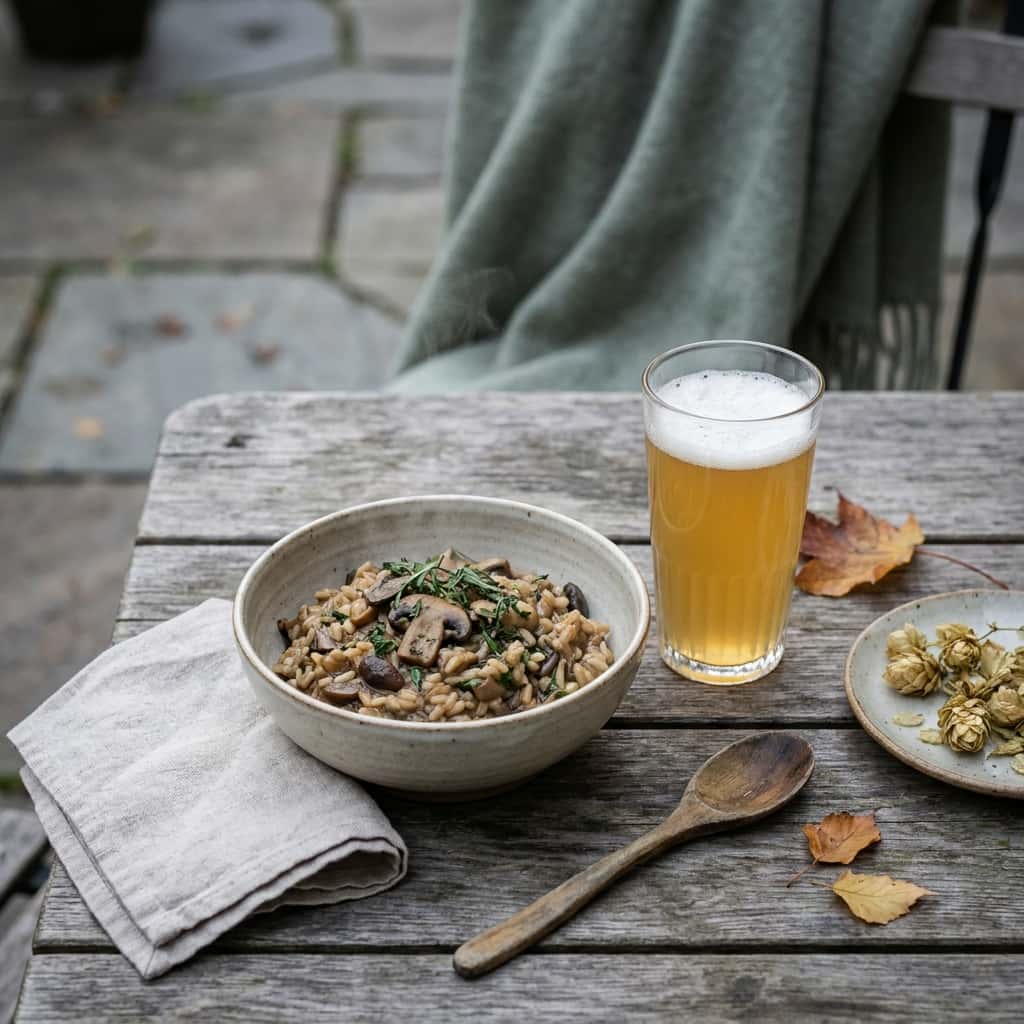
Mushroom risotto: go earthy, not fruity
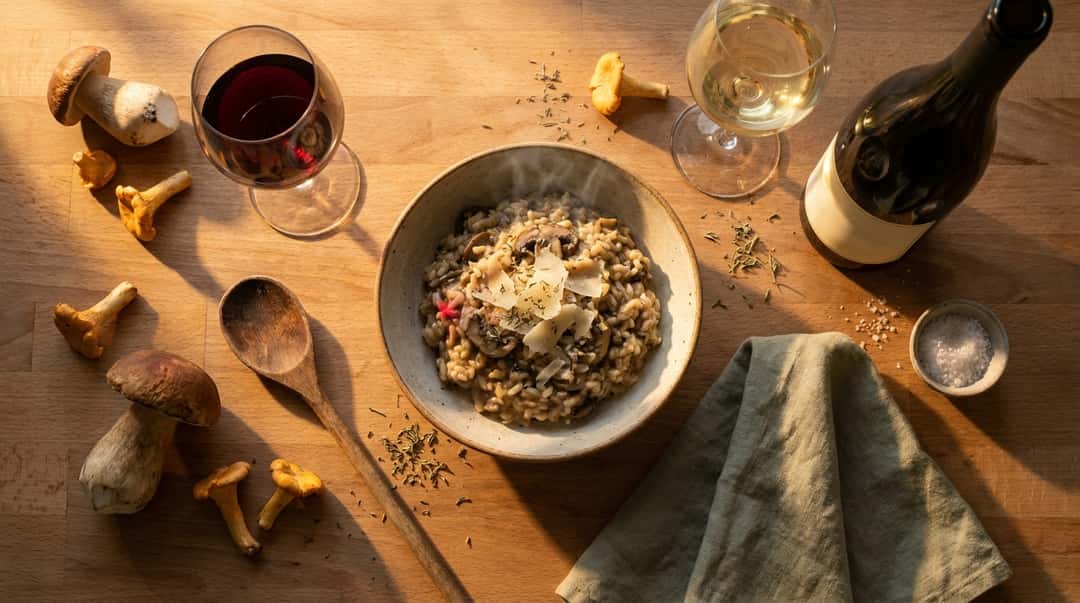
A risotto built on porcini, chanterelles or a proper mix of forest mushrooms wants a drink that mirrors its own earthiness rather than fighting it with fruit. Dry, savory whites with some age — an oxidative Jura Chardonnay style, or an aged white Rioja — pick up on the nutty, umami notes hiding in the parmesan and stock. If you're pouring red instead, look for an earthy Pinot Noir with real forest-floor character, the kind that's often described as smelling faintly of mushroom and wet leaves itself. That's not a coincidence — it's a flavor echo, and it works.
For an alcohol-free match, a good non-alcoholic amber or brown ale style drink works surprisingly well; the roasted malt character does some of the same job tannin usually handles, giving the dish something to grip onto. A mushroom or miso-based savory tonic, increasingly available as a non-alcoholic aperitif style drink, leans straight into the umami instead of trying to cut around it.
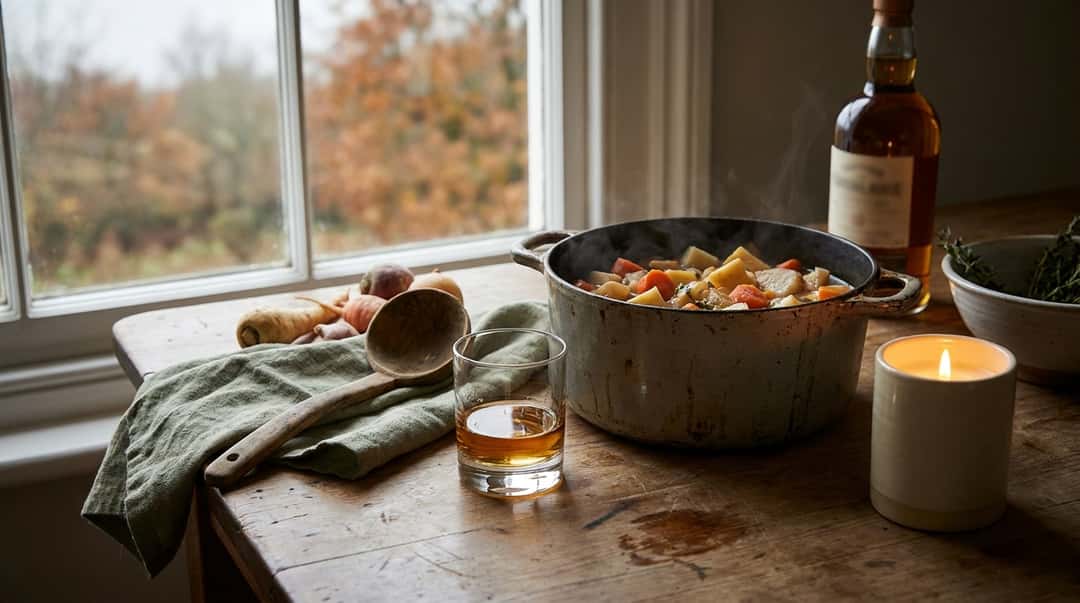
Root vegetable stews and the case for smoke
Slow-cooked stews built on celeriac, beetroot and swede develop a deep, caramelized sweetness that plays beautifully with a touch of smoke. This is one of the rare places where a smoky whisky genuinely complements rather than overwhelms the food — whether it's a splash in a warming toddy, or simply sipped alongside the bowl. The smokiness mirrors the caramelized, slightly charred edges you get from roasting root vegetables hard and fast, while the whisky's underlying sweetness matches the vegetables' own.
If whisky isn't your thing, a dry, smoky beer style such as a rauchbier does similar work with far less alcohol involved. For an alcohol-free route, try a strong black tea with a hint of smoke — lapsang souchong is the classic example — served warm alongside the meal to pick up the same thread.
Game meat: where tannin earns its keep
Venison, wild boar and other game carry a deeper, sometimes faintly metallic or gamey flavor that genuinely needs serious tannic structure to sit alongside it. This is classic territory for a firm, age-worthy red — Nebbiolo, Syrah, or a mature Bordeaux blend — where the tannins bind the proteins and cut through the richness, while the drink's own dark fruit and earth notes stay in conversation with the dish rather than shouting over it.
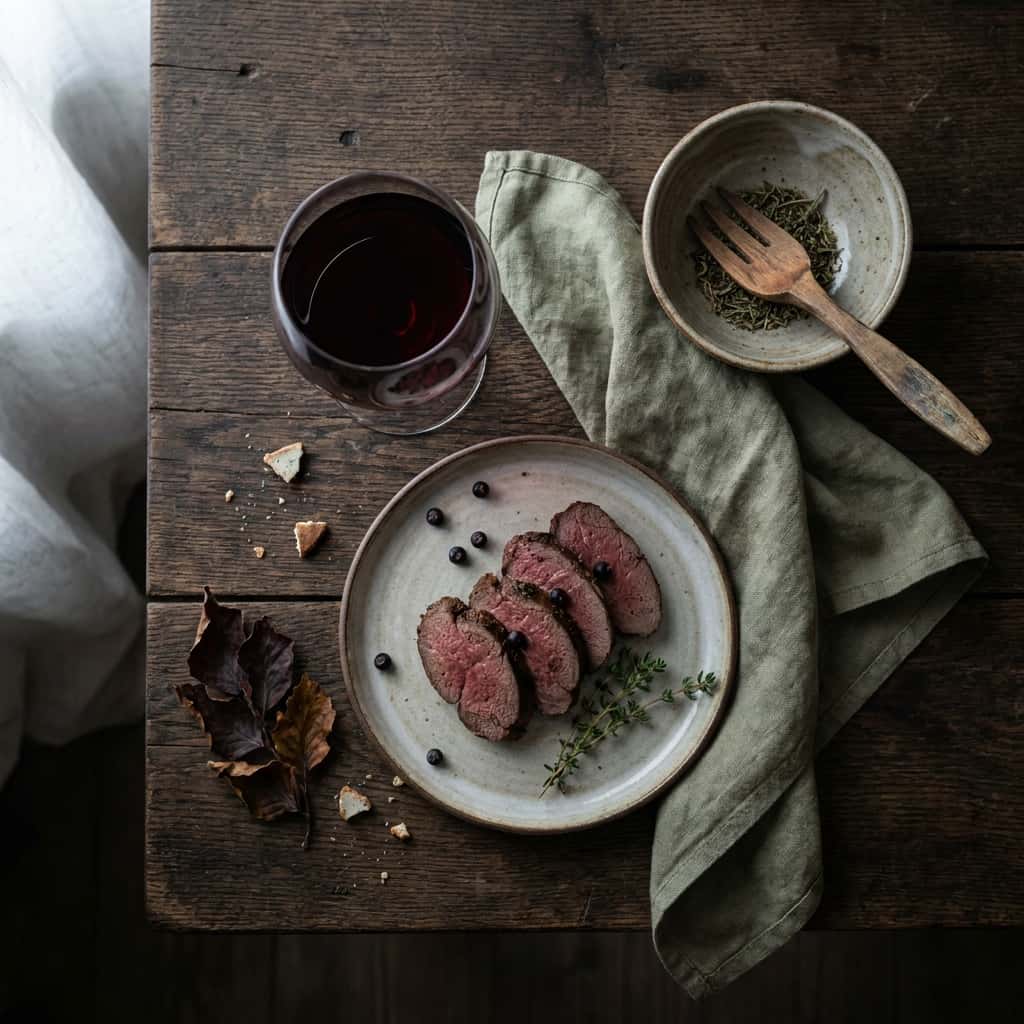
A quick reference for what tends to work, and why:
| Dish style | Key challenge | Drink style that helps |
|---|---|---|
| Mushroom risotto | Deep umami, creaminess | Aged/oxidative white, earthy Pinot Noir |
| Root vegetable stew | Natural sweetness, char | Smoky whisky, rauchbier, smoked tea |
| Game meat | Gaminess, fat | Firm, tannic red (Nebbiolo, Syrah) |
| Wild mushroom soup | Concentrated broth flavor | Dry sherry-style, savory non-alc tonic |
A note on alcohol-free pairing
Everything above holds whether or not there's alcohol in the glass. Tannin exists in strong black tea and in some non-alcoholic wine alternatives made with proper grape-skin contact. Acidity is easy to find in dry ciders, verjuice-based drinks and sharp kombuchas. And umami itself can be matched directly — a warm mushroom or miso broth served in a small cup alongside the main dish does something a sweet soft drink never will: it deepens the meal instead of just refreshing the palate between bites.
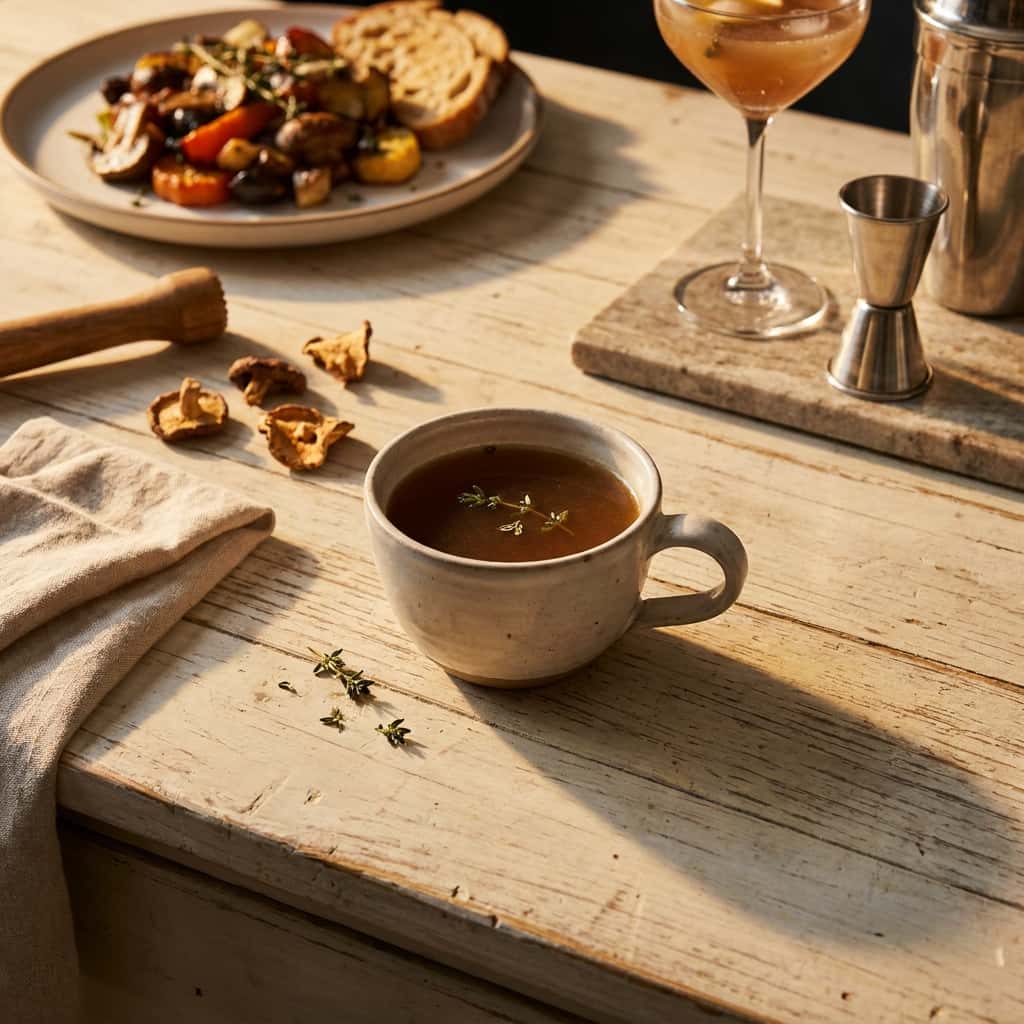
The real trick to pairing with earthy autumn food isn't finding the fanciest bottle in the cabinet — it's asking what job the drink actually needs to do. Does the dish need something to cut the richness? Reach for tannin. Does it need lifting? Reach for acid. Does it need an echo of its own flavor? Reach for something earthy or smoky. Once you start thinking in those terms, the right glass for a plate of forest mushrooms or a pot of slow-cooked root vegetables becomes much easier to find — no label required, just a good nose and a hungry appetite.