There's a strange divide in Swedish drinking culture: aquavit belongs to August, to crayfish and silly little drinking songs, while wine takes over as autumn turns darker and the food gets heavier. I think that's a shame. Because right now, as the game stew simmers on the stove and the scent of juniper and bay leaf settles into the whole kitchen, spiced aquavit is actually one of the most interesting food drinks you can put on the table.
Think about it: aquavit flavoured with caraway, dill or fennel belongs to the same aromatic family as many of autumn's spices. Wormwood snaps has a bitterness that does exactly what a heavy sauce needs so it doesn't become tiresome by the third bite. This is not semla-season drinking. It's food drink, dead serious.
Aquavit isn't the party's joke – it's autumn food's quiet hero.
Why aquavit works with game
Game meat – moose, deer, roe deer – has a deep, almost iron-like taste that needs something to play against. Red wine solves it with tannins and acidity. But aquavit does a different job: it cuts through the fat of a rich sauce with both alcohol strength and aroma, and the spicing in the glass echoes the spicing in the pot instead of competing with it.
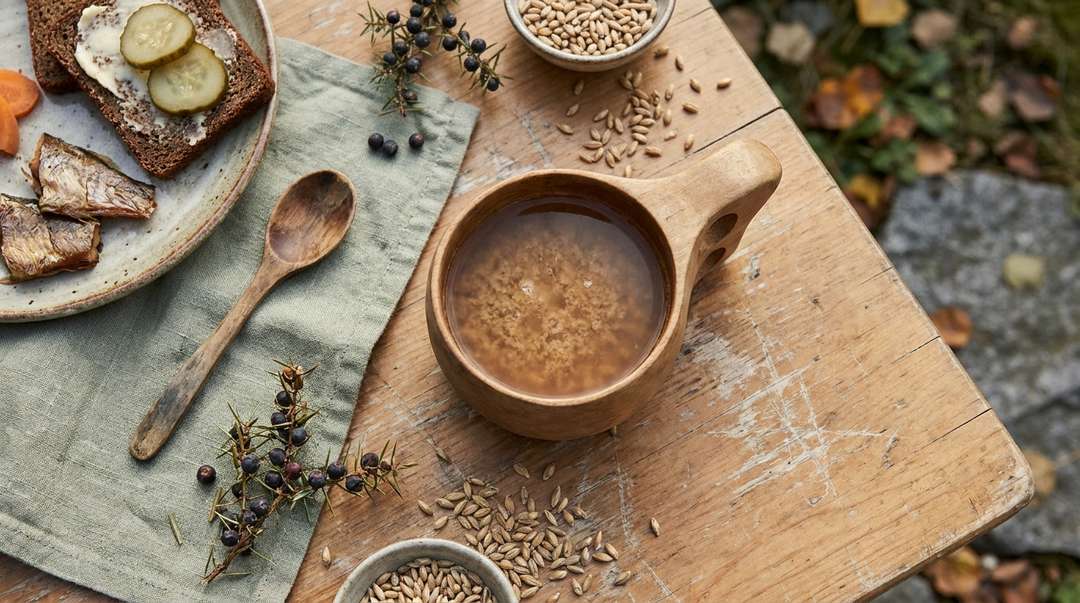
Caraway is the classic Swedish aquavit spice, and it has a warm, almost bready tone that pairs beautifully with root vegetables like parsnip and swede. Fennel and anise give a lighter, almost liquorice-like freshness that works well with fattier game cuts, like brisket or chuck in a stew. Wormwood, on the other hand, is the one I reach for when the food is really dark and smoky – smoked moose, for example, where the bitterness in the snaps balances the smoky flavour instead of drowning it in sweetness.

Serving: forget the songs, think temperature
The big mistake is treating all aquavit the same way – ice cold, in a tiny glass, knocked back in one go. At the crayfish party, that's charming. At a game dinner, it's a waste of flavour.
For a spiced aquavit with game, I recommend serving it a few degrees warmer than freezer-cold, around seven to nine degrees. At that temperature, the caraway and dill notes open up instead of just feeling like a cold, strong kick of alcohol. Pour it into a slightly larger glass than the classic snaps glass – a small wine glass works excellently – and let the guest smell it before drinking, just like with a glass of wine.
Wormwood snaps, with its sharper bitterness, can handle being served a bit colder, but avoid the freezer entirely. The freezer kills the aromas and leaves only the raw alcohol feeling behind, which is a shame when the spicing actually has something to say.
Three concrete pairings to try this autumn
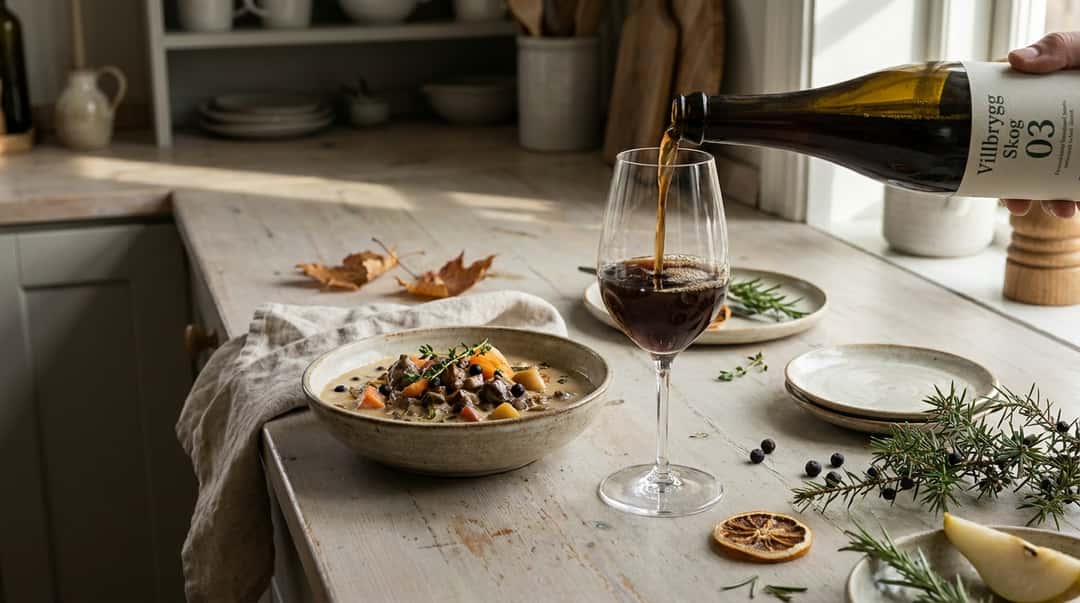
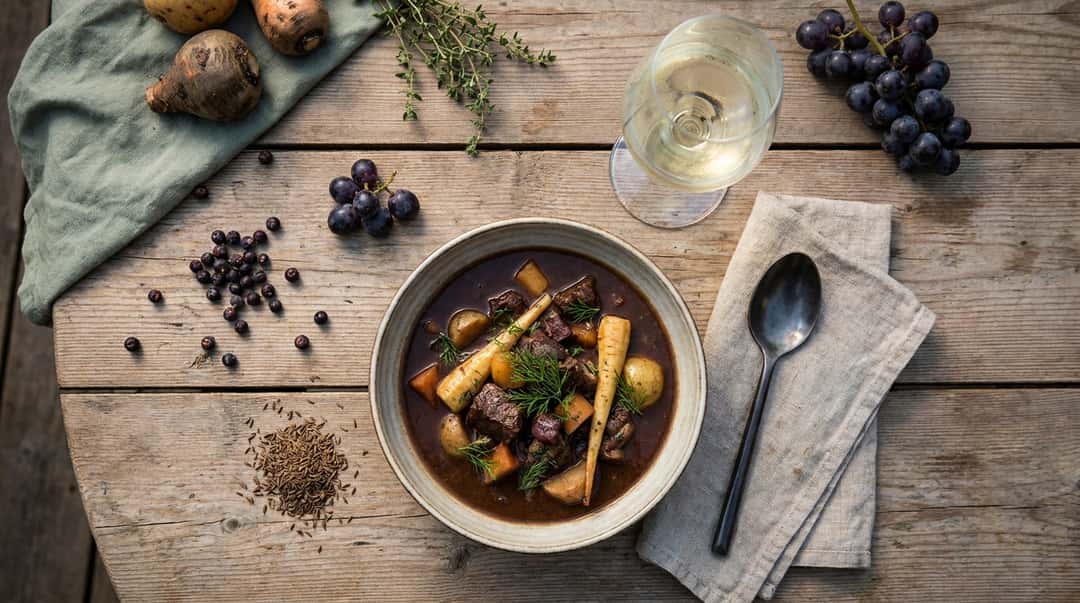
For the classic game stew with bay leaf, juniper and a hearty cream- or red-wine-based sauce, a caraway aquavit works as an extension of the sauce rather than a contrast. It also matches the root vegetable mash on the plate – parsnip and potato apparently like dill and caraway just as much as the moose does.
With smoked moose, often served thinly sliced with tart elements like pickled red onion or lingonberry, a fennel- or anise-spiced aquavit lifts the smoky flavour without taking over. The light, almost sweet spiciness meets the acidity of the lingonberries in a way that feels deliberate rather than random.
And with game pâté or a hearty game terrine, ideally with a touch of juniper or black pepper in the mix itself, it's the wormwood snaps that wins. The bitterness cleanses the palate between every slice of bread in a way that neither beer nor wine quite manages.

A non-alcoholic path that actually holds up
It doesn't have to be aquavit in every glass for the principle to apply. A strong, hot broth flavoured with caraway and a bit of lemon zest – almost like a warm, aromatic dashi but made from game stock – gives the same spiced punch without alcohol. Another option is sparkling water with a splash of dill syrup and a slice of lemon: it sounds simple, but the light anise note from the dill actually does the job the aquavit would otherwise have done, albeit in a milder version.
Take this with you into the kitchen
Next time game stew is on the menu, let the aquavit come out of the cupboard even though it's neither midsummer nor crayfish party season. Choose the spicing to match the food – caraway for the classic, fennel for the smoked, wormwood for the fatty and rich – and serve it a few degrees warmer than you're used to. It's a small change that finally lets aquavit show what it can actually do, beyond the joke songs and the ice-cold glasses.