The first time I drank sahti, I expected beer. What I got reminded me more of a mature apple wine in which someone had forgotten a juniper branch to soak. Almost no carbonation, cloudy as fresh juice, and an aftertaste where banana, rye bread and a sharp, almost resinous juniper branch danced side by side. If you expect a pilsner, sahti will disappoint you every time. If you give it a chance to be its own animal, it's one of the most interesting drinks found anywhere in the Nordics.
Sahti doesn't try to be beer as we know it – and that's exactly why it should be drunk on its own terms.
Where that flavour comes from
Sahti is a traditional beer from Häme and Satakunta, made at home for generations without hops in any sense we'd recognise as a reference point. In the traditional recipe, malt – often a mix of barley and rye – is mashed and then filtered through a natural filter made of juniper branches and straw. This isn't just a technical trick: the juniper gives the drink its characteristic resinous, almost gum-tingling sharpness that sets sahti apart from every other fermented beverage.
Hops are traditionally used sparingly or not at all, so the bitters doesn't come from juniper or hops – instead, the flavour is built on high alcohol content, abundant residual sugar, and a bready graininess. The yeast used is often bakery or wine yeast rather than traditional brewer's yeast, which explains some of sahti's fruity aroma reminiscent of banana and clove – a similar effect to German weissbier, but a wilder version of it.

Why it doesn't belong in an ordinary beer glass
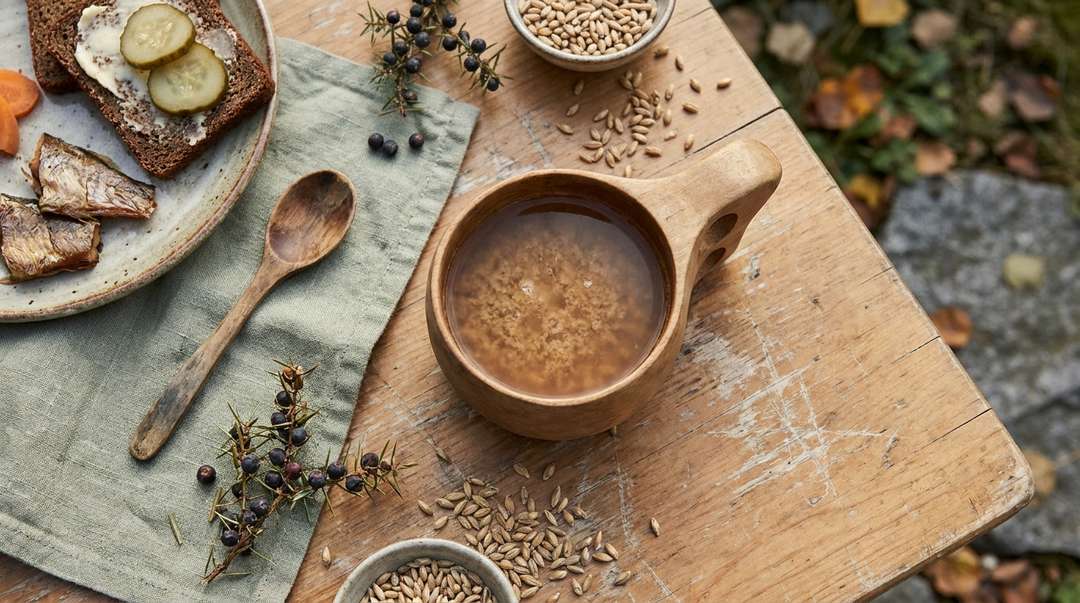
Sahti is cloudy, thick, and often over eight percent alcohol – sometimes considerably more. A drink like this shouldn't be served in a tall, narrow glass designed to concentrate carbonation bubbles and foam. Sahti has hardly any bubbles, and no foam is needed at all. The traditional serving vessel is a low, wide-mouthed wooden cup, or a modern version of one: a short, rounded glass that lets you smell the juniper and grain right from the first sniff.
Temperature is another thing many people get wrong. Served cold, sahti's thick body and sugar mask exactly the nuances that make the drink interesting. Serve it cool, not ice-cold – around 8–10 degrees. That way both the sharpness of the juniper and the warmth of the grain can speak, and the drink feels alive rather than merely sweet.
Food company for autumn
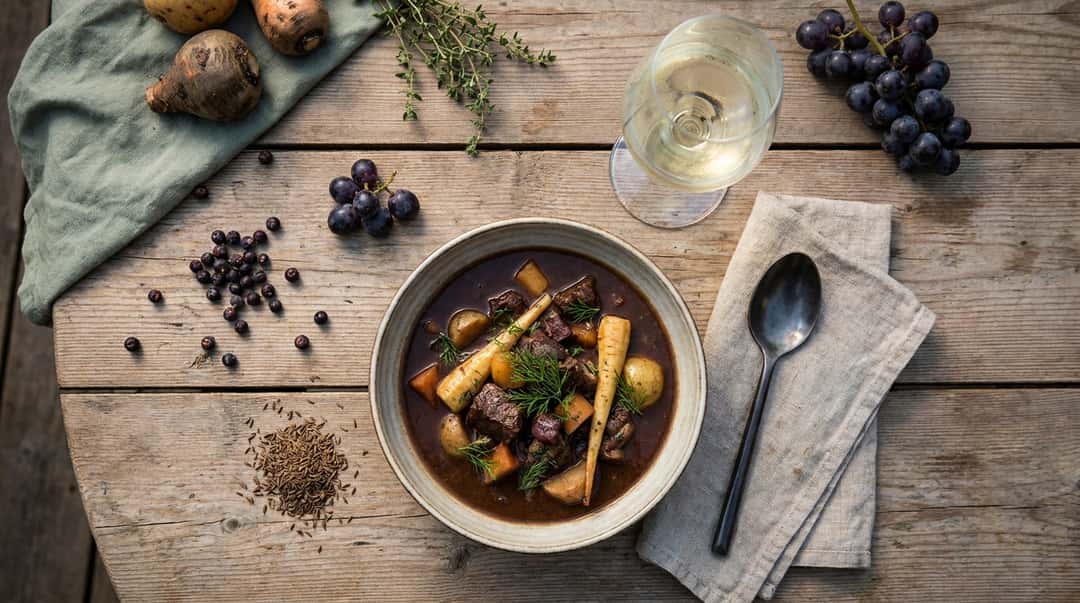
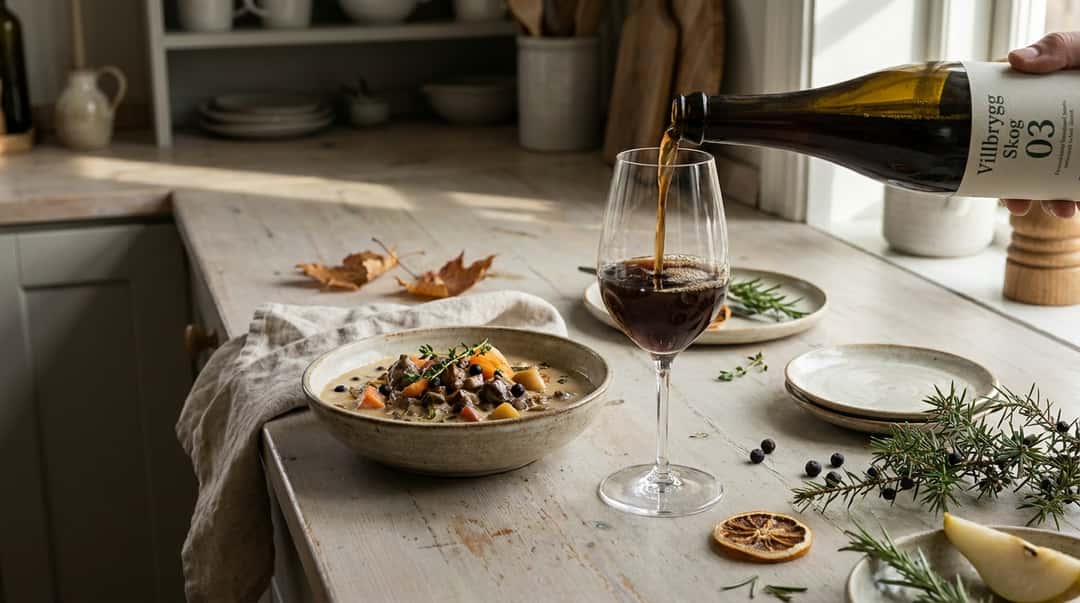
Sahti has traditionally been a celebration drink – at weddings, communal work gatherings, and harvest festivals – and it still works best alongside food that isn't afraid to match its strength. In autumn, that means game, smoked fish, or dark rye bread with butter and pickled cucumber. The sweet-sour tension already present in sahti balances a fatty game stew with surprising elegance: the drink cuts through the fat without needing to be bitter.

For an alcohol-free alternative, aim for the same structure as sahti: cloudy, slightly sweet, grainy. Unfiltered apple juice with a small amount of juniper berries left to steep for a few hours brings the same resinous note without the alcohol – not quite the same experience, but built on the same logic.
One drink, many ways to make it
Sahti recipes vary from village to village and family to family more than those of any other Nordic drink. Someone adds more rye, someone uses only juniper as a filter without berries as flavouring, someone lets it ferment weeks longer in hope of a bolder alcohol percentage. This variation shouldn't be seen as imprecision but as exactly what makes sahti a home-brewing tradition rather than an industrial product: every batch tells you about the person who made it.

If you see sahti on offer somewhere – at a fair, as a small brewery's experimental batch, or at a traditional event – don't compare it in your mind to an IPA or a lager. Let it be its own thing, pour it into a low cup, keep it cool but not ice-cold, and see what the juniper does in your mouth. It isn't beer as we've learned to define it – and that's exactly why it's worth tasting.