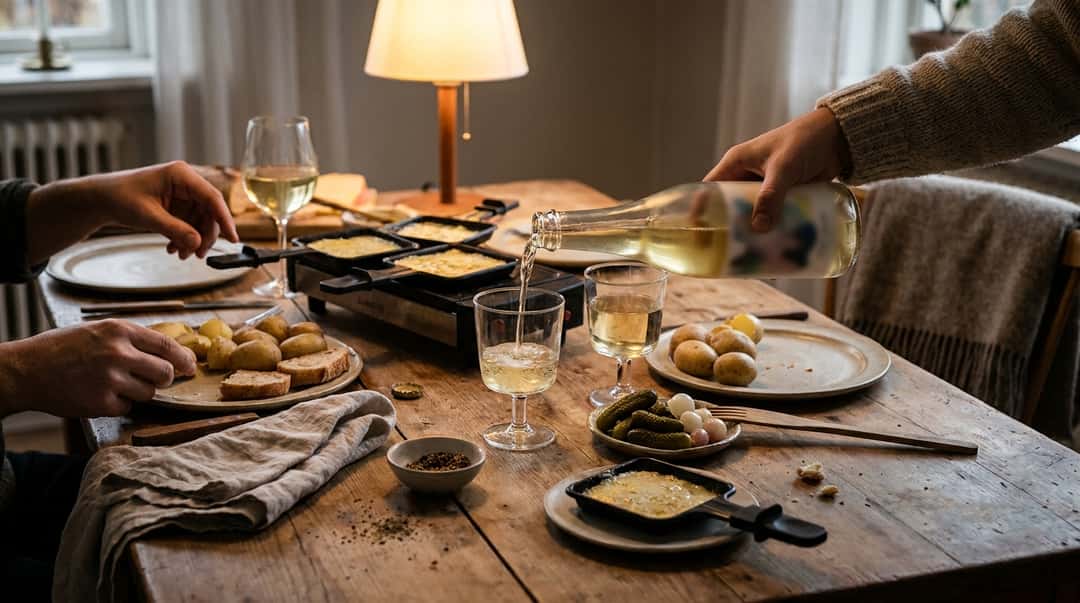

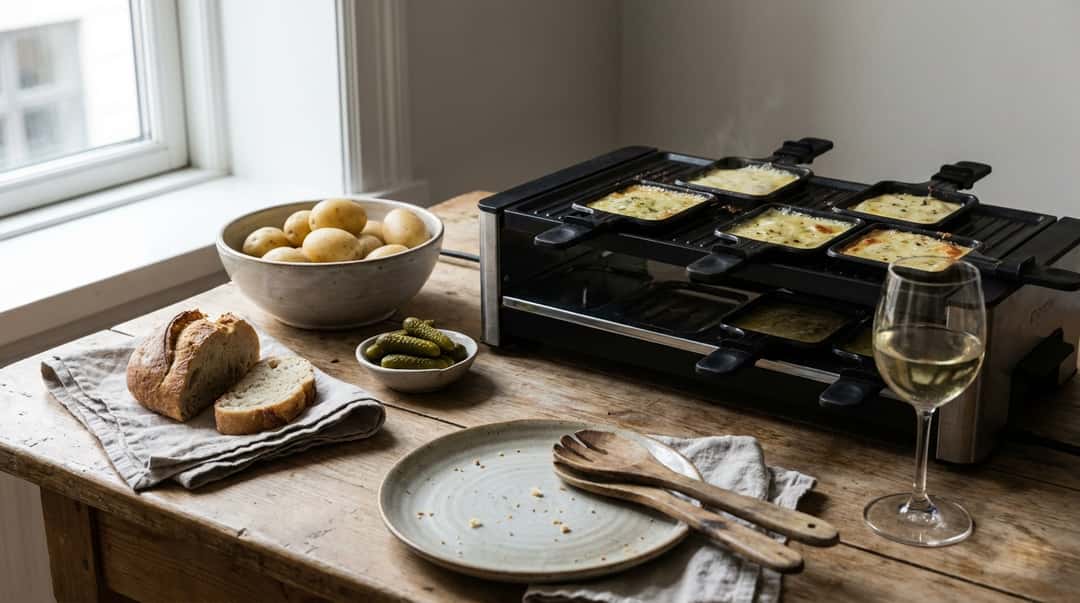
Raclette has a special ability to make grown adults impatient. You sit there with your little pan, watching the cheese. Has it browned yet? Now? Meanwhile, the potatoes vanish from the plate.
I want something fresh in my glass for that dinner. A dry white wine, a dry apple cider, or apple juice with sparkling water are three good directions. Not because melted cheese demands some secret kind of drink, but because I like the contrast between warm, salty food and a cool sip.
Start with what ends up under the cheese
Boiled potatoes, bread and a few cornichons make for a different plate than sweet roasted carrots and parsnips. The cheese ties it all together, but the sides are welcome to influence the glass.
With potatoes and salty cheese, I'd start with a crisp, dry white wine. Riesling or sauvignon blanc are two styles to ask for at Systembolaget. Describe the food first and the grape second: "We're having raclette, with potatoes and tart sides." That says more about the evening than "a nice white."
Acidity as a counterweight to rich food is a useful starting point. WSET discusses exactly this interplay between fat, acid and salt. In practice you don't need to think about it with every bite. Just notice whether you're craving the next one.
Cider for the roasted edge
When root vegetables get dark edges in the oven, I start craving apple in my glass. Try a dry cider with a cheese gratin of potato and parsnip. For me, it's the meeting of apple, roasted flavor and salt that makes the combination appealing.
You can also go red. I'd try a lighter red wine, served a bit cool, if that's what the group prefers. Salt and fat can soften the perception of tannic grip, as WSET describes in its guide to winter food and wine. So the cheese doesn't need to be used as an argument for banning red wine from the table.
The same care for the non-alcoholic option
Set out apple juice and cold sparkling water in separate jugs and let everyone mix their own. I start with roughly equal parts and adjust to the food. With a sweeter root vegetable gratin I often want more water; with salty cheese I might prefer more apple.
The cornichons are welcome to stay on the table even when the non-alcoholic drinks come out. That little tart crunch is half the pleasure on my plate.
Fondue works just as well with the same approach: pick a fresh direction and taste alongside the food. Then you can let go of the glass analysis. Someone has to keep an eye on that last potato.