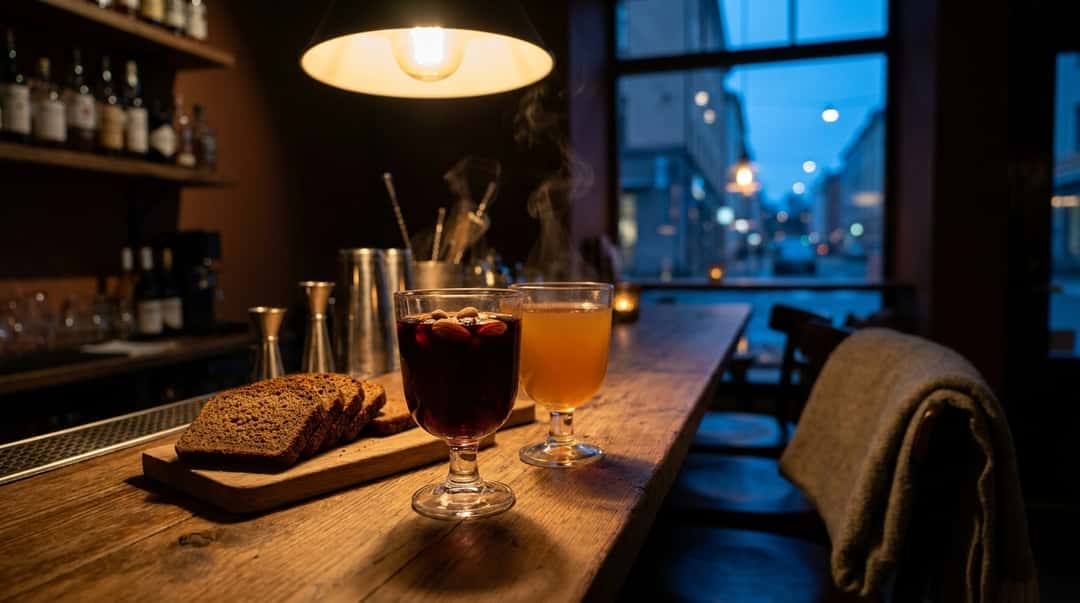

I still remember the sound when my grandmother broke a piece of rye bread in half on the kitchen table and dipped one half into the glögi glass. For a moment it just floated on the surface, soaking up the scent of cinnamon and cloves, and then it was eaten with a spoon straight from the glass. As a child I thought it was a bit odd – bread belongs with butter and cheese, not in a drinking glass. Now, decades later, having learned behind a bar to read flavours more systematically, I understand why that combination worked so well.
Finnish rye bread is not just an everyday given at the breakfast table. It is a sour, dark and full-bodied bread that differs from the wheat-dominated bread culture of many other countries precisely because of its sourness and rye fibre content. This same sourness is the key to why it suits glögi better than many traditional glögi companions, such as gingerbread or almonds.
Sour bread doesn't compete with the sweetness of glögi – it clears space for it.— MAGNUS MIXMASTER
Why sourness and spice meet
Glögi is typically built on a base of juice or red wine, to which Christmas spices are added: cinnamon, cloves, cardamom, ginger and often bitter orange too. These are the same spices that flavour gingerbread – no wonder, since glögi and gingerbread have long gone hand in hand at Christmas time in Finland. But in autumn, before the actual Christmas season, glögi also works perfectly well as its own evening flavour pairing without any gingerbread connection.
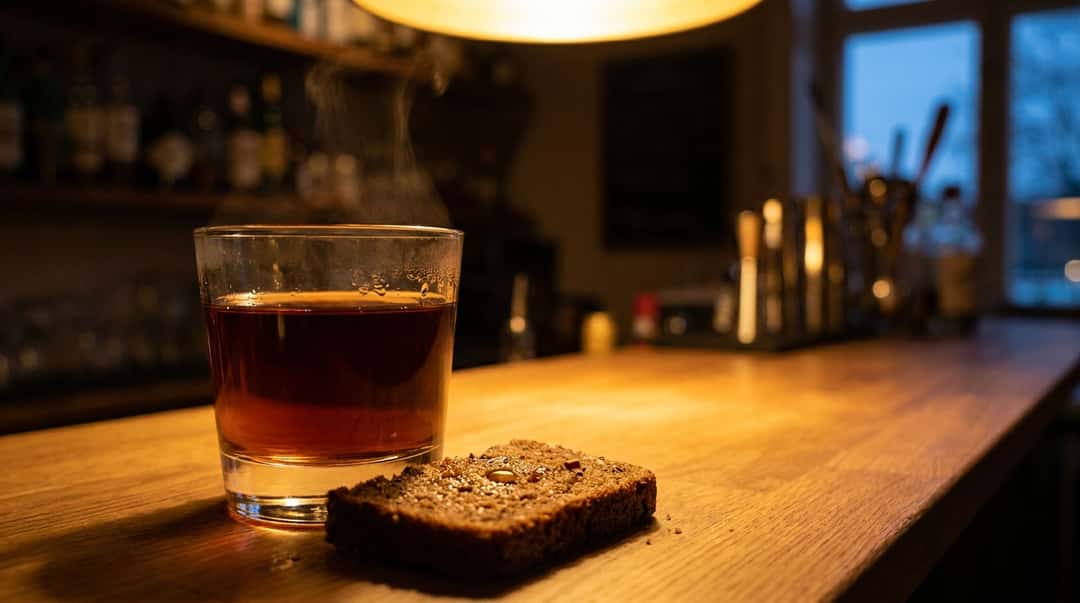
The acidity of rye bread balances the sweetness of glögi in the same way lemon balances a heavy sauce. When the bread is dark and dense – for example sour rye bread in the eastern Finnish style – its deep, almost caramel-like grainy character melts together with the cinnamon and cloves. Western Finnish rye bread, which is somewhat sweeter, instead highlights the spiciness of glögi more softly, less sharply.
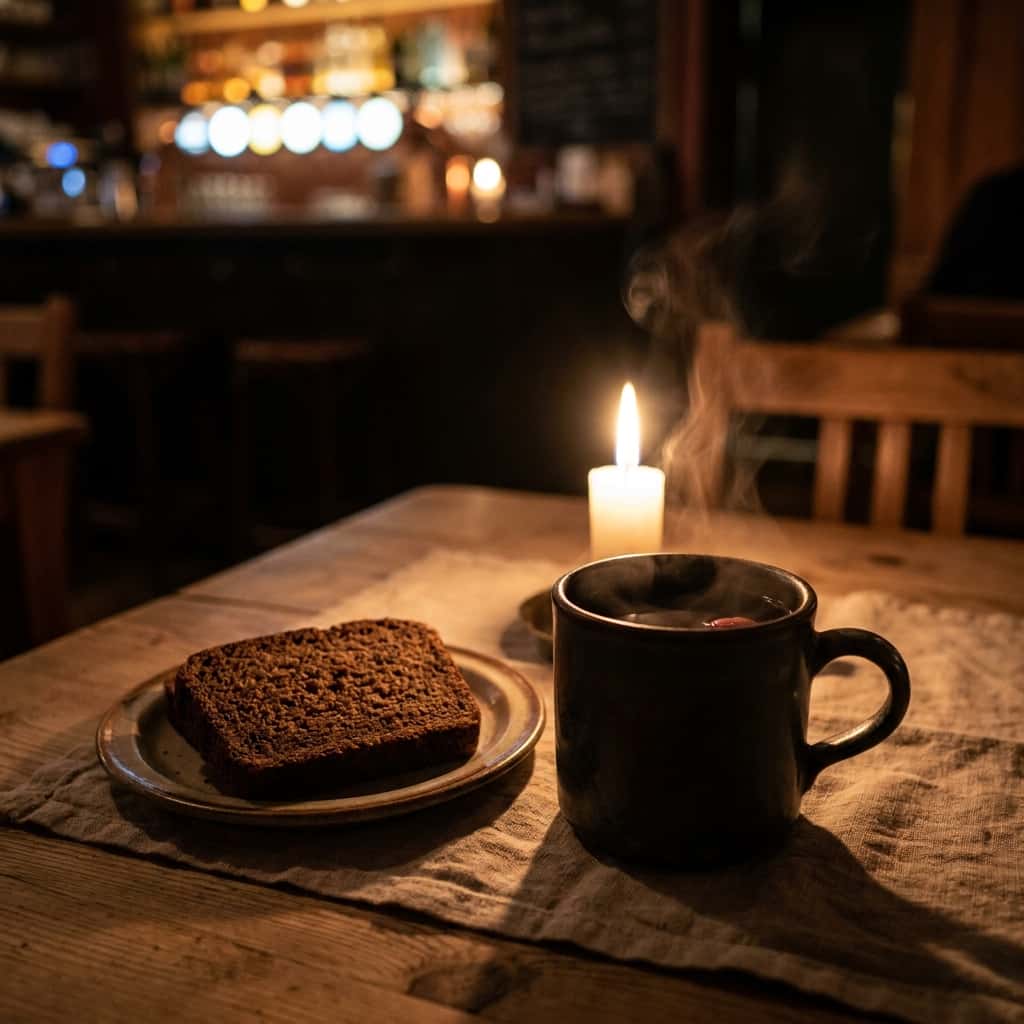
Dipping, or just enjoying it on the side?
My grandmother's way – dipping the piece of bread straight into the glögi glass – isn't the only way, but it's perhaps the most interesting one. The moistened rye bread softens and soaks up the spiced liquid, creating an almost dessert-like whole eaten with a spoon. If this feels too bold, it works just as well to eat the piece of bread separately, a small bite at a time, between sips of glögi. In both methods the principle is the same: sour and spiced alternate in the mouth, and neither gets to dominate.
You don't need much butter on the bread, if any at all – the fat would only slow down how the bread absorbs the flavour of the glögi. If you want to add something, a thin slice of aged cheese works surprisingly well, because its umami adds depth without masking the spices.
Glögi you make yourself
The most traditional Finnish glögi is made with a blackcurrant juice base, but nowadays red-wine-based and entirely non-alcoholic versions are common too. Both work with rye bread, because the decisive factor is the spice blend, not the alcohol.
Red wine glögi
Ingredients
- 1 bottle (approx. 7.5 dl) red wine
- 0.5 dl blackcurrant juice concentrate
- 1 dl water
- 0.5–1 dl sugar, to taste
- 1 tsp whole cloves
- 1–2 cinnamon sticks
Preparation
- Combine all the ingredients in a pot.
- Heat on low heat – do not let it boil, as too much heat drives off the aromas.
- Let the spices steep for at least 10 minutes.
- Taste and adjust the sweetness with sugar.
Non-alcoholic apple glögi
Ingredients
- 3 dl good-quality apple juice
- 3 dl non-alcoholic white wine
- 4 cinnamon sticks
- 8 star anise
- a splash of runny honey
Preparation
- Combine the ingredients in a pot.
- Heat and let steep for at least 10 minutes.
- Adjust the sweetness with honey.
The non-alcoholic version is a little lighter and fruitier, and it suits especially well if the rye bread is dark and strongly sour – a lighter glögi won't then get buried under the bread.
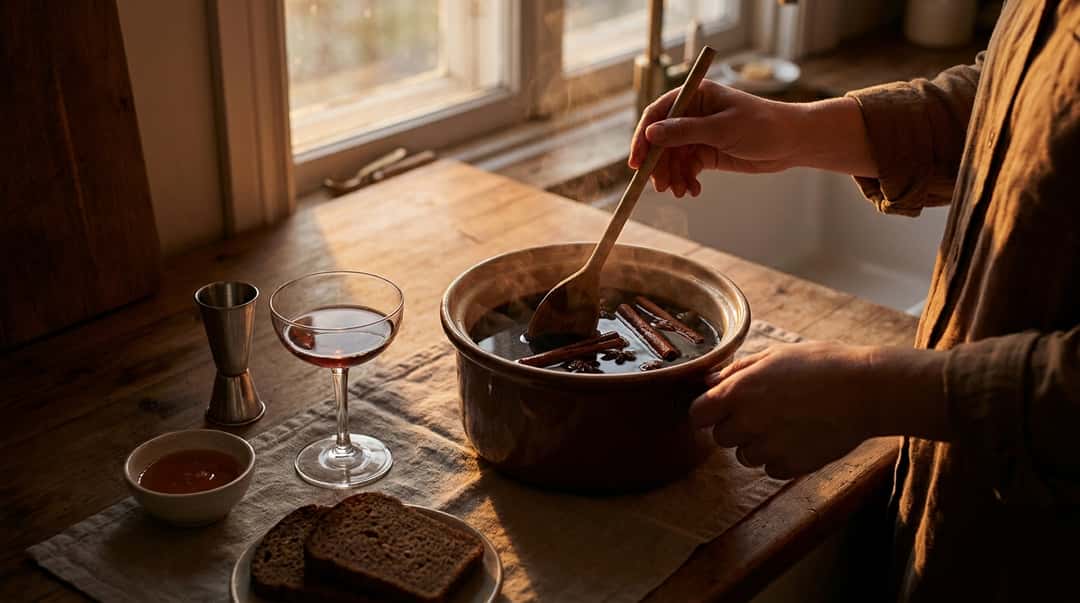
An autumn evening's own ritual
This pair doesn't need Christmas to happen. A darkening October evening, wool socks and a steaming glass on the table are enough. While many only start their glögi season in December, it's worth trying it already now in autumn – calmer, without the rush of Christmas, just you and a good piece of bread.
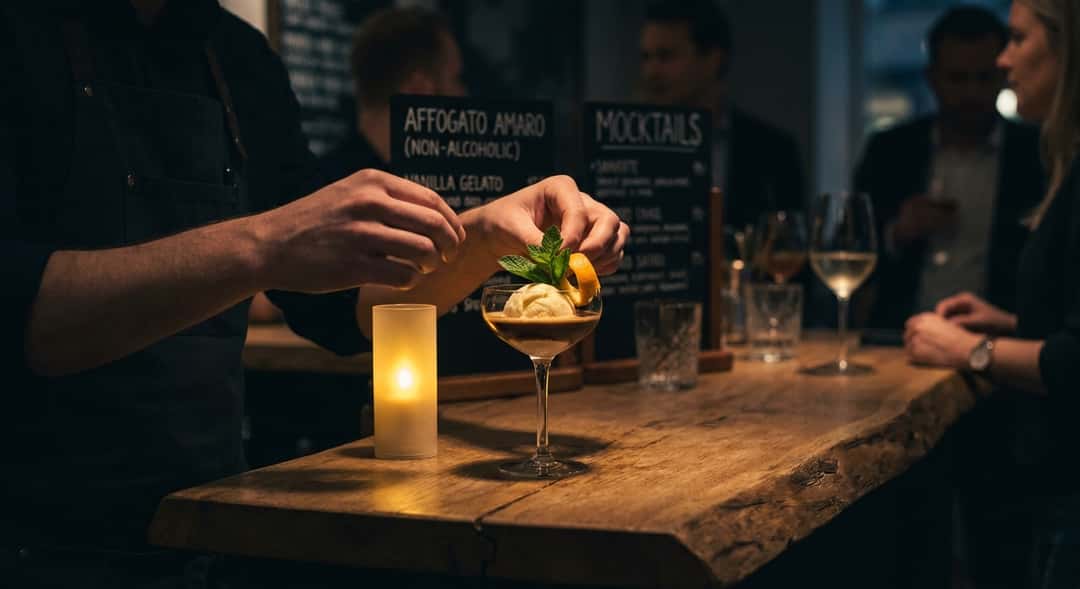
If there are children in the family, or someone doesn't drink alcohol, non-alcoholic glögi and the same piece of rye bread work just as well at the table – no one is left without their own glass.