
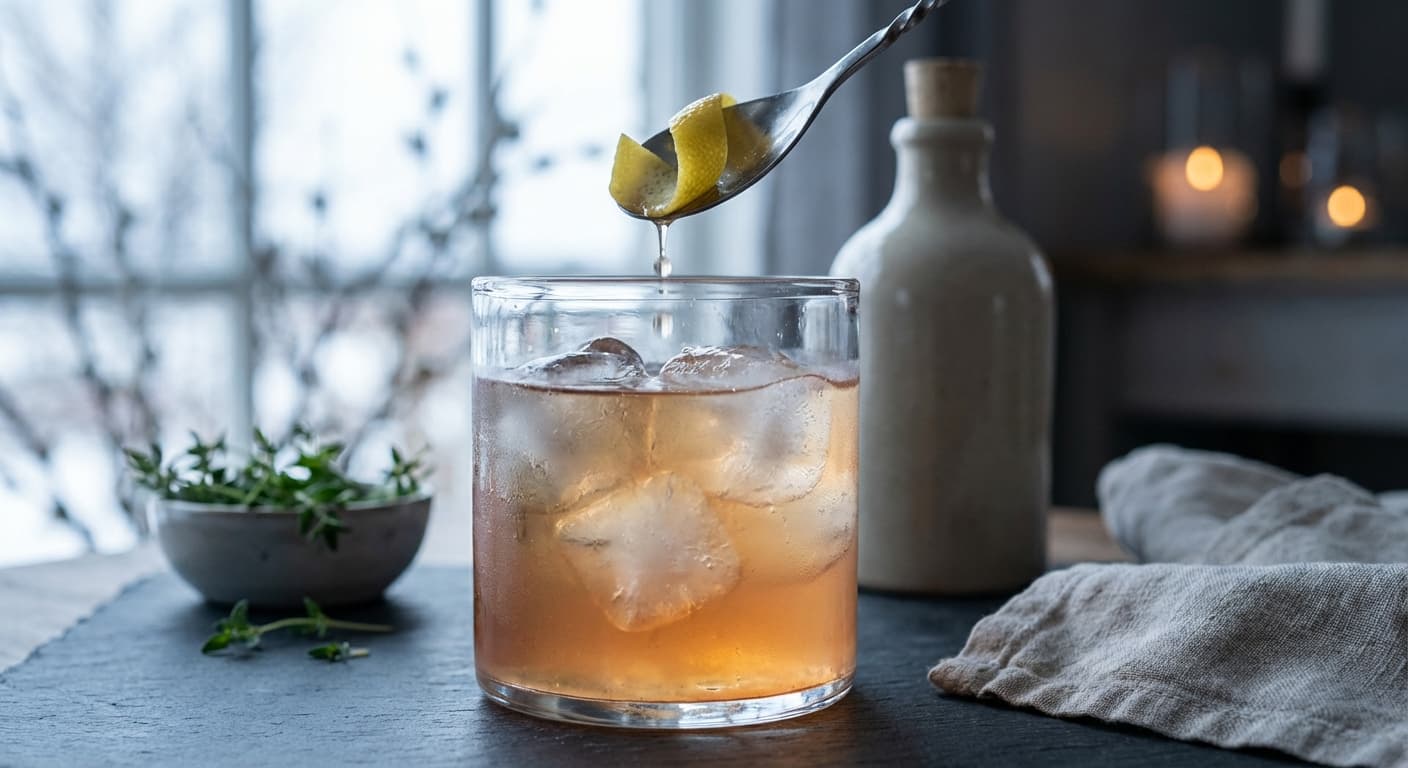

There is something magical about the moment rhubarb stalks push up through the otherwise limp April garden. For me, it is the starting gun – not just for baking and compote, but for a whole season of homemade shrubs. This vinegar-based syrup is the bartender's secret handshake, and fortunately it is anything but difficult to make at home.

What exactly is a shrub?
A shrub is a tart syrup made from fruit, sugar, and vinegar – originally used as a preservation method, now rediscovered by bartenders around the world. It combines sweetness and acidity in one, and adds instant depth to drinks without needing to squeeze lemon or lime.
Shrubs became popular in colonial times, when people had to preserve summer fruit through long winters. Today they are back in full force – partly because cocktail culture has matured, partly because people want exciting alternatives to ready-made mixes. Think of it as a flavor concentrate: a little sweet, a little tart, lots of complexity.
There are two methods:
- The cold method: Fruit and sugar are combined and left to rest overnight before vinegar is added. Best preserves the freshness of the ingredients.
- The hot method: Fruit is cooked with sugar and vinegar. Faster, but produces a more cooked and rounded flavor.
For spring ingredients I prefer the cold method – it retains the almost perfumed freshness of rhubarb and tarragon.
Shrub no. 1: Rhubarb and white wine vinegar
Rhubarb shrub is the easiest entry point and one of the most versatile. The tart, slightly astringent character of rhubarb pairs beautifully with the mild acidity of white wine vinegar – and produces a syrup that tastes of early spring in a single splash.
Ingredients
- 300 g rhubarb, chopped into pieces
- 200 g white sugar
- 120 ml white wine vinegar
Method
- Combine rhubarb and sugar in a bowl. Cover and leave in the refrigerator for 24 hours – the sugar draws out the juice and forms a natural syrup.
- Strain off the pulp and press well.
- Stir in the white wine vinegar until the sugar is dissolved.
- Pour into a sterilized bottle. Keeps for 3–4 weeks in the refrigerator.
How to use it: 2 cl shrub + 15 cl sparkling water + ice = a brilliantly fresh non-alcoholic drink. Want alcohol? Try 2 cl shrub + 4 cl gin + tonic. Portobello Road London Dry Gin works beautifully here – the dry, herbal botanicals balance the fruity tang of the rhubarb acidity without overpowering it.

Shrub no. 2: Tarragon and apple cider vinegar
Tarragon is spring's most underrated herb in a glass – the anise-like, slightly sweet aroma makes a tarragon shrub something almost exotic. Combined with the mild fruitiness of apple cider vinegar, you get a syrup with a fascinating green complexity.
Ingredients
- 1 large handful of fresh tarragon (approx. 25–30 g)
- 200 g sugar
- 120 ml apple cider vinegar (unfiltered, preferably with the mother)
Method
- Roughly chop the tarragon and combine with the sugar. Crush lightly with a spoon to release the oils.
- Leave covered at room temperature for 12 hours (not more than 24 – tarragon can turn bitter).
- Strain and press well.
- Stir in the apple cider vinegar.
- Pour into a bottle and store in a cool place.
How to use it: This is a shrub that sings in combination with aquavit. Atlungstad Vestfold Aquavit has a fresh, floral profile with hints of citrus and caraway – combine 4 cl aquavit, 2 cl tarragon shrub, 1 cl freshly squeezed lemon and top with sparkling water. Serve over ice with a tarragon sprig as garnish. The result? A spring aperitif that feels like a walk through a Norwegian herb garden.
For a non-alcoholic version: 2 cl tarragon shrub + 1 cl lemon + 15 cl ginger beer. Surprisingly sophisticated.

Shrub no. 3: Gooseberry and sherry vinegar
Gooseberries are perhaps a little late in the season right now, but the first greenhouse specimens are starting to appear – and they are worth waiting for. Gooseberry shrub with sherry vinegar is the most complex of the three, with a nutty, vinous depth that suits longer, more aromatic drinks perfectly.
Ingredients
- 300 g gooseberries (preferably a mix of red and green)
- 200 g sugar
- 100 ml sherry vinegar (jerez vinegar)
Method
- Lightly crush the gooseberries with a fork and combine with the sugar.
- Leave to rest in the refrigerator for 24–36 hours.
- Strain and press thoroughly.
- Stir in the sherry vinegar.
- Taste – if you want more acidity, add an extra tablespoon of vinegar.
How to use it: 2 cl gooseberry shrub + 4 cl whisky + 1 cl honey syrup + ice and stirring = a remarkably good twist on the Whisky Sour concept. Elijah Craig Straight Rye Whiskey can work brilliantly here – the rye whisky's spicy, peppery character cuts straight through the gooseberry's sweet body and lets the sherry vinegar's roundness bind everything together.

Three important tips for successful shrubs at home
If you want to succeed with shrubs, it comes down to three things: ingredient quality, balance between sweet and sour, and patience. You cannot rush a good shrub.
Here is what I have learned through many years behind the bar and at the kitchen counter:
1. Use good vinegar. It is the single most important ingredient. Cheap white vinegar produces a sharp, unpleasant flavor. White wine vinegar, apple cider vinegar, and sherry vinegar are your friends.
2. Start with the ratio 2:1:1 (fruit : sugar : vinegar) and adjust from there. Want more acidity? More vinegar. Want more roundness? More sugar.
3. Taste as you go. A shrub that tastes a little too sharp right after mixing will mellow out after a few days in the refrigerator. Have patience.
Can shrubs be used in food?
Absolutely – shrubs are just as at home in the kitchen as in the bar. Use them as a dressing base, in marinades, or drizzle a little over a raw fish starter. Tarragon shrub over grilled white asparagus is a revelation.
Think of shrub as a very aromatic vinegar with extra fruit character. Anything you would use balsamic or apple cider vinegar for can be tried with a homemade shrub. I often use rhubarb shrub in a vinaigrette for spring's first salads – the pink color and fresh acidity add a completely different dimension compared to ordinary vinegar.
Also try drizzling a little gooseberry shrub over a plate of smoked trout or gravlax. The nutty sherry character and berry sweetness create a fascinating contrast with the fatty fish.
Storage and shelf life
A well-made shrub keeps for a surprisingly long time – thanks to the preserving properties of vinegar. In the refrigerator they typically last 3–4 weeks, sometimes longer. Signs that a shrub has passed its best are that it starts to smell fermented or develops a slimy texture.
My tip: make smaller quantities more often. It keeps enthusiasm high, and you always get the freshest flavors. Besides, it is fun to experiment – once you have mastered the three basic recipes above, the sky is the limit. Raspberry and champagne vinegar? Strawberry and balsamic? Apple and thyme with white wine vinegar?
Shrubs are, when all is said and done, proof that the best bar tools do not always need to come from a fancy bottle. Sometimes all you need is a little patience, a cup of sugar, and the very best of what the season has to offer. Spring's first rhubarb deserves just as good a home in the glass as on the plate.
So next time you are in the garden snapping off the first stalks – do not throw them all straight into the saucepan. Set aside a handful for the shrub project. You will not regret it.