
Something fun is happening at spring's festive table. Between champagne glasses and prosecco bottles, something new is appearing – something that bubbles just as elegantly, tastes just as exciting, and above all: something that surprises guests in the very best way. I'm talking about kombucha and sparkling tea. And no, this is not "the healthy alternative" that people merely tolerate. These are drinks that genuinely deserve a proper glass.
Let's have a chat about it.
What exactly is kombucha – and what is sparkling tea?
Kombucha is fermented tea. A symbiosis of bacteria and yeast – that may not sound appetising, but the result is a living, effervescent drink with a tart, fruity, and lightly yeast-tinged character. Imagine the taste of apple juice meets white wine meets something a little wilder. That is kombucha at its best.
Sparkling tea is a broader category. Here you find everything from carbonated green tea with ginger, to elegant blended tea extracts with natural carbonation added – often with flowers, fruit, or herbs as the aromatic base. What they share is the bubbles, freshness, and an exciting complexity that surprises even those who expect nothing.
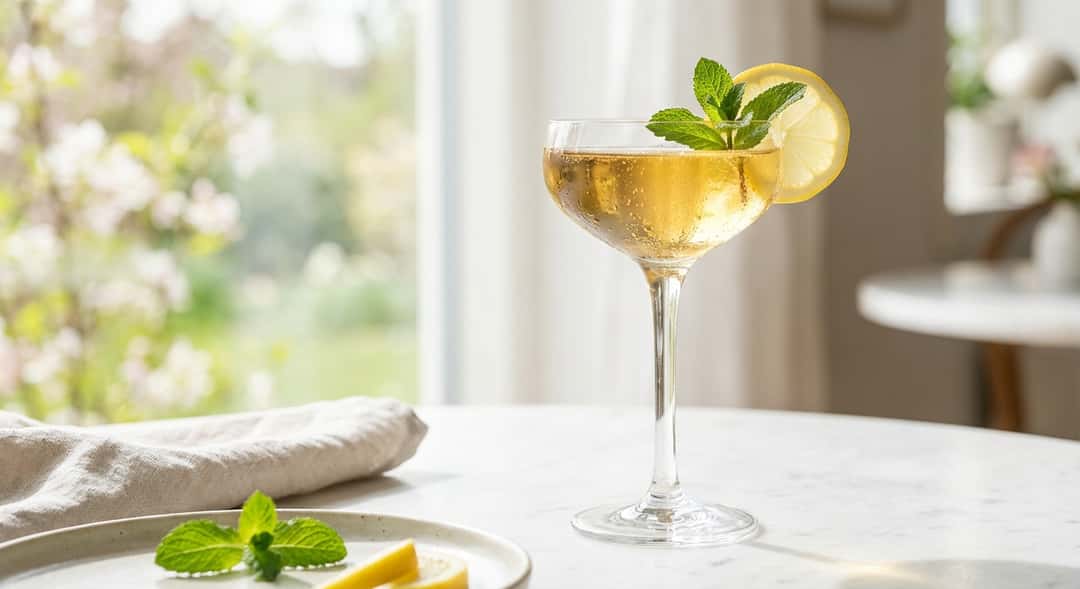
Why an aperitif?
The aperitif moment is about one thing: opening the appetite and setting the tone for the evening. A good aperitif should refresh the palate, not fill it. It should neither dominate nor disappear. It should make people happy.
Kombucha’s acidity and bubbles can make a fresh start to a meal. Alcohol content varies between products; check the label when choosing an alcohol-free option.
Which styles work best?
Not all kombucha is created equal. For an aperitif at the spring table, you should think about three styles:
The light and citrus-fresh
Kombuchas based on green tea or white tea with citrus and ginger are spring's natural companion. They are light, effervescent, and fresh – just like a light white wine. Dryness in the aftertaste, not sweetness. These work perfectly when you are standing out on the terrace in the April sun waiting for the grill to heat up.
The floral and delicate
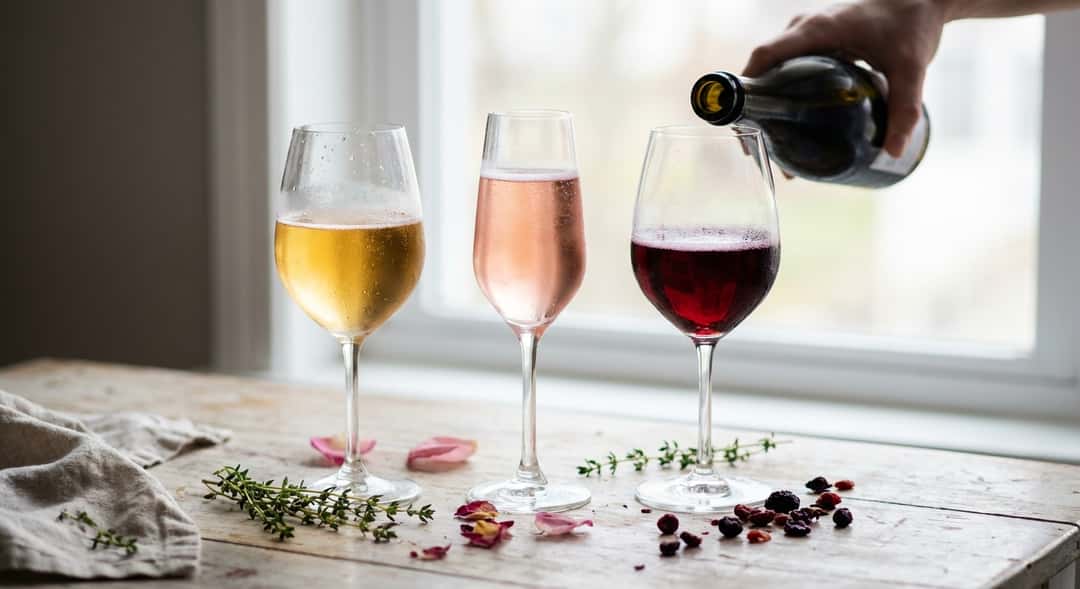
Hibiscus, elderflower, and rose kombucha have a beautiful rose-pink colour and a floral fragrance that makes them just as photogenic as a rosé. These are perfect for the Easter breakfast when you want a touch of elegance in the glass without anything heavy. They are reminiscent of a light perfume – but in the glass.
The dark and complex
Black tea kombucha with berries or spices is bolder and more wine-like in character. This suits the cheese board after the meal better than as a pure aperitif – but it impresses those who think they don't like kombucha. Here you get tannins, depth, and a body that can actually stand up to a light red wine.
Empress Moonbrew – a bottled wine among kombuchas
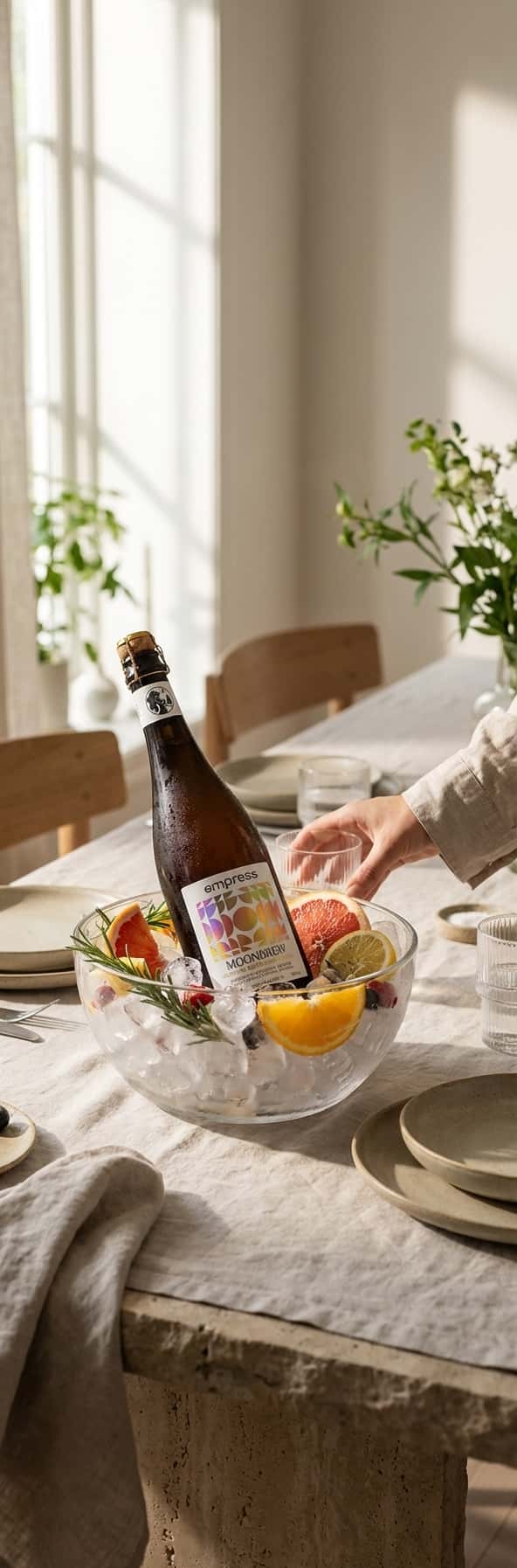
Among the products that genuinely bring kombucha into champagne territory, Empress Moonbrew Sparkling Kombucha stands out. It comes in a 75 cl bottle – the same format as a wine bottle – which already signals that this is to be treated with respect.
Empress Moonbrew has a clean, dry style with fine bubbles and a taste profile reminiscent of light white wine with tea tannins and a discreet acidity. It is non-alcoholic, which makes it a natural choice both for those who do not drink alcohol and for those who want to keep a clear head during a long Easter lunch.
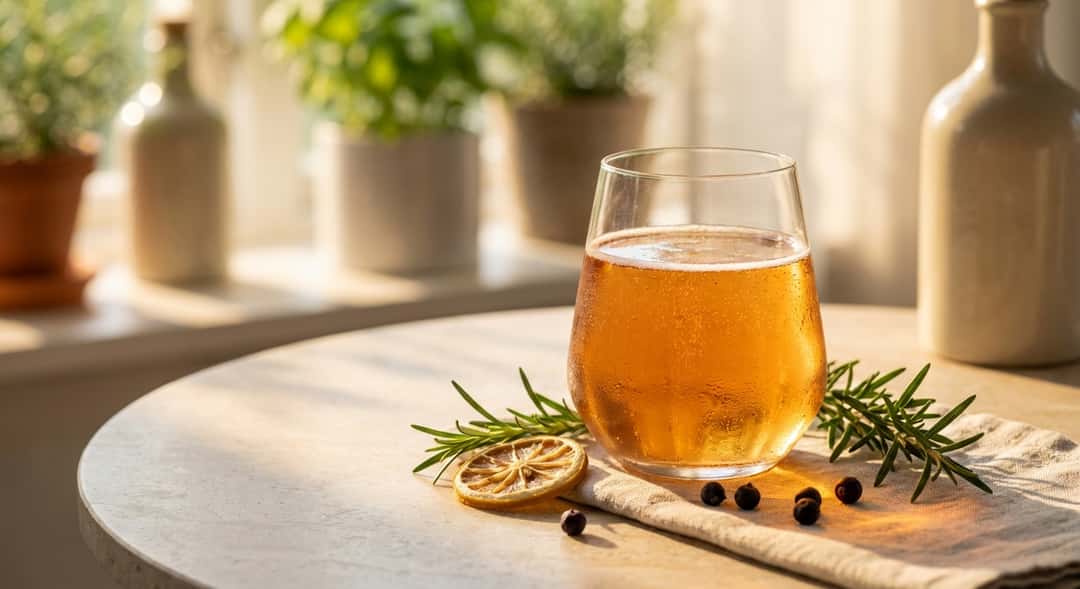
Serve it ice cold in a champagne glass. Ideally with a slice of lemon or a sprig of fresh thyme on the rim. Guests will wonder what it is – and that is exactly the point.
How to serve it elegantly
It is not just about what is in the glass – it is about how you present it.
Use the right glass. A champagne flute or a wide coupe elevates the experience dramatically. Do not serve kombucha in a plastic cup and expect a festive atmosphere. The glass is half the experience.
Serve ice cold. Kombucha and sparkling tea should be drunk at 6–8 degrees. Put them in the fridge the evening before, not just an hour ahead. If you forget, fill a bowl with ice and water and let the bottle sit there for 20 minutes before serving.
Create a small garnish. A thin slice of lemon, a flower from the garden, a mint leaf, or a couple of raspberries at the bottom of the glass works wonders for the presentation – and adds a subtle aroma. It takes ten seconds, but gives the impression that you have been planning this for weeks.
Tell your guests what it is. Don't just leave it there as a mystery. Say it proudly: "This is sparkling kombucha – give it a try." Enthusiasm is contagious. And people are curious when you seem confident they are going to like it.
With food: what does it pair with?
For the Easter table, the combinations are many. Here are some favourites:
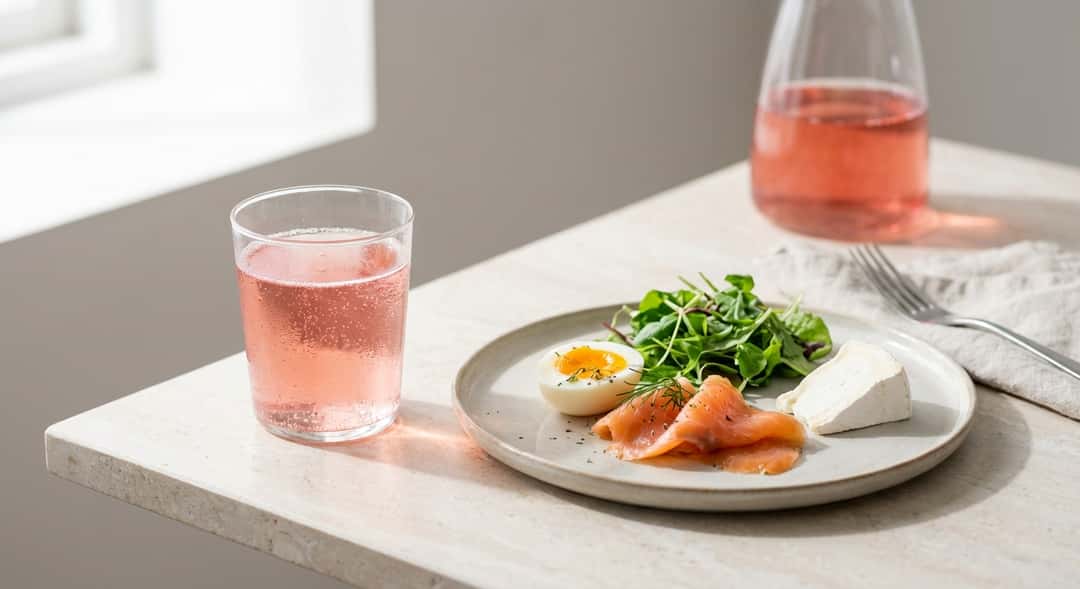
Salmon and citrus-marinated fish – the fresh tartness in the kombucha cuts through the fat and lifts the fish. Think gravlax with mustard sauce, smoked salmon on rye bread, or cold trout with horseradish cream.
Green salads and herb dressings – floral kombuchas are made for this. Especially when the salad contains radishes, spring onions, or fresh herbs like cress and dill.
Egg dishes – deviled eggs, egg salad, classic Easter eggs? The gentle tartness works wonders. The egg gets a cleaner, fresher taste when you wash it down with something tart and carbonated.
Mild white cheese – try a semi-firm goat's cheese against a hibiscus kombucha. You won't regret it. The floral aroma and the gentle tartness balance the cheese's fat and salt in a way that actually recalls a good white wine.
A small challenge for you
Next time you set up an aperitif station – whether it is at the cabin at Easter, at home on a Saturday, or for the first outdoor barbecue in May – put out one bottle of sparkling kombucha alongside the wine. Don't label it, say nothing. Just let people discover it for themselves.
I bet you will get the question: "What is this delicious thing?"
And then you can smile a little, take a sip from your own glass, and say: "Just spring's best surprise."
Because that is exactly what it is. A surprise. One that bubbles, tastes wonderful, and makes people remember the evening – not just because the food was good, but because you served something they did not expect.
Choose a bottle with a stated alcohol content that suits your guests. Follow the producer's storage instructions after opening.
Spring is here. The bubbles are ready. Now all that remains is to pour.