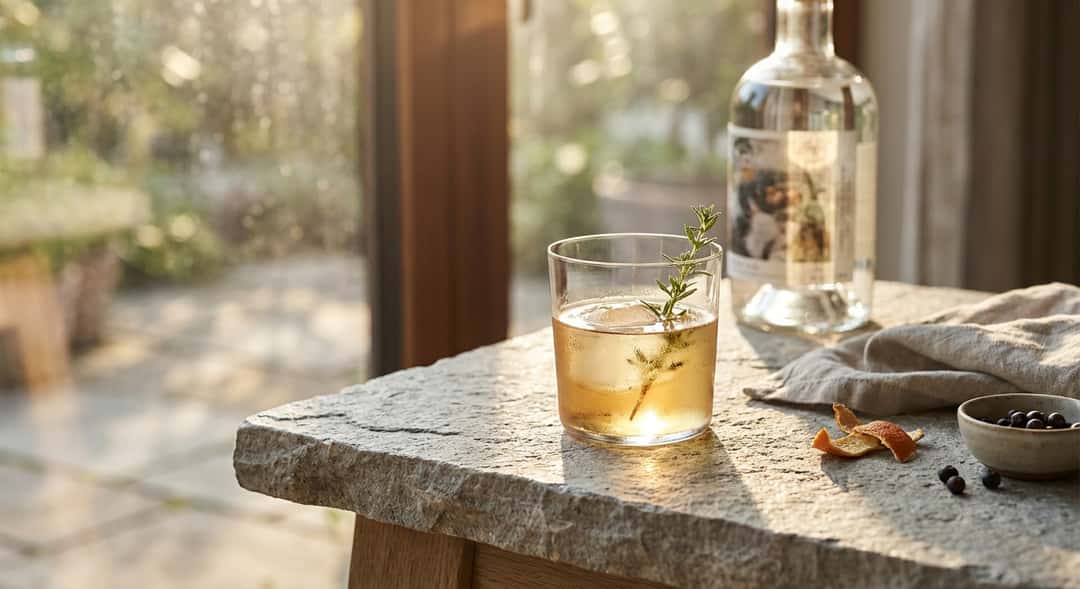

There is something paradoxical about distilling spring. You take something fleeting – a handful of rhubarb, fresh fennel, flower buds that last only a few days – and push it through a process designed to preserve and intensify. The result? Spirits that taste of jam, garden, and season, packed into a bottle you can open in March when the world finally starts to smell green again.
It is no coincidence that many of the most interesting distillates right now are working with spring profiles. While classic gin long revolved around juniper and citrus, and aquavit around caraway and anise, craft distillers in recent years have begun thinking more like jam-makers than distillers. They bring in the season, let it macerate, steep, infuse – and then distil it down to its essence.
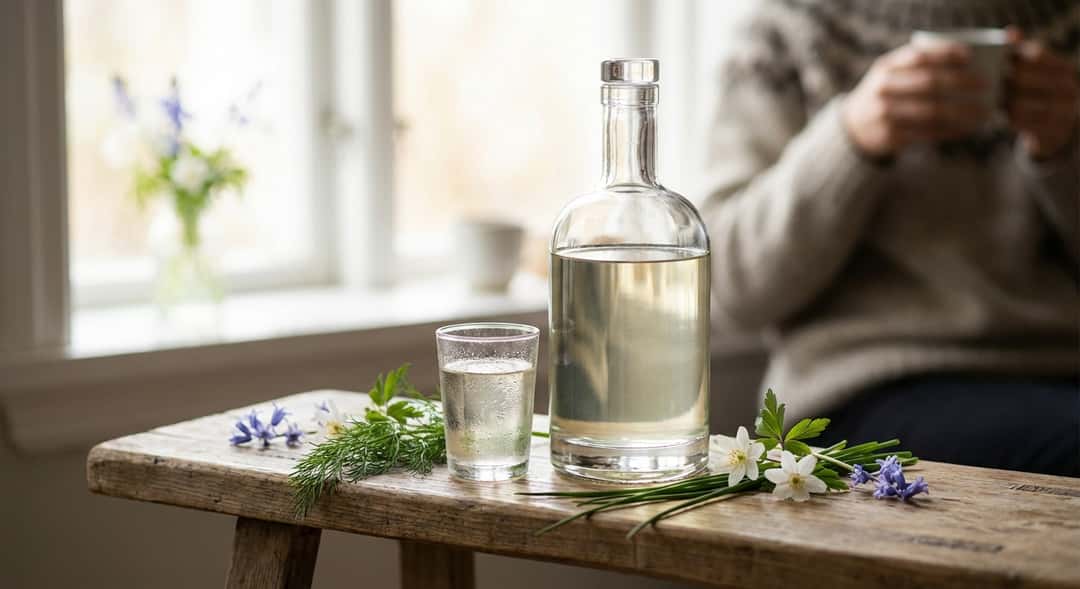
The technique behind the flavor
When you read rhubarb gin or fennel aquavit on the label, it is usually one of three methods that has been used.
Maceration means the ingredients sit in the alcohol over time – often days or weeks – before distillation. This gives a deep, integrated flavor. Vapour infusion means the steam during distillation passes through a basket of botanicals – a more delicate, top-of-the-spirit character. Post-distillation infusion is the simplest: you distil clean, then blend in extracts, herbs, or macerate afterward. The last method often delivers more intensity, but can lack the finesse you get when everything passes through the distillation.
The difference is noticeable. A macerated and distilled fennel gin tastes integrated, almost as if the fennel was always there. A post-infusion can give you more punch, but also a more obvious sweetness or herbal note that does not quite meld with the base.
Four bottles that capture spring
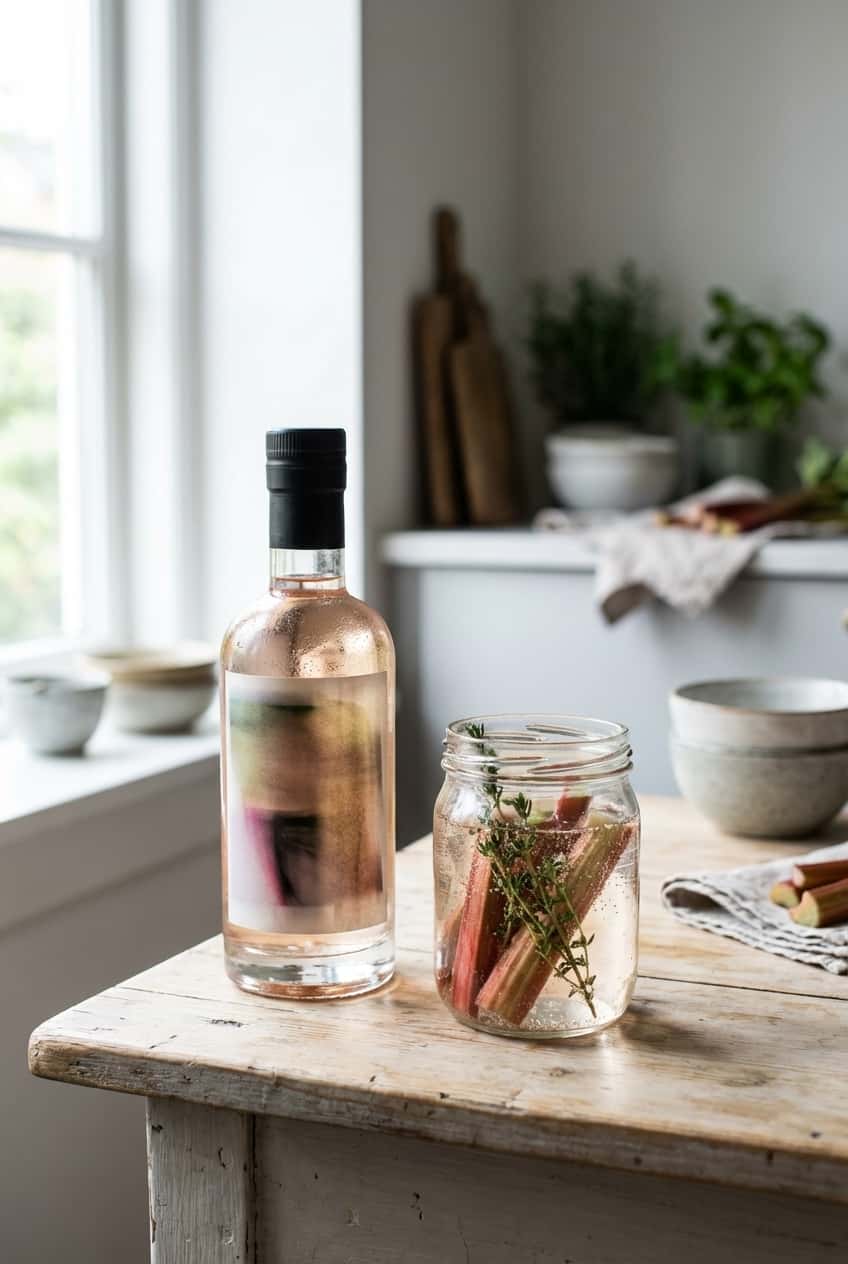
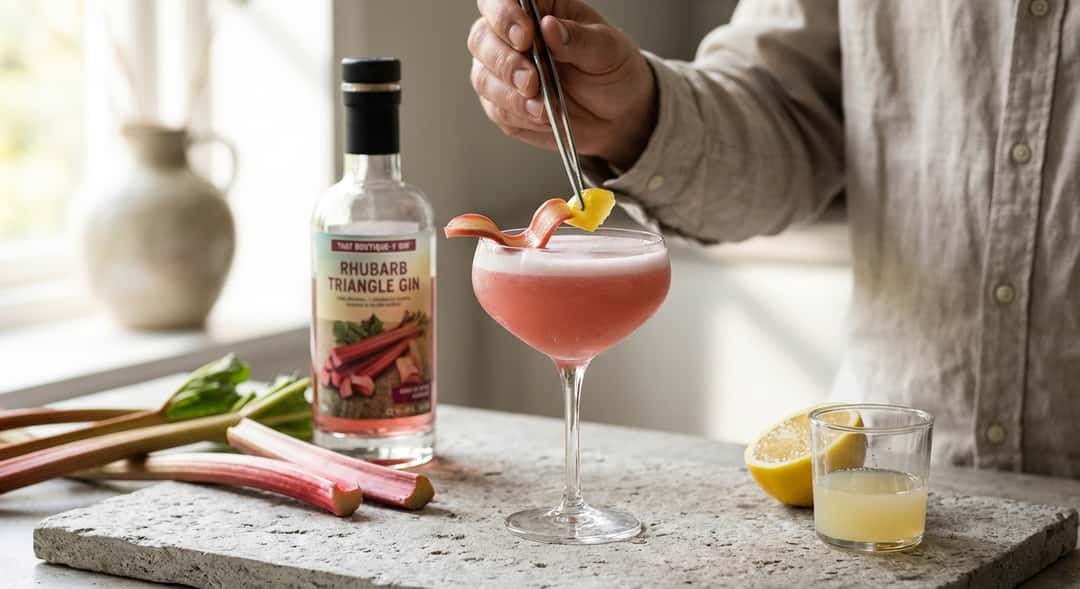
1. That Boutique-y Gin Co. Rhubarb Triangle Gin
This gin from Yorkshire takes its starting point from a geographical phenomenon – The Rhubarb Triangle, an area in England known for early, forced rhubarb. The distillate has a clear, sweet-tart rhubarb character, but without tipping into liqueur territory. It works because they balance the sweetness with classic gin botanicals – juniper, coriander, angelica root – which hold the structure together. At 46% alcohol it also has enough strength not to disappear in a drink.
What you make: A Rhubarb Sour. 5 cl gin, 2.5 cl lemon juice, 1.5 cl simple syrup, an egg white if you want foam. Shake hard, double-strain, serve in a coupe glass with a thin rhubarb stalk standing in the glass like a pillar. The rhubarb in the gin meets the acid in the lemon – and suddenly you have the taste of May in March.
2. Oslo Håndverksdestilleri Fjæra rosé Gin
Here you encounter a Norwegian interpretation of the season. Fjæra rosé Gin is made with Norwegian herbs and berries that give a light pink color and a floral character that never becomes perfumed. It is a balance between a classic gin backbone and something softer, almost rosé-wine elegance. At 43% it delivers both enough alcohol and enough structure to carry a drink without drowning.
What you make: Keep it simple. 4 cl Fjæra, 10 cl good tonic, ice cubes, a slice of grapefruit and a sprig of fresh mint. It sounds boring, but it is the opposite. The gin already has the complexity – your job is to let it speak, not drown it out with seven botanicals and three types of citrus.
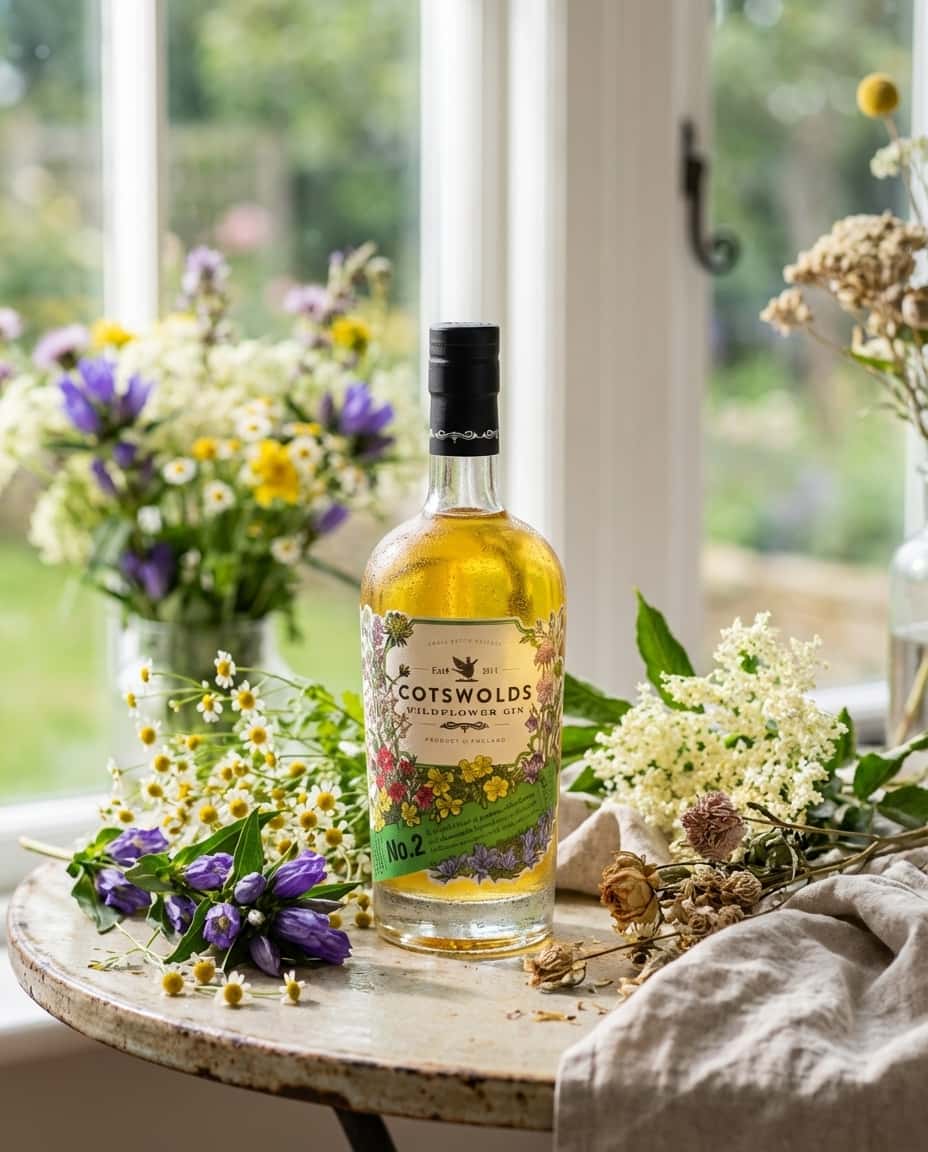
3. Cotswolds Wildflower Gin #2
Cotswolds lies at the heart of the English agricultural landscape, and Wildflower Gin is their seasonal project. The #2 edition works with meadow and garden flowers: elderflower, chamomile, lavender. But they do not tip over into scented-candle territory – it is still a gin with nerve and a dry finish. They use both maceration and vapour infusion, and you can tell: the floral notes sit deep in the structure, not just on top.
What you make: An Elderflower Martini. 6 cl Wildflower Gin, 1.5 cl dry vermouth, 0.5 cl elderflower cordial (or St. Germain if you have it). Stir down with ice, strain into a chilled cocktail glass, spray lemon peel over the surface of the glass and discard the peel. This is spring in martini disguise – elegant, dry, and floral at the same time.
4. Kimerud Pink Gin
Kimerud brenneri in Buskerud has long been one of Norway's most solid small-scale distillers. Pink Gin is their least traditionally Norwegian expression – here it is raspberry, apple, and rose petal profiles that lead, and it becomes almost rosé-like in character. At 38% alcohol it is softer than most of the other gins here, but that also means it works better in drinks where you want more body and less alcohol bite.
What you make: A Kimerud Spritz. 4 cl Pink Gin, 6 cl Prosecco, 3 cl iced tea (yes, iced tea – cold, unsweetened rooibos works perfectly), ice cubes, a couple of fresh raspberries and a lemon slice. It sounds like a confused aperitivo, but it works: the raspberry in the gin, the tea bringing tannins, the Prosecco lifting it all up.
How to work with seasonal spirits
There is one principle that applies to all of these bottles: do not kill them with complexity. If the spirit already contains eight botanicals and macerated rhubarb, you do not need seven more ingredients in the glass. Keep it clean. Let one acid (lemon or lime) meet one sweetness (simple syrup or liqueur), and let the spirit stand at the center.
The second principle: temperature and dilution mean everything. A rhubarb gin that is too warm tastes sweet and enervating. A floral gin that is too diluted tastes like nothing. Use enough ice, separate your drinking ice from your shaking ice, and be mindful of how much dilution you actually want.
The third: timing. These gins are not candidates for long storage. They are made to be drunk within a year or two, while the botanicals profiles are still fresh. Buy them now, drink them through spring and summer, and keep the bottle cool and dark when it is not in use.
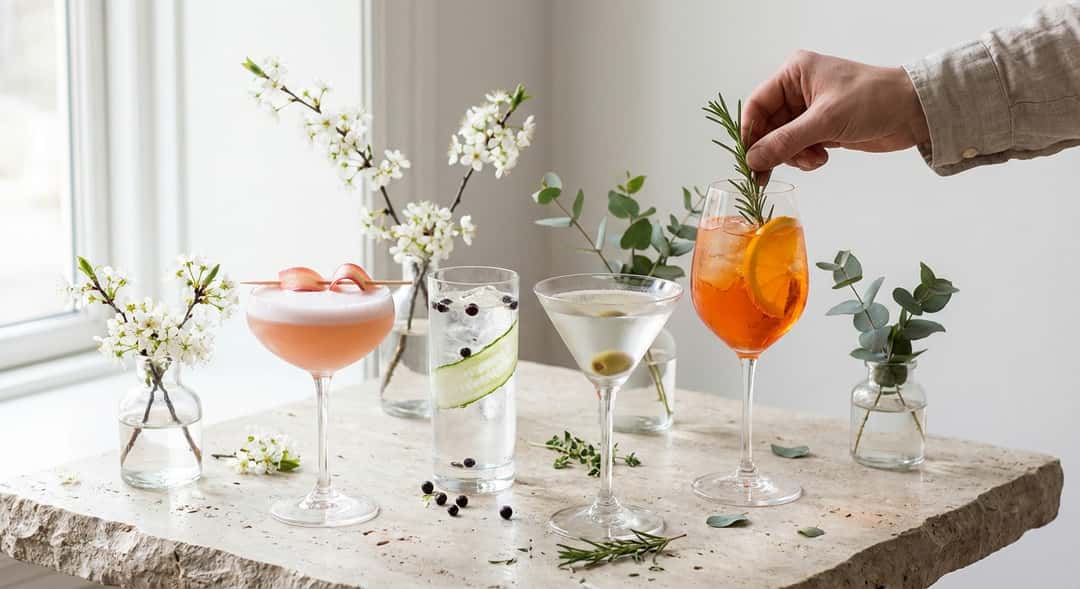
The spring that keeps
The strange thing about these spirits is that they give you season out of season. You can make a rhubarb sour in November. You can drink a Wildflower Martini in January. But they still feel most right exactly now, when the light returns and you start to think that a drink can be something other than just warmth and comfort.
This is where craft distillers deliver something the big brands struggle to match: local time, captured and distilled. Not marketed season, but actual season. Not a summer-flavor launch in February, but spring that was actually picked in May and distilled in June.
These four bottles are not the only ones on the market working with this philosophy, but they are all available now, all relatively affordable, and all work just as well in a simple highball as in a more ambitious cocktail. They are jam in a bottle – preserved, concentrated, ready to be opened when spring finally comes knocking.