
It was during a dinner in Brussels a few years ago that I had my aha moment with glassware. I had ordered a classic Belgian ale, and the waiter set down an elegant, curved glass with a wide bell shape. When I took the first sip, the aromas hit me like a small shock – I had drunk the same beer many times before, but never experienced it so intensely and with such complexity.
The glass, the waiter explained with a smile, had been specially designed for exactly this beer style. Since that evening I have become increasingly curious about how the glass we drink from actually affects the tasting experience. And the more I have read and experimented, the clearer it has become: this is not pretension or snobbish decoration. It is about fundamental physics, chemistry – and how our brain interprets taste.

Why the glass actually matters
Taste is more than what happens on the tongue. Research shows that up to 80 percent of what we perceive as taste is actually smell. When we drink, the liquid releases aromas that rise up through the nose – both while we drink and in the moment before the lip meets the rim of the glass.
The shape of the glass determines where these aromas gather, how quickly they are released, and how concentrated they are when they reach our nose.
A narrow, closed glass – such as a tulip glass – traps the aromas and directs them toward the nose. A wide, open glass – such as a coupe – lets the aromas escape quickly into the room. That is why sparkling wine in coupes often feels flatter than the same wine in a flûte.
But it does not stop there. The shape of the glass also affects how the liquid hits the tongue, which taste areas are activated first, and how much oxygen the drink receives. A red wine that seems tight and tannic in a small glass can open up and become silky smooth in a large balloon that allows room for aeration.
Think of it as an acoustic amplifier for taste. Same drink, different glass – a completely different experience.
The glasses you actually need at home
Let me be clear: you do not need twenty different glasses in the cupboard. But a few well-chosen options can really elevate everyday life – even on an ordinary January evening when you feel like something nice after dinner.
Here are my recommendations:
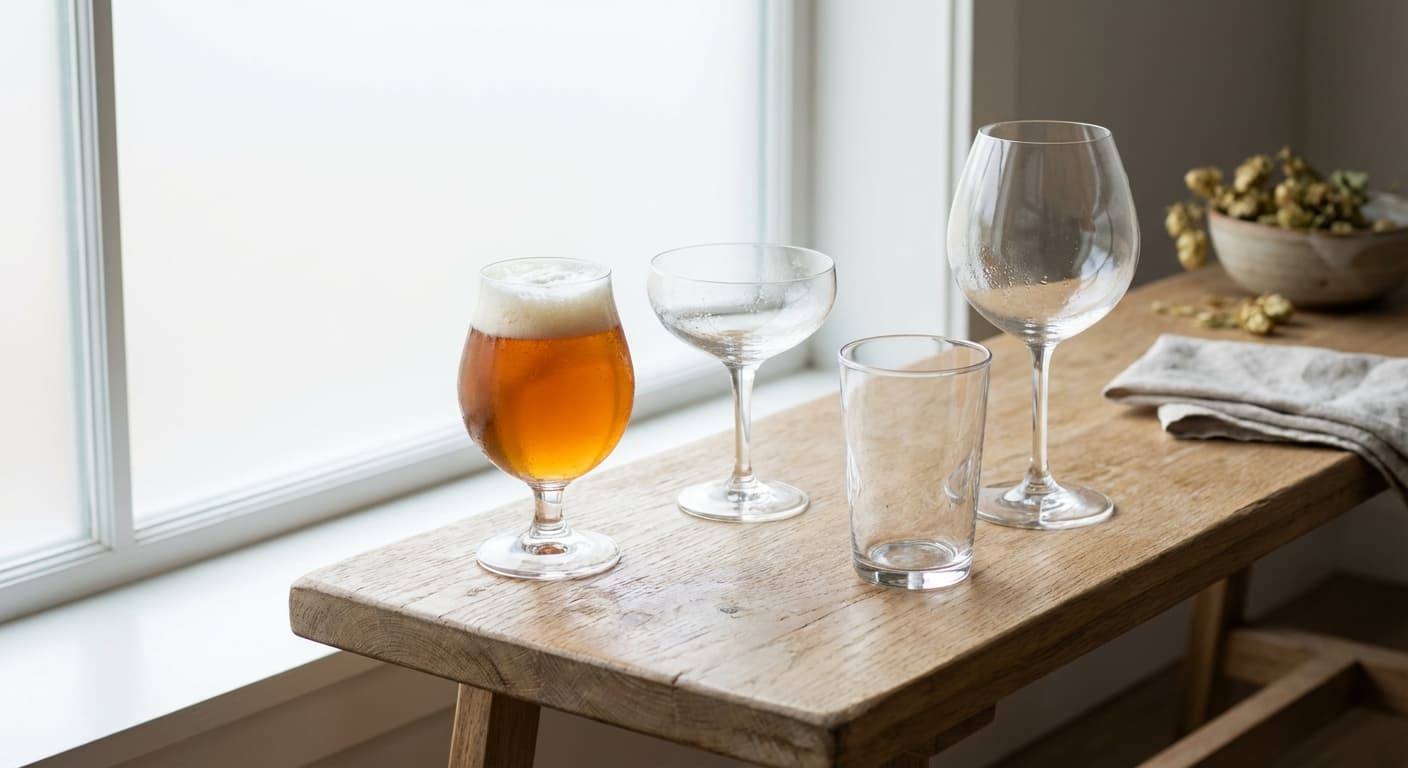
Tulip glass (for beer)
A glass with a curved shape and narrower top is perfect for aromatic beers – everything from Belgian ales to powerful IPAs. The shape traps the hop aromas and leads them straight to the nose.
Take for example a double IPA like Kinn Brottsjø Dobbel Indiaøl – served in a tulip glass you really bring out the tropical fruit notes and resinous character that make the style so interesting. Or a dark, complex trappist like Chimay Trappist Blue, where the glass lifts out the dried fruits, spice and warm alcohol in a completely different way than in an ordinary beer glass.

Universal wine balloon
A medium-sized balloon with room to swirl the glass a little is the most versatile glass you can own. It works for both red wine and white wine, and lets you aerate the red wine without having to empty the bottle into a decanter first.
Choose one with thin glass – it feels more elegant and conducts the heat from your hand less than thick glass. This is the glass you use when you want something nice but do not want to stress about finding the "right" glass.
Tumbler / Old Fashioned glass
A solid, low glass with a thick base is indispensable for cocktails. Not just for an Old Fashioned, but for everything from a Negroni to whisky on the rocks. Choose one with a bit of weight – it sits well in the hand and feels "right" when you are making something proper.
On cold winter evenings there is something particularly satisfying about the sound of ice against glass, and the cool weight in your hand as you sit on the sofa.
Coupe glass
Yes, I know what you are thinking: "But sparkling wine should be in a flûte!" It is true that the flûte preserves the bubbles longer, but the coupe shape – the flat, wide glass allegedly modelled on Marie Antoinette's breast – has made a comeback in the cocktail world.
It is perfect for classic cocktails served "up": Martini, Manhattan, Daiquiri. The wide opening means you take in all the aromas at once, and it simply looks more elegant than a V-shaped Martini glass.

The myths we can stop believing
Let us clear up some common misconceptions:
"Beer glasses are just marketing"
It is true that many breweries create their own glasses for branding reasons. But the underlying principle holds: aromatic beers need glasses that concentrate the aromas, while light lagers work fine in simpler glasses.
You do not need branded glasses, but you do need the right shape. The difference between an IPA in an ordinary beer glass and in a tulip glass is actually striking – try it yourself, side by side, and you will notice it immediately.
"Red wine must have a large glass, white wine a small one"
That is a reasonable rule of thumb, but not a law. Aromatic white wines – such as drier Riesling or oak barrel-aged Chardonnay – can also flourish in a larger glass. And light red wines do not necessarily need a balloon the size of an aquarium.
Think instead about intensity rather than colour: the more aromatic and complex the drink, the more room it needs to breathe.
"Warm beer tastes better in a mug"
Drinking from porcelain or ceramic actually changes the tasting experience – the material is porous and retains heat better, but it also blocks the aromas. If you really want to bring out the flavours, choose glass – even for warm beer or a hot toddy.
I know it feels cosy with a ceramic mug on a cold winter evening, but try the same drink in a thin glass sometime. You will be surprised by how much more you pick up.
The practical approach
If you are standing in front of the glass shelf feeling overwhelmed, take it easy. Start with one glass you like the look of and that suits what you drink most often. Over time you will notice for yourself what is missing.
Perhaps you will discover that your IPA tastes better in a narrower glass, or that your whisky gains more depth in a glass with a thin rim. There is no definitive answer here – just principles that help you find what works for you.
And remember: the best glass is the one you actually use. A delicious Belgian ale like Chimay Trappist Blue always tastes better in a simple wine glass than in a coffee cup – and far better than if it is left unopened because you do not have the "right" glass.
My advice to you
Start simple. Buy one or two glasses that feel right for what you drink most. Experiment a little. Pour the same beer into two different glasses and taste side by side. You do not need to be an expert to notice the difference.
Glassware is not about being a glass nerd at the party. It is about giving your drink the best chance to show itself off – and giving yourself the opportunity to enjoy it fully.
So next time you pour a drink, take a moment to think about which glass you choose. It can be the difference between a good drink and an unforgettable one. And on a dark January evening, when you feel like something warming and a little luxurious, the right glass can be exactly that small extra touch that elevates the moment.