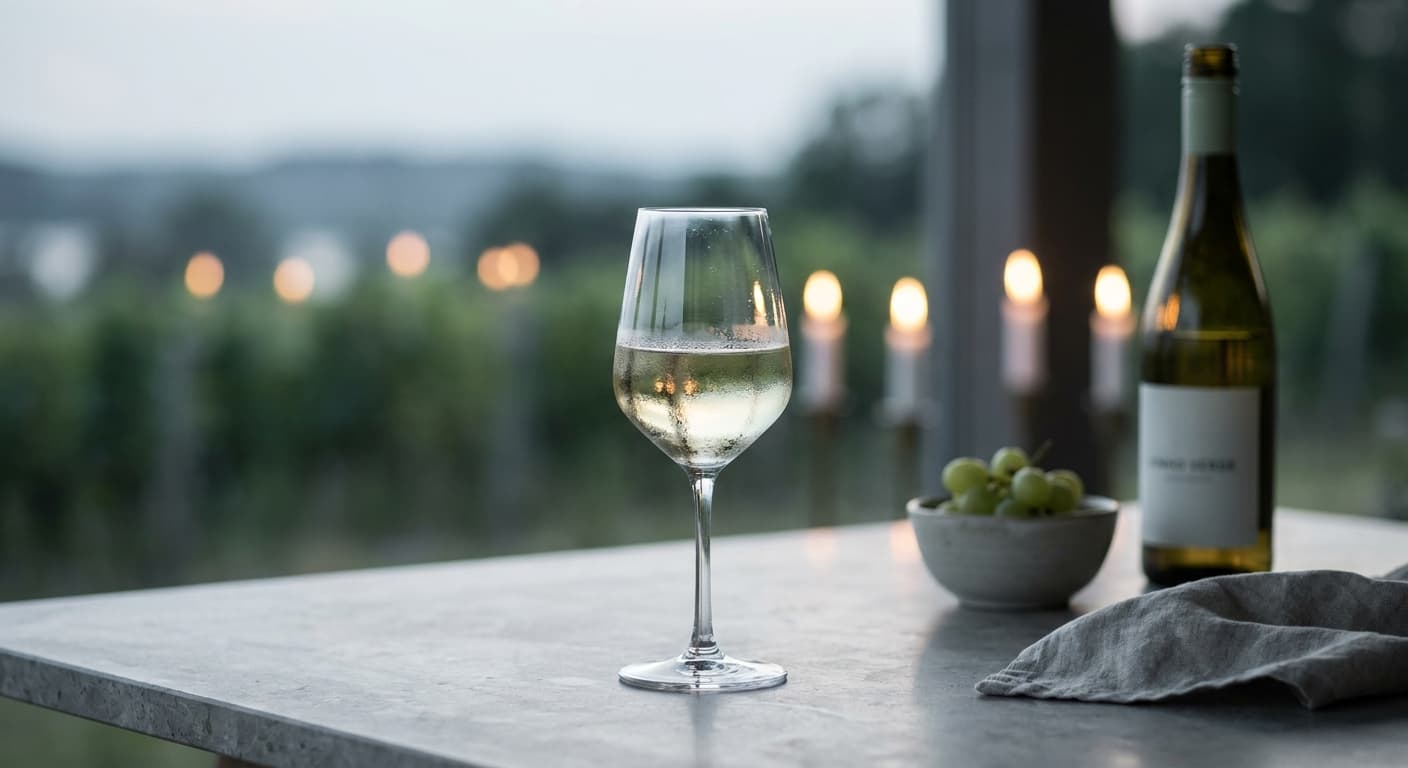

There are wines that demand attention, and wines that only demand a glass and a terrace. Vinho Verde belongs to the latter category – and that is precisely what makes it so brilliant in summer.
When the temperature creeps upward and you really can't be bothered to think too much, Vinho Verde is the answer. Light, fresh, low in alcohol, and with a small, tickling fizz that teases the tongue. It is like taking a sip of the North Atlantic itself.
What exactly is Vinho Verde?
Vinho Verde literally means "green wine" – not because it is green in colour, but because it is young. The region lies in the north-western corner of Portugal, in the Minho province, just south of Galicia in Spain. It is cool and humid here, with plenty of rain, and the vines thrive at height – they are often trained up poles and pergola structures to keep them away from the damp ground.
It is precisely this climate and this cultivation method that shapes the Vinho Verde style: high acidity, moderate alcohol, and a natural, light spritz that comes from the wine often being bottled while a little CO₂ remains, or by adding carbonation during the process. The result is not a sparkling wine in the Champagne style – it is more like a whisper of bubbles, just enough to lift the flavour and make the wine extra refreshing.

The grape varieties that shape the style
Vinho Verde is not one grape variety – it is a region. The most common white grape varieties are Loureiro, Arinto, Trajadura, and Azal. But the king of the region, the one that has attracted the most international attention, is Alvarinho – known as Albariño across the border in Spain. Alvarinho grows primarily in the sub-region of Monção e Melgaço and produces wines with more body and aromatic richness: peach, apricot, salt, and lemon. The alcohol is often a little higher than in the classic everyday versions, but still pleasantly low.
The more accessible versions, based on Loureiro and the blended grape varieties, tend to be lighter and more neutral – but it is precisely that lightness that makes them perfect summer wines for people who do not want "too much of anything".
Low alcohol is not a weakness
This is where many Norwegians get it wrong: they see 8–9% on the label and think "cheap wine". But low alcohol in Vinho Verde is a deliberate stylistic choice, not a compromised production.
Think about what happens to a wine at 14% in 27-degree heat. The alcohol rises straight up into the nose, the palate dries out, and if you drink one extra glass, you feel it the next morning. A Vinho Verde at 8–9% you can enjoy calmly through a long afternoon on the terrace without it getting in the way – and despite the low alcohol, it has more than enough acidity and flavour to keep your interest alive.
It is actually one of the reasons Vinho Verde has made something of a comeback among people who care about mindful consumption. You drink something that tastes of summer, without necessarily feeling it in your body afterwards. That is not a small thing.

Three wines to know
An excellent example of the crowd-pleasing style is Casal Garcia Vinho Verde. This is a wine most Portuguese people and Vinho Verde lovers know well – fresh, simple, and honest with green apple, lemon, and the characteristic fizz. Low alcohol at 8%, and a price point that makes it easy to enjoy without thinking about the bill. Perfect for a casual barbecue evening or as an aperitif with olives and salted nuts.
For those who want a little more depth and complexity, Soalheiro Vinho Verde Alvarinho 2025 is a natural step up. Soalheiro is one of the most respected names in Monção e Melgaço – a producer who has been growing Alvarinho since the 1970s and truly understands the grape variety. The wine has a fuller texture, more of the aromatic peach and floral notes, but retains the fresh acidity and the salty, mineral finish that is so typical of the region. Try it with grilled white fish or prawns with aioli.
And if you want to explore the Loureiro grape variety specifically, Adega Ponte de Lima Vinho Verde Loureiro 2023 is worth getting to know. Ponte de Lima is one of the oldest cooperatives in Portugal and has a long tradition with this particular grape variety. The wine is light, floral, and fresh – with white flowers, green apple, and an almost ivory-like elegance. It is a little more delicate than the Alvarinho versions, and pairs excellently with light salads, summer rolls, or simply a glass on its own.

What do you eat with it?
Vinho Verde is one of the most food-flexible wines there is, precisely because it does not dominate. It works with the food, not against it.
- Seafood and fish is the classic pairing. Grilled white fish, fish tacos, prawns with aioli, squid – the salty, citrus-fresh character mirrors the flavours of the sea in an almost magical way.
- Summery vegetable dishes: Avocado toast, tzatziki, grilled corn, salads with citrus dressing.
- Asian light food: Summer rolls, noodle salad, light sushi – the acidity in Vinho Verde plays well with umami and fresh herbs.
- Cheese: Young, fresh cheeses such as chèvre or mozzarella. Not aged, powerful cheeses – that creates too much competition.
And do not forget: Vinho Verde is superb as an aperitif. One glass, some olives and salted nuts, and you are starting the evening on the right foot.
A quick overview of the style
| Style | Example | Alcohol | Character |
|---|---|---|---|
| Classic blend | Casal Garcia | 8% | Light, fizzy, citrus-fresh |
| Loureiro | Ponte de Lima | 11% | Floral, delicate, fresh |
| Alvarinho | Soalheiro | 12% | Fuller-bodied, peach, salty finish |
How to serve it
Chilled – and I mean properly chilled. Not 14 degrees as many recommend for white wine in general. Vinho Verde wants to be at around 8–10 degrees. Take it out of the fridge just before serving and use a wine cooler at the table if you like.
Glass: No fancy Burgundy glass here. A simple white wine glass with a little opening works perfectly. You do not need to let the wine "breathe" – it is ready to serve straight away.
The philosophy behind the glass
I think what makes Vinho Verde so relevant right now is that it reminds us that wine does not need to impress. It needs to suit the moment.
When you are sitting on the terrace on a Friday afternoon and want something to hold in your hand while the conversation flows, you do not need Bourgogne. You need something that tastes of summer, that does not tire you out, and that preferably costs a little under 200 kroner. That is exactly what Vinho Verde offers – and that is not a small thing, it is actually quite a lot.
The Portuguese have been drinking this for generations, often chilled in a plastic bucket of ice on a taverna veranda somewhere along the Atlantic coast. We can do the same, just with a view over the Oslofjord or a Norwegian summer terrace. The taste is the same.
So the next time you see that slightly unassuming bottle with green tones and low alcohol – take it home. Put it in the fridge. And wait until the sun is low enough that the glass casts long shadows.