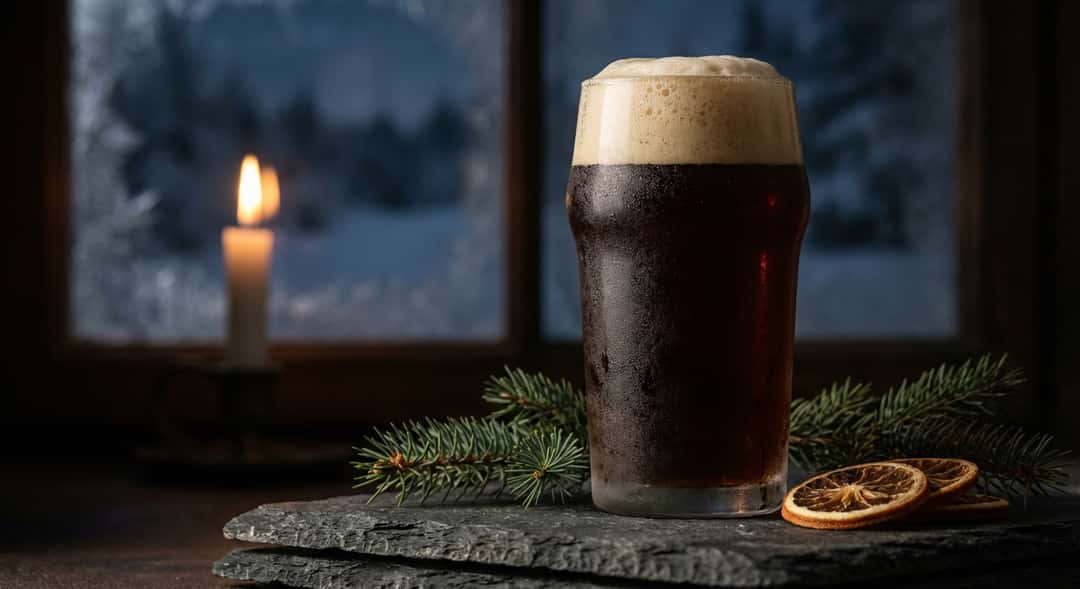

I have a confession: I nearly killed the best winter beer I've tasted this year. How? By serving it ice-cold, straight from the fridge.
The problem is mine, but it's also a very, very Norwegian one. We love our ice-cold beer. And yes, a light beer on a summer's day should be cold. But when the winter darkness descends, and the beer gets thicker, darker, more complex – the ice-cold serving becomes a pure flavor tragedy.
Because when the temperature dips down toward 4–5 degrees, the aromas close up. The flavors go flat. And the nuances you actually paid for? They disappear.
The temperature that changes everything
Let me take you through a little experiment I did. Five Norwegian winter beers, three temperatures: 4, 8, and 12 degrees. I timed everything with a stopwatch, noted it all down, and forgot that the neighbors were probably wondering why I was talking loudly to myself for four hours.
First up: the ice-cold one. At 4 degrees, everything is restrained. You get coldness, a hint of malt, maybe a touch of bitterness. But it's like meeting someone wearing sunglasses and a hoodie – you sense there's a person there, but you can't quite connect.
Then, at 8 degrees, the magic begins. The aromas lift. Suddenly you notice caramel, a little raisin, something that recalls dark chocolate. The bitterness is still there, but it's joined by sweet, warm tones that remind you why you liked this beer in the first place.
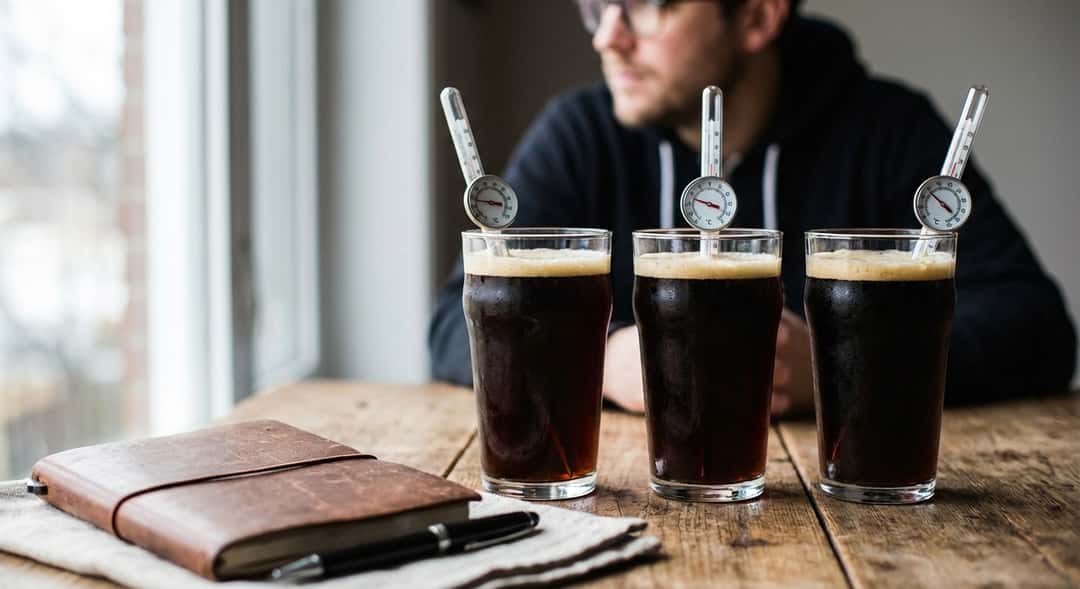
At 12 degrees, things go almost a little too far with some of the brews. Imperial stout? Absolutely fantastic. It opens up like a flower, with layer upon layer of dried fruit, mocha, tobacco, liquorice. But a simpler brown ale became a little too flat, a little too dull. Here you need to know your beer.
What actually happens in the glass
As a former brewer, I can't help but say a little about why this happens. It's about volatility – that is, how easily aroma compounds lift from the liquid and reach your nose. At low temperatures they stay put. At higher temperatures they fly, and you get them straight to the senses.
Temperature also changes how sweetness, bitterness and alcohol are perceived together. The effect varies with the beer and the taster; there is no simple rule that cold always increases bitterness. Compare small tastes at different temperatures to find the balance you enjoy.
That's why a dark, malt-rich winter beer is actually designed to taste best between 8 and 12 degrees. The brewer has balanced it for that temperature. Serving it ice-cold is like listening to a symphony with earplugs in.
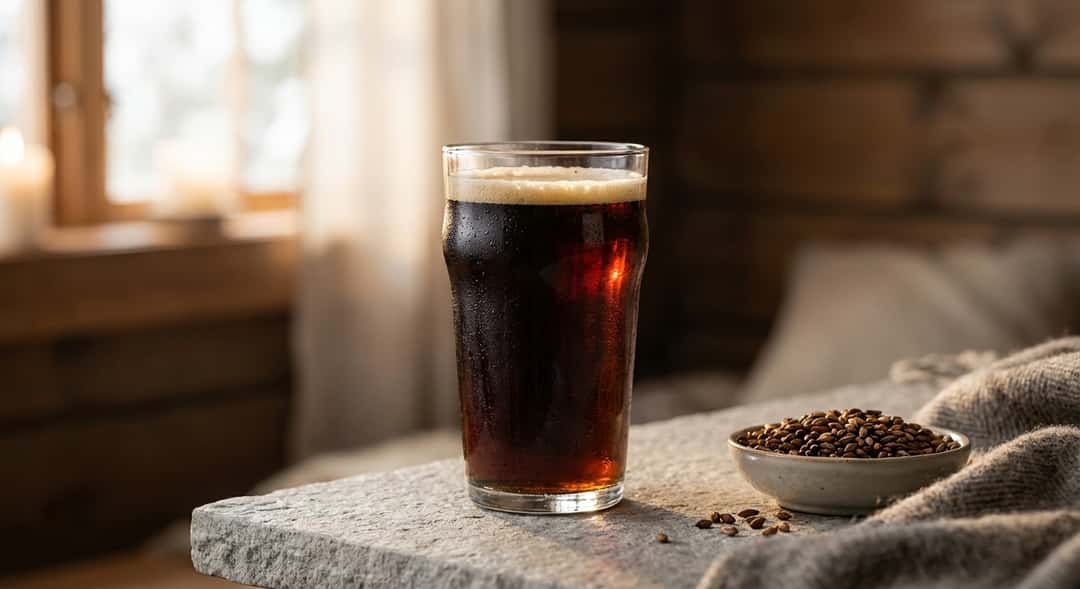
My five favorites – and what the temperature did
I won't turn this into a full tasting-note marathon, but some highlights must be shared:
The imperial stout category was the big winner at 12 degrees. Here you get layer upon layer: coffee, dark chocolate, dried fig, a hint of vanilla. At 4 degrees the same beer tasted mostly of nothing – just a murky, bitter heaviness.
Porter and brown ale hit the sweet spot at 8–9 degrees. Enough warmth for the nutty character to come through, but not so much that it turned cellar-like. Think toasted bread, caramelized sugar, a little espresso in the background.
Dark ales with Christmas spices – here I was genuinely surprised. At 4 degrees they tasted mostly of alcohol and an anonymous whisper of spice. At 10 degrees it burst open: clove, cinnamon, a little orange peel, warm ginger. It was like going from a dash to a full poem.
A red-brown ale with caramel malt became a little too thin at 12 degrees – it was as if the body disappeared and it just became sweet and a little flat. But at 8 degrees? Perfect balance between sweetness, burnt sugar, and a light, aromatic hop bitterness.
A smoked beer (yes, I threw in a wildcard) became intensely oak-barrel-like at 12 degrees, almost whisky-esque. Interesting, but a bit much. At 8 degrees the smoke was more integrated, like baked ham and a campfire in the background of the malt sweetness.
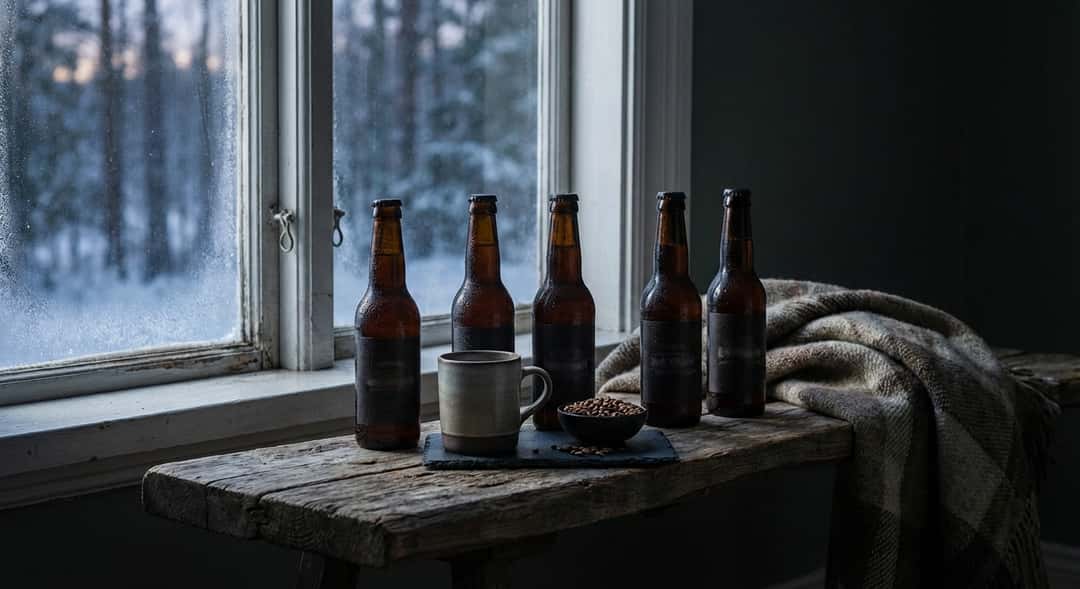
How to do it at home
Fair enough, Kristine, you've sold me. But how do I know when my beer is 8 degrees, and not 6 or 11?
Simple answer: Buy a thermometer. It costs next to nothing, and you can also use it for home brewing or cooking temperatures.
But here's the rule of thumb:
- Beer fridge or regular fridge: 4–6 degrees. Take the beer out 20–30 minutes before serving, depending on room temperature.
- Room temperature (20 degrees): Too warm for most beers. Cool it down to 12–14 degrees, then take it out 10 minutes before you're going to drink it.
- Judge by feeling the bottle/can: If it's so cold it almost hurts to hold, it's too cold. If it's lukewarm, it's too warm. If it's pleasantly cool, like a mountain stream in July, you're there.
And remember: it's better to start a little too cold and let the beer warm up in the glass as you drink, than to start too warm. You can always watch the flavors develop along the way – it's actually quite fascinating.
Why this matters especially in winter
It's no coincidence that I'm doing this experiment now, in the middle of January. The winter months are the season for the heaviest, most complex beers. Brewers know it. They make imperial stouts, Barley Wines, porters, and spiced ales precisely because we seek warmth, depth, and comfort when it's dark outside.
But these beers are also the ones that suffer most from the wrong temperature. A light pilsner can handle being ice-cold – it doesn't have that many aromas to lose. An imperial stout with 10 percent alcohol and six different malts? It needs warmth to show what it can do.
So in winter, more than at any other time of year, it pays to think about temperature. Not just because the beer tastes better, but because you actually get value for your money. The best winter beers aren't cheap. Why throw away half the flavor experience by serving them wrong?
The big lesson
I haven't stopped drinking ice-cold lager in summer. I won't. But dark, full-bodied winter beers deserve different treatment. They deserve to be met on their own terms, at the temperature where all the layers unfold.
So the next time you have an imperial stout, a porter, or a robust ale in front of you: give it time. Let it warm up. Put your nose into the glass and notice how the aromas change.
It's not snobbery. It's just smart. And it really, truly tastes so much better.