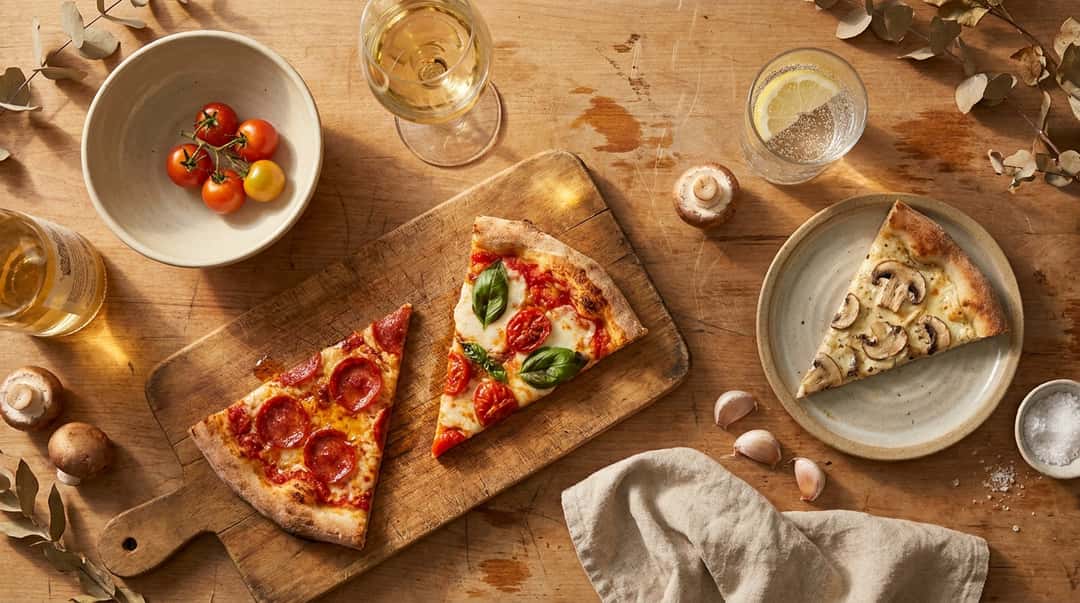

There is something about the way we think of cider in Norway. We drink it at garden parties in summer, often with ice in the glass and sun on our faces. But it is in the winter months, when the casseroles come out and the oven runs for hours at a time, that cider truly gets to shine.
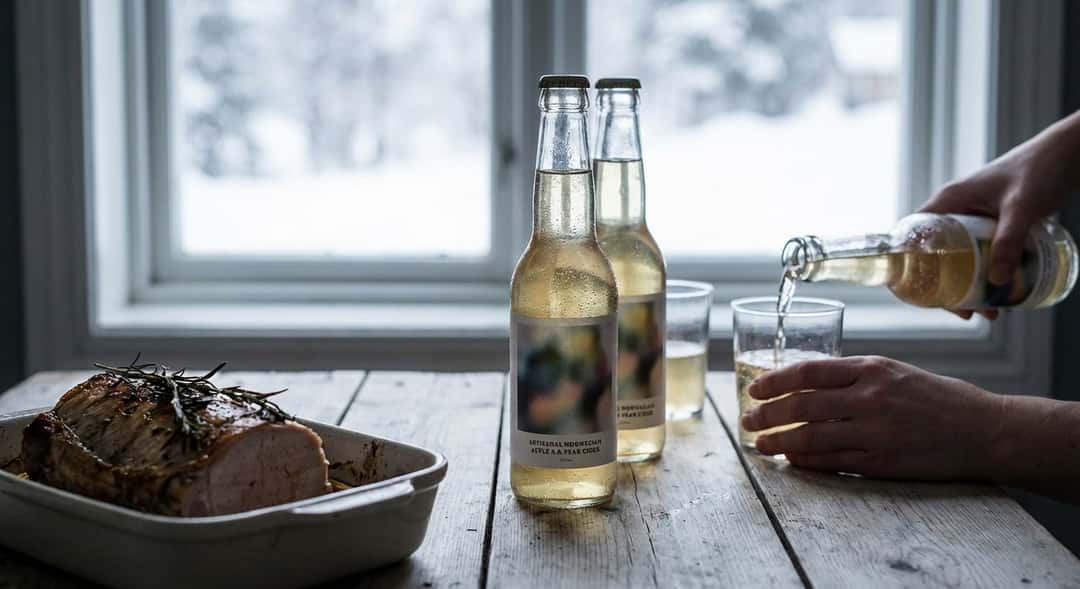
The reason is simple: cider has a tartness and fruitiness that cuts through fat in a way that neither beer nor wine quite manages. At the same time, especially the Norwegian craft ciders, they have enough body and complexity to stand up to bold flavours. It is about balance – just as you use apple juice to deglaze the pan after frying pork, cider acts as a bridge between the salty, fatty and sweet elements on the plate.
Why cider works with winter food
Let me be specific: the natural malic acid in cider acts as a flavour enhancer. It wakes up the palate, cleanses it between each bite, and helps you notice the nuances in the food more clearly. When you eat something truly rich in fat – say roasted duck or pork ribs – you need something that resets the taste buds. Beer can be too heavy, wine too tannic or too tart. Cider hits the sweet spot.
The second point is temperature. Cider is served cold, yes, but it tolerates being a little warmer than white wine without losing its character. Six to seven degrees is ideal – cool enough to be refreshing, warm enough for the fruit flavours to come through. That makes it perfect for weeknight dinners where you might not feel like ice-bathing the bottle for twenty minutes.
Five concrete combinations
1. Oven-roasted pork loin with apple cider
This is a classic for good reason. Pork and apple are a natural pairing, but we are not talking about sweet apple sauce here. A bone-dry apple cider like Homborsider Eple Knusktørr (7%, 75 cl) brings out the natural sweetness of the meat without making the meal cloying. The freshly pressed character of this cider mirrors exactly the fruity finesse you want without added sugar.
2. Lamb stew with root vegetables and pear cider
Pear has a rounder, more perfumed character than apple, and that makes it fantastic with lamb. A pear cider like Åkre Gard Edel Pæresider (6%, 75 cl) has a floral elegance that lifts both the mildly sweet meat and the earthy flavour of celeriac and carrot. Think of it as a white wine with more personality and less alcohol – perfect when you want something that does not dominate, but does not disappear either.
3. Oven-baked salmon with fennel and apple cider
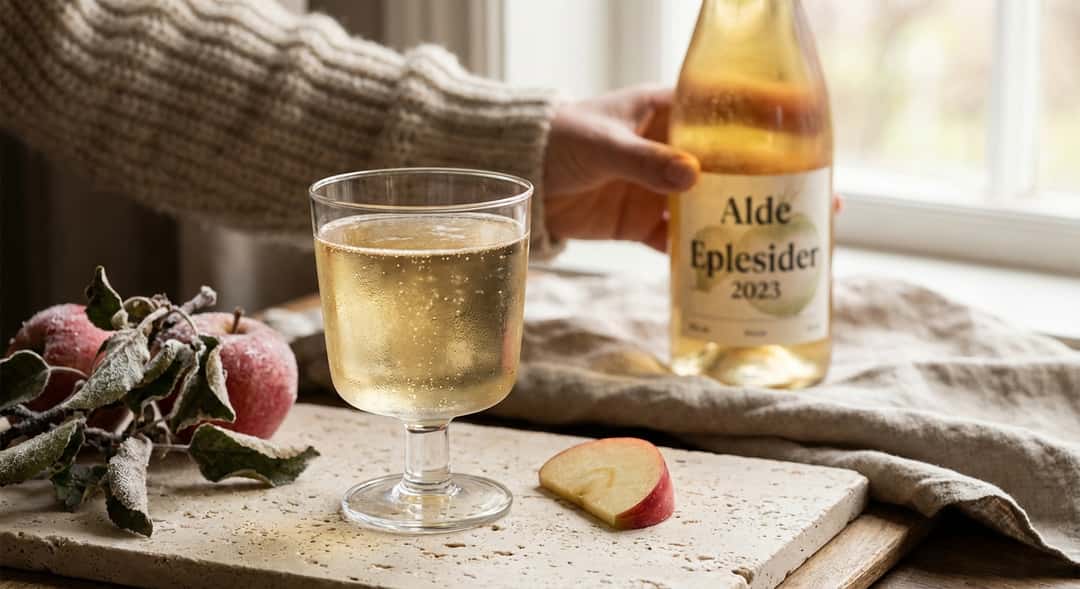
Yes, cider with fish. Especially fatty fish like salmon or trout. Here you need a cider with a little more acidity and crispness, ideally one that has spent some time in the bottle and developed a touch of rounded complexity. Alde Eplesider 2023 (6%, 75 cl) has that firm, almost mineral quality that makes it work like a Chablis – only with Norwegian apples instead of Chardonnay.
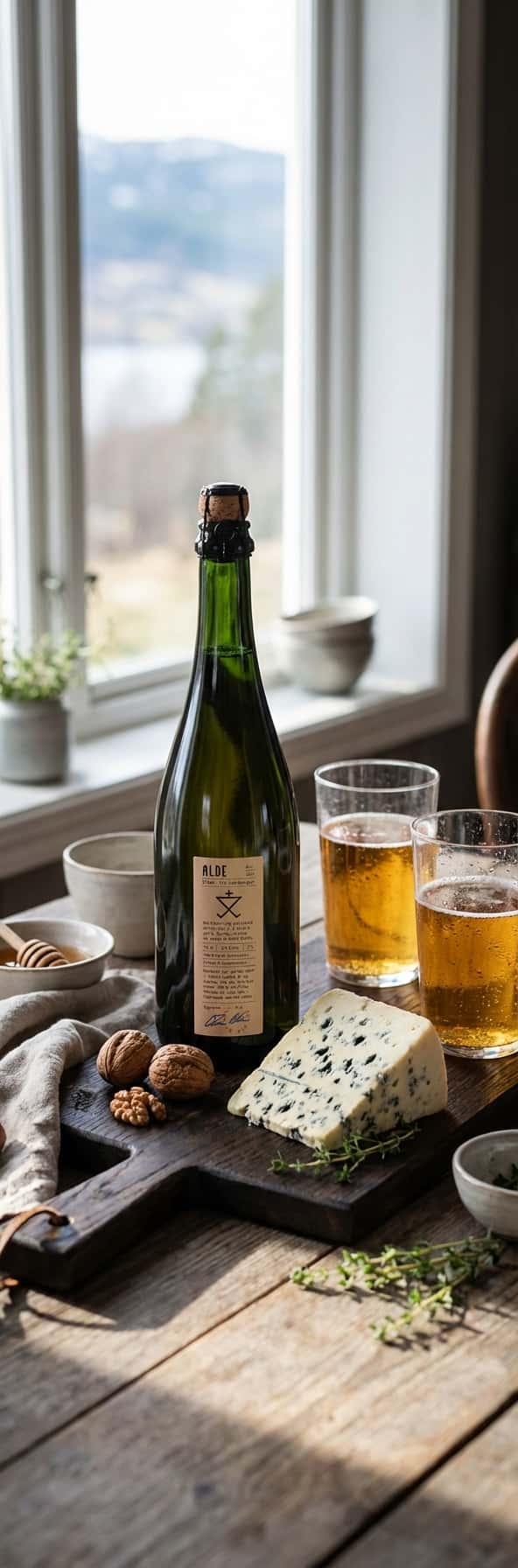
4. Blue cheese and honey with apple cider
A cheese board for dessert is a winter pleasure, and here cider actually surpasses port wine for many people. The key is finding a cider with enough residual sweetness to balance the salty intensity of the cheese. Norwegian ciders like Solhøi Cider Nothing Compæres (7%, 75 cl) combine apple and pear in a delicate drink that both handles the bold flavour of aged cheese and harmonises with the floral notes of the honey.
5. Pork rib dinner with spiced pear cider
If we are going to talk about the ultimate winter combination, we have to mention ribs. Here you need volume, acidity and a little weight. An Attåt Pæresider (5%, 33 cl) in a smaller format is perfect if you want one with the food and one afterwards – it has a clean, fruity profile that cuts through fat without competing with the other flavours on the table.
What to look for
When you are standing at Vinmonopolet choosing a cider to go with food, look for a few things:
Dryness: Dry or bone-dry means the cider has fermented out most of the sugar. That gives you a clean, sharp expression that matches salt and fat better than a sweet cider.
Alcohol content: Check the label and choose a strength suited to your serving. ABV alone does not tell you how full-bodied or food-friendly a cider is.
Craft cider vs. industrial: Norwegian craft producers typically use local apple varieties and natural fermentation. That gives more complexity and character – and often a slightly hazy colour, which is a good sign.
Vintage information: If a vintage is listed on the bottle, it means the producer cares about the details. Apples vary from year to year just like grapes.
How to serve it
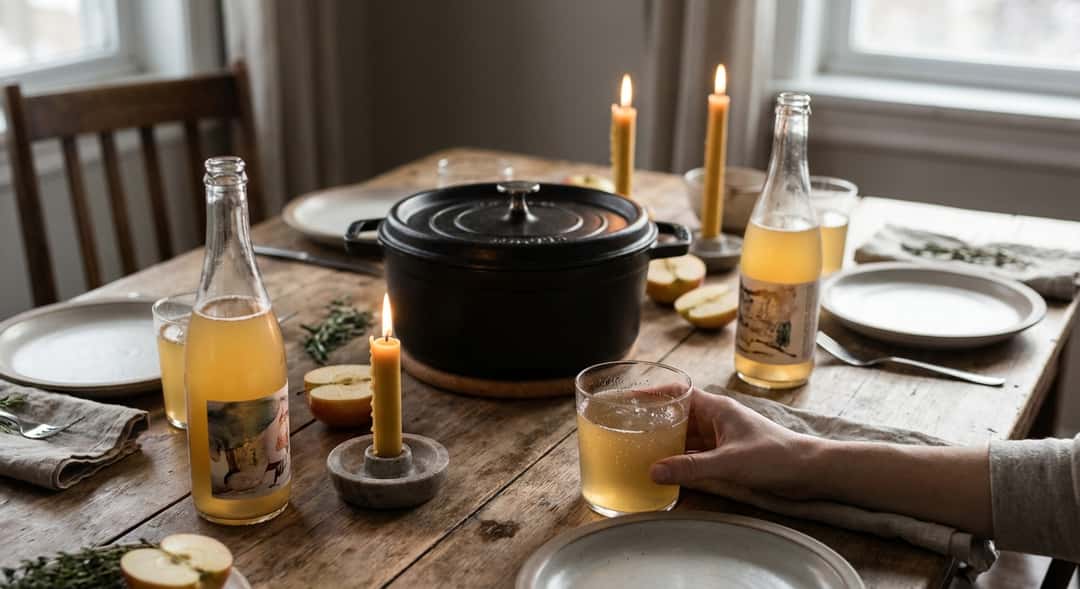
Forget the Champagne coupes. Use a tall, narrow glass instead – either a white wine glass or a pilsner glass. It keeps the carbonation longer and concentrates the aromas.
Serve cold, but not ice-cold. Take it out of the fridge five to ten minutes before serving.
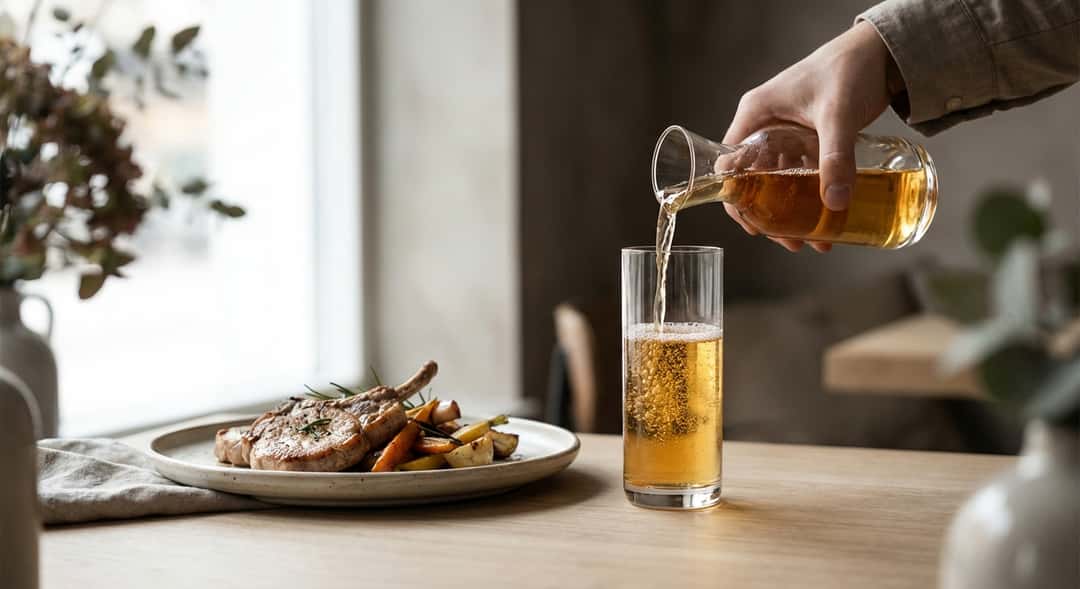
And here is a trick few people know: pour gently, along the side of the glass, the way you do with beer. Cider often has natural carbonation, and you want to avoid it foaming over like a shaken fizzy drink.
Everyday luxury without snobbery
The best thing about cider with winter food is how low-key it is. You do not need to decant, swirl it around your mouth or talk about tannins. You open the bottle, you pour it into the glass, you drink. And suddenly the pork chop tastes better, the cheese has more layers, and the dinner feels a little more considered – without you having had to work for it.
That is exactly how a drink should be: a natural part of the meal, not a research project. When the cold bites outside and the kitchen is warm, there is something wonderfully liberating about twisting the cap off a bottle of Norwegian cider and just letting it be what it is. Simple, good, honest.