
There are dessert recipes that require patisserie training, a stand mixer, and three hours. And then there's this one.
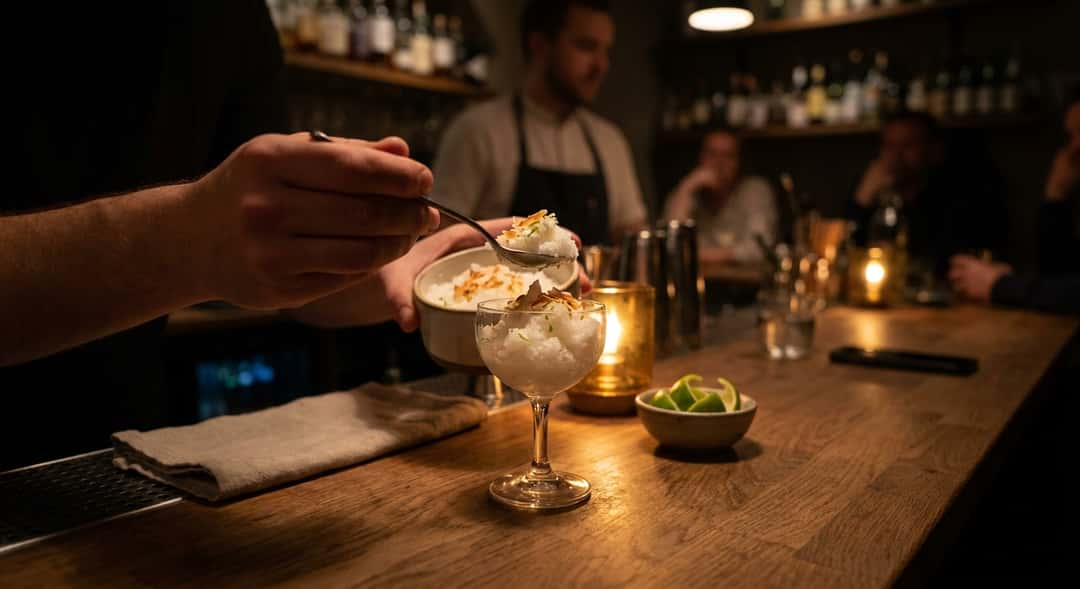
Coconut water granita is Italian technique meeting Caribbean soul: you freeze a flavourful liquid and scrape it up into loose, crunchy ice crystals that melt slowly and beautifully in the mouth. No ice cream machine. No complicated equipment. Just a fork, a baking dish, and a little patience while the rest of the party tends the grill.
Why granita – and not sorbet?
This is a question I keep getting, and the answer is all about texture and technique. A sorbet is smooth and creamy because it is stirred continuously during freezing – either in a machine or with frequent whisking. Granita, on the other hand, lets the crystals grow large, and that is precisely what gives it its characteristic, almost crunchy consistency.
The physics behind it are simple: sugar and alcohol lower the freezing point. Add too little, and you get a block of ice. Add too much, and the mixture never freezes properly. In this recipe we balance the natural fat content of the coconut milk, the acidity of the lime juice, and the alcohol in the rum so that the granita crystals end up just the right coarseness – not a hard lump, not slush.
The alcohol therefore contributes not only to the flavour. It is an active ingredient in the texture itself.
Choose the right rum
White rum is the key here. It has a light, fresh profile with hints of sugarcane and tropical fruit that lifts the coconut and lime notes without overpowering them. A dark, caramel-heavy rum would compete with the coconut milk's sweetness and make the granita heavier than we want it.
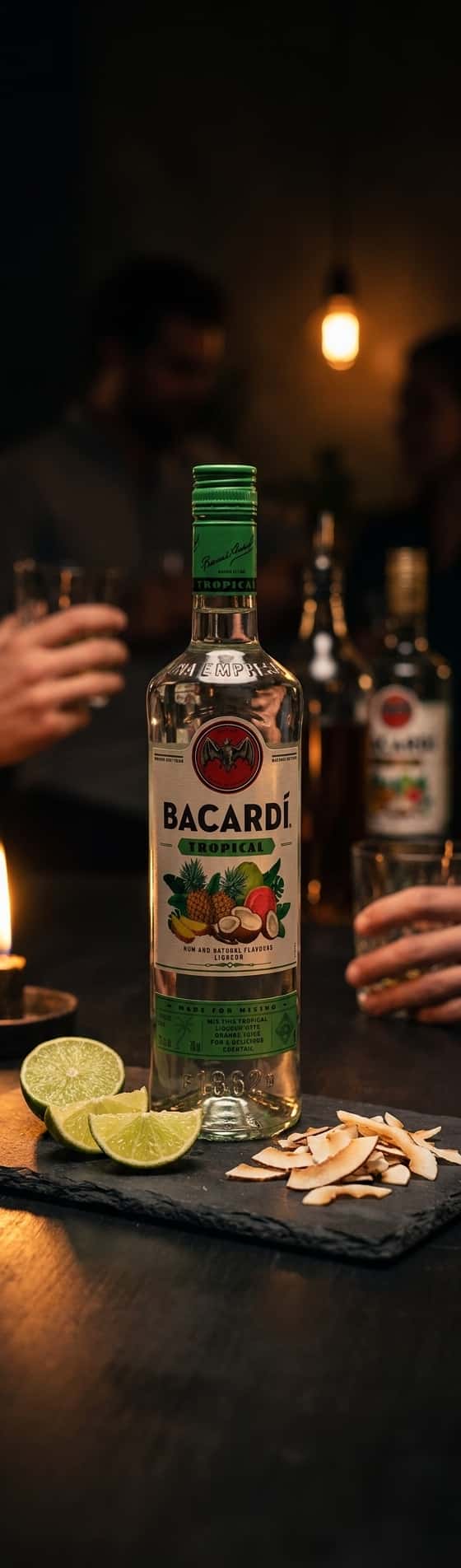
Bacardi is the standard choice for good reason: clean, reliable, and widely available. But if you're looking for something with a bit more tropical character, Bacardi Tropical is a fun alternative – it has a fruity, pineapple- and passion fruit-inspired profile that actually suits coconut very well. Note that it is lower in alcohol (32%), which means you should adjust the ratio slightly if you use it instead of a standard 40% white rum – more on that in the notes below the recipe.
Ingredients
(Makes 4–6 servings)
- 400 ml coconut milk (full fat – not the 'light' variety)
- 100 ml coconut water
- 6 cl white rum (or Bacardi Tropical for a fruitier version)
- 60 ml freshly squeezed lime juice (approx. 3 large limes)
- 2 tsp finely grated lime zest
- 60 g icing sugar (sift it for lump-free results)
- 1 pinch flaky salt
To serve:
- 3–4 tbsp toasted coconut flakes
- Thin lime slices
- A few leaves of fresh mint (optional)
Method
- Mix the base. Stir the coconut milk, coconut water, icing sugar, and flaky salt together in a bowl until the sugar is completely dissolved. This is important – undissolved sugar causes uneven freezing.
- Add the acid and alcohol. Stir in the lime juice, lime zest, and rum. Taste: the mixture should taste a little stronger and more tart than you want the finished granita to be – cold noticeably dulls the flavour experience.
- Pour into a low, wide baking dish (approx. 20×30 cm). The layer should be no more than 3–4 cm deep.
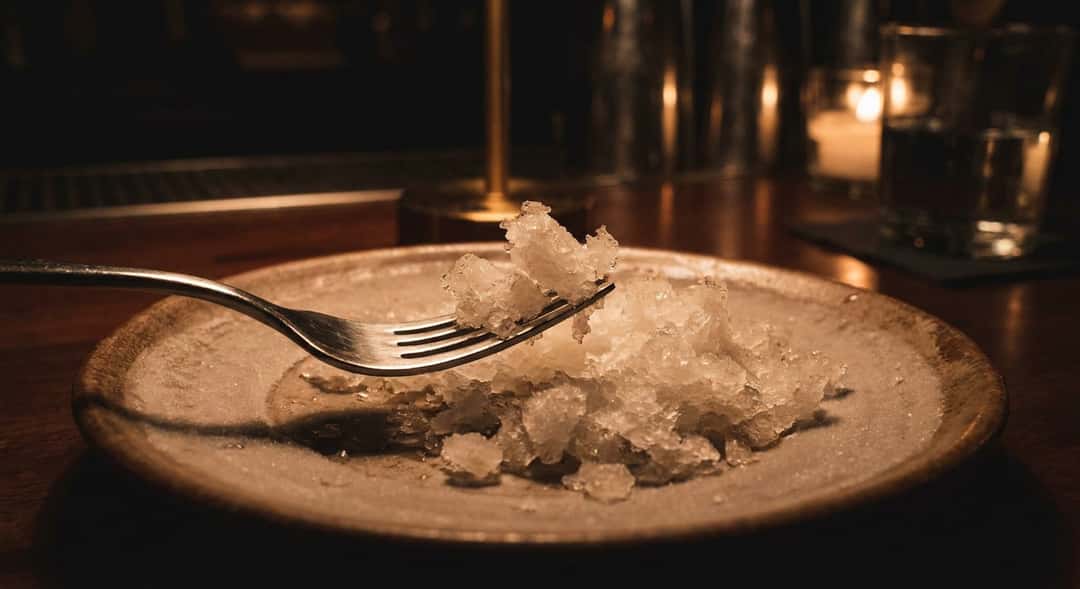
- Place in the freezer at the lowest temperature. After 45 minutes, take out the dish and scrape with a fork from the edges in towards the centre. Repeat every 30 minutes for a total of 3–4 hours.
- The final scrape is done just before serving. At this point the granita should consist of loose, airy crystals – not one continuous sheet of ice.
Picnic tip: Transport the granita fully frozen in an insulated container with frozen ice packs and serve promptly. An ordinary cool box does not guarantee that it will stay frozen for several hours.— MAGNUS MIXMASTER
Topping: toasted coconut flakes make all the difference
This is the step many people skip – and that's a shame. Toasted coconut flakes add a nutty depth and a crispy texture that contrasts the granita crystals perfectly. It takes four minutes in a dry frying pan over medium heat: shake the pan regularly and remove from the heat as soon as they turn golden.
Feel free to experiment with the topping:
- Lime zest grated directly over the bowl gives fresh bursts of aroma
- A small dollop of coconut cream (coconut milk that has been chilled and separated) is decadent and delicious
- Chilli flakes in a small pinch are surprisingly good – the heat from the chilli suits the coconut fat in an unexpected way
Adjustments and variations
Lower ABV: If you want a softer version – or are serving guests who prefer little alcohol – you can reduce the rum to 3 cl and replace the rest with more coconut water. The texture will be slightly firmer, but still excellent.
Non-alcoholic: Leave out the rum entirely and add 1 extra tsp of lime juice plus 1 tsp of alcohol-free vanilla flavouring. The freezing point rises, so scraping every 20 minutes is recommended.
Pineapple twist: Replace 50 ml of the coconut water with freshly squeezed pineapple juice. The coconut–pineapple–lime combination is a classic for a reason.
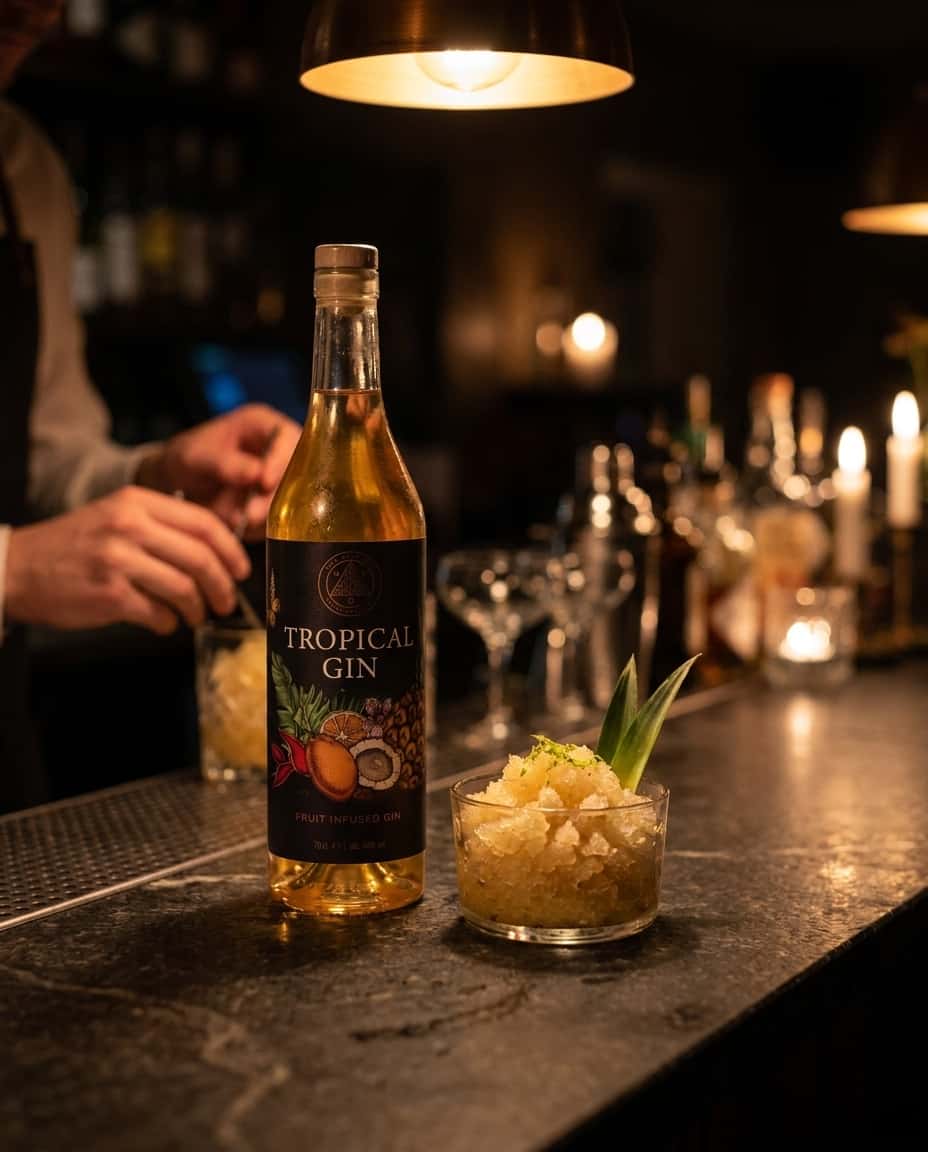
Gin version: A tropical gin can replace the rum for a more aromatic, herbal profile. Oslo Håndverksdestilleri Tropical Gin is an exciting Norwegian alternative – it has a fruity, floral character with citrus nuances that suits the lime juice elegantly and gives the granita a more complex, Nordic feel.
Notes on alcohol and texture
As mentioned: alcohol is a functional ingredient here, not just flavouring. If you use Bacardi Tropical (32% versus a standard 40%) it means you get slightly less alcohol per volume. The solution is simple: increase the amount to 7–8 cl instead of 6 cl.
Sugar and alcohol affect freezing differently, so their percentages cannot be added into one universal rule. Follow the recipe quantities and scrape the mixture regularly as it freezes.
Granita is, at its core, an argument for simplicity. Some of the best things in the glass – and on the spoon – do not require advanced equipment. They require good ingredients, a little understanding of what happens in the freezer, and a fork.
Happy summer.