
I've said it before, and I'll say it again: red wine is not always the answer. Not even with Easter lamb.
There is something almost ritualistic about the Norwegian Easter lamb tradition. The leg of lamb goes into the oven early on Good Friday, rosemary and garlic are pressed into the meat, and the house fills with an aroma that makes you forget it's below freezing outside. And to go with it, most people put out a bottle of red wine – often something southern and robust. But that is precisely the problem: a heavy, tannic wine can easily drown out what the lamb actually tastes like. Delicate, slightly gamey, almost sweet – lamb is a meat with character, and it deserves a match that actually brings it out.
Beer does that. I mean it completely seriously. And not just any beer – it's about choosing the right style. Let me explain why, and what you should look for.
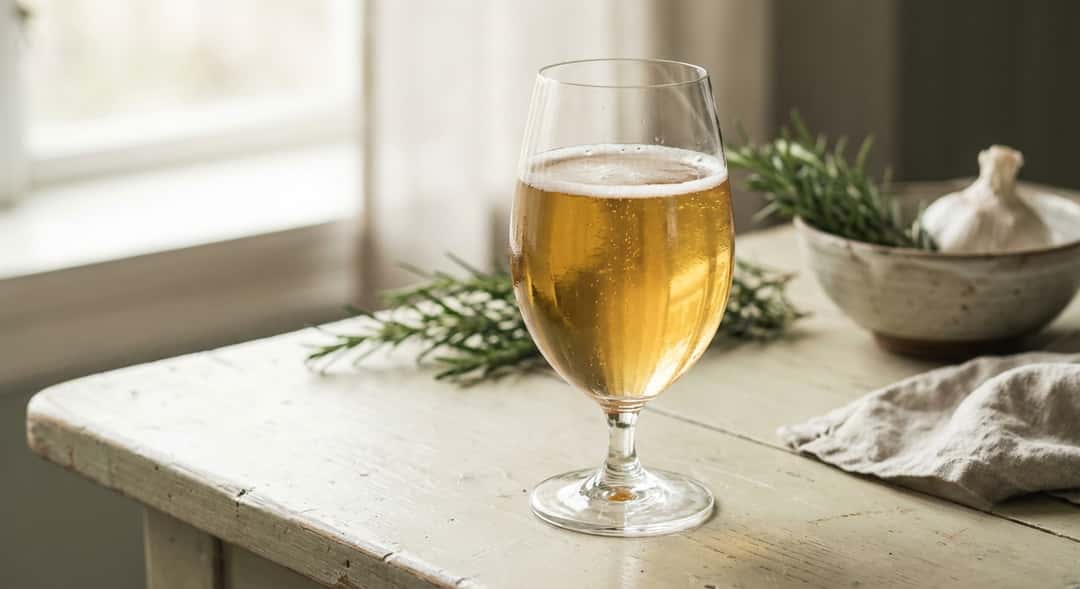
Why beer works with lamb
Lamb has a natural fattiness that needs carbonation to cleanse the palate. Where wine uses tannins to cut through the fat, beer uses bubbles and bitterness – and that is a milder, more pleasant form of contrast for many people. Beer is also rich in Maillard aromas: the caramelised, bread-like notes from the malt mirror the roasted crust on the lamb in a way that feels almost inevitably right.
But it's not just about food and chemistry. It's also about atmosphere. Easter means a cabin, sun through cold windows, a waxed jacket and slippers. Beer is part of that.
Saison: the natural Easter beer
Saison is the style I always return to in spring. Originally brewed for farm workers in Belgium and northern France, it is a style made to be drunk outside in sun and light. The yeast does much of the work: it produces fruity esters, peppery spice, and a dry finish that means the glass is almost always drained. Against lamb – especially a lamb prepared with herbs, lemon zest and garlic – Saison is a revelation.
Saison Dupont (6%, 75 cl) is the benchmark against which all others are measured. The Belgian brewery Dupont has been making this beer since the early 1900s, and it holds an iconic place in beer history. Fruity, spicy and dry – with a lightly tart aftertaste that washes the palate. It is substantial enough to stand up to the lamb, yet still respects it. Aromas of citrus, pepper and flowers dance around the roasted meat without competing.
If you want something Norwegian in the glass, Kinn Saison Extra (7%, 75 cl) from Florø is a great choice. Kinn is a brewery that truly understands the Saison style – and the Extra version has a little more body and alcohol than the base version, which sits perfectly against a richly glazed lamb dish. You also get a slightly more pronounced yeast character here, with notes of apple, pear and white pepper.
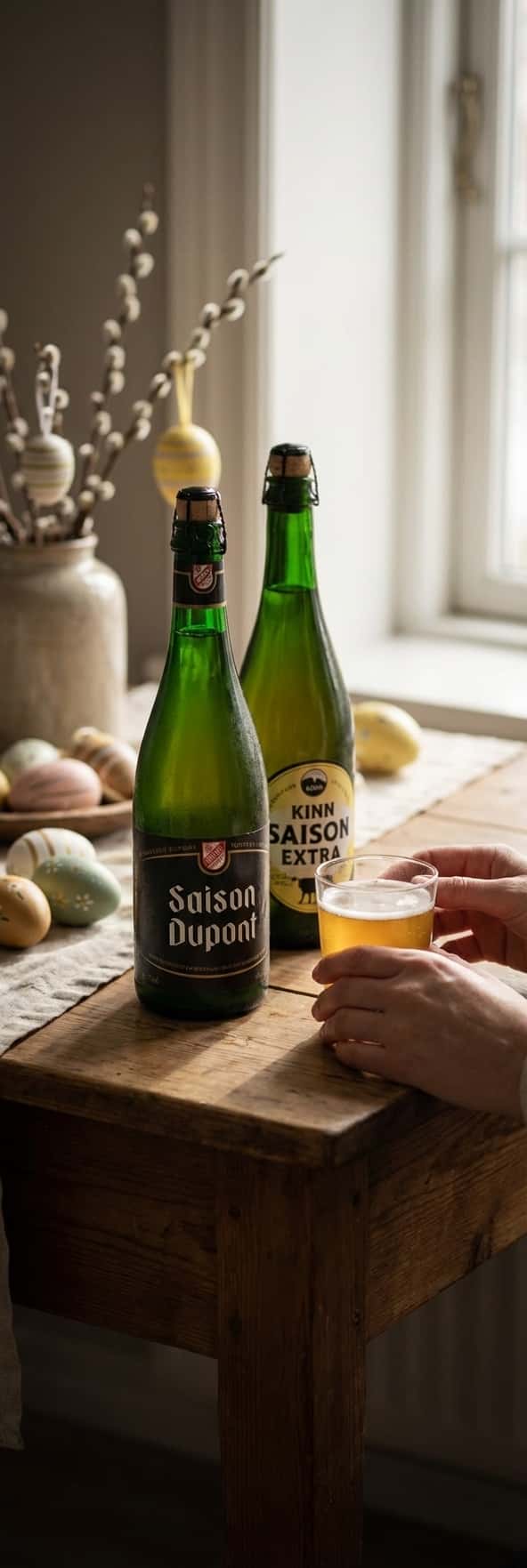
Another Norwegian variant worth mentioning is Klostergården Saison (7%, 50 cl). This is a beer that balances fruitiness and spice in a way that recalls classic Belgian examples, but with a slightly rounder malt profile that suits Norwegian tastes well. Perfect if you want something local on the table.
Amber ale: the safe route
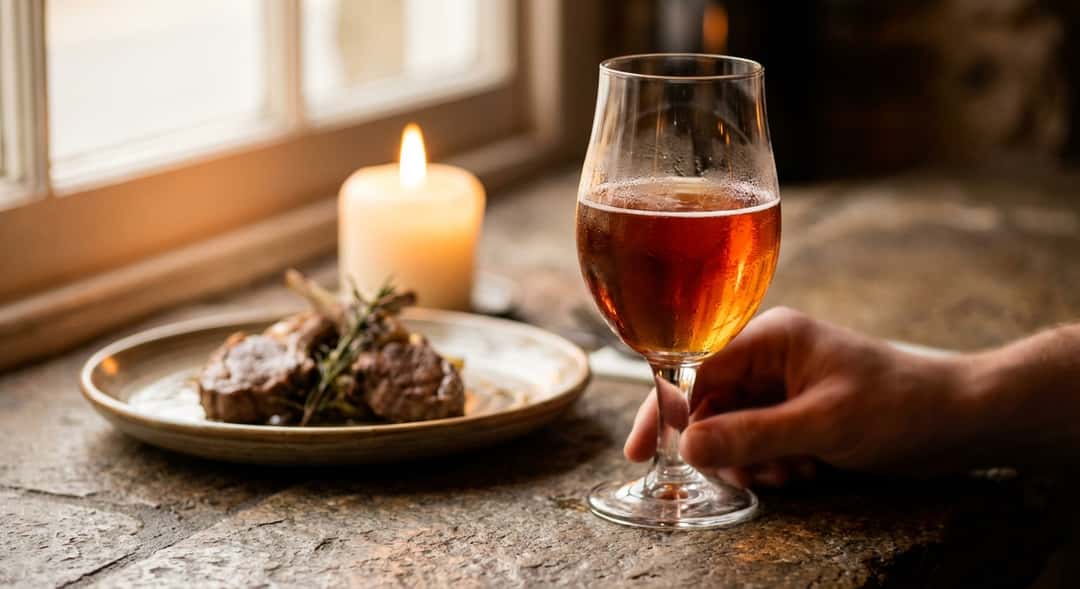
Amber ale is what many beer lovers would call the sensible compromise. It has enough malt to match the fat in the lamb, enough hops to keep things fresh, and a colour that looks beautiful in a glass at the Easter table.
La Parisienne Rousse Amber Ale (5%, 33 cl) is a fine example. The Parisian brewery produces an amber with caramel, a light nuttiness and a mild bitterness. There is nothing intimidating or complicated here – just good beer doing its job quietly and competently. I especially recommend it to those who are new to beer-and-food pairings.
The caramelised malt in a good amber ale actually mirrors the roasted crust on the lamb almost perfectly. It is as if the two speak the same language – warm, rounded, slightly sweet tones that reinforce each other without becoming dull.
NEIPA: surprising, but right
Here I just have to say it straight out: a juicy New England IPA with lamb is not as strange as it sounds. I know many people wrinkle their noses, but the thick, tropical fruitiness of a NEIPA – mango, peach, orange – actually mirrors the fruity notes in good lamb very well. What is crucial is that the bitterness is low. A too-bitter IPA ruins everything.
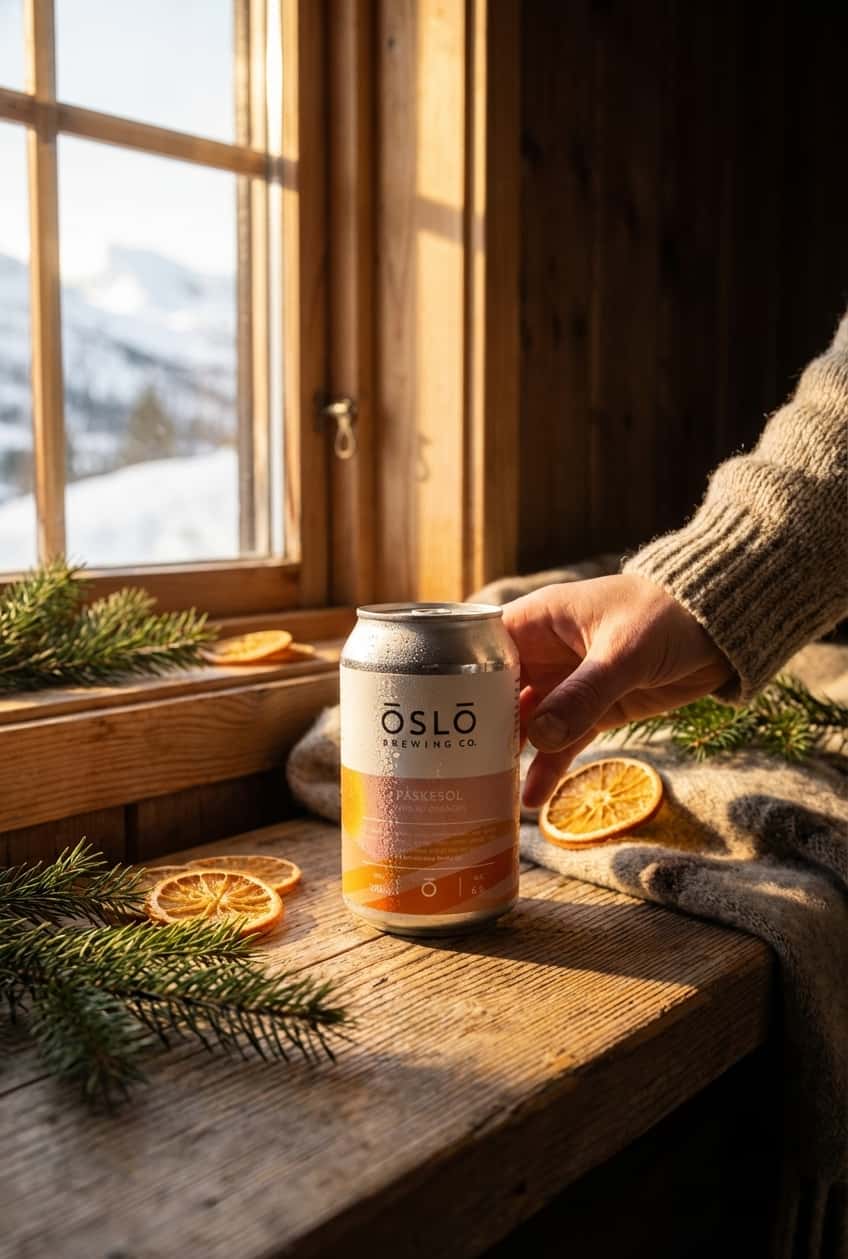
Oslo Brewing Påskesol NEIPA (6%, 33 cl) is a no-brainer here. The Easter promise is right there in the name, and the beer delivers: juicy, bright and fresh with distinct tropical fruit and a soft, creamy texture. It is genuinely one of the more welcome breweries to have taken Norwegian Easter tradition and pressed it into a modern beer format.
What makes NEIPA particularly interesting with lamb is the low perceived bitterness combined with high aroma intensity. You get all the fruitiness and complexity without the sharp hop bitterness that can clash with the meat. The result is a pairing that feels both modern and surprisingly harmonious.
What to avoid
Since we're talking expertise: let me also say something about what doesn't work.
Dark stouts and porters are too heavy. They compete with the lamb instead of complementing it – you end up with two powerful things clinging to each other without resolving anything. Great beer in other contexts, but not here.
Very aggressive West Coast IPAs with high IBU are not a winner either. The sharp bitterness amplifies any iron note in the lamb and makes the pairing metallic and harsh. If you want an IPA, stick to the softer, juicier variants.
Light lager works as a thirst-quencher but lacks the complexity to actually elevate the meal. Drinkable, but dull. You deserve better with your Easter lamb.
The glass matters more than you think
As a former brewer, I can't help but mention this: beer with food should always be served in the right glass. Saison belongs in a tulip glass – it gathers the aromas and lets the carbonation rise nicely. NEIPA works well in a wide, open IPA glass. Amber ale is more flexible, but a simple Pokal or Willi Becher is never wrong.
Temperature is also underrated. Saison should not be served ice-cold – around 8–10 degrees lets the taste profile open up. Take it out of the fridge 15 minutes before serving. That's all it takes. For amber ale you can go a little warmer, around 10–12 degrees, while NEIPA is best around 6–8 degrees.
The short version
The lamb on the Easter table deserves more than automatic red wine. Saison – whether a classic like Saison Dupont or a Norwegian variant like Kinn Saison Extra or Klostergården Saison – is the most natural match. Amber ale is the safe and accessible option. And if you dare: a juicy NEIPA like Oslo Brewing Påskesol will pleasantly surprise you.
It's Easter. The sun is on its way. The lamb is waiting. Pour the glass.