
There are thousands of drink recipes out there, but the really interesting thing happens when you no longer need them. When you understand why a drink works, a whole new world opens up — one where you can improvise with what you have in the fridge, adapt the flavor to the season and the mood, and end up with something that is entirely your own.
I use five building blocks when creating drinks: acidity, sweetness, base, dilution and aroma. Not every drink needs all five. This method is especially useful for sours and long drinks; a Martini or Old Fashioned uses a different balance.
Acidity – the muscle that lifts everything
Acidity is what makes a drink come alive. Without it, everything goes flat and dull, like a football match where everyone just walks around. Lemon and lime are the classics, but now that spring is here I've started looking at the alternatives: rhubarb juice, green apple, even a splash of white wine vinegar in the right context.
The brilliant thing about acidity is that it doesn't just taste sour — it balances sweetness, highlights aromas, and gives structure. Try this exercise: make a simple drink with a base and a sweetener (gin and honey syrup, for example), taste it, then add lemon juice one teaspoon at a time. Feel how the drink rises, how it suddenly gains edge and direction.
Rule of thumb: start carefully. It's easier to add more acidity than to rescue a drink that has tipped over into sharpness.
Sweetness – the anchor that holds it all together
Sweetness is not just sugar. It's balance, body, mouthfeel. And this is where it gets really fun, because the source of sweetness shapes the character of the entire drink.
Simple syrup (1:1 sugar and water) is the neutral starting point. But try warming honey with a little water instead — suddenly you get a deeper, floral sweetness that works like magic with gin. Or make a syrup from rhubarb and cardamom, and watch how it delivers both sweetness and complexity at the same time.
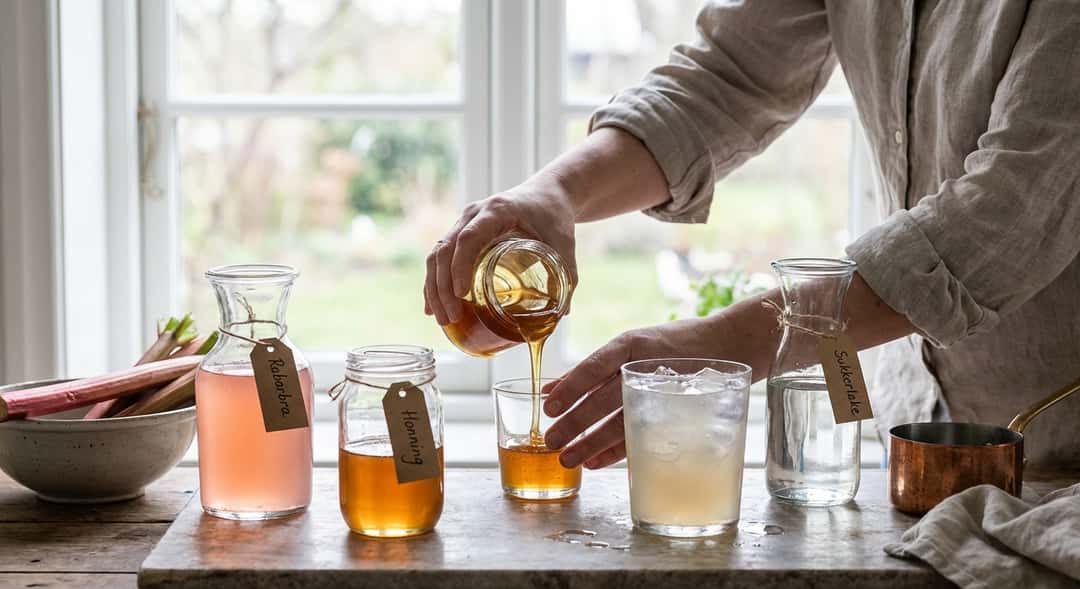
My favorite method this spring: cook down yellow onion with sugar and a little salt until it caramelizes, dilute with water, strain — you have an umami-sweet syrup that is absolutely magical in vodka-based drinks with herbs.
Remember: sweetness doesn't just temper acidity, it also gives weight and texture. A drink without enough sweetness feels thin, almost aggressive. One with too much becomes sticky and tiring.
Base – the foundation that carries the flavor
This is where many people start, but really you should think of the base as the canvas you're painting on. What character should it have? How much should it dominate?
Gin is the most forgiving base for improvisation because the juniper provides a natural bridge between botanicals and pickled ingredients. A classic London Dry like Hernö London Dry Gin gives you purity and clarity — you can taste everything else you add. If you want something more complex from the outset, a gin with distinct herbal or citrus notes, such as Harahorn Gin, can give you a head start on the taste profile.
Vodka is the blank canvas — almost invisible, perfect when you want other ingredients to shine. The Norwegian Amundsen Arctic Vodka is a clean, neutral choice that lets spring's delicate aromas come forward without being overshadowed.
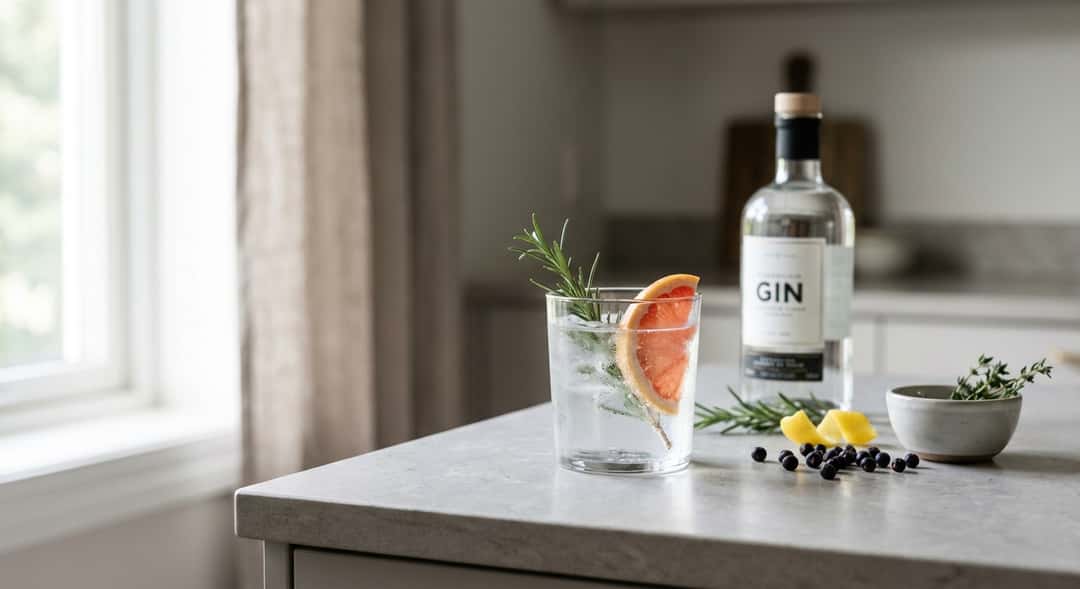
A rule of thumb: 4–6 cl of base per drink. But let taste be your guide. If you're making something with intense aromatic ingredients (say chili and coriander), you may need more base to carry them.
Dilution – the thing nobody talks about, but everyone needs
This is the most underrated element. Dilution is not about watering things down — it's about making the drink drinkable, elegant, balanced.
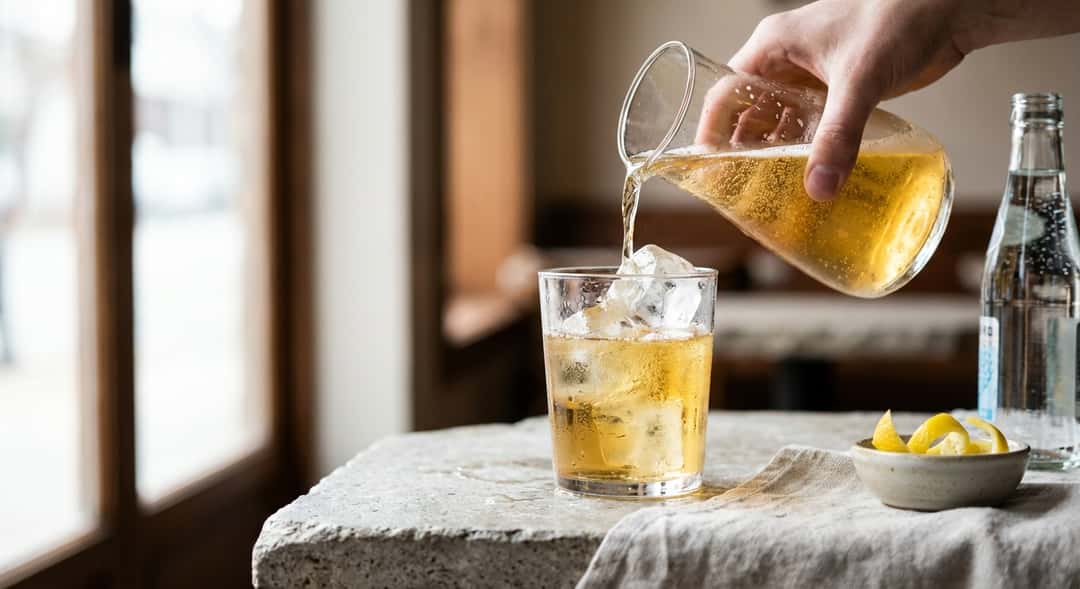
Ice is the classic solution. When you shake a drink with ice, you dilute it with meltwater at the same time as you chill it. If you build a drink directly in the glass (like a G&T), the ice adds gradual dilution as you drink. It's a living thing.
But tonic, soda water, sparkling wine — all of these are also dilution. They add liquid, carbonation, and (in the case of tonic) bitterness. A drink with 5 cl of base and 1.5 cl of syrup/lemon needs dilution. Without it you get a syrupy shot, not a drink.
My spring favorite: sparkling water flavored with apple blossom or elderflower, which both dilutes and adds a subtle, Nordic aroma.
Aromatic – the finish that makes it personal
This is the seasoning, the finish, the thing that makes the drink yours. Here you can go completely wild.
Bitters are the most elegant route: a few drops of Angostura Aromatic Bitters can lift an otherwise flat drink with layers of spice, wood, and complexity. They work like a chef who tastes the dish and adds exactly that little something extra.
But think more broadly too: fresh herbs (mint, basil, tarragon), citrus peel (the oil in the peel, not the juice), flowers, even a twist of black pepper. The rhubarb growing in the garden can be cut into thin slices and placed in the glass — it adds both aroma and visual elegance.
Spring's aromatic palette is unique: fresh, green, lightly bitter, with hints of blossom and grass. Make the most of it.
The building method – how to put it all together
Now that you know the five building blocks, it's time to put them together. Here is my method:
1. Decide on your base and the occasion: should this be invigorating, relaxing, food-friendly? Choose your base accordingly — gin for complexity, vodka for purity.
2. Choose your sweetener based on which aromas you want. Honey gives florals, agave gives minerality, rhubarb gives tart fruitiness.
3. Find your acidity — does it taste good with the sweetener? Lemon is classic, but grapefruit, lime, or apple can give entirely different dimensions.
4. Build in glass or shaker: start with 5 cl base, 1.5 cl sweet, 2 cl acid. This is the starting point, not the law.
5. Taste (yes, before you've fully diluted). This is the most important step. Feel the balance between acid and sweet. Is it too sharp? Add more sweetener. Too flat? More acidity.
6. Adjust: is it missing acidity? Sweetness? Body? Fix it now, while you still can.
7. Add dilution — ice, tonic, soda. This opens up the drink, makes it airy and drinkable.
8. Finish with aromatics — bitters, herbs, peel. This is your signature, the thing that makes the drink unique.
The most important trick? Taste as you go. Every time you add something, taste the drink. Feel how the balance shifts. This is not chemistry, it's cooking — and the best guide you have is your own palate.
Three spring examples without a recipe
The green one: gin + agave syrup + lime juice + mint + soda. The balance lies between fresh acidity and sweet agave, the mint provides aroma, the soda lightens it all. Perfect with a lunch salad of asparagus.
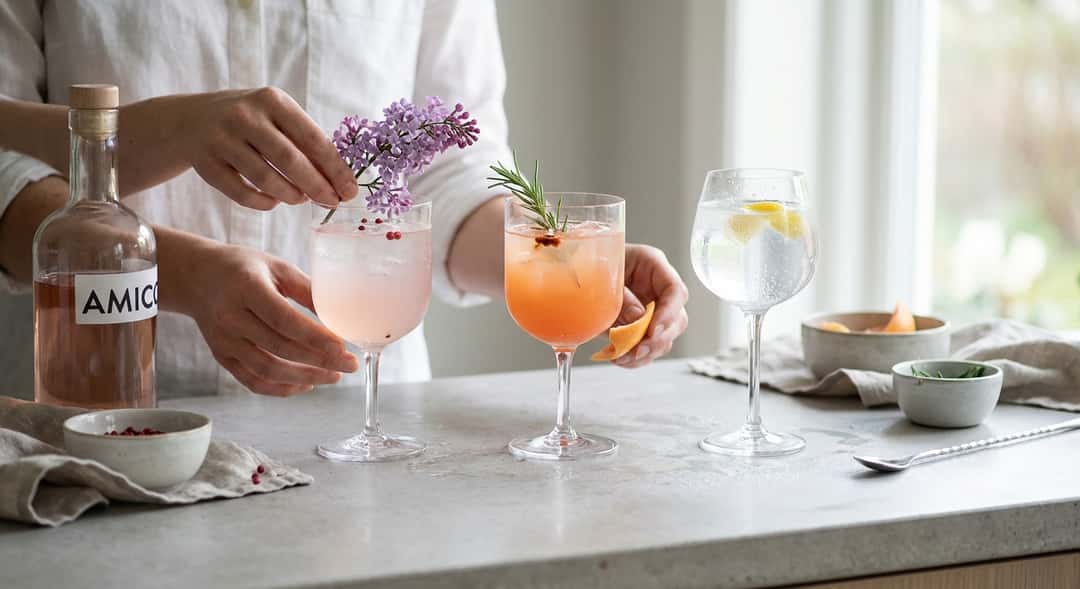
The floral one: vodka + elderflower syrup + white balsamic (the acidity!) + tonic + pink peppercorns. Delicate, perfumed, like drinking a spring meadow. Lovely as an aperitif.
The urban one: gin + honey water + grapefruit + rosemary + Angostura. Balances sweet and bitter, rosemary gives a woody depth. Works brilliantly with grilled chicken.
No quantities given. Because you'll find those yourself when you taste and build.
Freedom through understanding
This is what I love about understanding the principles: you become free. No longer tied to recipes, no longer dependent on the store having exactly that one ingredient. You can stand in front of the fridge, see what you have, and build something beautiful.
A good drink is like a good meal — it's about balance, about knowing your ingredients, about tasting as you go. And just as with cooking, you get better the more you practice. So start simple. Choose a base you like, find an acidity and a sweetener, and build from there. Taste, adjust, learn.
Spring is the perfect time to experiment. The ingredients are fresh and light, the days are getting longer, and there's something in the air that calls for something crisp and refreshing in the glass. So forget the recipes for a while. Trust your palate. Build your own drink.