
It was a warm summer evening in Venice in the 1800s. Austrian soldiers stationed in the Italian lagoon found the local wine a little too strong for the oppressive heat. The solution was simple: they asked for it to be diluted with a splash of water – a "spritz" in German dialect. Nobody knew at the time that this casually pragmatic move would become the foundation for one of the world's most popular summer cocktails.
I like that story. Not because it's romantic, but because it reminds us of something important: the best drinks tend to arise from necessity and common sense, not from strict recipes.

The principle is everything
Many people think that an Aperol Spritz is the spritz, and that everything else is a deviation. But Aperol is just one of countless bitters you can build a spritz around. The principle itself is razor-simple:
Bitters + bubbles + ice + garnish
That's it. Four elements. Learn them, and you'll never need a recipe again.
The bitters provide the character – the sweetness, the herbal quality, the slightly demanding edge that keeps your attention on the glass. The bubbles add freshness and lift the aromatic notes up toward your nose. The ice keeps everything cold and brings the alcohol down to a comfortable level. The garnish isn't decoration for decoration's sake – an orange peel or a sprig of rosemary actually adds flavour and aroma to that first impression.
The ratio? A good rule of thumb is 3–4 cl bitters, 9–12 cl bubbles – prosecco, cava, or a dry sparkling wine you enjoy. Some like to top it off with a splash of sparkling water for extra lightness. Adjust to your own taste. That's the whole point.
Three summer variations to try
1. The classic – Campari
Campari is the original bitter. It was created in Milan in 1860 and is made from a secret blend of herbs, spices, and fruit peels – a recipe that has never been made public. The flavour is intense, almost liquorice-like bitter with distinct notes of orange and something reminiscent of grapefruit peel. It is stronger than Aperol, with a ruby-red colour that looks almost artful in the glass.
Campari Bitter is the starting point for any spritz explorer. Build it like this:
Ingredients:
- 4 cl Campari Bitter
- 10 cl prosecco or cava
- 2 cl sparkling water (optional)
- Plenty of ice
- Garnish: orange slice or peel
Method:
- Fill a large balloon glass to the brim with ice cubes.
- Pour over the Campari.
- Add prosecco or cava carefully along the edge of the glass.
- Top with sparkling water if desired.
- Place the orange slice on top and stir gently once.
The result is red, fresh, and with a bitter edge that makes you automatically reach for another sip. Perfect with cheese and salted nuts on the terrace.

2. The mild and sun-drenched – Aperol
Aperol is the milder sibling. Lighter orange in colour, lower in alcohol (11%), and with a sweetness that makes it more approachable for people who aren't fans of the intensely bitter. The flavour carries notes of orange, rhubarb, and a hint of vanilla – like a summer's day in a glass.
Aperol Spritz is perhaps the world's most photographed drink right now, and there's a reason for that: the combination is genuinely good and easy to enjoy. But do try swapping the prosecco for a drier cava – it gives more backbone and prevents the drink from becoming too sweet.
Ingredients:
- 4 cl Aperol
- 9 cl dry sparkling wine
- Splash of sparkling water
- Plenty of ice
- Garnish: orange slice and ideally a green olive (try it – it works!)
Method:
- Fill the balloon glass with ice.
- Pour over the Aperol.
- Add sparkling wine carefully.
- Top with a splash of sparkling water.
- Garnish with the orange slice and olive.
3. The Norwegian wild card – Marka Bitter
This is where I really have fun. Oslo Håndverksdestilleri Marka Bitter is made with Norwegian herbs and plants – which gives it a more earthy, forest-like profile than the Italian classics. Think wild thyme, birch, and something resinous that reminds you of walking through Nordmarka on an early morning. It's different, and surprisingly good.
Build it exactly like the others, but try an off-dry Norwegian sparkling wine or a dry cider instead of prosecco. Top with a sprig of fresh thyme and a slice of lemon.
Ingredients:
- 3 cl Marka Bitter
- 10 cl off-dry sparkling wine or dry cider
- Ice
- Garnish: sprig of thyme, lemon slice
Method:
- Fill the glass with ice.
- Pour over the Marka Bitter.
- Add sparkling wine or cider.
- Place the thyme sprig and lemon slice on top.
- Stir gently and serve immediately.

The role of the bubbles – don't underestimate it
If you choose a prosecco with a lot of sweetness, the whole drink becomes sweeter. If you choose a brut nature or dry cava, you get more minerality and sharpness. It's not irrelevant what you pour into the glass.
A good rule of thumb: the sweeter the bitters (like Aperol), the drier the bubbles you should choose. And vice versa – with a very dry and intense bitter like Campari, you can easily use a prosecco with a little residual sweetness. They balance each other out.
Sparkling water is not cheating. It is actually how many bartenders in Italy serve their spritz – with a splash of sparkling water on top to lengthen the drink and lower the alcohol slightly. Call it an extension, not a dilution.
The glass matters more than you think
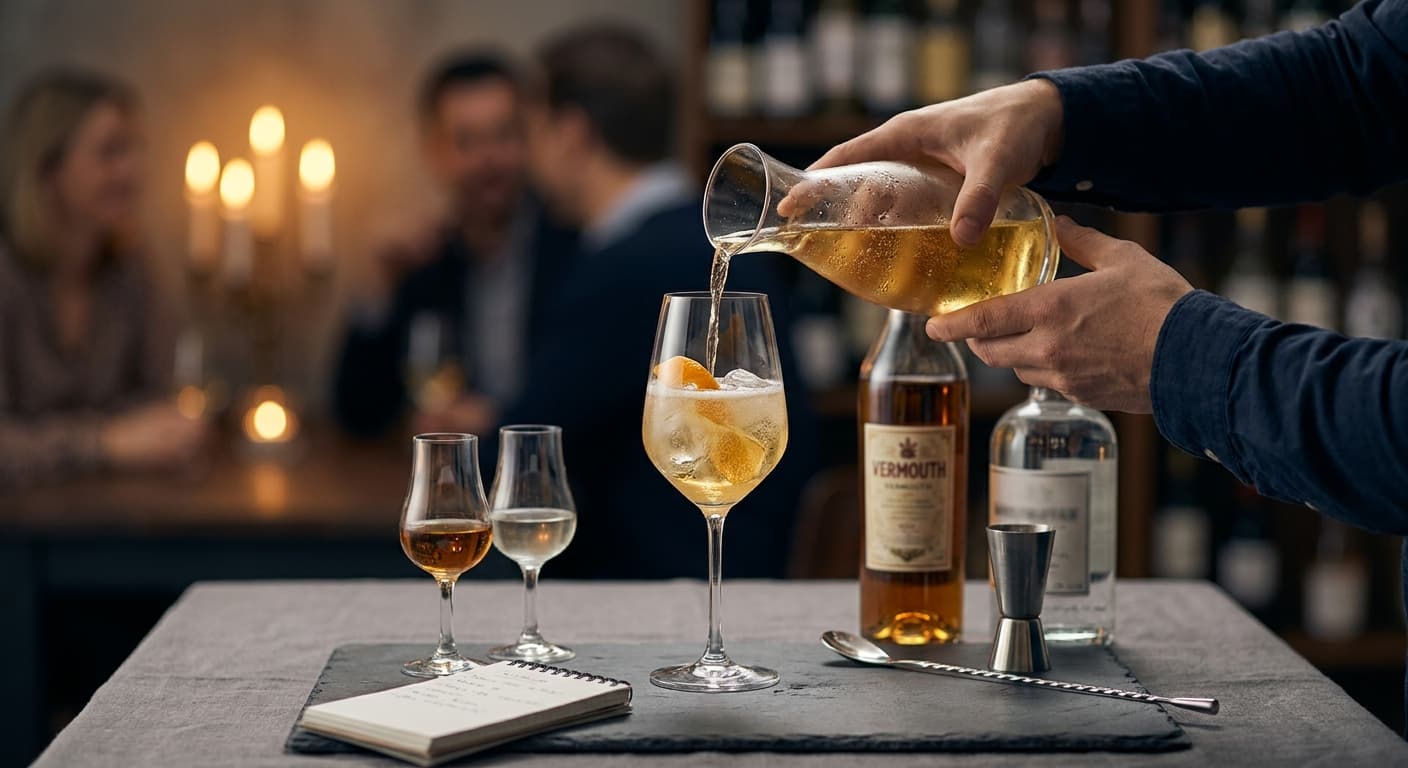
Large balloon glasses aren't just aesthetics. The large volume of air above the drink lets the aromas gather, and the wide opening means you actually smell the drink before you taste it. You also have room for plenty of ice, which is crucial. A lukewarm spritz is not a good spritz – it's just sweet, warm wine with an aftertaste of disappointment.
Fill the glass with ice all the way to the brim. Not halfway. To the brim.
It's about freedom
The beautiful thing about the spritz principle is that there is no definitive answer. You can experiment with rhubarb bitters, Norwegian herbal bitters, or even a small squeeze of grapefruit juice to amplify the citrus note. You can swap prosecco for a sparkling white tea for a non-alcoholic version that actually works.
And the next time someone asks what you want to drink this summer, you don't need to open an app or look up a recipe. You already know the answer: a little bitter, lots of bubbles, ice to the brim, and something fresh to look at in the glass.
Have a great summer with that.