
It was a summer evening a few years ago. I had invited friends over for a grill night, ordered three cases of rosé and a bucket of ice – and then the message arrived: "Lars, can you have something non-alcoholic? There are six of us who aren't drinking this summer." Six people! I stared at the two bottles of sparkling water I had put out as backup and felt the shame creeping in.
That evening was a lesson. Since then I have spent meaningful hours figuring out what actually works at a summer party – not just as a nod to the abstainers, but as a genuine drinking experience everyone can enjoy.
And thankfully: in 2026, the selection of non-alcoholic wine alternatives is better than ever.
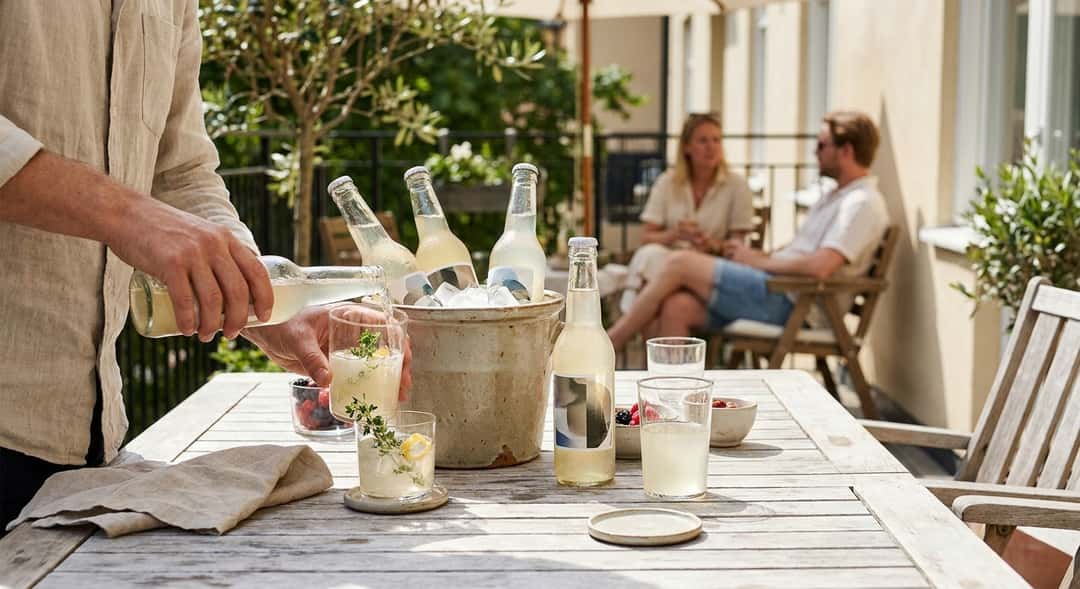
What exactly is "non-alcoholic wine"?
First, a little background. Non-alcoholic wine is most often made from real wine from which the alcohol is later removed through vacuum distillation or reverse osmosis. The process is far more demanding than many people think, and the best producers actually manage to retain much of the fruitiness and structure. The result is not always identical to regular wine – but that is not the point either. It is a standalone product that should taste good, not a copy.
In addition, there is a whole world of sparkling teas, apple juice, and fermented drinks that often find their natural place on the wine table. Include them in your consideration – you won't regret it.
Think style by situation
The most important advice I can give is this: think about non-alcoholic wine exactly the way you think about regular wine. What are you eating? What is the mood? Is it an aperitif, a meal, or dessert? The answers to those questions guide the choice – regardless of whether the bottle contains alcohol or not.
For aperitif and welcome drinks
Here you want bubbles. Something that sparkles, something that looks festive in the glass and gets the taste buds going while the grill warms up.
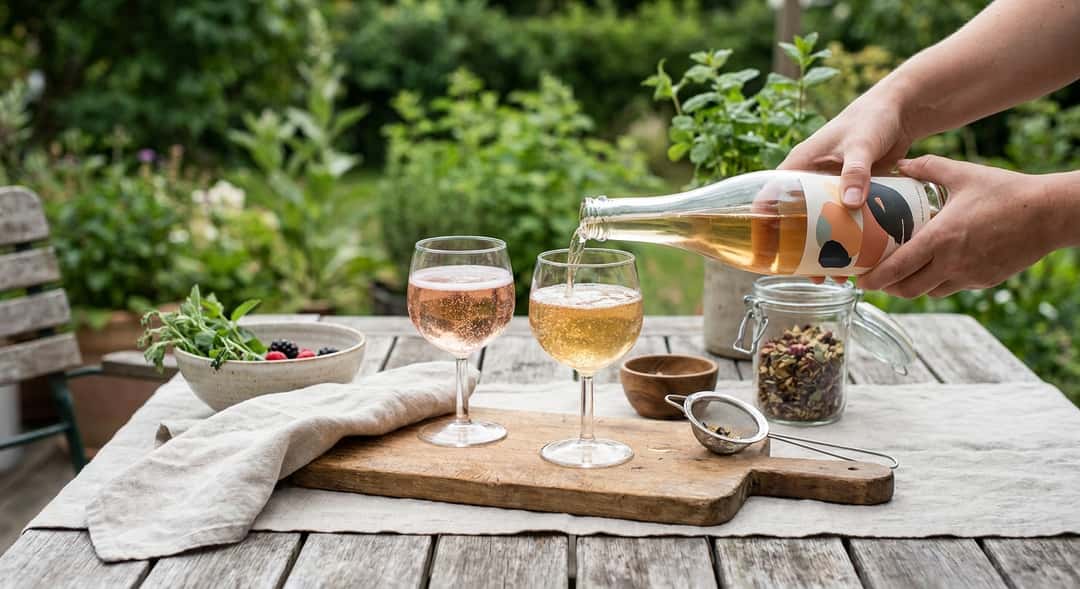
Pierre Zero Signature Sparkling Rose is a good example of what the category can deliver. Pale salmon colour, fine and persistent bubbles, and a flavour that leans towards fresh strawberry, a little citrus, and a discreet floral note. It looks elegant in the glass and is the closest you get to a classic Provençal sparkling rosé – without a drop of alcohol.
If you prefer something a little more unconventional, Copenhagen Co. Sparkling Tea Blå is an exciting choice. This is a sparkling tea made from a blend of different tea types and natural botanical ingredients, and the result is floral, slightly tart, and surprisingly complex. Many guests who taste it for the first time are not sure what they are tasting – and that is actually a compliment. It is something of its own, and it deserves a proper champagne glass.
For grilled food and salads
When the meat hits the grate and the air smells of smoke, you want something with a little more body and character.
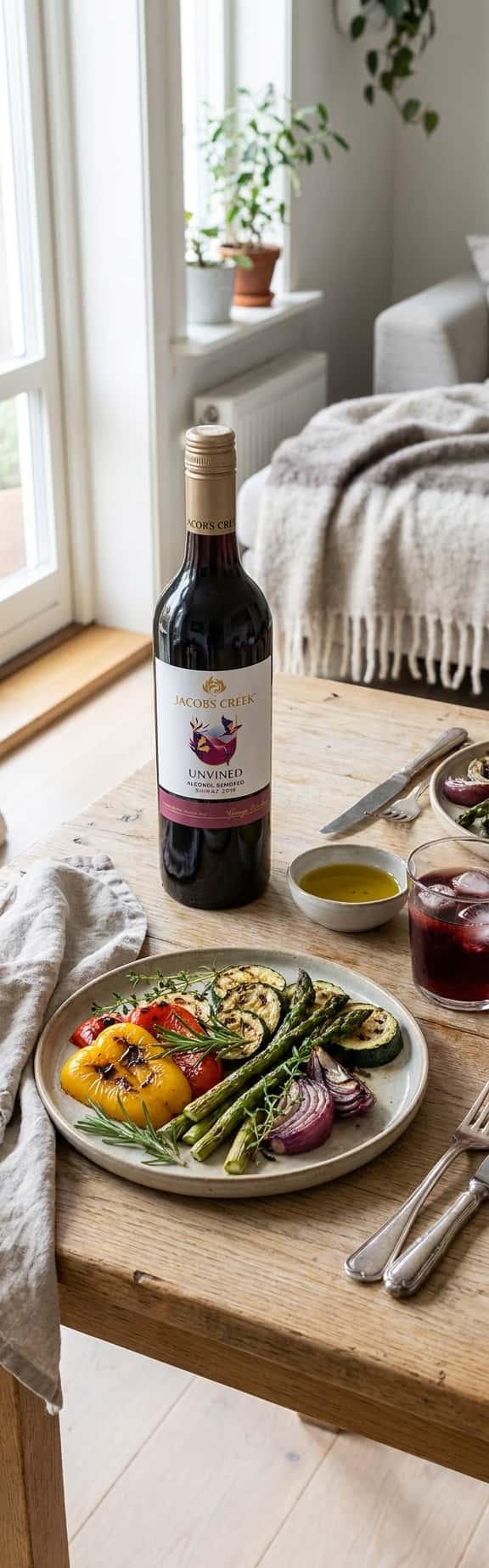
Jacob's Creek Unvined Shiraz from Australia is made from real Shiraz grapes from which the alcohol has been removed through gentle vacuum distillation. It has the typical Australian Shiraz profile with dark plum, a little black pepper, and a warm, round finish. It may lack the final layer of tannin complexity you find in a full-strength red wine, but with burgers, grilled sausages, and spiced chicken it works excellently. Serve it at room temperature – around 16 degrees – and the character comes through best.
For those who prefer white with fish on the grill: Strauch Blanc Pur Riesling 2024 is a non-alcoholic Riesling with the characteristic fruity acidity and floral aroma you expect from the grape variety. Think green apple, peach, and a hint of white flowers, with a clean mineral finish that cleanses the palate. With grilled salmon or white fish with herbs and lemon, it is a winner.
And if you want something that combines the best of both worlds – a little fruit, a little acidity, and fine bubbles – Leitz Eins Zwei Zero Sparkling Riesling from Rheingau in Germany is a safe and versatile choice. It has become one of the best-selling non-alcoholic Rieslings in Scandinavia, and not without reason. Fresh apple and peach notes, balanced acidity, and a clean mineral finish make it a regular on my table.
| Product | Style | Pairs with |
|---|---|---|
| Pierre Zero Sparkling Rose | Sparkling rosé | Aperitif, snacks |
| Jacob's Creek Unvined Shiraz | Full-bodied red | Grilled meat, burgers |
| Strauch Blanc Pur Riesling | Fresh white | Fish, salads |
| Copenhagen Co. Sparkling Tea Blå | Sparkling tea | Aperitif, dessert |
| Leitz Eins Zwei Zero Sparkling Riesling | Sparkling white | Versatile, aperitif and food |
Don't forget the ciders and apple juice
Norwegian and Scandinavian apple juice has had a real upgrade in recent years, and at a summer party these can serve as a fantastic bridge between "just sparkling water" and a genuine wine experience. They are fresh, fruity, and look great in the glass – especially the sparkling varieties.
If you want something Norwegian and locally rooted, Balholm Sprudlande Emma eplemost from Sogn is a good choice. It is made from apples and has a natural sweetness balanced by fresh acidity – exactly what you want on a warm summer day. Serve it ice cold in a white wine glass and watch the guests light up.
Practical tips for the party
A couple of things that make the non-alcoholic experience better:
Serve it cold. This applies especially to the sparkling varieties. A non-alcoholic wine that is too warm loses much of its charm. Aim for 7–10 degrees for whites and rosés, and around 14–16 degrees for the reds.
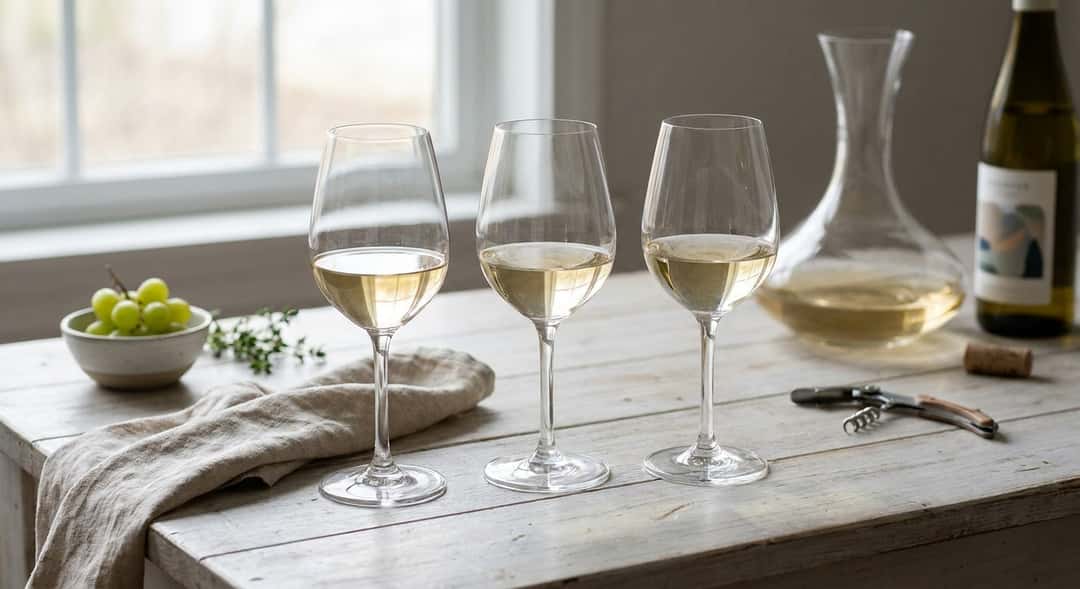
Use proper glasses. It sounds trivial, but a wine glass elevates the experience enormously – for the non-alcoholic drink too. A champagne glass for the sparkling rosé, a white wine glass for the Riesling. It is a small detail that makes a big difference.
Feel free to mix. Many non-alcoholic alternatives work excellently as a base for light summer cocktails. The sparkling rosé with fresh mint and a slice of lemon is wonderful. The non-alcoholic Riesling with a little crushed ice and a sprig of rosemary? Surprisingly good. Play around.
Have enough of it. A classic mistake is buying three bottles of non-alcoholic drinks for twelve people, six of whom don't drink alcohol. Plan quantities around the number of guests, the length of the evening and the other non-alcoholic drinks you are serving. There is nothing more embarrassing than running out of the non-alcoholic option at half past eight.
It's about inclusion
I think the most important thing we can do as hosts is to make sure that everyone around the table – whatever their reason for not drinking alcohol – gets a drinking experience that matches the rest of the evening. Not a half-hearted alternative in a plastic bowl, but a thoughtfully chosen bottle served with pride in a proper glass.
It really is that simple. And the next time six friends send me a message saying they don't drink alcohol, I am ready – with an ice bucket full of carefully selected bottles and a smile on my face.
Cheers – with whatever is in the glass.