
There is something about September that makes the whisky glass feel more fitting than the whole summer combined. Maybe it's the light growing lower, maybe it's simply that we finally dare bring out the heavier bottles again. Whatever the reason: autumn 2026 offers a whisky scene where peat, wood and local nature are no longer curiosities, but the very project itself.
More and more producers — both Norwegian and Scottish — are building their entire identity around what happens when you let the landscape speak directly into the cask. It's about bog that gives smoke, about local oak that gives spice, and about a sea that gives salt without anyone adding it on purpose.
A whisky cask is really just a window into the place it was filled.— MAGNUS MIXMASTER
Why does whisky taste different in autumn?
Whisky doesn't change chemically with the seasons, but your experience of it does. Lower room temperature and cooler air make the aromas of peat, wood and spice come through more clearly and more concentrated. Your body is also more receptive to heavy, warming flavours as the temperature outside drops — which is why a robust dram feels more fitting in October than in July.
What does "Norwegian terroir" mean in whisky?
Norwegian terroir in whisky is about climate, water, wood and, to some extent, local peat leaving a recognisable imprint on the finished product. In practice, this means an Arctic maturation climate with large temperature swings, local bog used for smoke-drying malt, and oak casks that have sat in Norwegian climate before being filled. The result is often a whisky with a more mineral, salty or rugged character than its British siblings.
Myken – whisky of the sea from the Helgeland coast
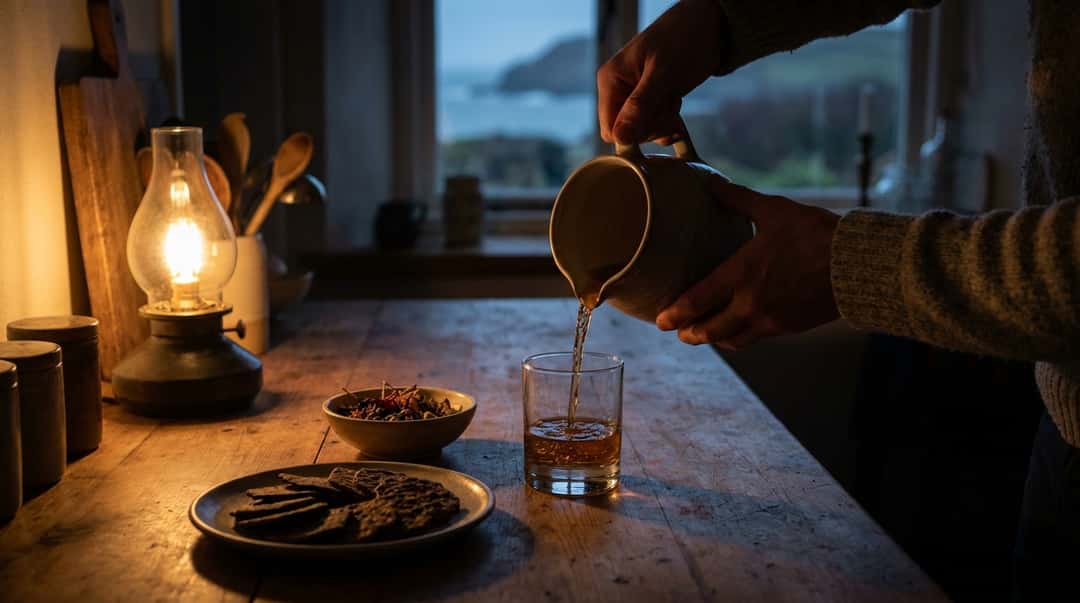
On the small island of Myken off the Helgeland coast, whisky is matured in a climate where the sea is almost an ingredient in itself. The great swings between storm and calm, saltwater and dry wind, make the casks "breathe" more than they would in a more even Scottish climate. Myken French Relation Arctic Single Malt Whisky is a fine example of this style — a whisky that balances sweetish fruitiness from French oak casks against a distinct, almost seaweed-brushed salty undercurrent. It's exactly the kind of dram that suits autumn's seafood stews and smoked fish, where the saltiness in the glass meets the saltiness on the plate.
Hiernagla – peat smoke sourced from Norwegian bog
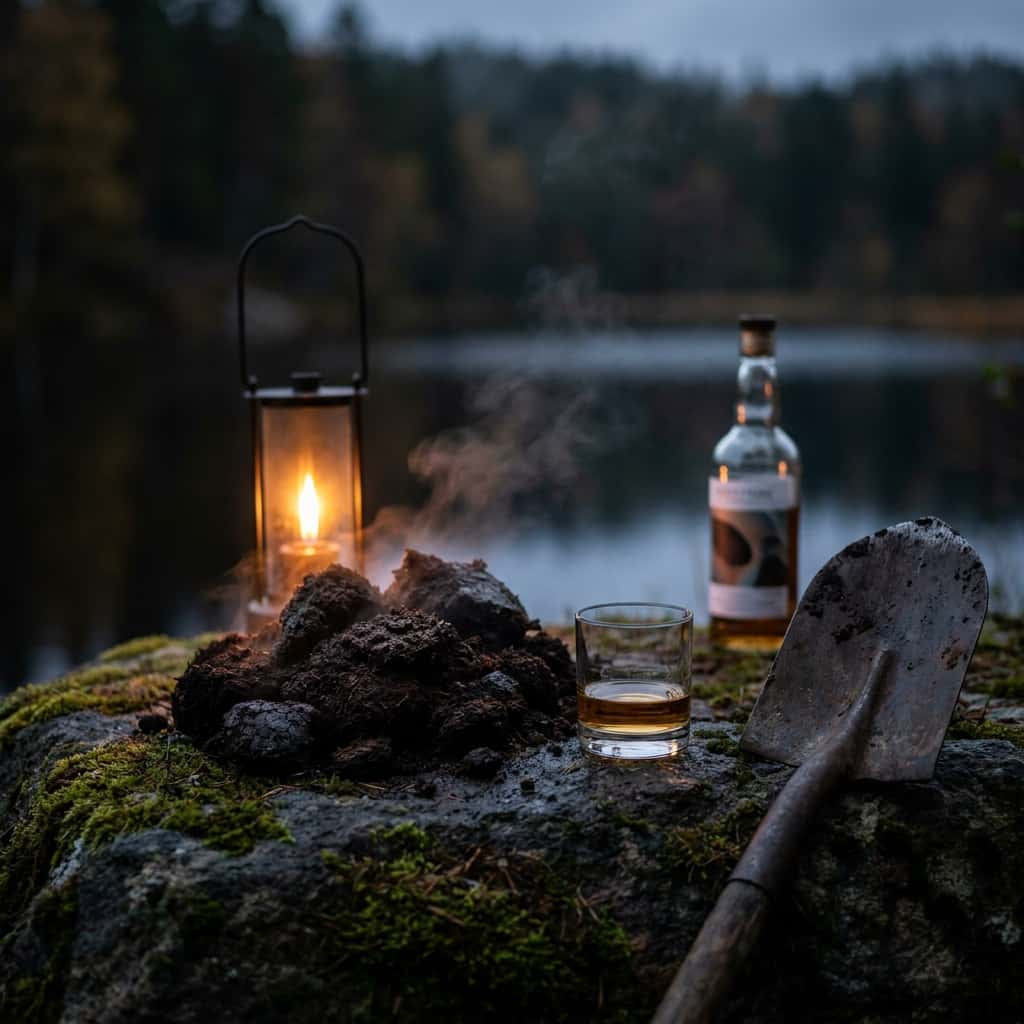
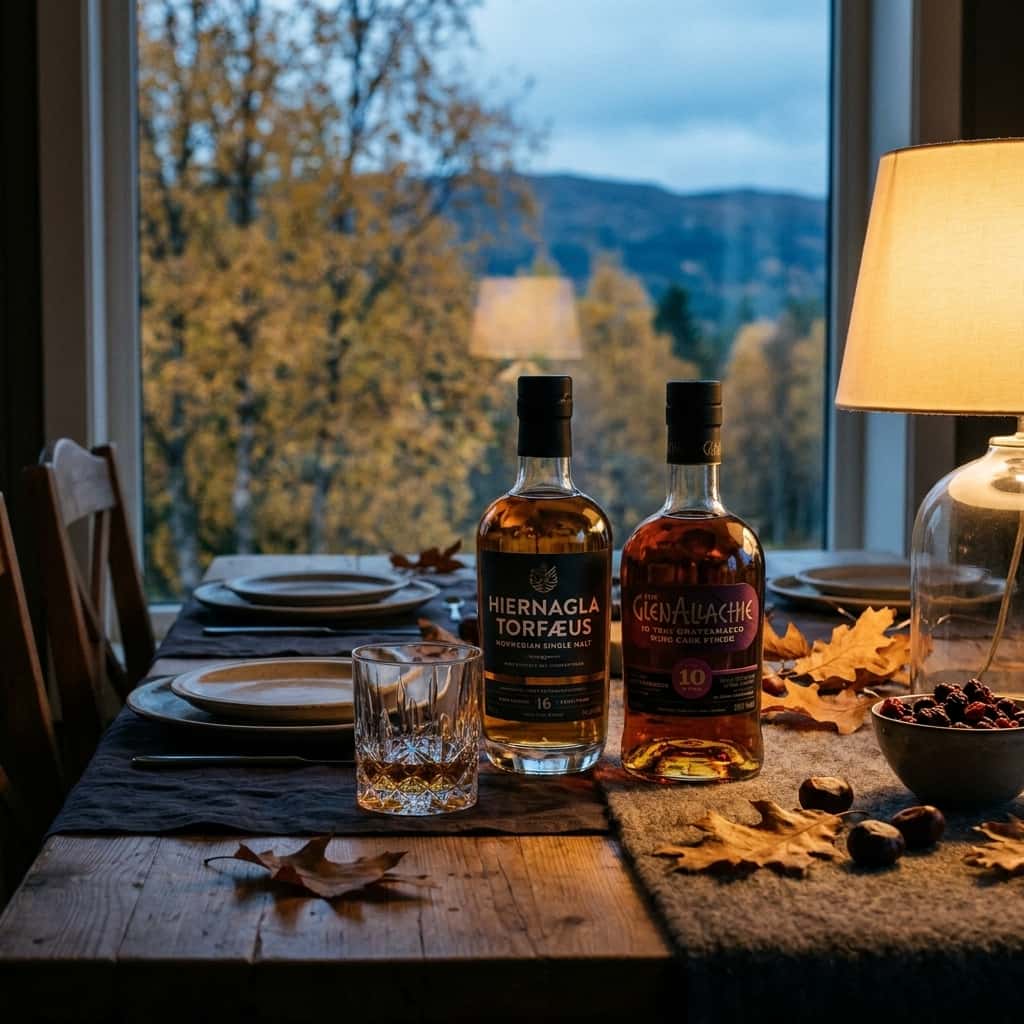
While Scottish peat smoke traditionally comes from Islay, some Norwegian producers now source their own peat locally — with an entirely different chemical composition than the Scottish kind. Hiernagla Torfæus single malt whisky is named precisely after the peat, and the smoke it gives is less medicinal and iodine-like than the Islay style, but instead sharper and almost resinous, with distinct notes of birch and pine needle. This is a whisky well suited to a quiet evening by the fireplace, ideally alongside dark chocolate or a piece of aged brown cheese.
Scotland experiments right back

While Norwegian distilleries draw inspiration from their own nature, Scottish producers are responding with increasingly unconventional casks. Kilchoman Mezcal Matured Single Malt Whisky is a fresh example: the classic Islay peat here meets a smoky, almost earthy sweetness from former mezcal casks, and the result is a whisky that proves peat and agave can actually speak the same language. GlenAllachie Grattamacco 10YO Single Malt Whisky takes a different route, drawing character from Italian wine casks, where dark berry fruit and a touch of tannins settle as a new layer atop the classic Speyside sweetness. Both show that "terroir" isn't only about where the grain was grown, but also about what landscape the cask itself has lived in before it met the whisky.
How do I taste out peat, wood and terroir at home?
You don't need a warehouse to discover these nuances — just a bit of patience and the right technique. Pour the whisky into a tulip-shaped glass, let it sit undisturbed for at least five minutes, and inhale with your mouth slightly open to avoid the alcohol dominating your nose.
- Start by smelling without tasting, and note whether you pick up smoke, wood, fruit or salt first.
- Take a small sip and let it sit on your tongue for a few seconds before swallowing.
- Add a few drops of water and repeat — many peated drams only open up then.
- Try comparing two glasses side by side, one Scottish and one Norwegian, to feel the difference in character directly.
What should I serve with autumn's peaty drams?
Peated and wood-driven whisky loves the company of food with smoke, fat or sweetness that can meet its intensity. Smoked salmon, dark chocolate, aged cheese and even grilled mushrooms are all good companions. Try thinking of the whisky as a spice blend rather than a drink on its own — that makes it easier to find the right match.
For me, autumn is the only season where I truly let the whisky take its time. Summer's light drinks are traded for quiet evenings where the glass gets to sit undisturbed long enough for all the layers of flavour to reveal themselves. It's an exercise in patience that pays off — especially when you're working through something with as much history in it as a proper peaty or wood-matured dram.
The Norwegian autumn gives us a rare chance to experience whisky as a mirror of the landscape around us, whether it's the bog of Western Norway or the sea off Helgeland. Whichever bottle you choose this year, chances are it tells a story about the place it comes from — and that might be the best reason to pour another glass right now.