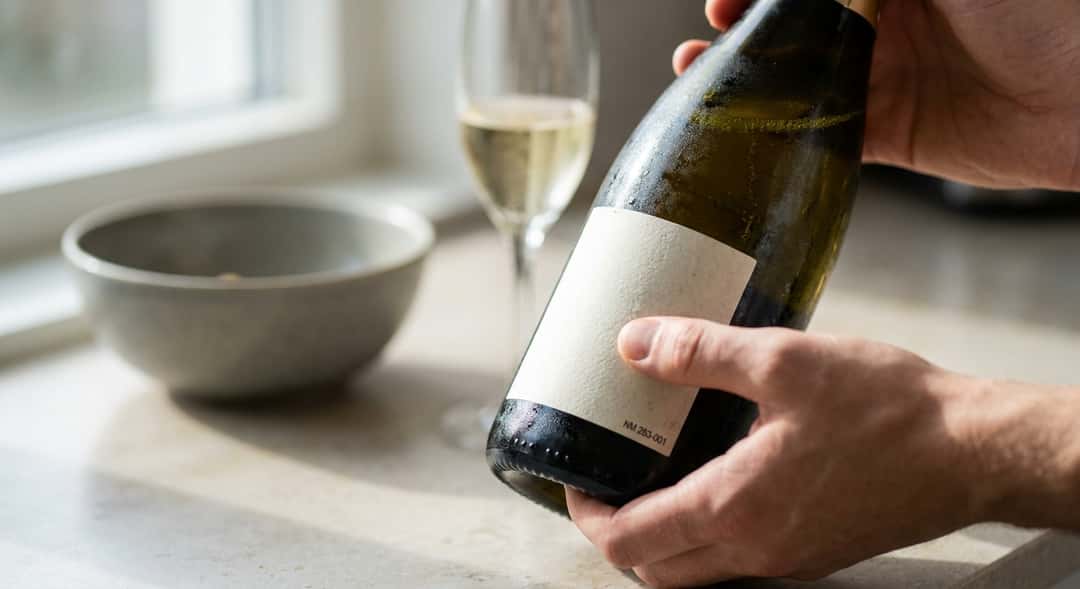

Next time you hold a champagne bottle in your hand, turn it over. On the back, often printed in small type just above the base, you'll find a combination of two letters followed by a long number. It looks like a code – and that's exactly what it is. A code that tells you who actually made the wine you're about to drink.
These two letters are called the producer code, and they are regulated by the CIVC (Comité Champagne), the industry body that governs champagne production in France. The code is mandatory on all champagne bottles, yet the vast majority of consumers have no idea what it means. Let's change that.
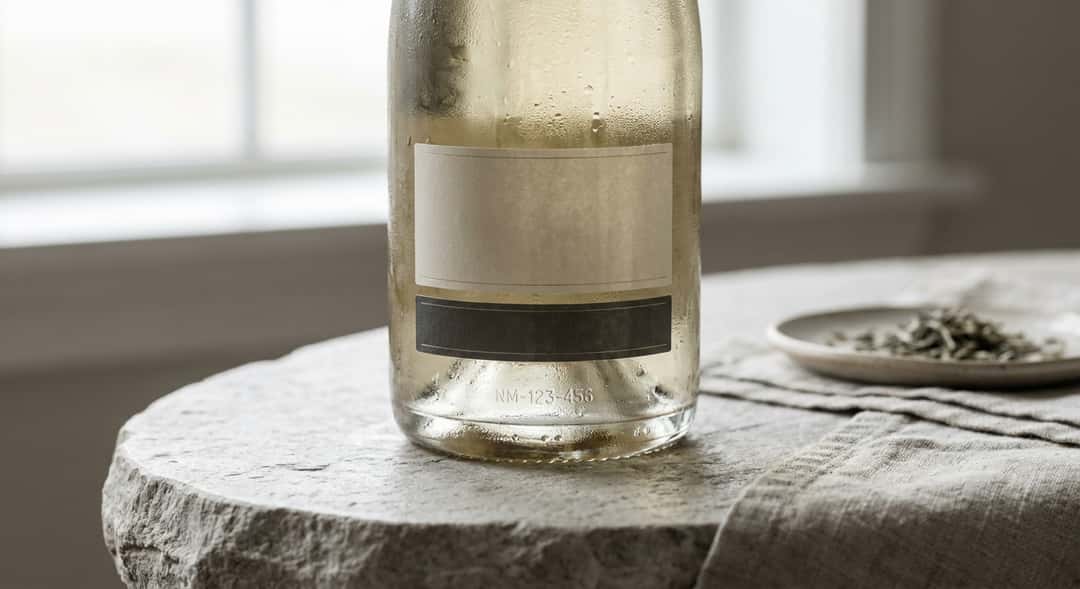
NM – Négociant Manipulant
These are the big houses. Négociant Manipulant means that the producer buys grapes – or must – from grape growers in the Champagne region and then makes the champagne themselves. Names such as Moët & Chandon, Veuve Clicquot, Laurent-Perrier and Taittinger are all NM houses.
The advantages of the NM model are obvious: access to grapes from many different villages and crus makes it possible to create large, consistent blends year after year. Taittinger is a fine example – their iconic Taittinger Comtes de Champagne Blanc de Blancs Brut 2012 is based exclusively on Chardonnay grapes from the Grand Cru villages of the Côte des Blancs. With its creamy texture, fresh citrus zest and nutty depth after many years on the yeast lees, this is a champagne that speaks for itself – and demonstrates the precision a great NM house can achieve when it truly sets its mind to it.
But the NM model has its limitations too: dependence on many suppliers makes it difficult to tie the champagne to a single specific terroir. That is where the next two codes come in.

RM – Récoltant Manipulant
This is where things get really interesting. RM means that the producer both grows their own grapes and makes their own champagne. These are commonly known as "grower champagnes" in English, or vigneron champagnes in Norwegian.
An RM producer makes Champagne from their own grapes but may own vineyards in several places and blend them. NM producers can also make single-site wines. The code describes the production model, not an automatic measure of terroir expression or quality.
The movement of RM producers has exploded in popularity over the past two decades, and for good reason. Champagne Guiborat Prisme.19 Grand Cru Extra Brut Blanc de Blancs is a fine example of what a small, dedicated RM producer can deliver: an intense, mineral Blanc de Blancs with a clear expression from the limestone soils of Cramant, where freshness and precision are in perfect balance. No large blending facilities, no team of oenologists – just a family and their own vineyards.
Similarly, T. Perseval Champagne La Masure Pinot Noir 2016 is a textbook illustration of what the RM philosophy is all about: pure, site-specific Pinot Noir from a single lieu-dit, with the red-fruit intensity and the clayey earthiness that only emerges when the producer knows their vineyard in their sleep. It is a champagne that tastes of a concrete place – not of a brand concept.
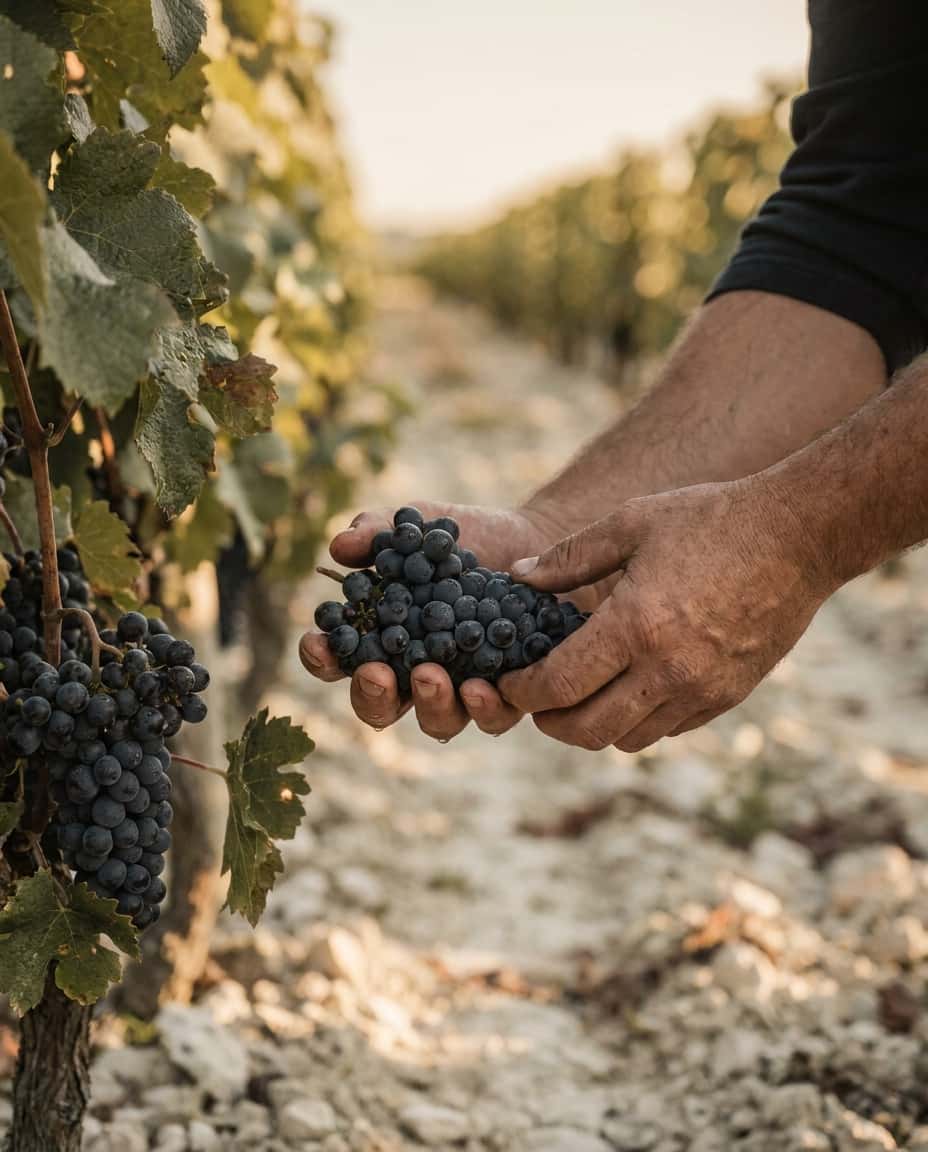
RM champagnes can vary enormously in quality – precisely because there is no large house with tight standards behind them. But the best are among the most exciting things you can open. They taste of something real, something untranslatable.
CM – Coopérative de Manipulation
The third major code is CM – Coopérative de Manipulation. Here, many grape growers pool their grapes and deliver them to a cooperative, which then produces the champagne on behalf of its members.
The cooperatives in Champagne occupy an interesting middle ground. They have access to large quantities of grapes from many different growers, but unlike the NM houses their members are typically local and regionally rooted. Champagne Le Mesnil is a well-known example – a cooperative based in Le Mesnil-sur-Oger, a village celebrated for its limestone terroirs and mineral Chardonnay. Their Champagne Le Mesnil Grand Cru Blanc de Blancs Brut bears exactly that hallmark: crisp acidity, chalk-white minerality and a purity that is almost meditative. It is champagne that tastes of the place it comes from, at a price that doesn't require you to take out a loan.
Cooperatives often produce very good champagnes at sensible prices, precisely because they do not have the same marketing apparatus as the large NM houses. They are, in other words, a good place to look for hidden gems.
The other codes
In addition to NM, RM and CM, there are some rarer codes you may encounter:
- RC – Récoltant Coopérateur: The grape grower delivers their grapes to a cooperative but sells the champagne under their own name. The cooperative therefore produces on their behalf.
- SR – Société de Récoltants: Two or more grape growers from the same family who collaborate on production.
- ND – Négociant Distributeur: Buys finished champagnes and sells them under their own brand – no own production.
- MA – Marque d'Acheteur: "The buyer's brand." These are typically supermarket champagnes and private labels where the store or restaurant puts its own name on a bottle produced by someone else.
These codes are rare, but they are worth knowing. MA in particular can turn up in surprising places – and tells you that the brand name on the label does not necessarily say anything about who actually made the wine.
What does this mean in practice?
The simple rule of thumb is this: RM gives you terroir, NM gives you consistency, CM often gives you value.
But that is not an absolute truth. There are RM producers who do weak work, and NM houses that produce champagnes of formidable depth and character. The point is that the producer code is a starting point – a contextual key that helps you understand what kind of champagne you are actually holding in your hand.
It is spring now, and champagne suits the lightness of the season perfectly – for a brunch with friends, an aperitif on the terrace, or a Sunday dinner where there doesn't need to be any particular occasion. When you choose a bottle, take a moment to turn it over. Is it an RM? Then you can expect something more individual, perhaps a little uneven and fascinating. Is it an NM from a prestigious house? Then you know you are paying for consistency, brand power and an impressive blending archive built up over generations. Is it a CM? Then there is a good chance you have found a hidden gem at a reasonable price.
The codes are not judgements – they are descriptions. And in Champagne, where everything is about nuance, it is precisely that kind of detail that makes the difference between drinking and understanding.

So next time someone at the table asks whether it is "a good champagne", you can say something far more interesting than quoting the price. You can tell the story behind the two small letters on the label – and that is a story always worth sharing.