
There is something magical about the meeting between Japanese sake and Norwegian seafood. While we have for years turned to white wines like Chablis or Riesling to elevate delicate shellfish, we have overlooked a far more elegant partner: the subtle, umami-rich world of premium sake.
I remember the first time I truly understood this pairing. It was during an omakase dinner in Bergen, where a local chef served fresh Askøy shrimp with a chilled junmai ginjo. The sake amplified the natural sweetness of the shrimp without overpowering it, and the clean flavor created a balance that no wine I had tried could match.
Why sake works so well
It is about chemistry – literally. Sake contains five times as many amino acids as wine, and these amino acids enhance the umami flavor that naturally occurs in seafood. Where wine can often overpower with tartness or tannins, sake glides in as a soft, harmonizing force.
Temperature also plays a decisive role. Where we are used to serving white wine ice-cold, sake can be nuanced through temperature. For ingredients from our cold sea, this is a significant point. You can adjust the experience of the same sake from fresh and fruity at 8 degrees to full-bodied and creamy at 40 degrees.

The four basic types and their roles
Before we dive into the specific pairings, we need to understand the sake categories. This is not rocket science, but a little basic knowledge makes you a more confident host.
Junmai is pure rice sake with no added alcohol. It often has a fuller, more earthy flavor with distinct umami. This is your partner for more robust seafood – mussels, crab, mackerel.
Honjozo has a little added distilled alcohol, which gives a lighter, more aromatic profile. Perfect for delicate dishes where you do not want to overpower the ingredient's own character.
Ginjo and Junmai Ginjo are made from rice where at least 40% has been polished away. The result is an elegant, fruity sake with floral aromas. Here we are talking finesse – this is the sake you serve with scallops and shrimp.
Daiginjo is the top tier, with at least 50% polishing. Silky smooth, complex, and often expensive – this is the Champagne of the sake world. Save it for special occasions.
Specific pairings that work
Fresh shrimp and junmai
Norwegian shrimp have a natural sweetness and a lightly creamy texture that calls for a drink with presence. An Eigashima Shuzo Kamitaka Junmai with its rich, grainy profile creates a lovely contrast. Serve the sake at 15–18 degrees – so-called "room temperature" – to bring out the round, mild character.
Peel the shrimp yourself at the table, dip them in a little soy mayonnaise with lemon, and take a sip of sake between each bite. The slightly nutty aftertaste of the junmai sake enhances the shellfish flavor without overpowering it. This is a pairing that makes even the most skeptical wine lovers stop in their tracks.

Scallops and honjozo
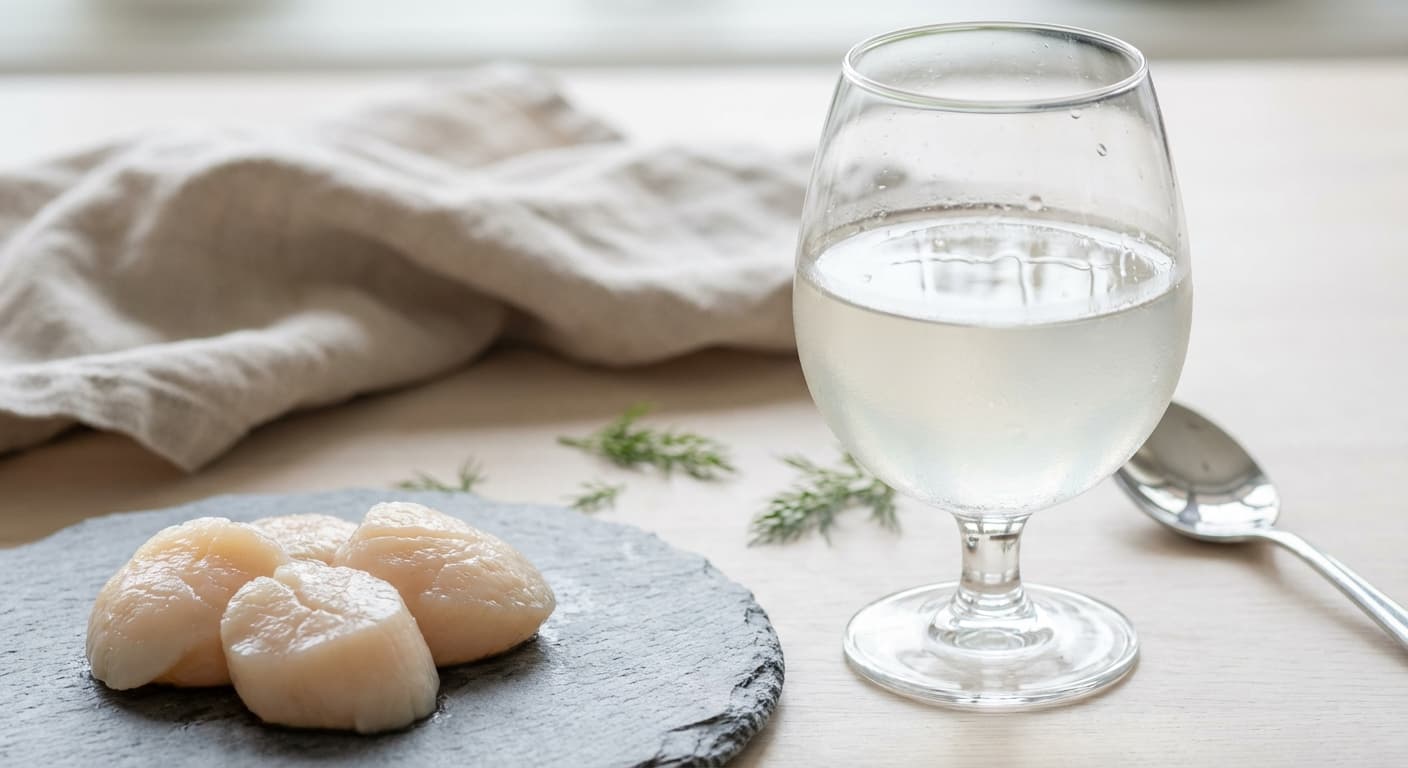
Scallops are perhaps the most delicate of our luxury ingredients from the sea. Their sweet, almost melon-like flavor calls for a sake that balances finesse with presence. Here you do not need a robust junmai – quite the opposite.
Sear the scallops quickly over high heat – a maximum of 90 seconds per side – so that the center remains glassy. Serve with just a pinch of sea salt and perhaps a little brown butter. Here a chilled honjozo (8–10 degrees) will be perfect. The light, clean profile suits the scallops' natural elegance, and the subtle fruitiness lifts the sweetness without competing.
Mussels and warm sake
Here comes a surprise: steamed mussels with white wine is a classic, but try them with warm sake instead. The salty-sweet intensity of mussels can handle a sake served at 40–45 degrees in a way that few wines can manage.
Steam the mussels with ginger, spring onion, and a good splash of sake directly in the pot. Serve with the broth in small bowls, and drink a warm junmai alongside. The warmth opens up entirely different aroma profiles – rice blossom, caramel, and a creamy roundness that embraces the robust mussels. This is comfort food at a high level.

The temperature guide – your secret weapon
This is perhaps the most liberating thing about sake: you can adjust the experience through temperature. The same bottle can play entirely different roles depending on how you serve it.
5–10 degrees (chilled): Highlights fruitiness and freshness. Perfect for raw seafood such as tartare or crudo. The sake becomes lively and sprightly, almost Champagne-like in its elegance.
15–18 degrees (room temperature): Balanced and harmonious. Lets both sake and food shine without either element dominating. This is my go-to temperature for most dinners.
40–45 degrees (warm): Opens up richness and complexity. Suits more robust preparations – grilled, smoked, or steamed seafood with pronounced flavors. The alcohol becomes softer, and the umami character comes forward.
Never above 50 degrees – at that point the alcohol begins to dominate, and the fine nuances disappear. You want warmth, not boiling.
Practical tips for the home table
Start with a simple aperitif: serve a junmai ginjo at 10 degrees alongside fresh shrimp salad. A sake like Yamaoka Junmai Ginjo Zuikan Kimoto, made with a traditional kimoto fermentation, has a soft tartness that cuts through mayonnaise and lifts the fresh seafood flavor.
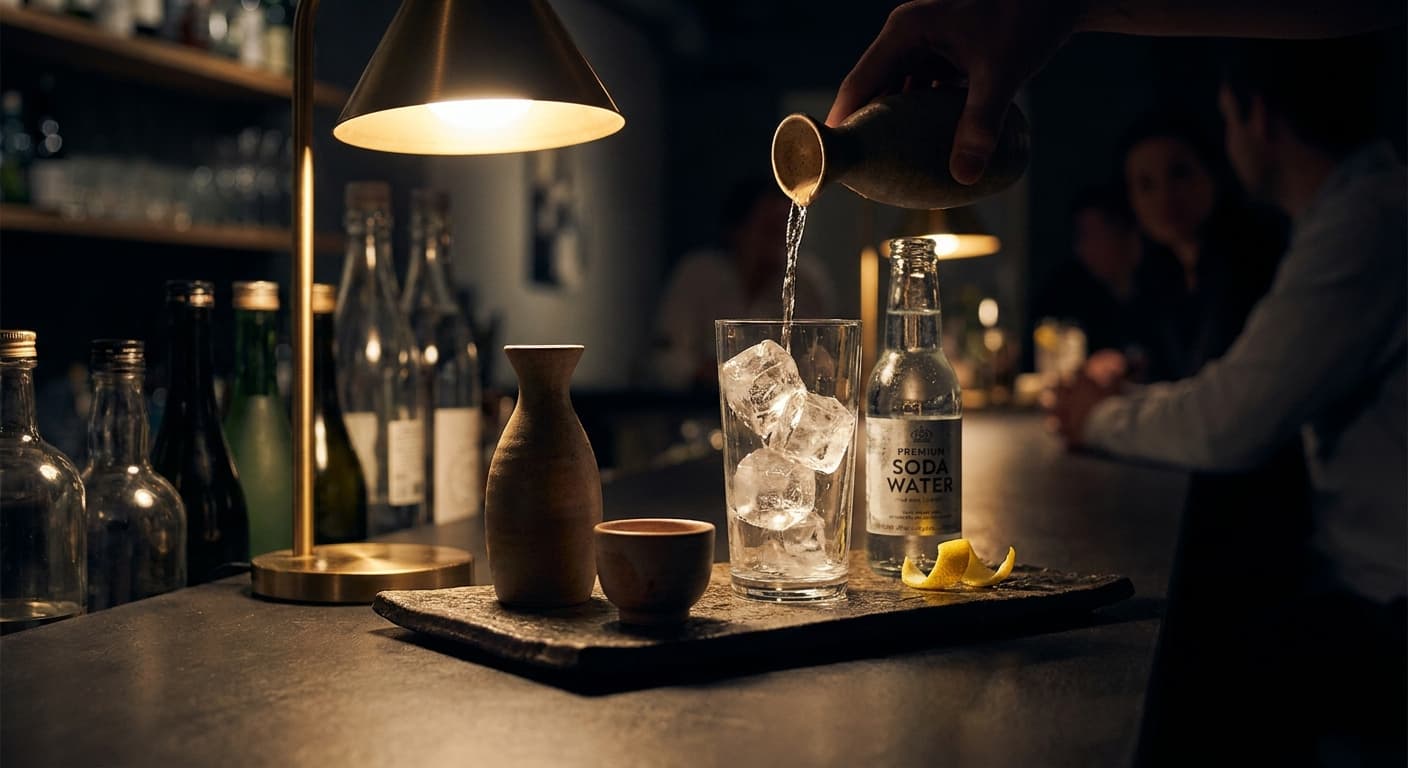
Invest in a good sake carafe (tokkuri) and small ceramic cups (choko) – it is not about snobbery, but about proper serving. The small cups keep the temperature stable, and the carafes let the sake breathe. Sake oxidizes quickly after opening, so drink the bottle the same evening. This is not a drink you store half-full in the fridge.
Another tip: never heat sake in the microwave. Use a water bath instead – pour the sake into the carafe, place it in a bowl of hot water, and let it reach the right temperature slowly. It takes five minutes, and the difference is noticeable.
The ultimate luxury dinner
Here is the menu I make when I really want to impress – four courses, four temperatures, one drink. This is the true potential of the sake-seafood pairing.
First course: Scallop crudo with yuzu and sesame oil. Sake: Cold junmai ginjo (8 degrees). The fresh, fruity sake suits the raw, delicate texture perfectly.
Second course: Steamed king crab with ginger-soy butter. Sake: Lukewarm honjozo (30 degrees). Here we begin to build intensity – in both food and drink.
Main course: Grilled lobster with seaweed butter. Sake: Room-temperature junmai (18 degrees). The grilled character of the lobster meets the grainy, nutty profile of the sake.
Finale: Smoked mackerel with pickled radish. Sake: Warm junmai (40 degrees). The smoked, fatty fish needs warmth and intensity – here warm sake delivers on all fronts.
Four courses, four temperatures, one type of drink. Try doing the same with wine – it quickly becomes messy. With sake you have the flexibility to follow the entire meal without switching bottles.
Closing words
Sake and Norwegian seafood is not just a trend – it is a logical, delicious pairing that deserves a permanent place on our tables. We have the ingredients, we have access to quality sake, and now you have the knowledge.
The next time you stand at the counter considering a bottle of Sancerre for a shellfish dinner, take the step over to the sake section. Your palate will thank you, and your guests will remember the meal for a long time. It requires nothing more than curiosity and a willingness to try something new.
Start simply – perhaps with shrimp and a junmai – and build from there. Play with temperatures, experiment with different types of seafood, and find your own favorite combinations. There is no definitive answer here, only flavorful discoveries.
Cheers – or as the Japanese say: Kanpai!