
Something is happening at the market these weeks. Among the cabbages and storage potatoes, bunches of spring onions appear, asparagus spears in green bundles, bags of radishes with their leaves still attached. These are not just ingredients for the dinner plate — they belong in the glass too.
Vegetables in cocktails are nothing new. Celery in a Bloody Mary, cucumber in a Pimm's Cup, olives in a Martini. But what is happening now is something different: bartenders and home bar enthusiasts are discovering that spring vegetables — with their distinct crunch, their earthy flavor, and their sharp, clean freshness — do something to classic recipes that lemon and lime never can. They add a green, almost umami-like depth that makes a drink less one-dimensionally tart, more suited to food.
Why vegetables work so well right now
Spring is about drinking differently. We are tired of the eternal citrus dominance, weary of the sweet-sour formula that governs everything from a Margarita to a Whisky Sour. Vegetables offer us another route into the balance between sweet, salty, tart, and bitter.
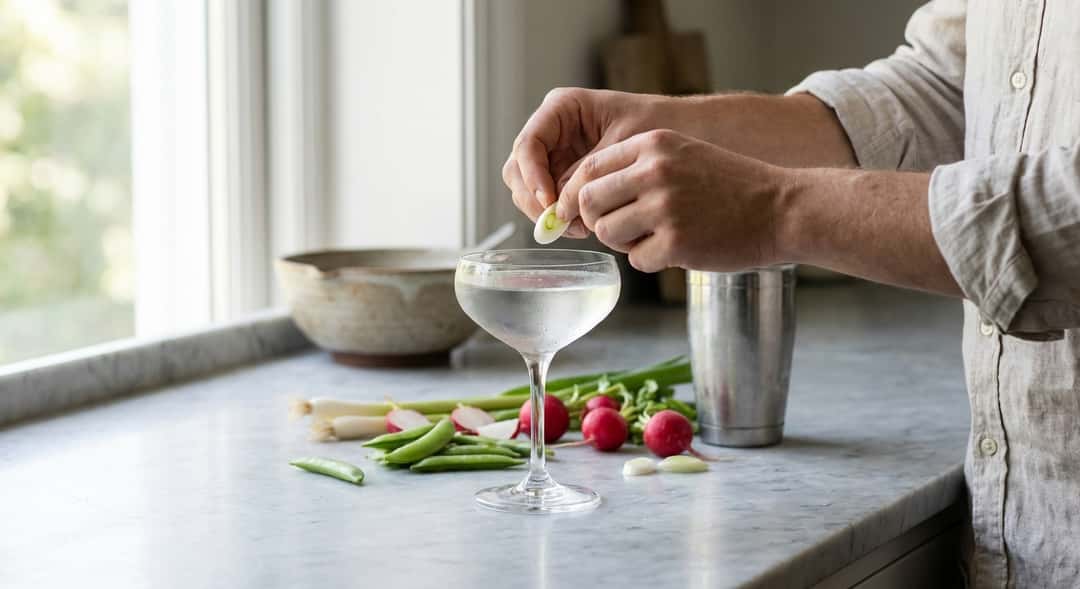
Spring onion has a sharp, onion-like intensity that softens elegantly in combination with gin. Radish — raw or muddled — gives a peppery note that lifts vodka-based drinks without overpowering them. Sugar snap peas add a sweetish, green freshness. And asparagus? It is surprisingly delicate when it meets botanical spirits.
There is also a practical angle: when you are shopping for vegetables for dinner, you can throw a little extra into the basket and use them before they go limp. The bartender's garden is no longer in the herb pot on the kitchen counter. It is in the vegetable drawer.
Four recipes where vegetables take over
1. Spring Onion Gimlet
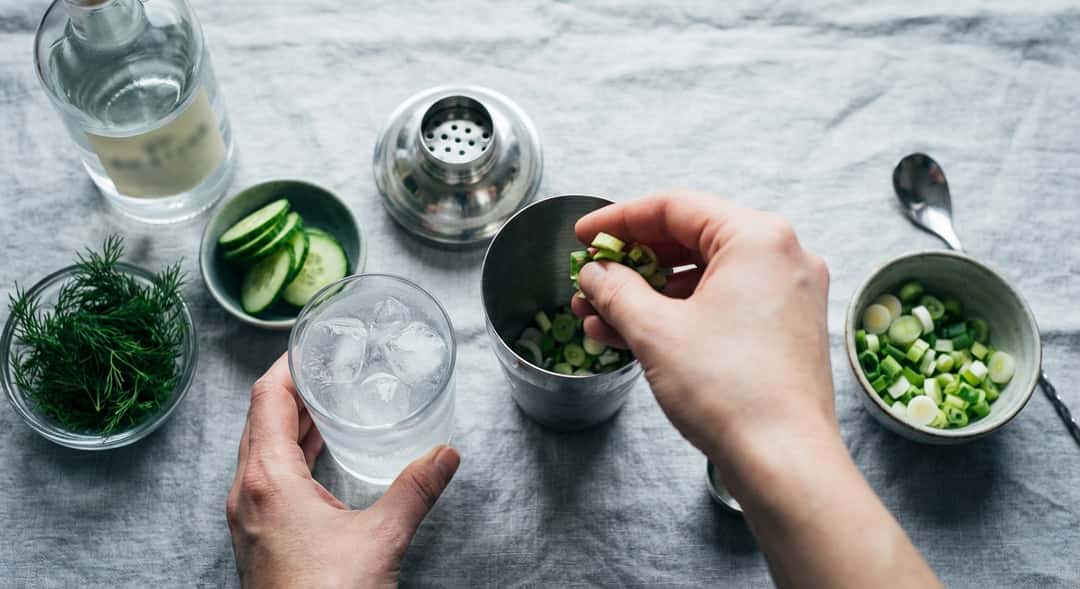
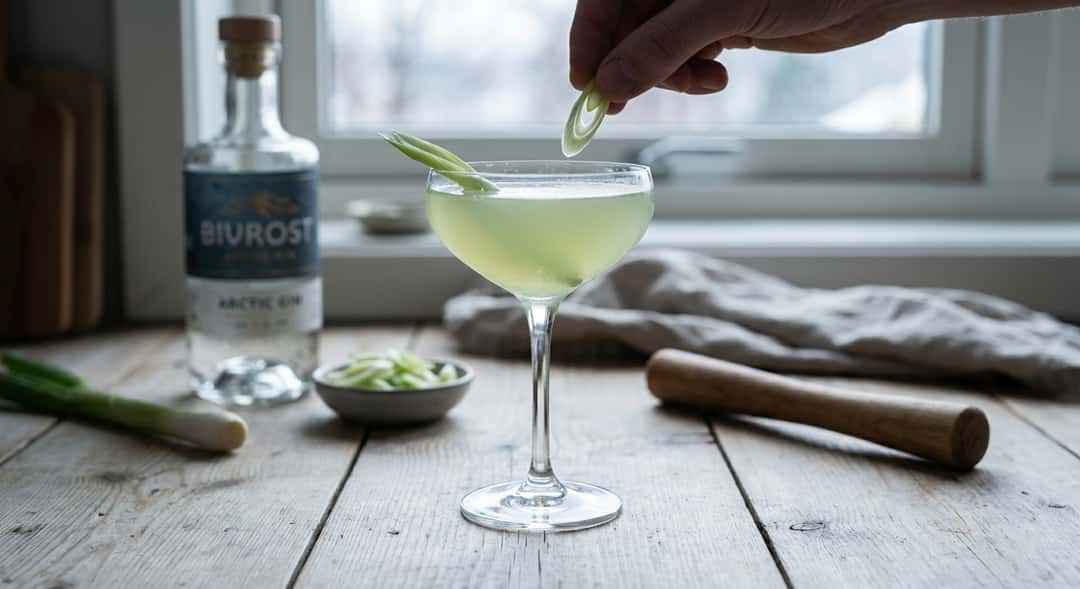
A Gimlet really needs nothing more than gin, lime, and simple syrup. But when you muddle a few slices of spring onion in the shaker first, you get an herbal depth that balances the acidity and makes the drink almost floral. Try a Norwegian gin like Bivrost Arctic Gin, with its distinct botanical character — the spring onion amplifies the juniper notes rather than hiding them.
Ingredients:
- 5 cl gin (preferably one with prominent juniper)
- 2 cl fresh lime juice
- 1.5 cl simple syrup
- 3–4 cm spring onion, cut into thin slices
Method:
- Place the spring onion in the bottom of the shaker and muddle gently — you want the aromas, not the pulp.
- Add gin, lime juice, syrup, and ice.
- Shake vigorously for 15 seconds.
- Double-strain into a chilled coupe glass.
- Garnish with a thin spring onion ribbon.
2. Radish Mule
A Moscow Mule can become monotonously sweet. Radish — especially the white French breakfast radish variety — gives a peppery, almost righteous contrast to ginger beer. Muddle a few slices together with mint and you have a drink that knows its place at the dinner table.
Ingredients:
- 5 cl vodka (a clean, neutral base works best)
- 2 cl lime juice
- 4–5 thin slices of radish
- 3–4 mint leaves
- 10 cl ginger beer
Method:
- Muddle radish and mint gently in the bottom of a tall glass.
- Fill the glass with crushed ice.
- Pour over vodka and lime juice.
- Top with ginger beer and stir lightly.
- Garnish with a whole radish with its leaves attached.
3. Sugar Snap Pea Sour
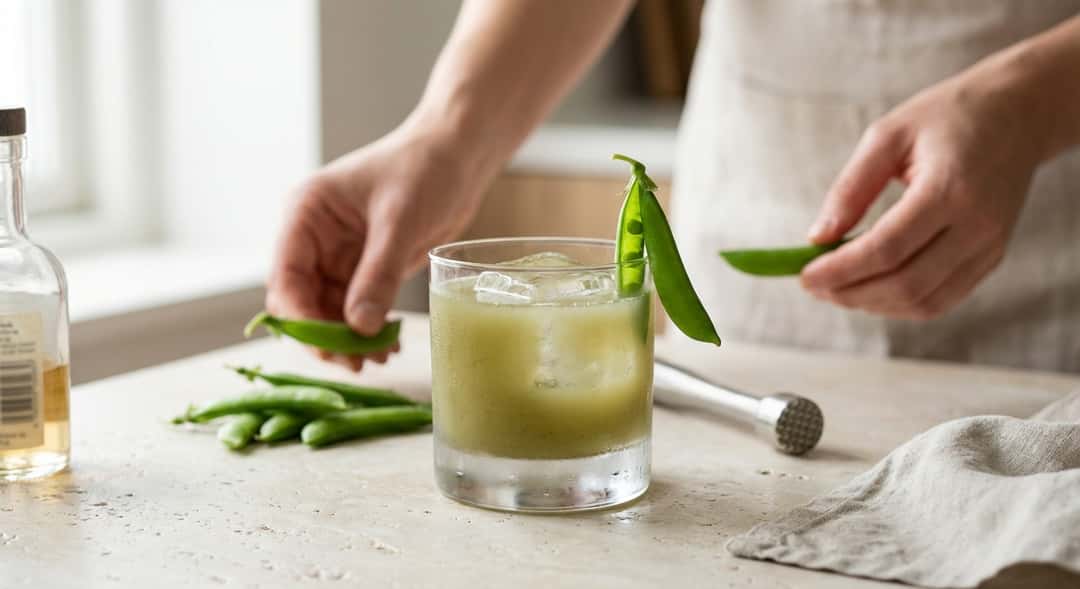
Sugar snap peas have a natural sweetness that replaces part of the sugar in a classic sour. They also give a silky mouthfeel when shaken hard enough. This drink is almost a smoothie — but with an edge.
Ingredients:
- 5 cl gin or vodka
- 2 cl lemon juice
- 1 cl simple syrup
- 6–7 sugar snap peas (shelled if you want a softer texture)
Method:
- Place the sugar snap peas, lemon juice, and syrup in the shaker. Muddle thoroughly.
- Add spirits and ice.
- Shake for at least 20 seconds — the sugar snap peas need force to release their juice.
- Double-strain into a short glass filled with fresh ice.
- Garnish with a whole sugar snap pea on the rim.
4. Asparagus & Tonic
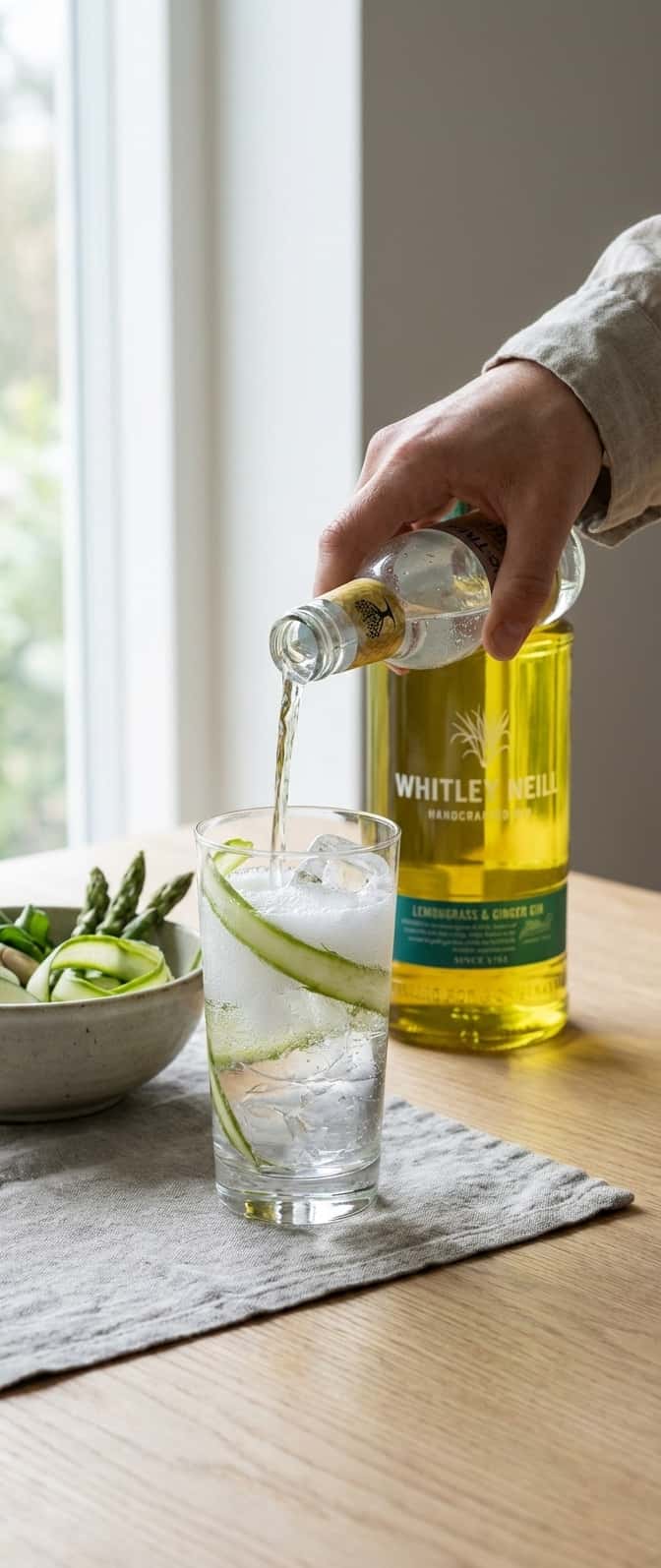
This sounds strange until you have tasted it. White asparagus — raw, cut into thin strips — gives an almost nutty, delicate flavor that harmonizes with a classic gin & tonic. Especially if you use a gin with citrus notes, such as Whitley Neill Lemongrass & Ginger, which amplifies the floral side of the asparagus.
Ingredients:
- 5 cl gin (preferably with citrus or ginger)
- 4–5 thin strips of white asparagus (use a vegetable peeler)
- 12 cl tonic
- 1 slice of lime
Method:
- Place the asparagus strips in a tall glass.
- Fill with ice.
- Pour over gin and tonic.
- Stir gently with a bar spoon.
- Squeeze a lime slice over the glass and drop it in.
Three tips when making vegetable cocktails
Use fresh, market-quality produce. Limp vegetables make limp drinks. Choose firm, crisp specimens — they give more flavor and better texture.
Muddle with care. You want the aromas, not the fiber mass. Press once, twist the shaker, press once more. Do not mash.
Always double-strain. Vegetables leave particles you do not want in the glass. Use both the shaker's built-in strainer and a fine mesh strainer when pouring.
Why this is more than a trend
When we use spring vegetables in cocktails, we are doing the same thing that happens in Nordic fine dining: we take what grows here, what tastes of place and season, and let it guide the recipe. Gin and vodka are international, but spring onions from Lofoten or radishes from Hadeland give the drink a local grounding that lemons from Spain can never match.
It is also a way of drinking that pairs better with food. Vegetable cocktails are less sweet, saltier, more umami-driven. They work as an aperitif, but also alongside the plate — not as a competitor to the food, but as a companion.
So the next time you come home from the market with a bunch of spring onions, save a few for the shaker. The vegetable garden belongs in the glass too.