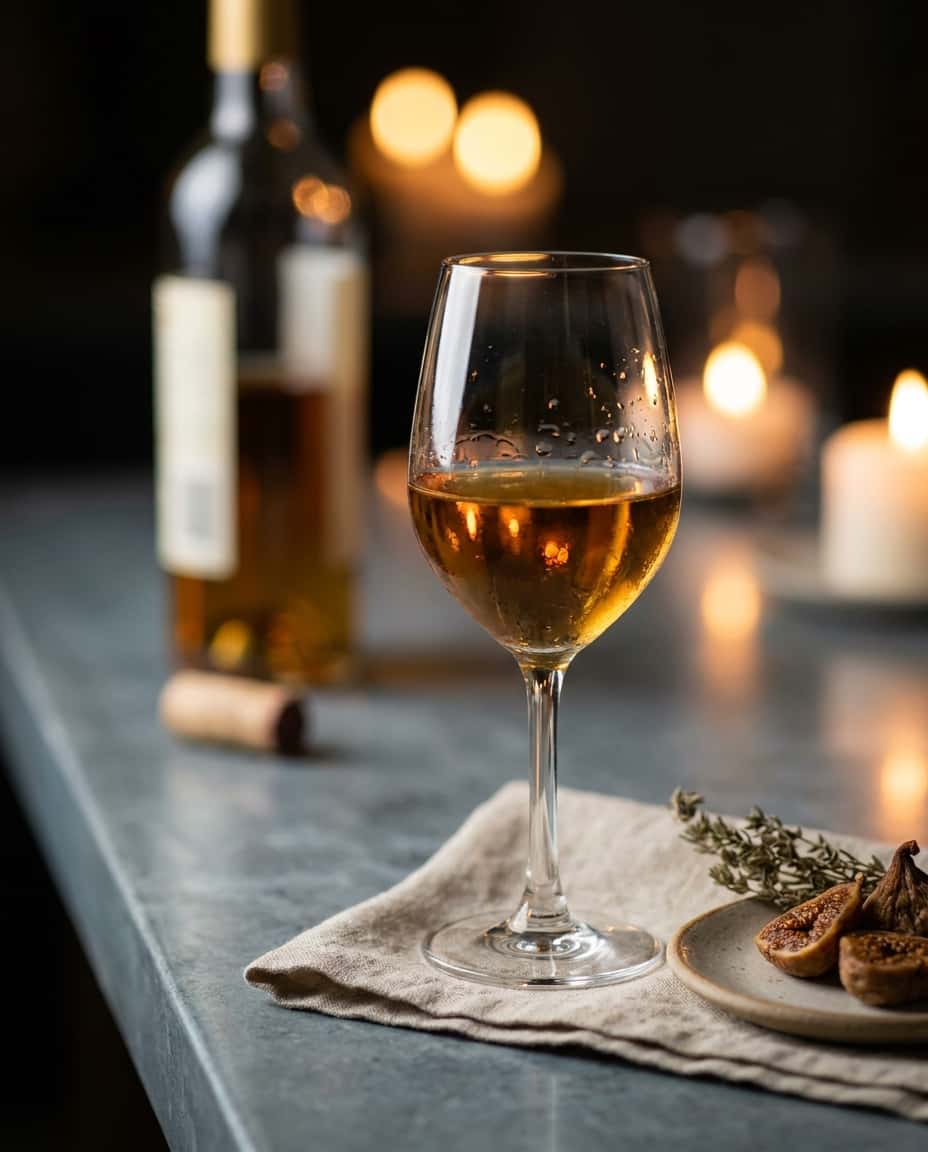

There's a strange consensus in Norway that sweet wine is a little embarrassing. As if reaching for a bottle of Sauternes reveals something shameful about your taste. But let me say it plainly: it's one of the most unnecessary prejudices in the drinks world, and summer is the season when that prejudice costs you the most.
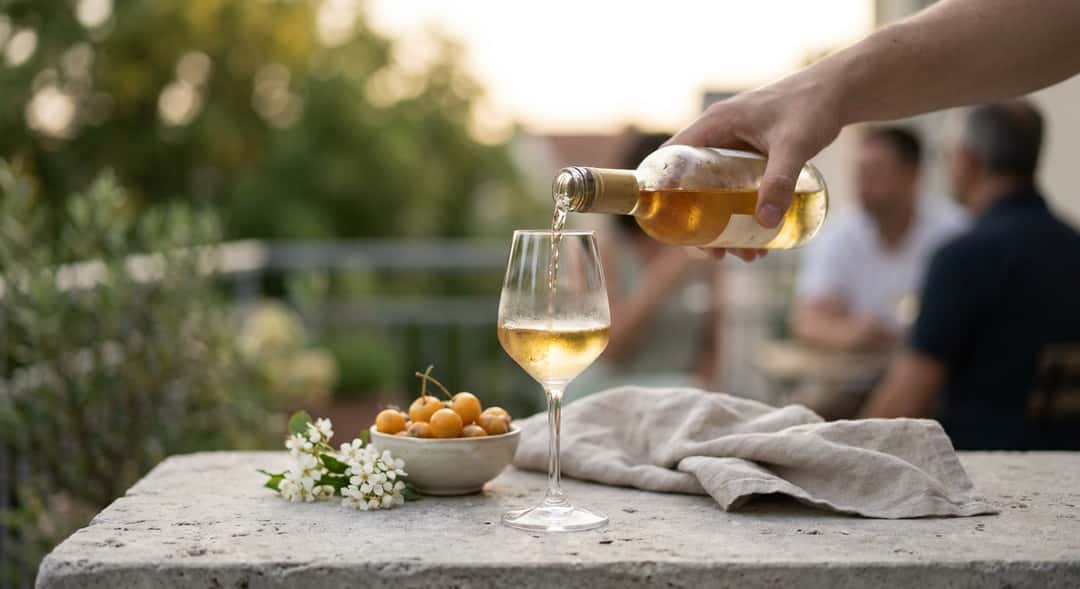
Because at a warm evening table in June – with strawberries, blue cheese, peaches, or just a piece of good chocolate – a well-chosen dessert wine isn't just appropriate. It's magical.
What makes sweet wine a summer wine?
It might sound counterintuitive. Sweet and warm isn't exactly a refreshing combination. But a good dessert wine is never just sweet – it's the balance that makes the difference. Acidity, minerality, and complexity keep the sugar in check and make the glass feel alive, not exhausting.
Think of it this way: a slice of ripe peach in the middle of July is sweet, but it's also juicy and tart and full of fragrance. A good dessert wine is the same thing in a glass.
Sauternes – the great classic
If there is one dessert wine that deserves its legendary status, it's Sauternes. Produced in Bordeaux from grapes affected by noble rot – Botrytis cinerea – this is a wine that smells of honey, quince, orange peel, and saffron, and tastes as if someone has boiled down an entire summer orchard into one small, intensely golden bottle.
The Botrytis mould dries out the grapes and concentrates sugars and aromatic compounds in a way that is almost alchemical. The result is a wine with juice and acidity, a rich and silky mouthfeel, and an aftertaste that can last for minutes.
The good news about Sauternes today is that it has become more accessible than many people think. A half-bottle – which is perfect for two people over dessert – is not necessarily a luxury expense.
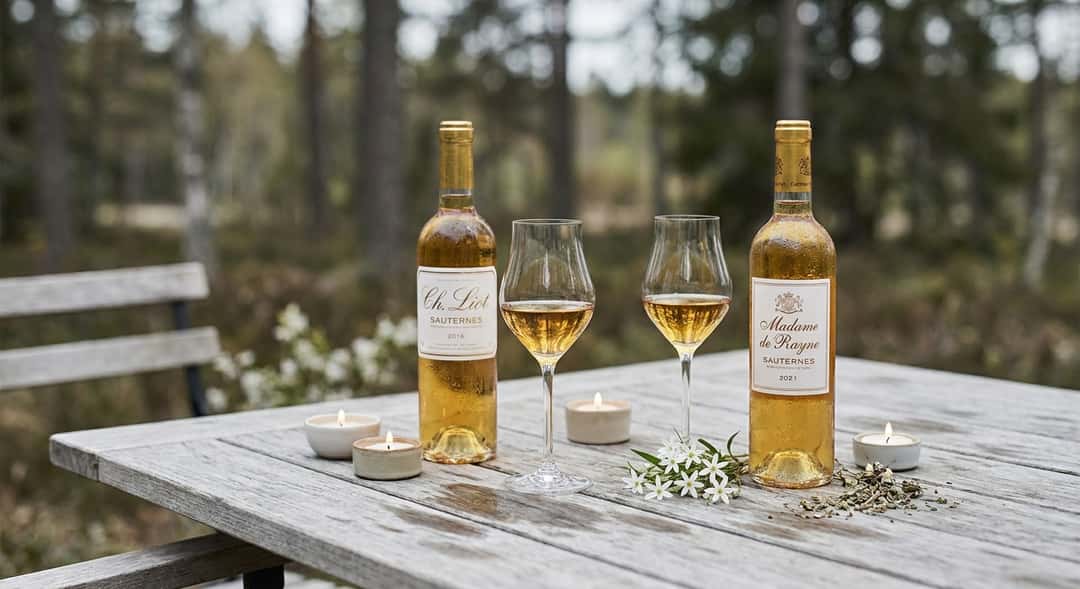
Ch. Liot Sauternes 2016 is an estate in Barsac that year after year delivers Sauternes with fresh acidity and clear notes of apricot jam and beeswax. The 2016 vintage is mature but still lively – it sits in a fine drinking window right now. If you want something a little more concentrated and floral, Madame de Rayne Sauternes 2021 is a wonderful choice: fruity and elegant with a fine balance between sweetness and freshness, and a nose reminiscent of white peach and acacia blossom.
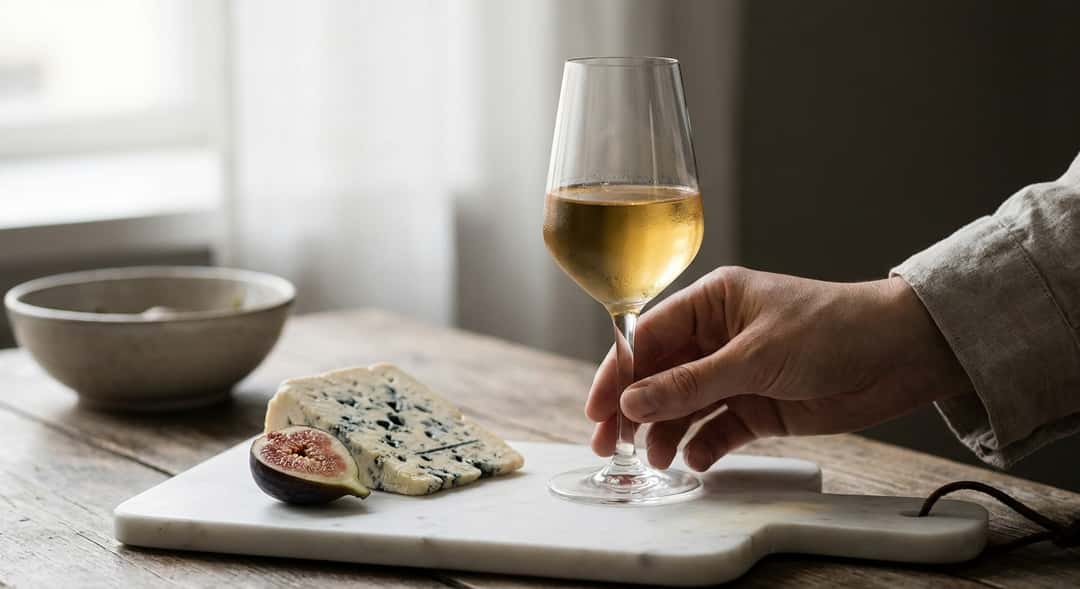
Pairs well with: Roquefort or other blue cheese, fresh peach with cream, crème brûlée, foie gras – or simply nothing at all. Just enjoy the glass.
Moscato d'Asti – the most delightful summer companion in bubbles
If Sauternes is the grand, serious dessert wine, Moscato d'Asti is its lighter, more playful sister. Produced in Piemonte from the moscato bianco grape variety, this is a frizzante wine – lightly sparkling – with only around 5 percent alcohol and a sweetness that is floral and fruity rather than heavy.
The nose is lavish: white peach, apricot blossom, jasmine, and citrus peel. On the palate there is something foamy and almost airy – bubbles of flavour rather than bubbles you need to chew through.
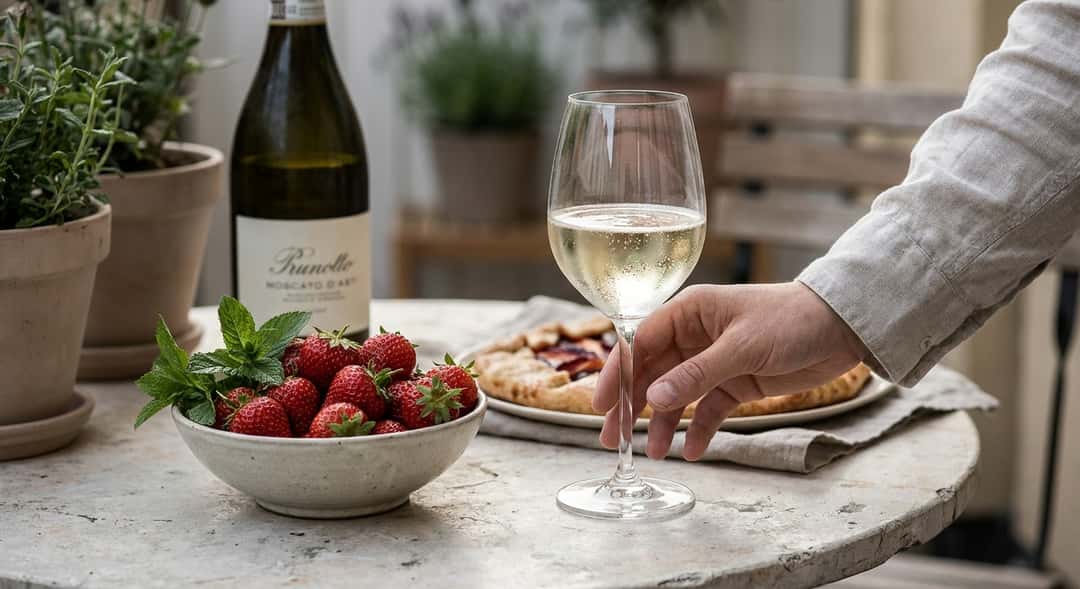
Prunotto Moscato d'Asti 2022 is a classic example from one of Piemonte's most respected houses, with roots going back to 1904. Young, fresh, and heavenly with strawberries and cream – or with a simple fruit tart on the terrace on a warm summer evening.
The low alcohol also makes Moscato d'Asti an excellent aperitif if you want something a little sweeter with snacks before dinner. It's not demanding. It's just good.
Pairs well with: Strawberries and cream, panna cotta, light cakes, melon with cured ham, or as an aperitif with almonds and mild cheeses.
Norwegian berry liqueurs – the underrated wild card
Now for what is perhaps the most overlooked category of all on the Norwegian summer table: Norwegian berry liqueurs. These have undergone a quiet renaissance in recent years, with producers who truly take their raw ingredients seriously.
A good berry liqueur is not syrupy sweet like candy. It has depth from the fruit, structure from the alcohol, and an acidity that makes it work in a glass, over ice cream, in a light spritz – or simply chilled as a small dram after dinner.
Atlungstad Søtnos Bringebærlikør from Hedmark is a fine example: based on Norwegian raspberries and distilled with care, it has a fresh and distinct raspberry character that doesn't taste artificial. The intensity is there, but the sweetness is elegant and never cloying.
Equally impressive is Bareksten Blåbærlikør from Western Norway – a darker, more earthy style with wild blueberries, light herbs, and an almost tannic structure that is more reminiscent of wine than of sweets. Chilled in a small glass alongside chocolate cake, this is a combination that holds up beautifully throughout the entire evening.
Both are also beautiful in the glass – the deep ruby colour of the raspberry liqueur and the almost indigo-blue tone of the blueberry liqueur make them natural conversation starters at a nicely set table.
Pairs well with: Chocolate and berries, vanilla ice cream, panna cotta, Norwegian cheeses, or used as a topping over yoghurt and muesli for Sunday brunch – yes, it actually works.
A quick guide to styles and serving temperature
| Style | Example | Temp | Goes with |
|---|---|---|---|
| Botrytis white wine | Sauternes | 8–10 °C | Blue cheese, peach, foie gras |
| Frizzante sweet | Moscato d'Asti | 6–8 °C | Strawberries, panna cotta, aperitif |
| Berry liqueur | Blueberry/raspberry | 8–10 °C | Ice cream, chocolate, cheese |
The biggest mistake people make
Most people serve dessert wines far too late – right at the end of an already full meal, when the stomach is full and the palate is tired. Instead, try using sweet wine early: as an aperitif, with a cheese board between courses, or as a "mid-break" during a long gathering.
Another classic mistake is too large a pour. Dessert wines are concentrated – you need no more than 6–8 cl per person. A small, elegant glass of something intense and complex is far better than a half-full large glass that quickly becomes overwhelming.
And chill them down. All of these wines and liqueurs benefit from a little cold. It tames the sweetness and lifts the fruit – just as a cool summer day makes strawberries sweeter than they really are.
Summer is the season of dessert wine
Sweet wines are made in different ways, including noble rot, late harvesting and stopping fermentation to retain sweetness. Choose the style for your food and serving occasion, whatever the season.
So next time you're shopping for a weekend gathering: bring along a half-bottle of Sauternes. Or a fresh Moscato d'Asti. Or a small Norwegian berry liqueur that surprises your guests and starts a conversation about Norwegian spirits craftsmanship.
Prejudices are made to be broken. Especially the sweet ones.