
There is a brief window between the snowmelt and the full grilling season when the garden is still a little tame, but the herbs are already standing ready. Mint, lemon balm, parsley – they tolerate cool weather and come back year after year, often before you have had a chance to plan anything at all. And while you wait for the rest to bloom, you can pick leaves and press them straight down into the glass.
It is not about complicated recipes. Gin, vodka, tonic, Sprite, ice – and a few fresh leaves you tap gently against the back of your hand to wake up the aromas. It does not get simpler than that. And the taste? Far better than anything you get from a bottle.

Mint – the know-it-all's favourite
Mint is so obvious it almost becomes boring to mention. But there is a reason it turns up in everything from mojito to Pimm's: it works. Sweet, fresh, slightly menthol-like – it lifts almost anything that is cold and fizzy.
A simple gin-mint-tonic is perhaps the most underrated longdrink you can make. Fill the glass with ice, pour over 4 cl of gin, press in a couple of sprigs of mint, top with tonic. Done. If you want a little more punch, replace half the tonic with Sprite. Sweet and fresh, without becoming childish.
Mint is also the gateway for those who have never used herbs in a drink before. It does not shout – it just lifts.

Lemon balm – the discreet surprise
Lemon balm resembles mint a little, but with a citrus twist that is softer than lime juice and more elegant than lemon zest. It grows like a weed if you give it a pot, and it tolerates both spring cold and summer heat without complaint.
Use it in a vodka spritz. 3 cl vodka, a handful of lemon balm leaves gently rubbed between the hands to release the oil, topped up with Sprite or another citrus soda, and a slice of lemon. It is refreshing in a way that almost feels medicinal – in the best sense.
You can also combine lemon balm with ginger beer if you want a little sharpness. Then you get something that resembles a Moscow Mule, but greener and lighter.
Parsley – yes, really
When someone mentions parsley in a drink, most people think Bloody Mary, but there is far more to explore. Flat-leaf parsley has a fresh, almost grassy taste that pairs incredibly well with vodka or gin. Curly parsley is a little bitter, but works too – just use a little less.
A Gin & Sprite with parsley and cucumber is one of the most refreshing things you can make when it is ten degrees outside and you are thinking that it might, just might, be spring. Pour 4 cl of gin into a glass with ice, press in a couple of parsley stalks, add a few slices of cucumber, top with Sprite. It tastes green, clean, almost like a salad – but in a good way.

Tarragon – the French wild card
Tarragon is an herb that tastes of anise and pepper at the same time, and it is surprisingly robust in the spring cold. It is used most often in sauce béarnaise, but has a natural place in gin-based drinks.
You do not need much. Two or three leaves are enough. Pour 4 cl of gin over ice, add the leaves, press them a little with a spoon, and top with tonic. The result is a drink that almost tastes as though it has been macerated for hours, even though you have only spent thirty seconds on it. There is something slightly sophisticated about it, without you having to pretend you have done anything fancy.
Tarragon also goes well with vodka, especially if you use grapefruit soda instead of tonic. Then it becomes a little more bitter, a little more grown-up.
Thyme – the scent of the Mediterranean
Thyme is tougher than most herbs. It tolerates frost, grows on stony hillsides in Provence, and tastes more of earth and wood than of greenery. That makes it perfect for longdrinks that need a little weight.
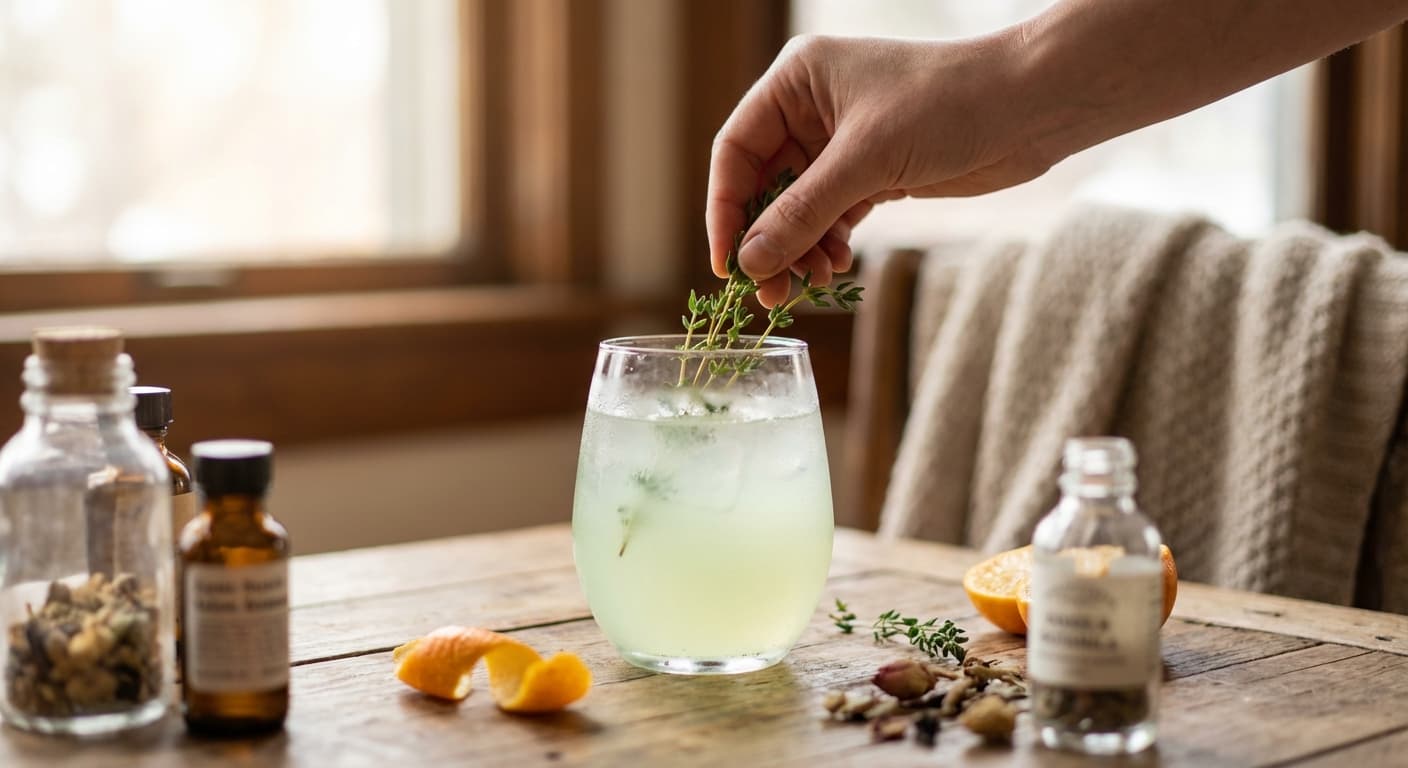
A vodka-lemon-thyme-soda is simply lovely. 4 cl vodka, juice from half a lemon, a couple of sprigs of thyme – you can leave them in whole – top with soda or tonic. Stir a little, let it sit for a minute while the ice melts and the aromas are released. It is a drink that tastes a little like an open lawn in sunlight, a little dust, a little forest.
If you fancy something Norwegian and a little rugged, Bivrost Vodka is a solid choice for this kind of drink. It is smooth and clean, made from Arctic water, and it lets both lemon and thyme shine without pushing itself forward. It is not a vodka that smells of spirits – it just does its job.

Dandelion – the lawn's revenge
Dandelion is technically not a garden herb, but it grows in the garden whether you want it to or not. And the leaves – picked early, before they grow large and bitter – have a nutty, slightly bitter taste that works surprisingly well in spritz variations.
Use small, pale leaves. Tear them a little, pour over 3 cl of gin or vodka, add a little honey water – honey dissolved in warm water, then cooled – top with prosecco or soda. You get something that resembles a Hugo, but with more edge. It is a drink you serve to someone who likes to be a little surprised – and who understands that weeds are really just herbs nobody has figured out yet.
Recipe: Classic Gin-Mint Spritz
Here is a simple base you can adjust with the other herbs depending on what you have available:
Ingredients
- 4 cl gin
- 1 handful of fresh mint (or another herb of your choice)
- 2 cl lime juice (fresh, preferably)
- 10 cl Sprite or tonic
- Ice
- Lime wedge for garnish
Method
- Place the mint leaves in a tall glass and press them gently with a spoon – not to crush, just to wake up the oil.
- Fill the glass with ice.
- Pour over the gin and lime juice.
- Top with Sprite or tonic, stir once.
- Garnish with a lime wedge and optionally an extra sprig of mint.
You can swap the mint for thyme, lemon balm or parsley without changing anything else. The taste changes, but the basic principle holds.
Why this works right now
March and April are months when we desperately long for spring, but often have to endure a few extra rounds of grey weather. Herbs are the first harbingers that actually deliver something you can eat – or drink. And unlike basil and coriander, which are fussy indoor prima donnas, these tolerate degrees below zero and come back year after year.
There is something liberating about picking something right outside the door and putting it in the glass. No trip to the store. No ready-mixed tonic with botanicals. Just leaves, ice, and something to mix with. It is early-spring luxury at its simplest.
And when the first green leaves begin to appear, it will not be long before the rest follow. By then you are already into the season – one glass at a time.