
I have a theory: most people drink beer with their eyes closed. Not literally, of course, but the nose stands idle while the glass is emptied. That's a shame. Because when you pour a dark winter beer and let the foam settle, an entire aromatic story is waiting for you.
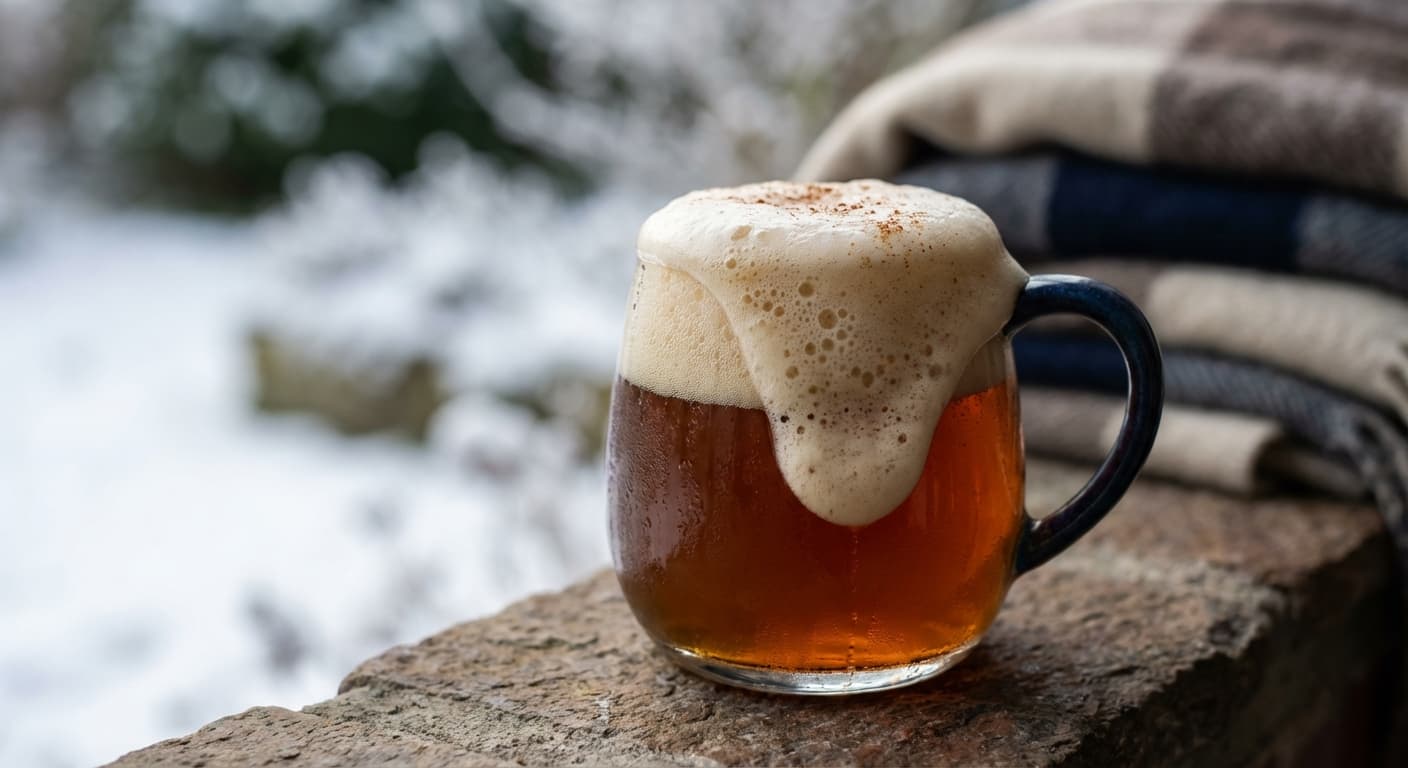
The foam is not just decoration. It is the beer's first language. In the tiny bubbles, volatile aromas are captured that never come through as clearly when you simply taste. The diacetyl that gives a buttery softness. The melanoidins from roasted malt that recall bread crusts and caramel. The hop aromas – from citrusy to earthy and resinous – that rise up before escaping from the glass.

Step one: Pour slowly, and wait
Temperature matters enormously. A beer that is too cold smells like almost nothing – aromatic molecules need warmth to be released. Let the glass sit at room temperature for five or six minutes after pouring. Watch how the foam gradually becomes denser, more cohesive. That is a sign that the carbonation is stabilizing, and that the beer's aroma profile is beginning to open up.
Many winter stouts and porters are actually better at 12–14 degrees than at refrigerator temperature. At home I often leave a bottle out on the kitchen counter for ten minutes before pouring. Even as I twist off the cap on a good chocolate stout I notice how cocoa notes and lightly roasted malt sweetness fill the room. It is like opening a box of dark chocolate – only better.

Five aroma signatures you should know
If you learn to recognize these five aroma groups, you will be able to read the beer before the first sip:
1. Caramel and nuts
Comes from lightly roasted malt. Classic in amber ales, brown ales, and bock. Sweet, warm, with a hint of bread dough. Think of the scent of freshly baked oat cookies or a newly baked cake. This is the comfort zone – aromas that remind you of your grandmother's kitchen.
2. Dark chocolate and coffee
The signature of darkly roasted malt – you find it in stout, porter, and imperial variants. Often accompanied by burnt sugar, tobacco, or a lightly ashy note. When I worked as a brewer, this was the profile I spent the most time balancing. Too much roasted malt gives ash and dryness, too little gives no depth. It is a fine line.
A beer like Nøisom Sjokoladestout leans heavily on this profile, with a foam that smells of cocoa powder mixed with espresso. It is brewed in Valdres, and the aromas are so distinct that you can almost taste them before the glass reaches your mouth.
3. Fruit and esters
The yeast's fingerprint. Belgian abbey-style beers and tripels can smell of plum, raisins, and banana. British ales give apple and pear. Fermentation temperature plays an enormous role here: warm fermentation gives more fruit, cold fermentation gives a cleaner malt profile. This is yeast chemistry in practice – and it is fascinating how much control the brewer actually has over the aromas.

4. Pine, juniper, and spice
The signature of winter darkness. Breweries play with festive ingredients: pine needles, cloves, cardamom, orange peel. A beer like Trysil Bryggeri En mørk vinternatt takes this further with a Nordic foraging tradition – the scent of pine forest hits you when you open the bottle. Here, the Christmas atmosphere becomes liquid. There is something magical about combining traditional brewing technique with ingredients from the forest.
5. Hops – citrus, floral, or earthy
Hops are not just bitterness. A Cascade hop smells of grapefruit. Mosaic gives tropical fruit and mango. British hop varieties give herbs and strawberry. In a balanced winter beer, hops should function as a spice, not the main ingredient. They should lift, not dominate.
How to smell properly
Don't plunge your nose straight into the glass. You will only get alcohol vapors. Hold the glass five to six centimeters below your nose, and breathe in slowly through both nostrils. Repeat two or three times.
Then: warm the glass slightly with your palms, swirl it gently (not like wine – the foam cannot handle aggressive treatment), and smell once more. Now the warmth will have lifted the heavier aromas – chocolate, caramel, roasted malt – up to the surface.

An extra trick: breathe out briefly through your nose while you taste. The aromas travel retronasally – from the mouth up into the nasal cavity – and enormously amplify the flavor picture. Sensory scientists call this nasal finish, and it is here that the complexity of a good winter stout truly blossoms. The first time I tried this deliberately, it was like switching on HD mode for my taste buds.
The foam also tells you about faults
A healthy beer foam should be dense, creamy, and hold for at least two to three minutes. If the foam disappears immediately, there can be several causes: the glass is greasy (dishwashing detergent residue), the beer is too old, or the carbonation has failed.
A sour, vinegary smell? Infection, either at the brewery or in the bottle. A strong sulfur smell (boiled eggs)? Yeast stress or poor storage. Beer is alive. It speaks to you – if you listen. I have thrown away more beer than I care to admit because my nose warned me before the taste had a chance to confirm it.
What you should try now
For those who want to train their nose, I recommend starting with three contrasting beers. Pour all three at the same time, let them sit for a while, and smell your way systematically through:
- A classic porter (such as Nøgne Ø Porter) – clean, dark, with distinct coffee and chocolate
- A spiced winter variant – preferably something with Christmas spices or pine needles
- A Belgian dubbel (such as Kinn Pryl Belgisk Dobbel) – fruit, caramel, and yeast character
This gives you three aromatic worlds to navigate. With time you will be able to smell your way to the beer style, the yeast type, and even which malt has been used. That may sound ambitious, but your nose is more powerful than you think. It just needs a little training.
The foam tells you everything. You just need to listen with your nose.