
There is something almost magical about the moment you pour a fragrant white wine into the right glass. Suddenly it opens up – the aromas bloom, the acidity feels fresher, and the whole experience lifts without you having done anything other than change the vessel. This is not imagination. It is science, and it is one of the most underrated secrets behind a truly great glass.
Let me take you through what you actually need to know – without having to invest in an entire cabinet full of glassware.
Why the glass actually matters
The shape of a glass controls three things: where the aromas gather, which part of the tongue the drink hits first, and how much surface area is in contact with air. That sounds technical, but the consequences are very concrete.
A narrow, tall glass keeps the aromas concentrated upward – you put your nose into a small, concentrated cloud of scent. A wide, open glass lets the aromas spread out into the room quickly, but gives you more air contact and oxidation. What smells good in one glass can seem flat and dull in the other.

It is also a matter of physics: when the wine hits the tip of the tongue (sweet), the sides (sour and salty) or the back (bitter), the taste is experienced differently. A glass that directs the drink straight toward the centre gives a different balance than one that tips it toward the tip. This is not hocus-pocus – it is the reason glassmakers have spent decades shaping glasses to match the character of the drink.
The Champagne flute – beautiful, but misunderstood
Let us start with the great classic. The Champagne flute looks elegant, and the bubbles rise beautifully upward in a long, thin column. The problem? It is actually not the best glass for high-quality sparkling wine.
The narrow opening dramatically limits aroma release. Champagne – especially a good blanc de blancs or a vintage prestige cuvée – is full of nuances: apple, brioche, lemon, yeast, nuts. In the flute you lose half of that.
That is why many people now use a regular white wine glass for good Champagne and cava. It is open enough for the aromas to gather, but narrows slightly toward the top so they do not disappear. The flute? Keep it for festive occasions where the visual effect is the point – and for simpler sparkling wines like Per Sundnes Bobler Over Prosecco, where the light, bubbly and fruity expression actually works well in an elegant flute.

White wine glass – freshness and aroma in balance
A standard white wine glass is narrower than a red wine glass, and that is intentional. White wine is usually fresher and more aromatic, and you want to preserve the light, volatile aromas – flowers, citrus, herbs – for as long as possible in the glass.
For a fresh, mineral style like Trimbach Riesling 2023 from Alsace, a classic white wine glass will truly bring out the laser-sharp acidity and the delicate floral quality. The glass narrows nicely at the top, and you get your nose down into a concentrated scent of lime, peach and stone minerals. It is almost meditative.
For a Chardonnay with more body and butter – think a Californian style like Ernest Vineyards Joyce Vineyard Chardonnay 2020 – you can easily use a slightly wider glass to let the creamy texture open up properly. That gives room for the rich, nutty expression, while the natural fresh acidity does not get drowned out.

Red wine glass – form follows the grape's function
Here there are two main names: the Burgundy glass and the Bordeaux glass.
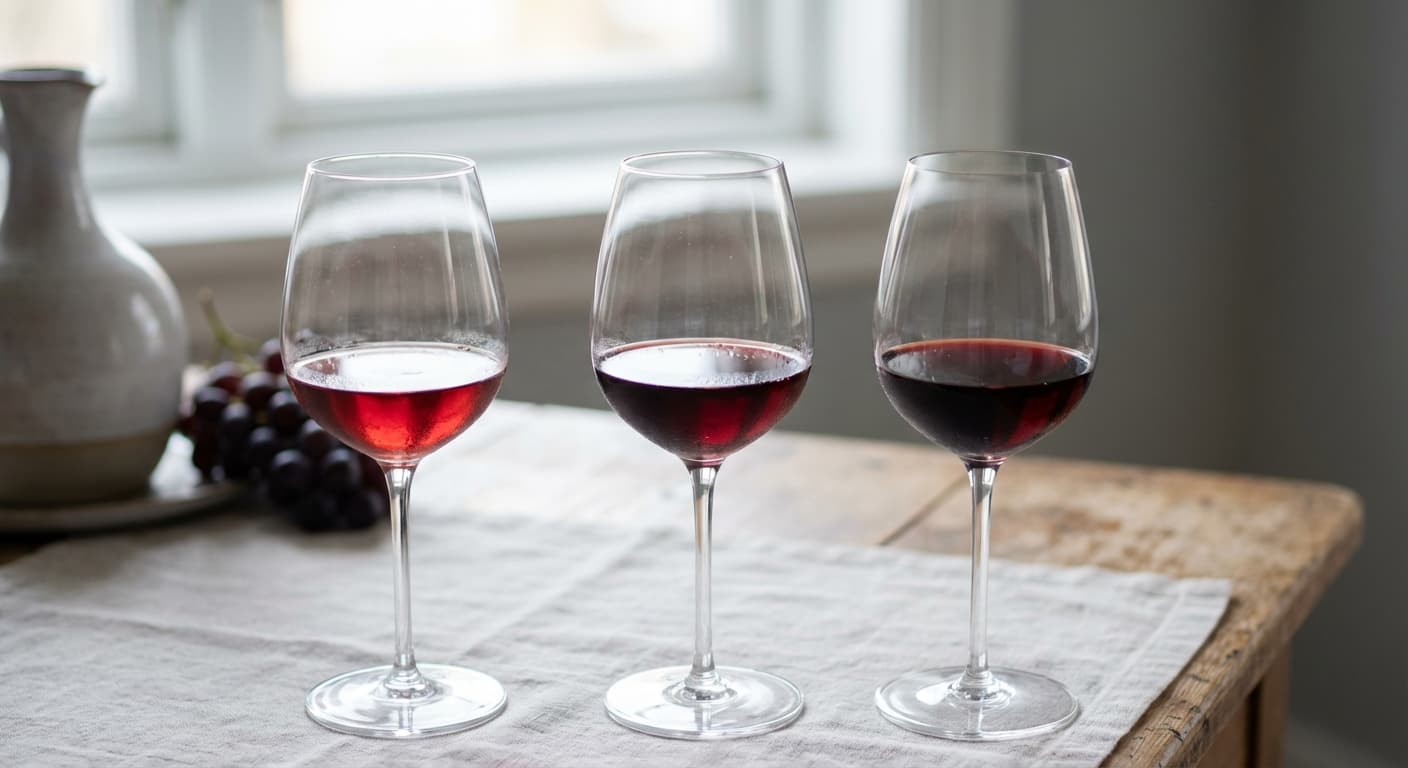
The Burgundy glass is the large, round, balloon-shaped glass you may have seen at fine restaurants. It is designed for Pinot Noir – a grape that is delicate, light and silky, with red berries, violet and a hint of earth. The wide bowl gives maximum air contact, so the light aromas can bloom. Pour a fine Burgundy like Dom. Arlaud Morey-Saint-Denis 1er Cru Les Ruchots 2022 into such a glass, and let it stand still on the table for two minutes, and it is almost as if the wine breathes a sigh of relief.
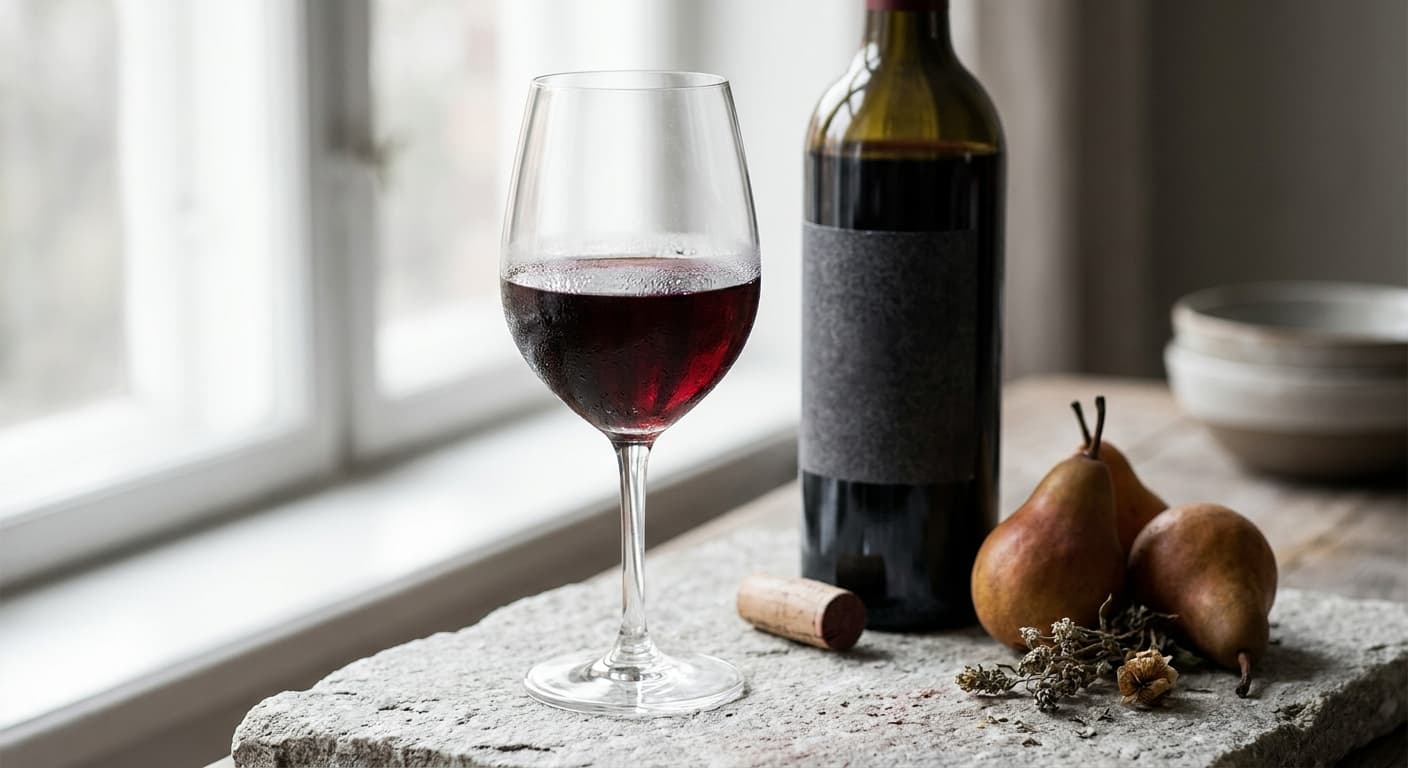
The Bordeaux glass is taller and slightly narrower than the Burgundy glass. It is made for heavier, tannin-rich wines like Cabernet Sauvignon. The somewhat higher opening leads the wine toward the centre of the mouth and lets the voluminous flavour distribute evenly, without the tannins seeming too harsh. For a powerful, structured wine like Ch. Clerc Milon 2022 from Pauillac, this glass is almost a necessity – it elegantly binds together the deep fruitiness and the delicate oak structure.

Tulip glass for beer – more than just a pint
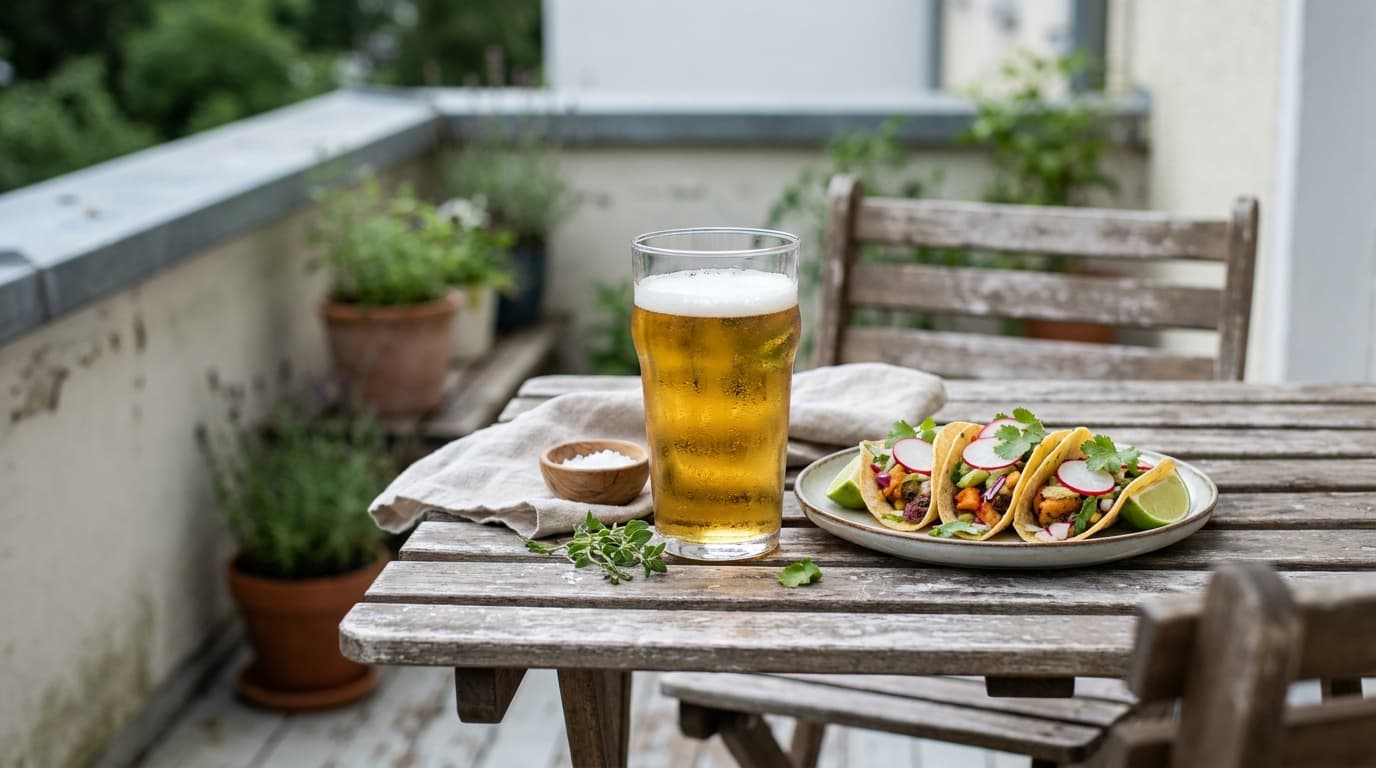
For beer it is simpler. A clean, clear beer pint gives you visual bubbles and plenty of room for the aromas from the hops. But for an imperial pastry stout or a powerful porter you should actually reach for a tulip-shaped beer glass – a bit like a small white wine glass – which gathers the rich, dark aromas of coffee, chocolate and custard where you can enjoy them fully.
A classic porter like St. Eriks Klassisk Porter really opens up in a tulip glass. The dark malt tones of roasted coffee, dark chocolate and lightly sweet molasses have room to develop, and the creamy foam head holds for longer.
Highball and tumbler – the bar at home
For gin and tonic the highball glass is king. The long, narrow glass keeps the ice cold for a long time and preserves the CO₂ bubbles in the tonic. Give it plenty of ice and a slice of citrus, and you get a drink that stays fresh and tingling to the last sip. A good gin like Isle Of Harris Gin with its maritime notes of sugar kelp and juniper deserves a tall, elegant glass that lets the botanicals aromas rise up toward the nose.
The tumbler – the wide, short glass – is the right choice for whisky and short drinks like Old Fashioned. The wide opening means the heavy, rich aromas of oak, vanilla and spice can spread out and meet the nose naturally.

What do you actually need at home?
Here is the honest list for most homes:
- 1 type of universal white wine glass – works for white wine, rosé, Champagne and light red wines
- 1 type of red wine glass (Bordeaux style) – wide enough for aeration, good for most reds
- 1 tulip-shaped beer glass – elevates everything from IPA to stout
- 1 highball – gin, long drinks, and aperitif moments
- 1 tumbler – whisky, Old Fashioned, and summer spritz
That is five glass types. You need no more than that to cover 95% of all situations – from a relaxed Easter Friday at the cabin to a dinner party with three wines and a dessert spirit.
The little secret everyone forgets
Whatever glass you use: make sure it is clean and odour-free. Residual washing-up liquid, fibres from a kitchen towel or simply dust in the cupboard can ruin even the best wine. Rinse the glass with a little room-temperature water just before you pour – it is a trick many professional sommeliers swear by.
So next time someone says glasses do not matter, you can smile quietly, pour into the right glass, and let the first sip speak for itself.
Cheers – and happy spring.