
Mulled wine has had its moment. After countless festive cups with the same spice blend and the same sweet aftertaste, there's something liberating about discovering that the Alps have entirely different answers to the question of what warms you best on a cold winter's evening.
I'm not talking about fancy cocktails made for Instagram, but about authentic drinks that have genuinely kept skiers, hikers, and après-ski guests warm for generations. Three drinks stand out: bombardino from Italy, jagertee from Austria, and a version of vin brulé that the Dolomites have perfected.
Let me take you on a taste journey that begins on the Italian ski slopes and ends in the Austrian forests.
Bombardino – Italy's Most Underrated Winter Drink
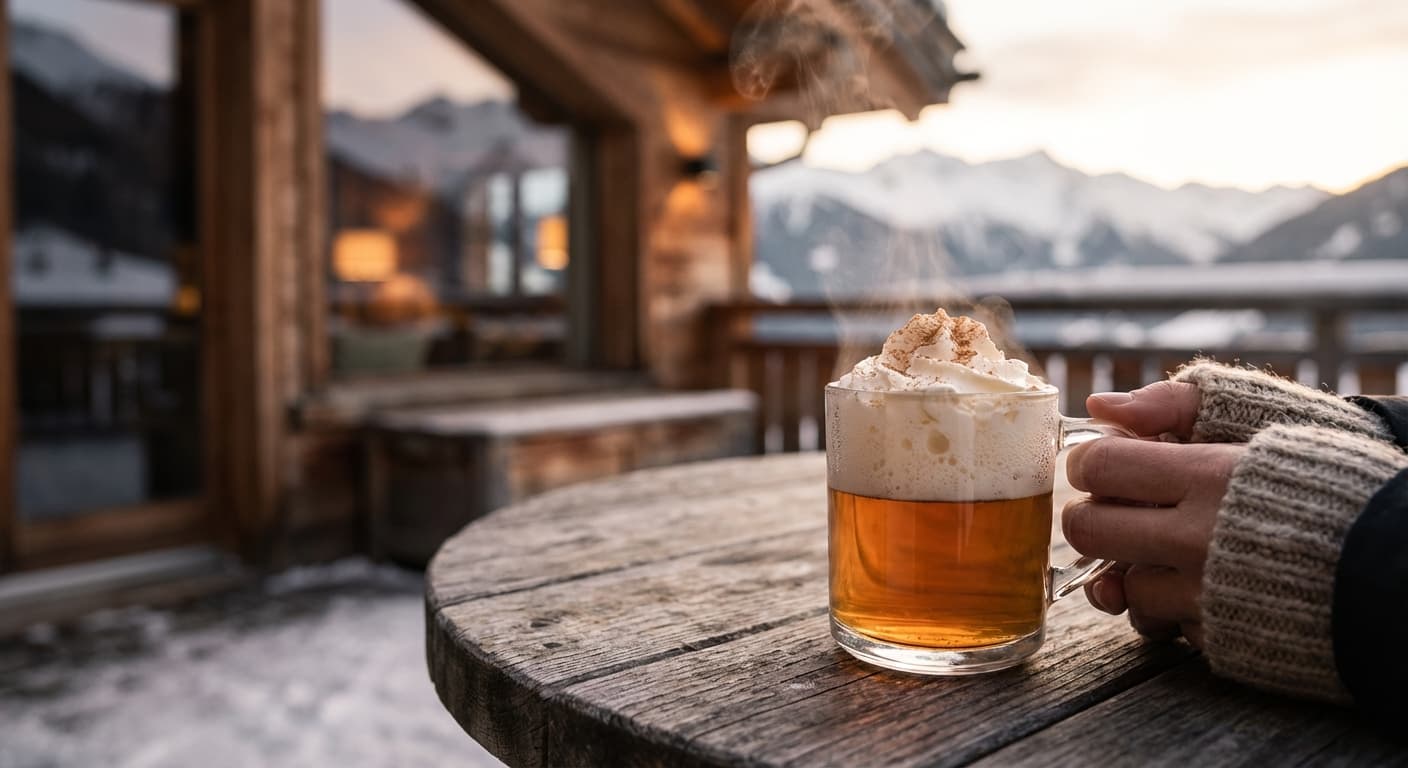
First up is bombardino, a silky smooth blend of egg cream and spirits warmed gently to the perfect drinking temperature. The name suggests an explosion, but the flavour is actually quite delicate – think of a warmer, more sophisticated version of eggnog.
The traditional recipe is remarkably simple: mix advocaat (the thick, yellow egg cream liqueur) with good brandy or cognac in a 1:1 ratio, warm gently in a saucepan or microwave, and top with a frothy layer of whipped cream. In some parts of northern Italy they use grappa instead of brandy, which gives a sharper, spicier profile.

Here is the secret that separates the amateurs from the mountain pros: the heat must be exactly right. Too high, and the egg coagulates into a lumpy mass. Too low, and you lose the cohesive, velvety texture that makes the drink so special. Aim for around 60–65 degrees – hot enough to steam, but not so hot that you can't hold the glass comfortably.
For anyone wanting a quality base for bombardino, a good cognac works excellently. Hennessy Very Special (40%, 70 cl) has the balanced, fruit-driven character that elevates the egg cream without dominating it. The warm notes of vanilla and oak complement the texture perfectly.
Jagertee – The Austrian Rebel
On to Austria, where jagertee (hunter's tea) has a far more rebellious history. Originally made by smugglers and hunters who needed something stronger than ordinary tea on long, cold days in the mountains, this is not actually tea at all – the name was legally imposed following a dispute with Sri Lanka over trade protection.
What you are actually making is a powerful blend of dark rum, red wine, and spices. And I mean powerful – the alcohol content often sits around 40% even after dilution, so this drink is not for those heading back out on the slopes.

Here is my approach to authentic jagertee:
Warm 500 ml of a robust, spiced red wine (think Amarone or a heavy Zweigelt) with 300 ml of dark rum. Add the juice of two oranges and one lemon, three cinnamon sticks, six whole cloves, two star anise, and a couple of slices of fresh ginger. Let it steep on low heat for at least 20 minutes – ideally longer, so the spice flavours really come through. Sweeten with 3–4 tablespoons of dark honey or cane sugar to taste.
The crucial thing with jagertee is the balance between the wine's tannins, the rum's sweet warmth, and the spices' bitter, aromatic notes. Captain Morgan Spiced Gold (35%, 70 cl) is actually a solid choice here – the spiced notes of vanilla and spice reinforce the whole without requiring you to fill the pot with ten different ingredients.
Vin Brulé à la the Dolomites – Not Your Grandmother's Mulled Wine
Finally, let's talk about vin brulé from the Dolomites – an Italian version of warmed wine that has little in common with the Scandinavian mulled wine we know.
Where Norwegian mulled wine often drowns in cloves and artificial sweetness, the Dolomite version is built on balance: good wine (yes, actually good wine – not the cheapest you can find), fresh citrus fruits, a little honey, and just enough spice to lift, not overwhelm.

Here is how I make it:
Use 750 ml of a robust Italian red wine – Valpolicella Ripasso or Barbera d'Alba are perfect. Peel two oranges and one lemon in thin strips (avoid the white pith – it turns bitter). Add four cinnamon sticks, six cardamom pods lightly crushed, three star anise, and a handful of fresh bay leaves if you can find them.
Warm gently to around 70 degrees – never let it boil. Sweeten with 100 ml of good honey, preferably chestnut or forest honey that has enough character to stand up to the wine. Let it steep for 15–20 minutes on the lowest heat, strain, and serve immediately.
The trick is to taste as you go. Does it need more acidity? Add more lemon. Too sweet? A pinch of sea salt actually balances things surprisingly well. Too flat? A few extra cardamom pods give it the lift you need.
Why These Drinks Warm You Better
It's not just about alcohol content. These three drinks are built on a principle that mulled wine often forgets: layering of warmth. The spirits deliver immediate inner warmth, the spice flavours stimulate circulation, and the sugar (in moderate amounts) provides energy without overwhelming the palate.
And then there are the rituals surrounding them. Bombardino is served in small, thick glasses that retain the heat. Jagertee is drunk slowly, often over a long time in good company. Vin brulé à la the Dolomites is typically served with biscotti or almonds on the side – something to chew on that balances the intensity.
How to Take It to the Next Level
Once you have mastered the basic recipes, it's time to experiment. Replace half the rum in jagertee with good cognac for a more refined profile. Add a couple of slices of fresh chilli to vin brulé for a heat that really bites. Or top bombardino with a small dash of Fernet Branca (39%, 50 cl) for a bitter contrast that cuts through the sweetness.
The great thing about these drinks is that they can handle personal adaptations. Perhaps you prefer more citrus in jagertee, or want extra cinnamon intensity in vin brulé. The key is to start with the classic proportions, then adjust to your own taste.
The truth is that the Alps have been keeping these secrets long enough. It's time we brought them down to our own kitchens – and gave mulled wine a well-deserved break. These drinks require a little more attention than heating up a ready-made blend, but the reward is drinks with depth, character, and authenticity that actually taste of something.
So next time the cold sets in and you need something that warms you properly, skip the mulled wine. Make a bombardino, a jagertee, or a proper vin brulé instead. Your body will thank you – and so will your taste buds.