
There is something almost meditative about brewing white tea. It is gentle, subtle, and has a floral purity that few other ingredients can match. This spring I have started using it as a base in mocktails – and the result has surprised even my most skeptical guests.
White tea can provide a mild, floral base for mocktails. Flavour varies with the tea and brewing method; follow the package instructions and taste as you brew, since white tea can also become bitter when oversteeped.
These three recipes are made for those who want to serve something that genuinely impresses – whether it is during graduation season, at a Sunday dinner, or simply as an everyday aperitif on the veranda. Nothing here tastes like "soda with lemon." This is real bartender work, just without alcohol.
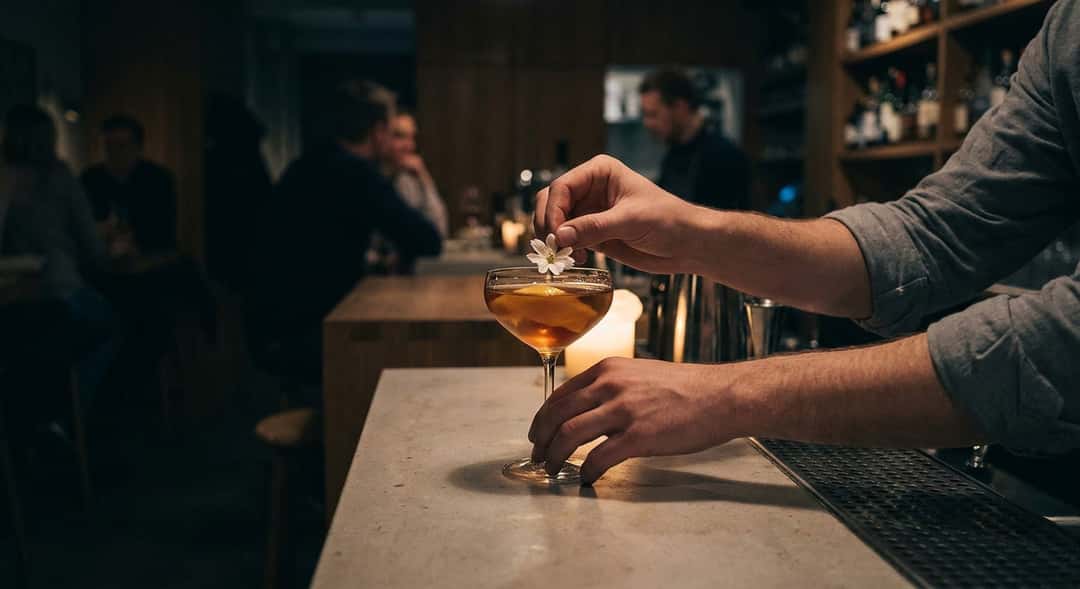
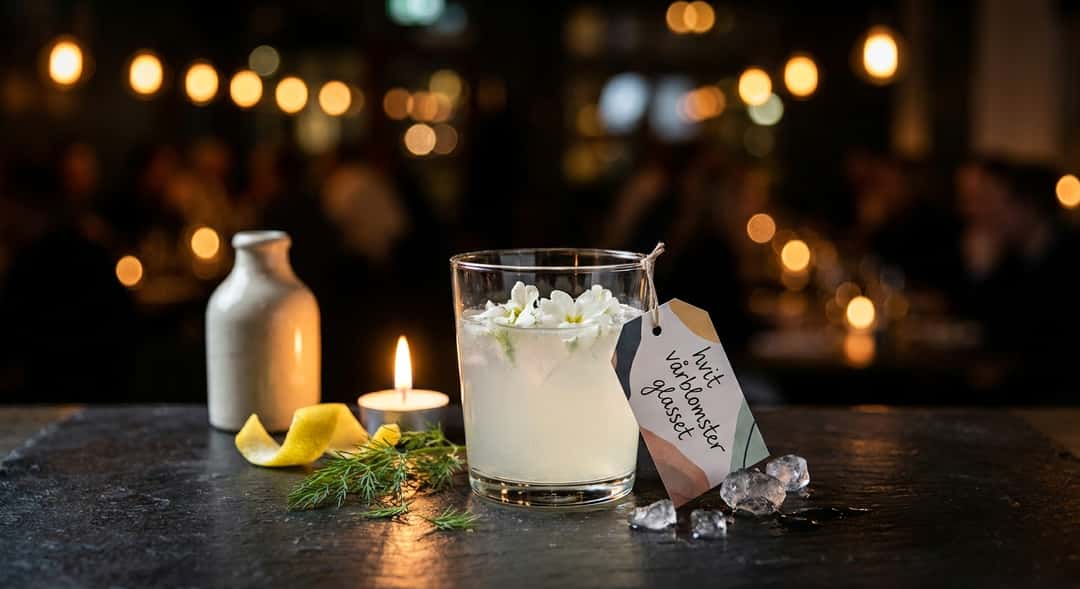
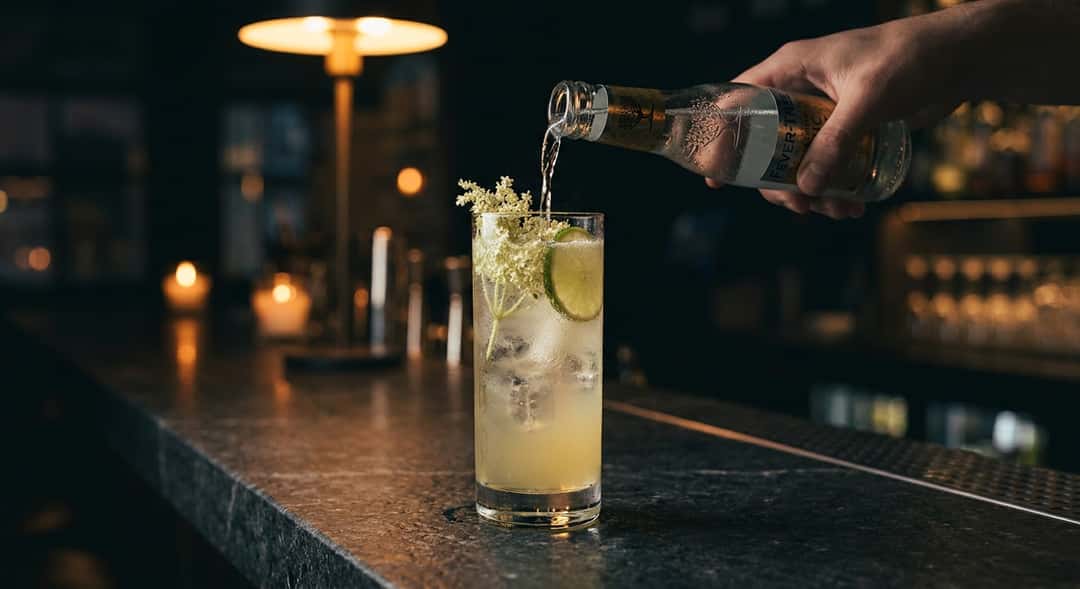
1. White Tea and Elderflower Smash
Elderflower syrup is perhaps the most Norwegian of all cocktail ingredients. It has that characteristic, slightly muscat-like floral flavour that simply smells of a Norwegian early summer. Combined with white tea and fresh lime, this becomes a drink that is both elegant and easy to drink – and that holds up well throughout an entire meal.
Ingredients
- 12 cl strongly brewed white tea (chilled)
- 3 cl elderflower syrup (homemade or store-bought)
- 2 cl freshly squeezed lime juice
- 6–8 fresh mint leaves
- Ice
- 5 cl Fever-Tree Spanish Clementine Tonic Water
Method
- Brew white tea twice as strong as usual – use double the amount of tea, 80°C water, and let it steep for 3 minutes. Chill.
- Place mint leaves in a tall glass and press gently with a muddler – do not crush, just open the leaves.
- Fill the glass with ice, pour over the tea, elderflower syrup, and lime juice.
- Stir gently for 10 seconds.
- Top with tonic water and stir once more.
Garnish: A couple of fresh elderflower sprigs and a piece of lime zest rolled around a cocktail pick.
Tip: Fever-Tree Spanish Clementine Tonic Water adds a light orange and clementine note that lifts the elderflower even further. Use a dry tonic rather than a sweet one – balance is everything.— MAGNUS MIXMASTER
2. Violet and White Tea – A Floral Highball
Violet is rarely used in the bartender world, but it has a mild, sweet, and almost perfumed flavour that pairs surprisingly well in drinks. Here we make a simple violet syrup and combine it with white tea and lemon for a highball that looks impressive and tastes even better. The purple colour alone is enough to stop a conversation.
Make the violet syrup first
Bring 1 dl water and 1 dl sugar to a boil. Remove from the heat, add a handful of fresh violet flowers (or 1 tsp dried violet) and optionally 1 tsp rose water. Let steep for 20 minutes. Strain and chill.
Ingredients
- 10 cl white tea (chilled, normal strength)
- 4 cl violet syrup (see above)
- 2 cl freshly squeezed lemon juice
- Ice
- 6 cl sparkling water
Method
- Add ice to a highball glass.
- Pour over the white tea, violet syrup, and lemon juice.
- Stir gently for 15 seconds.
- Top with sparkling water.
- Stir once – gently, you want to keep the bubbles.
Garnish: A fresh violet flower or a pickled violet placed on the rim of the glass.
Tip: The syrup keeps for 2 weeks in the refrigerator in a sealed bottle. Make a double batch and use the rest in sparkling water, yoghurt, or on pancakes.
3. Lemon Balm and White Tea – The Quiet Favourite
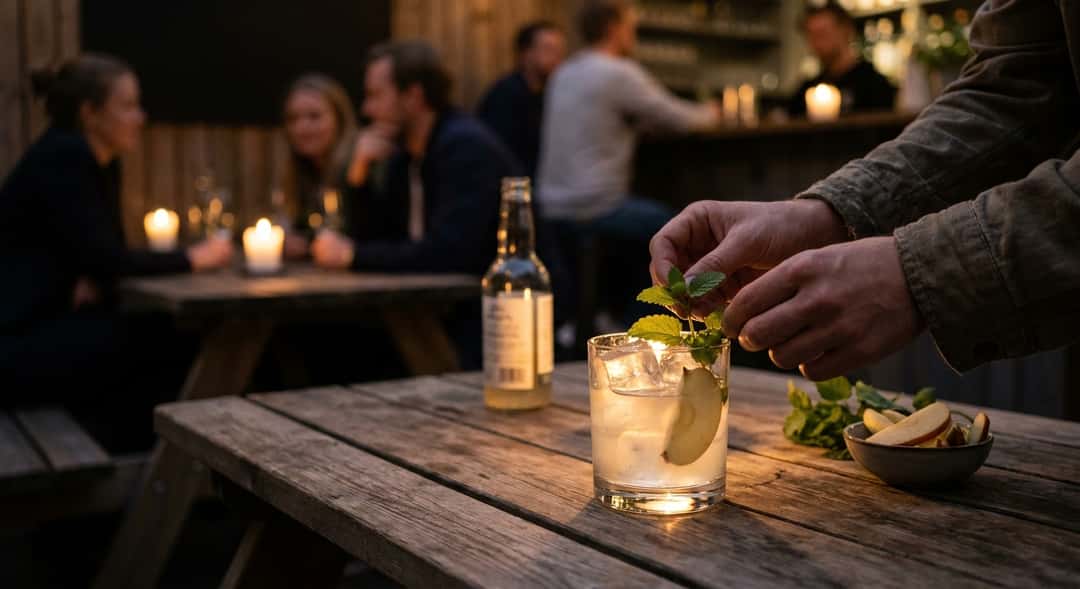
Lemon balm is the herb that is always overlooked but never forgotten. It has a mild lemon scent combined with something herbal and fresh – think a calmer version of lemongrass. In this mocktail we combine it with white tea, ginger syrup, and apple juice for a drink with more body and complexity than you might expect.
Askim Eplemost med fruktkjøtt is a good choice here: the naturally cloudy consistency gives the drink texture and an earthy fullness that clear juice cannot match.
Ingredients
- 8 cl white tea (chilled)
- 4 cl fresh apple juice (Askim Eplemost med fruktkjøtt recommended)
- 2 cl ginger syrup (make your own: 1 dl water + 1 dl sugar + 5 cm grated ginger, simmer 5 min, strain)
- 1 cl freshly squeezed lemon juice
- 5–6 fresh lemon balm leaves
- Ice
Method
- Place lemon balm leaves in the bottom of a shaker. Press gently with a muddler.
- Add white tea, apple juice, ginger syrup, and lemon juice.
- Add ice and shake for 10 seconds.
- Double-strain over a rocks glass filled with ice.
- Garnish and serve immediately.
Garnish: A sprig of lemon balm and a thin apple slice.
Tip: It is the small difference that separates a good mocktail from a memorable one – and here it is the apple juice that does the work.
Brewing Tips for White Tea as a Cocktail Base
White tea is the most delicate of all teas, and it deserves a little extra attention. Follow these four points and you will have a base that actually tastes of something:
- Temperature: 75–85°C. Never boiling water – it destroys the delicate aromas.
- Brewing time: 2–4 minutes. Taste as you go.
- Chilling: Pour the tea over ice immediately after brewing to stop the process and preserve the freshness.
- Strength: For mocktails I recommend double the amount of tea leaves – approximately 4 grams per 2 dl water – for more character in the glass.
White tea can easily disappear in a glass full of syrup and fruit. Make sure the tea flavour is actually present. It is the base, not the background.
A Grown-Up Choice Without Compromise
Something has happened in cocktail culture over the past few years. Non-alcoholic has gone from being a necessary evil to becoming a genuinely creative field. Bartenders around the world – from London to Tokyo – take mocktails just as seriously as their alcoholic counterparts, and it shows in the quality of the ingredients and techniques used.
These three recipes are my answer to that: drinks that do not apologise for themselves, that do not taste like a half-finished product, and that give you something real to hold in your hand – whether you are a graduating student, a designated driver, pregnant, or simply feel like taking a breather.
Spring's ingredients are at their best right now. Use them while you can.