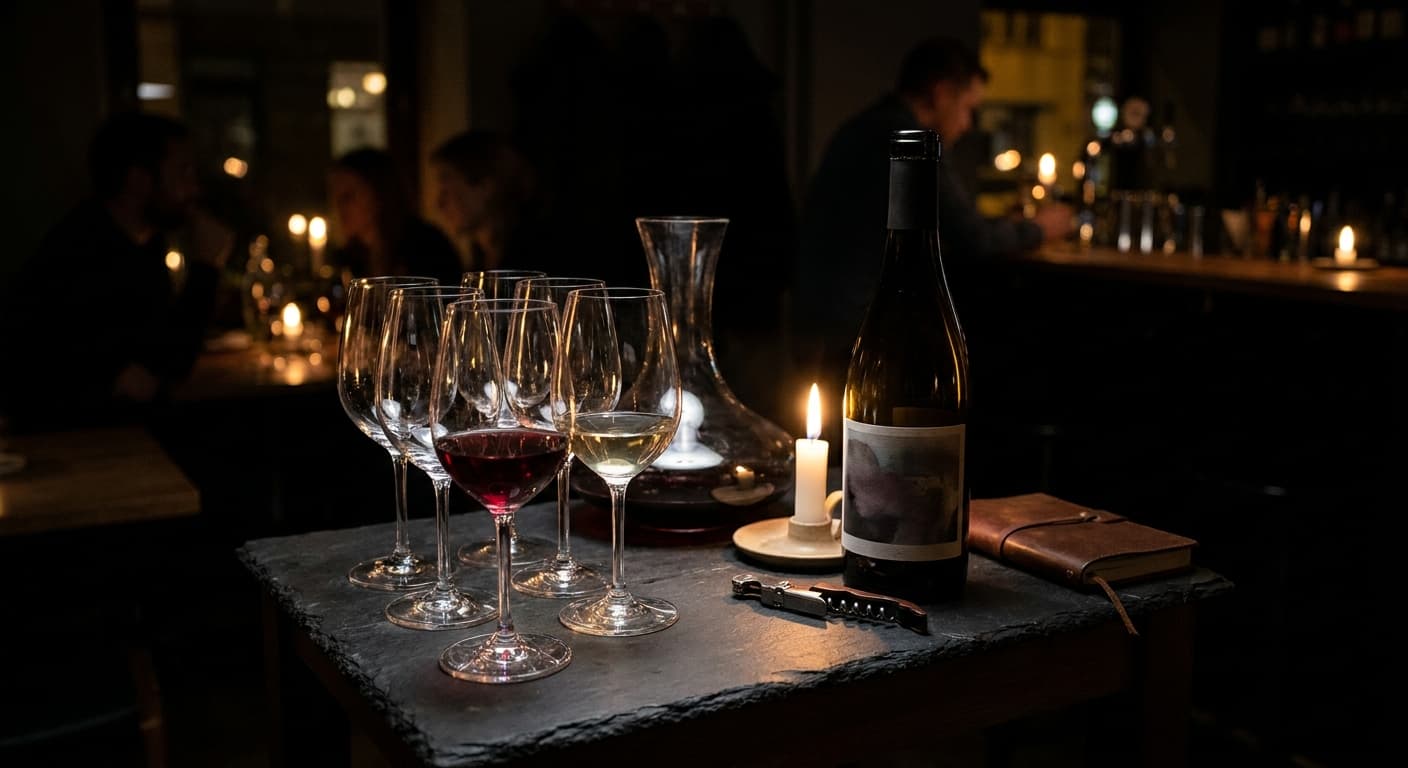

Something fundamental has changed on the wine shelves over the past year. Not just in Norway, but globally. Champagne – the ultimate status drink, the symbol of luxury and celebration – has become cheaper. At the same time, the price of ordinary white wine and red wine keeps creeping upward, season after season.
The result? A small price revolution that means the bubble you used to save for New Year's Eve can suddenly become the weekend's best buy.
But what is actually driving this price shift? And how can you as a consumer take advantage of it?
Why are Champagne prices falling?
The Champagne region has seen some unusually good annual harvests over the past few seasons. 2018, 2019, and 2020 were all solid vintages with high quality and large volumes. That means producers are sitting on significant stocks of mature, bottle-fermented wines that are now ready for sale.
At the same time, demand from key markets such as China and the United States has eased – partly due to economic uncertainty, partly because younger consumers are choosing other types of bubbles or sparkling wine.
The Champagne houses have responded by adjusting prices downward to keep volumes up. It is a classic market mechanism, but unusual within this tradition-rich category that has long been known for strict price control and luxury positioning.

In parallel, white wine and red wine from popular regions such as Bourgogne, Toscana, Rioja, and Rhône have experienced the opposite. Smaller harvest volumes due to drought, frost, and extreme weather have pushed prices up. At the same time, production costs have risen – energy, glass, transport – and that is felt directly in the shelf price.
A white wine from Loire or an elegant Italian red wine that cost 250 kroner two years ago now typically sits at 320–350 kroner.
What do you actually get for your money?
Let's take a concrete example. A solid white wine for the weekend dinner – say a Sancerre or a Chablis – typically costs between 350 and 450 kroner. You get freshness, minerality, elegance.
But compare that with a good Champagne at 370 kroner. Here you get not just freshness and elegance, but also complexity from bottle fermentation, the creamy texture of yeast autolysis, a minimum aging period of 15 months (often more), and the unique terroir of the chalk and limestone soils of Champagne.
Technically, Champagne is one of the world's most labor-intensive wines to produce. The grapes are harvested by hand, the wine is fermented twice, aged on yeast for years, and each bottle is turned manually (or mechanically) through a process called remuage to collect the sediment.
All of this costs money. That you can now get this quality for under 400 kroner – often at the same price as a simple everyday wine from Languedoc – is genuinely remarkable.

What should you look for?
Not all Champagne is created equal, and falling prices do not automatically mean good value. Here are some technical pointers to guide your search:
Brut vs. Brut Nature
Most Champagnes are dosed with a small amount of sugar (dosage) after disgorgement. Brut typically contains 6–12 grams of sugar per litre, enough to balance the acidity without tasting sweet.
Brut Nature (also called Zero Dosage) has no added sugar – here the grape quality and the aging must carry the whole show. If you find a Brut Nature under 400 kroner, it is often a sign that the producer has confidence in their product.
Blanc de Blancs and Blanc de Noirs
Blanc de Blancs is made solely from Chardonnay and is often leaner, more mineral, perfect as an aperitif or with shellfish. Blanc de Noirs is made from red grapes (Pinot Noir and/or Pinot Meunier) and has more body, red fruit notes, and pairs well with warm dishes.
If you see these designations on the label, you know the producer has deliberately chosen a single style – a good sign.
Small producers vs. large houses
The large Champagne houses (Moët, Veuve Clicquot, Bollinger) have brand prices that rarely fall dramatically. But smaller producers – often called récoltant-manipulant (RM) – can offer incredible character and quality at a lower price.
These producers grow their own grapes and control the entire process. They also have more flexibility to adjust prices quickly.
One example of exactly this is André Clouet Brut Silver. This is a small, family-run producer from the Grand Cru village of Bouzy, known for its Pinot Noir grapes. Clouet has been producing Champagne since 1911, and their Brut Silver is a classic blend dominated by Pinot Noir with a touch of Chardonnay.
The wine is aged for at least three years on yeast before disgorgement, giving it a fine depth with notes of brioche, apple, and citrus. At a price of 359.90 kroner, it sits well below many far more anonymous white wines and red wines, and delivers authentic Grand Cru quality in the glass.

How do you find the best buys?
Here is my strategy when hunting for Champagne value:
Check Grand Cru and Premier Cru status. Champagne is divided into villages ranked by quality. Grand Cru (100%) and Premier Cru (90–99%) give you grape quality at the highest level. If you find such a Champagne under 400 kroner, go for it.
Look for vintage Champagne (millésime). Most Champagnes are non-vintage wines, meaning blended from several years to achieve the house style. Vintage Champagne is made only in good years and from grapes from a single harvest. If the price is low, it may be because the producer is sitting on large stocks and wants to make room for the next vintage.
Consider the alternatives. Crémant, Cava, and Franciacorta are wonderful bubbles made using the same method as Champagne. But if Champagne actually is cheaper, why not choose the original?
Buy several bottles. Champagne keeps well in the fridge (in the short term) and in the cellar (in the long term). If you find a winner, buy 3–6 bottles. It is the drink that suits everything: aperitif, dinner, dessert, and the random Wednesday evening when you need something that reminds you that life is too short for boring wine.
Is this the new normal?
It is uncertain whether Champagne prices will remain low. If next year's harvest is small, or if demand picks up again, prices can turn quickly. But right now, in January 2026, there are good opportunities to discover Champagne as an everyday luxury – not just a rare celebratory drink.
So the next time you stand in front of the shelf weighing up a safe Chianti at 380 kroner, take an extra look at the Champagne section. Chances are you will find a bubble that gives you more joy, more elegance, and actually more value for your money.
It does not happen often – and it is worth taking advantage of while it lasts.