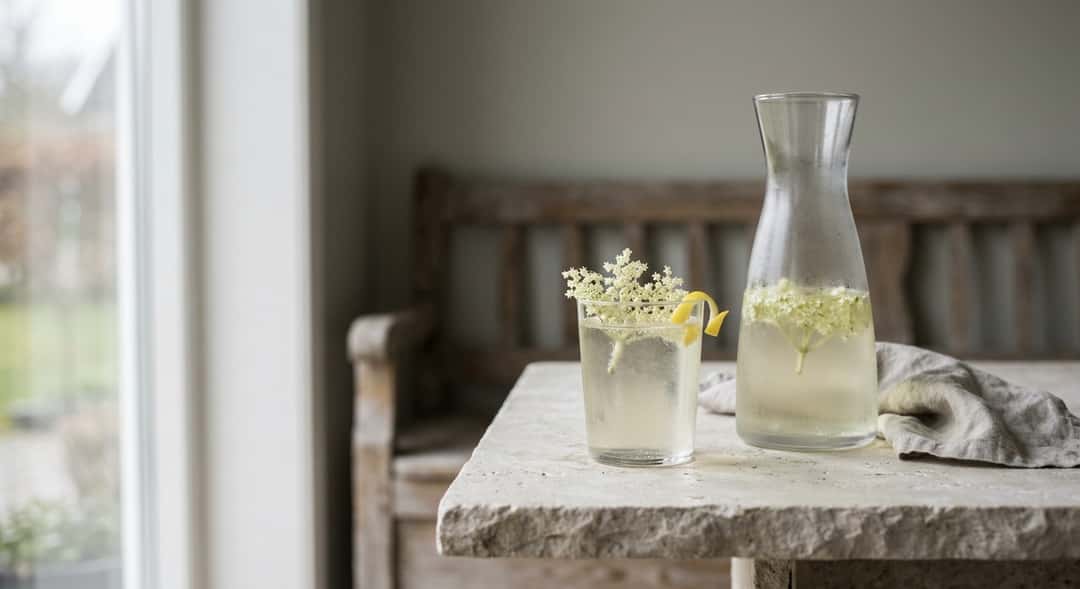

There is something almost magical about elderflower season. Over a few hectic weeks in May and June, the white, lace-like flower heads explode along roadsides, in gardens, and at forest edges all across the country. The scent is sweet, lightly citrusy, and florally intense – and it tells you unmistakably that summer is on its way.
Use only positively identified flowers of elder (Sambucus nigra). Remove leaves and stems; do not use other plant parts. Scent alone is not enough to identify the plant.
For those who know how to seize the moment, elderflower is an ingredient that can be transformed into something of the most beautiful things you can pour into a glass.
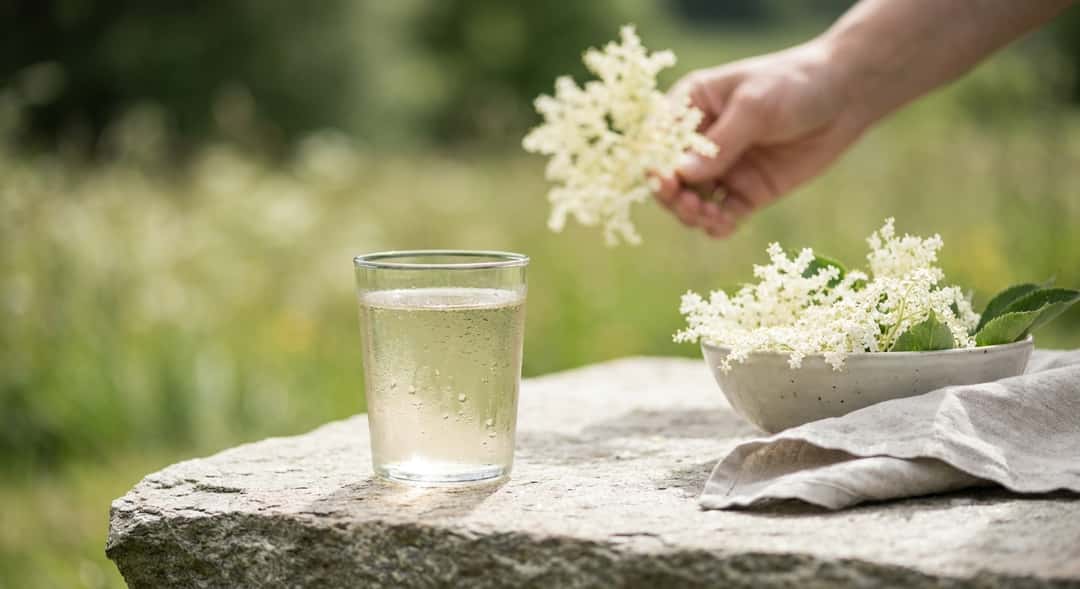
The Art of Picking – Timing Is Everything
Elderflower season is short, and it takes a little attention to get the timing right. The best picking window is generally from the end of May into mid-June, depending on where in the country you are and what kind of spring it has been. Scent is your best guide: the flowers should smell sweet and fresh, not sour or fermented.
A few simple tips for good picking results:
- Pick on a dry day, ideally mid-morning when the dew has evaporated but the sun's warmth has not yet dried out the flowers.
- Choose open, fully bloomed clusters with cream-white flowers. Avoid buds that have not fully opened, and discard clusters that are starting to turn yellow.
- Keep your distance from heavily trafficked roads – elderflowers absorb what surrounds them, and exhaust particles are not a desirable flavoring.
- Shake gently to remove insects, but do not wash the flowers – doing so removes much of the aroma and the natural yeast that sits in the flowers.
Bring a large, airy basket and pick around 20–30 large clusters per batch of cordial. That is more than enough to make something truly memorable.
Homemade Elderflower Cordial – Here's How
The cordial is the cornerstone of elderflower summer drink culture. Made properly, it has a complex aroma that balances floral fragrance, citrus, and a delicate bitterness from the pollen. It is simple to make, but the result is anything but simple.
Ingredients (for approx. 1.5 litres)
- 25–30 large elderflower clusters
- 1 kg sugar
- 1 litre water
- 2 lemons, unwaxed – zested and sliced
- 1 lime, unwaxed – zested and sliced
- 1 tsp citric acid (for shelf life and freshness)
Method
- Bring water and sugar to the boil until the sugar is completely dissolved. Allow the syrup to cool to room temperature.
- Place the elderflower clusters and lemon and lime slices in a large bowl or pot.
- Pour the cooled sugar syrup over the flowers and fruit.
- Stir in the citric acid.
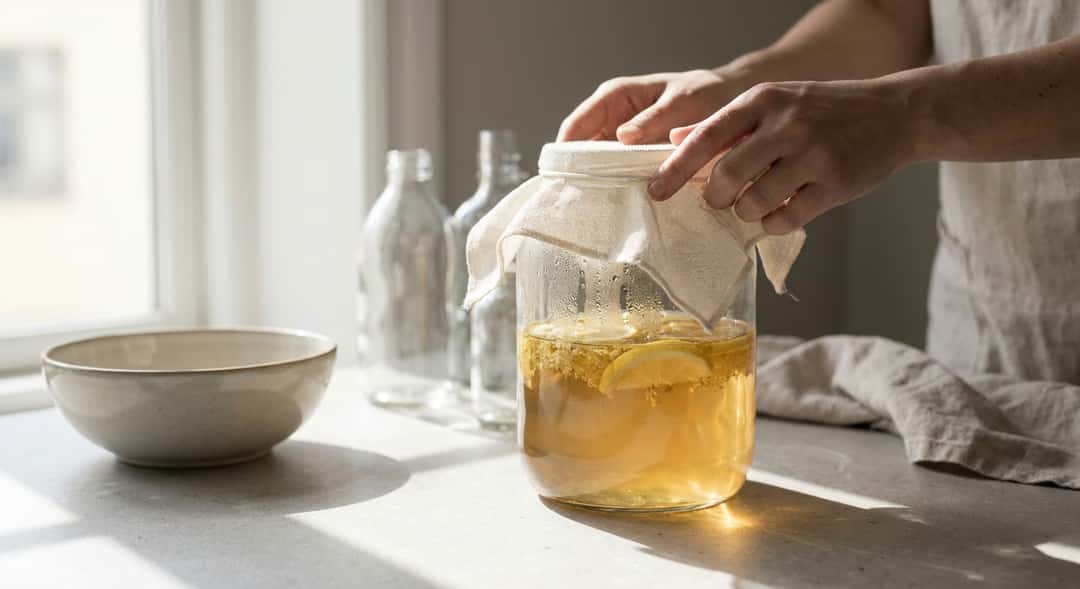
- Cover with a clean cloth and leave in the refrigerator for 48–72 hours. The longer, the more intense the floral aroma.
- Strain through a fine-mesh sieve or cheesecloth. Press gently to extract all the juice.
- Pour into clean bottles, refrigerate immediately and use promptly. Freeze the remainder in small portions. This recipe has not been validated for 4–6 weeks of refrigerated storage.
Tip: Add half a teaspoon of orange blossom water for an extra florally lifted dimension – it is not traditional, but it enhances the aroma in a subtle and beautiful way.
What Do You Do with the Cordial?
You now have a bottle full of Norwegian summer in liquid form. Here are some of the most elegant – and simple – ways to use it.
Non-Alcoholic Elderflower Spritz
Mix 3–4 cl cordial with ice-cold sparkling water or soda, squeeze over a little lemon, and add a sprig of fresh mint. Serve in a tall glass with plenty of ice. It is pure, radiant summer in a single glass – and a drink that everyone at the table can enjoy, regardless of age or preference.
Sparkling Wine Elderflower
For those who want a little more sense of occasion, the combination of cordial and sparkling wine is hard to beat. Use 2–3 cl cordial in the bottom of a champagne glass and top up with a dry, fresh bubble. A light and aromatic crémant works beautifully – the bubble cuts through the sweetness, and the floral aroma blooms in the glass.
If you want to invest a little more in the glass, Maison Legrand Crémant de Limoux is a considered choice. This crémant from the south of France is made from Mauzac, Chardonnay, and Chenin Blanc – an unusual and exciting combination that gives a fresh, somewhat nutty character with fine tartness and discreet fruit notes. It is a perfect counterweight to the cordial: it keeps the floral aroma in check without overpowering it, and the result is a drink that is greater than the sum of its parts.
Hylle-Hugo – The Crowd-Favourite Cocktail
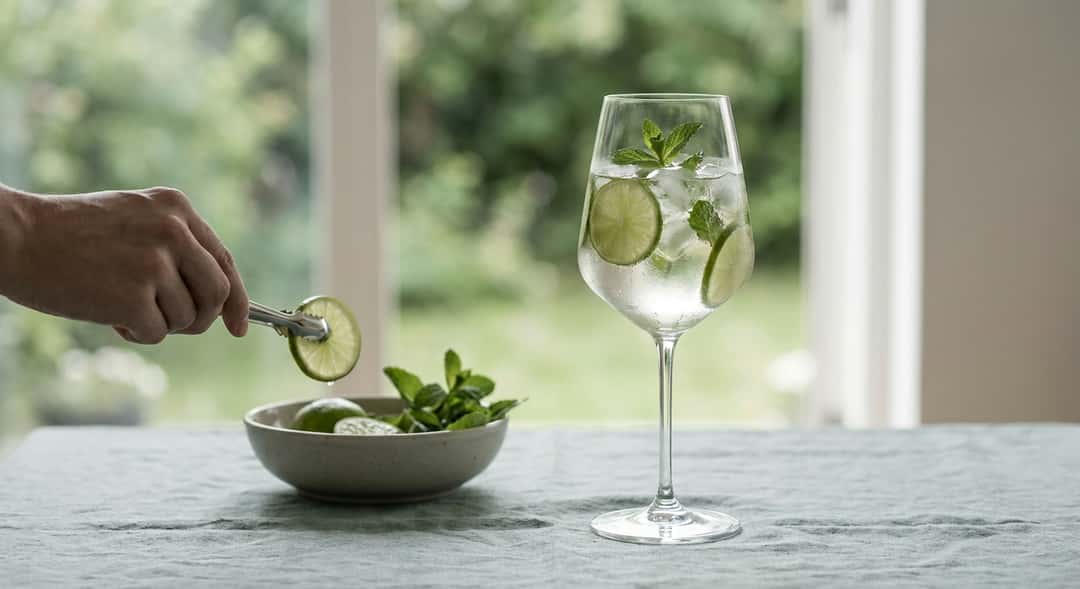
The Hugo cocktail has become Europe's most beloved summer drink in recent years, and it is made precisely for elderflower season. The classic is built on elderflower syrup, sparkling wine, and sparkling water, with fresh mint and lime slices. Simple, refreshing, and almost ridiculously good.
Ingredients (for 1 glass):
- 4 cl homemade elderflower cordial
- 10 cl dry, lightly sparkling wine
- 4 cl sparkling mineral water
- A few fresh mint leaves
- 2–3 lime slices
- Ice
Method:
- Fill a large wine glass generously with ice.
- Add lime slices and mint leaves.
- Pour over the elderflower cordial.
- Add the sparkling wine and finally the sparkling water.
- Stir gently once. No shaker, no fuss – just pure summer.
Elderflower Lemonade for Large Gatherings
Perfect for garden parties and summer dinners with many guests. Mix 1 part cordial with 4–5 parts cold sparkling water, the juice of 2–3 lemons, and plenty of ice cubes. Add a few fresh cucumber slices and a sprig of mint. Serve in a large carafe and let guests help themselves – it is the kind of drink that disappears faster than you can refill it.
Elderflower Beyond the Glass
The cordial does not stop at drinks. Stir it into vinaigrettes for a green spring salad, use it as a glaze for grilled salmon, or mix a spoonful into Greek yoghurt with strawberries. And if you have made pancakes for the weekend brunch? A splash of elderflower cordial in the batter gives an unexpected and wonderful floral note that everyone will ask about.
But at its core, it is in the glass that elderflower does its greatest work. That is where the fragrance is released, where the season becomes taste, and where nature's brief, generous gift can be shared with those you love.
So seize the moment now – it does not last long.
Homemade cordial can be frozen in bags and used through autumn and winter. Close your eyes, take a sip, and suddenly summer is back.