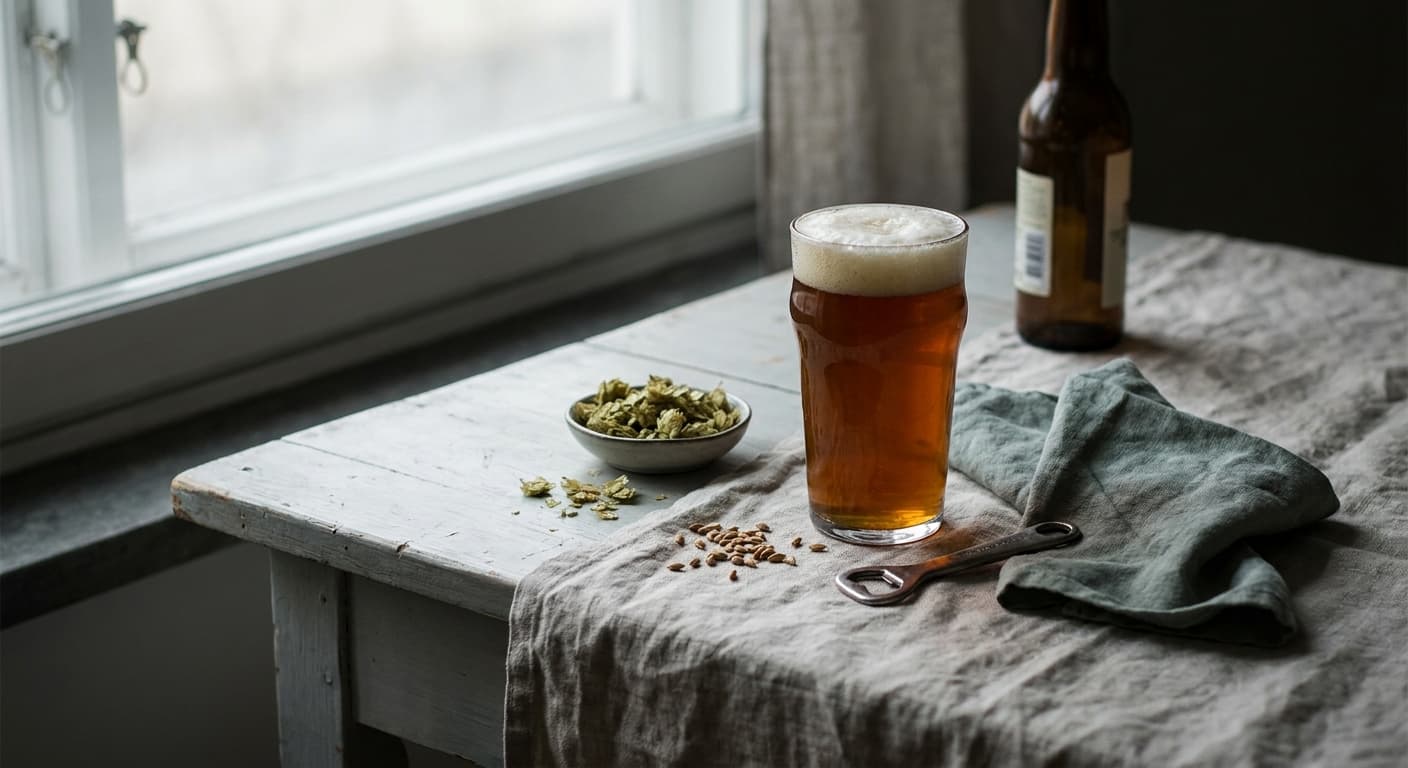

There is something almost magical about a drink that has survived hundreds of years, traversed imperial eras, two world wars, and Soviet industrialisation – and still ends up as the summer's most talked-about curiosity among craft breweries in Scandinavia. Kvass is exactly that. A fermented bread drink with roots in old Russia, Ukraine, and Poland, made from stale rye bread, water, and a little yeast. Simple. Almost brutally simple. And very, very good.
I came across kvass a few years ago when I was working as a brewer, and was immediately fascinated by the concept: a drink that is a by-product of food, made from what you would otherwise throw away. There is something fundamentally honest about that.
Fermentation is not about technique – it is about trusting the living.— KRISTINE CRAFT

What is kvass, really?
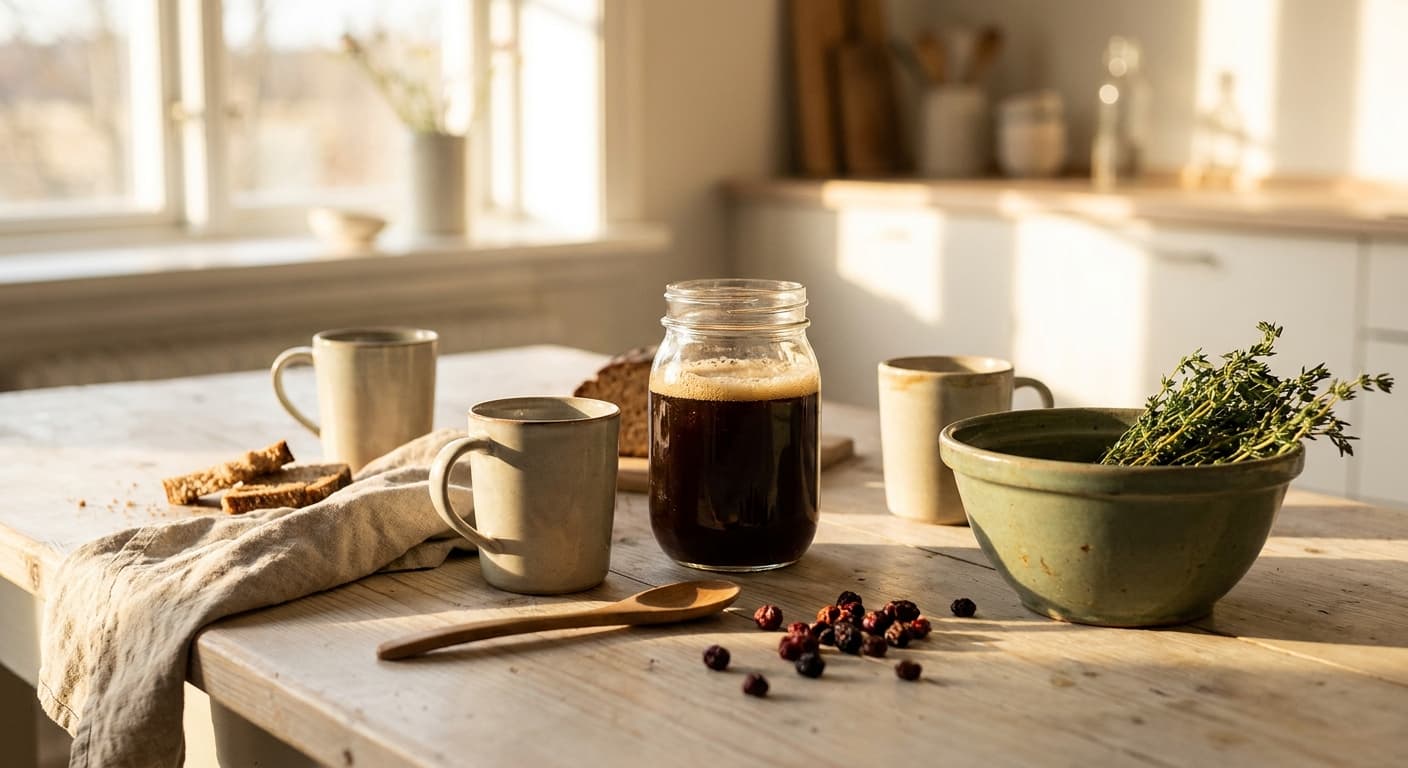
Kvass (or kvas, квас in Russian) is a low-alcohol fermented drink – typically between 0.5 and 2.5 percent alcohol, although some modern versions can go higher. The basic recipe is almost laughably simple: you toast or dry rye bread until it is properly dark, steep it in warm water, add a little sugar and yeast, let it ferment for one to three days, and then strain it off. The result is a drink with a characteristic dark, lightly caramelised bread flavour, slightly tart, faintly sweet, and with a freshness that is reminiscent of active fermentation.
In Russia and Ukraine, kvass was traditionally sold from large barrels on street corners in summer. Think of it as Eastern Europe's answer to the lemonade stand – except that it actually ferments and contains live cultures. People drank it because it was cheap, refreshing, and made from leftover bread. It is street food in drinkable form.
In terms of taste, kvass is something entirely its own. It is not beer, even though the process is similar. It is not a soft drink, even though the carbonation can be reminiscent of one. And it is definitely not tart enough to be called a kombucha. Kvass is kvass – with a lightly nutty rye bread character, hints of liquorice, perhaps some dried fruit, and a tart finish that makes you take one more sip.

Why does kvass suit the Norwegian summer?
Norway and Russia actually share more food culture than most people think. We have both had a deep love of rye bread for generations. We enjoy tart, fermented flavours. And we appreciate drinks that are refreshing without being cloyingly sweet.
In 35-degree heat – and yes, those kinds of summer days do appear even up here now – there is very little that beats a glass of ice-cold kvass. It is lighter than beer, more complex than a soft drink, and has the same pleasant "something is happening in the glass" feeling that makes fermented drinks so satisfying. Serve it with ice cubes, a few mint leaves, and perhaps a slice of pickled cucumber on the rim of the glass – suddenly you have a summer drink that looks as though it has been lifted straight from a café in Kyiv.
And for those who do not drink alcohol, or are looking for something light to go with the barbecue: kvass in its traditional form contains barely enough alcohol to be relevant. It is in practice non-alcoholic, and that is a great advantage at a Norwegian summer party where not everyone wants beer.
The kvass renaissance among craft breweries
In recent years we have seen a quiet but clear interest in kvass among European craft breweries. Polish, German, and now increasingly Scandinavian breweries are experimenting with the style. Some produce traditional versions based on dark rye bread alone. Others add ingredients such as beetroot, cherries, ginger, or lemon zest – creating something more cocktail-like than traditional, but equally interesting.
The main reason kvass fits brewery culture in 2026 is the same as the fermentation wave in general: people are curious about fermentation, roots, and authenticity. It is a natural extension of the interest in kombucha, kefir, and natural wine. Kvass is in many ways the ultimate "waste not, want not" brew – a fermented by-product of bread that tastes of place, time, and tradition.
That is the kind of brewery philosophy you find at Norwegian producers such as Kinn Bryggeri from Florø. Their Kinn Knekten is not kvass, but a golden ale in a 75 cl bottle that shows that Norwegian breweries have deep knowledge of complex grain and bread-like flavours – lightly honeyed, with a dry and balanced bitterness that makes it an excellent summer beer. It is precisely that kind of brewery culture that tends to lead to experimentation with kvass, and it is worth keeping an eye on what such producers do going forward.

Make your own – it's easier than you think
The great thing about kvass is that you can actually make it yourself without any brewing equipment. All you need is a couple of slices of dark rye bread – preferably the slightly stale kind you would otherwise throw away – water, sugar, dry yeast, and patience. The process is closer to baking than brewing, and that is exactly what makes it so accessible.
Simple homemade kvass
Ingredients:
- 4–5 slices of dark rye bread
- 100 cl water (warm, not boiling)
- 2 tbsp sugar
- ¼ tsp dry yeast
- Optional: a handful of dried berries, fresh ginger, or mint leaves
Method:
- Toast the rye bread slices in the oven at 200 degrees until they are dark and almost scorched at the edges – this gives depth and colour.
- Place the toasted bread slices in a large bowl or a clean glass jar. Pour over the warm water.
- Leave to steep for 4–6 hours until the water is dark and bread-like.
- Strain off the bread remnants. Add the sugar and stir until dissolved.
- Add the yeast when the temperature is below 30 degrees. Stir well.
- Cover with a kitchen towel and leave at room temperature for 12–24 hours.
- Strain once more, bottle, and refrigerate. Drink within two to three days.
The result should be lightly carbonated, faintly tart, and deliciously bread-like. Serve ice-cold, preferably with ice cubes and fresh herbs.

The future is fermented
Kvass is not just a curiosity or a hipster trend. It is a drink with genuine depth – culturally, in terms of taste, and historically. And it fits surprisingly well into the drinks world of 2026, where we are seeking low-alcohol alternatives with character, fermented flavours, and authentic stories.
Next time you are sitting outside on the terrace on a warm summer evening and want something other than lager or a soft drink, try kvass. You may well be surprised that Eastern Europe has been keeping your secret all along.