
It was a Friday in early May. The sun had just begun to sink behind the neighbor's birch trees, and a friend turned up on the terrace with a bottle of white wine and a question: "What do you actually put on an aperitif board?" He had brought a bag of crisps and a block of mild cheese. Well-intentioned – but we could do so much better.
Since that evening, the aperitif board has become something of a passion for me. Not because it needs to be complicated – quite the opposite. But a well-considered board with the right drinks, the right flavors, and the right textures can transform an ordinary spring evening into something that feels like a small ritual. And in spring, when the evenings are long and the air begins to smell of something green and promising, evenings deserve exactly that.
Start with the drink – it determines everything else
Everything on the board should support what you're drinking. So always start with the glass.
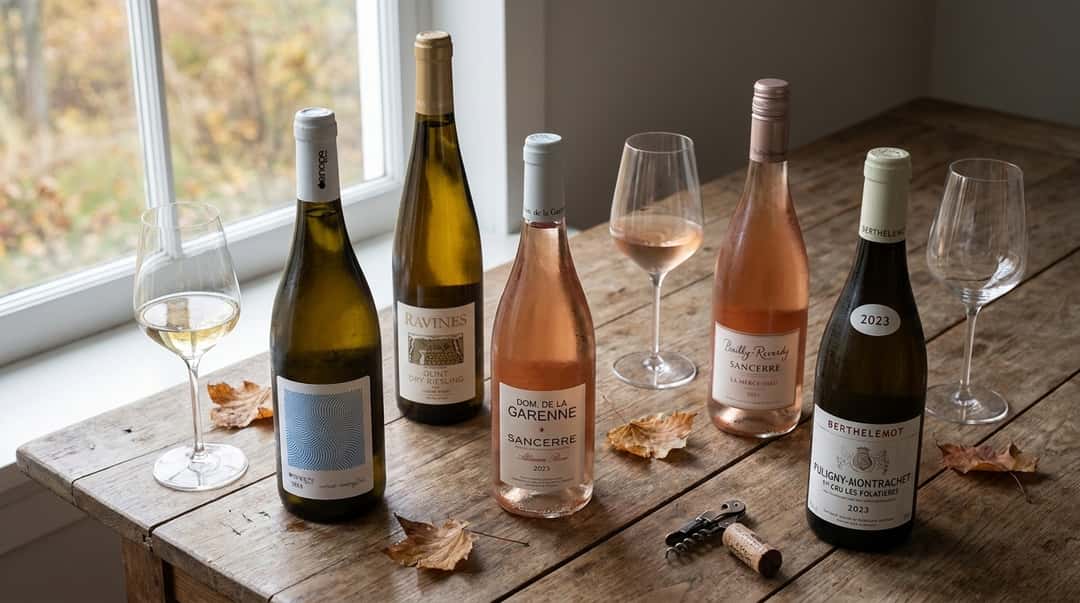
For a spring aperitif, I will almost always lean toward something fresh, light, and with good acidity. That could be a crisp Chablis, a Sancerre, a light rosé from Provence – or why not a sparkling wine with good minerality and freshness?
Pierre Paillard Les Mottelettes Bouzy Grand Cru Chardonnay Extra Brut 2019 is a brilliant example of exactly that. This sparkling wine from Bouzy Grand Cru is made from pure Chardonnay and has a limestone minerality and citrus freshness that makes it perfect as an appetite-opener. The Extra Brut style means little residual sugar, and that keeps the flavor profile clean and elegant – it doesn't weigh the board down with sweetness, it lifts it. Think green apple, white blossom, and a hint of brioche that melts into a long, dry finish. Lovely.
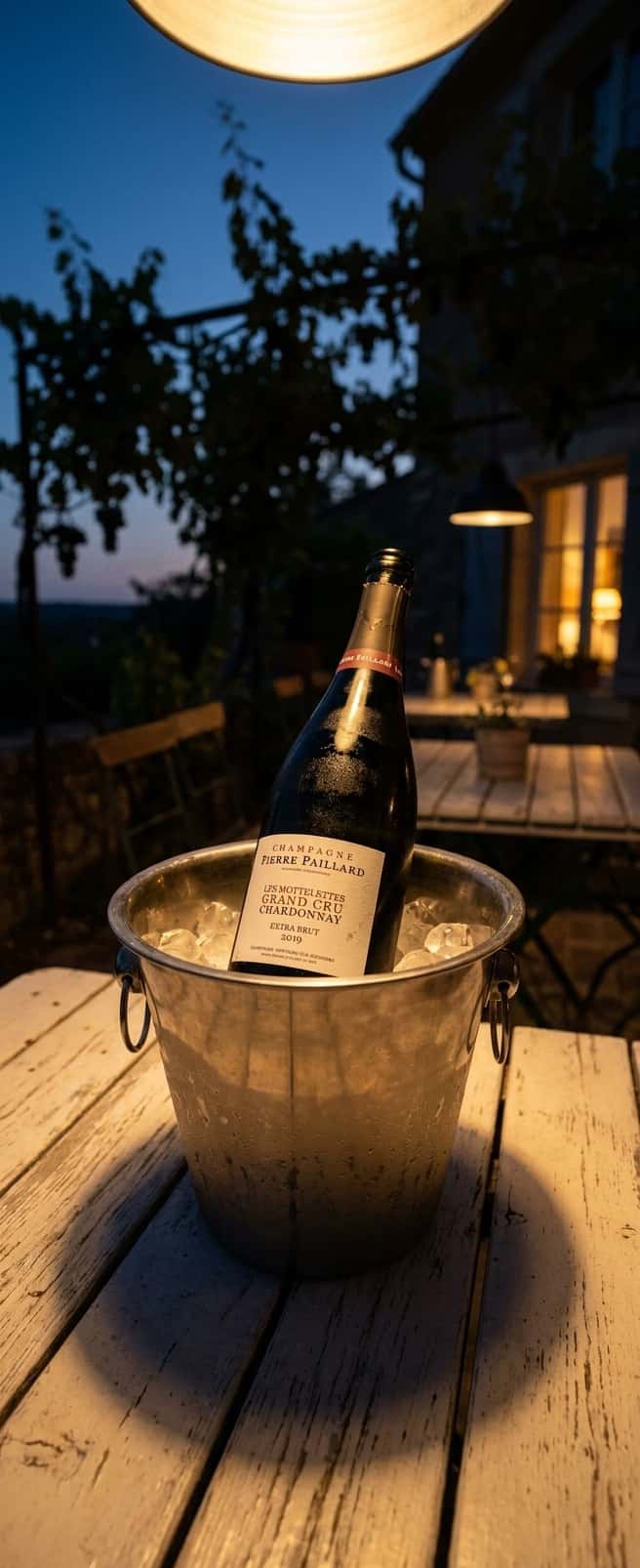
If sparkling wine isn't your thing in the evening, a white wine with good structure and freshness is an excellent alternative. Laporte Sancerre Le Grand Rochoy 2022 is a Loire classic of the highest order – Sauvignon Blanc from Sancerre with the characteristic combination of green herbs, grapefruit, and an almost chalk-white minerality. The wine has a precision and purity that makes it one of the most appetite-stimulating white wines you can open on a spring evening. For an aperitif board, it is made to order.
And if you want something a little different – a rosé from Provence can be exactly what's needed when the sun is still hanging low and the air is mild. Dom. de Cantarelle Triplette Côtes de Provence is a fresh, dry rosé with aromas of strawberry, citrus, and a light herbal note. It is light enough not to overpower the board, but has enough character to hold the interest throughout the entire aperitif hour.
Building blocks for the board
Once the drink is chosen, it's time to think about the board itself. I always divide it into four categories:
1. Something creamy
Creaminess balances acidity and binds the board together. Think:
- Fresh chèvre with a dollop of honey and dried thyme
- Ricotta whipped with lemon zest and flaky sea salt
- A mild brie or camembert if you want something more classic
Goat's cheese and Sancerre are almost mythologically good together – acidity meets acidity, and fat meets minerality. The result is a combination that has you reaching for a new glass almost without thinking about it.
2. Something salty and crunchy
Salt enhances the drink's freshness, and the textural contrast means you never stop eating. For spring I want:
- Thin rice crackers or crispbread with seeds
- Salted almonds toasted with rosemary and lemon zest
- Grissini wrapped in thin prosciutto
Avoid overly strong crisps or heavily spiced snacks – they take over from the drink and make everything murky and heavy.
3. Something fresh and green
This is spring's star on the board. Fresh, green elements pair perfectly with light drinks and give the eye somewhere to rest.
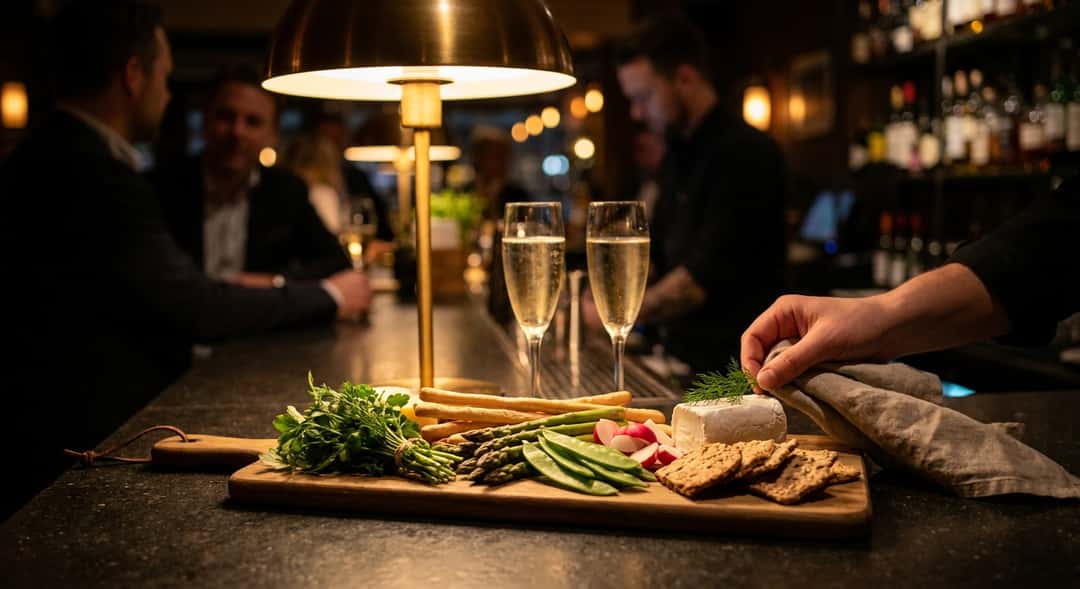
- Sugar snap peas and thin asparagus spears served raw or lightly blanched
- Cucumber in thin slices with a sprinkle of sea salt and dill
- Radishes – they look fantastic and have a peppery freshness that suits sparkling wine incredibly well
- A bunch of fresh herbs such as tarragon, chervil, or mint
4. Something sweet and tart
This is the little surprise element that makes the board memorable:
- Thin slices of fresh strawberry or fig
- A few dark olives with orange peel
- A small bowl of good apricot marmalade or lemon curd
- Capers for those who enjoy a tart kick
Size and layout – think flow
A good board has flow. The eye should want to wander around it, and the hand should always have something to reach for. A few rules of thumb:
- Use different heights. Put a small bowl of almonds, stand the grissini in a glass, place the chèvre on a small plate. Variation in height makes the board three-dimensional and inviting.
- Fill in the gaps with herbs or edible flowers. Fresh thyme sprigs, elderflowers, or a couple of nasturtium leaves work wonders for the visual effect.
- Don't overfill. A slightly airy board looks more exclusive than one that is crammed full. The principle that less is more absolutely applies here.
- Always have something to pick up with your hands. Grissini, nuts, and radishes are ideal – they lower the threshold and make the atmosphere relaxed and informal.
A small tip about glasses and temperature
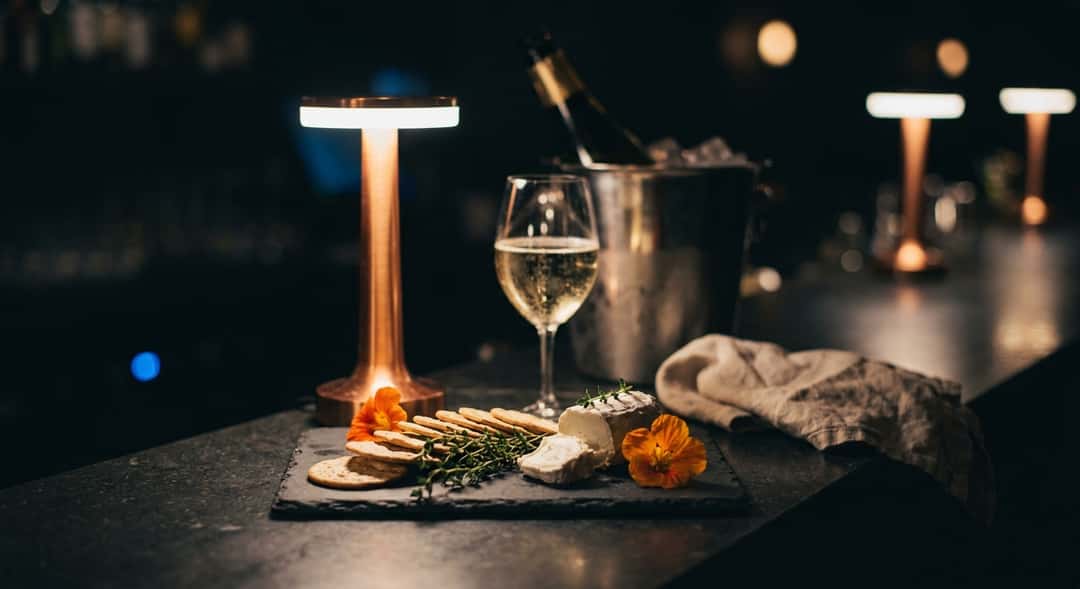
Make sure white wine and sparkling wine are properly chilled – around 8–10 degrees for sparkling wine and 10–12 for white wine. A drink that is too warm strips away the magic of freshness and makes everything flat and lifeless. Keep an ice bucket on the table and top it up at regular intervals.
And the glass? It doesn't need to be the most expensive, but a proper white wine glass with a certain width in the bowl allows the aromas to blossom. The aperitif moment is just as much about what you smell as what you taste – and that is exactly where a good glass makes all the difference.
The social side of the board
The finest thing about the aperitif board is not the food or the drink itself – it's what it creates. People gather around it, conversation flows, and no one needs to sit with their face buried in a plate full of food. The board is an invitation to take your time, to be present.
It is never just about the food. It is about who you are in the room with, and what you share. The aperitif board is the perfect setting for exactly that – and in spring, with long evenings and mild air, the setting is already in place.
Spring's minimum board – a checklist
- ✅ A bottle of fresh white wine, rosé, or sparkling wine (well chilled)
- ✅ Something creamy: chèvre, ricotta, or brie
- ✅ Something crunchy and salty: crispbread, almonds, or grissini
- ✅ Something green and fresh: radishes, cucumber, sugar snap peas, or asparagus
- ✅ Something sweet/tart: berries, olives, or marmalade
- ✅ Fresh herbs for decoration and flavor
With these building blocks you are ready. The sun is going down, the glass is filled, and the board is waiting. It's spring – and the evening is yours.