
Something quiet but exciting is happening in Norwegian drink production. While Italy has its bitter spritz and France its Lillet, Nordic producers are finding their own voice in the aperitif category. The secret lies not in exotic citrus fruits or complex herbal blends, but in what has always grown here: apples, raspberries, and blackcurrants.
There is a logic to what might at first seem surprising. Nordic berries and apples have exactly the tart freshness that aperitif drinks need to stimulate the appetite before a meal. Where more southerly ingredients often lean toward sweetness, Nordic fruit delivers the clean, clear acidity that cuts right through.

Why the aperitif needs Nordic tartness
The aperitif category has a clear job: to open the appetite, not to satisfy it. That requires balance between acidity, bitterness, and a touch of sweetness. Traditional aperitif drinks like Campari and Aperol are built on bitter herbaceousness, but the Nordic approach takes a different path. By using fruit that naturally contains both acidity and tannins, producers achieve complexity without having to add doses of botanicals.
Take blackcurrant as an example. This berry, which grows in Norwegian gardens, has a natural tartness and a light earthy bitterness that could have been designed for the aperitif category. Combined with lower alcohol content — often between 5–6 percent — you get drinks that can be enjoyed over time without becoming heavy.
It is also about the way we drink. Where Southern Europeans have aperitivo culture ingrained in their bones, we in the Nordics have traditionally gone straight to beer or wine with food. But with more spring and summer evenings spent at outdoor venues, and a general interest in lighter, more moderate ways of drinking alcohol, space is opening up for something new.
Three specific bottles to try
Let's look at some examples that show what this category can be.
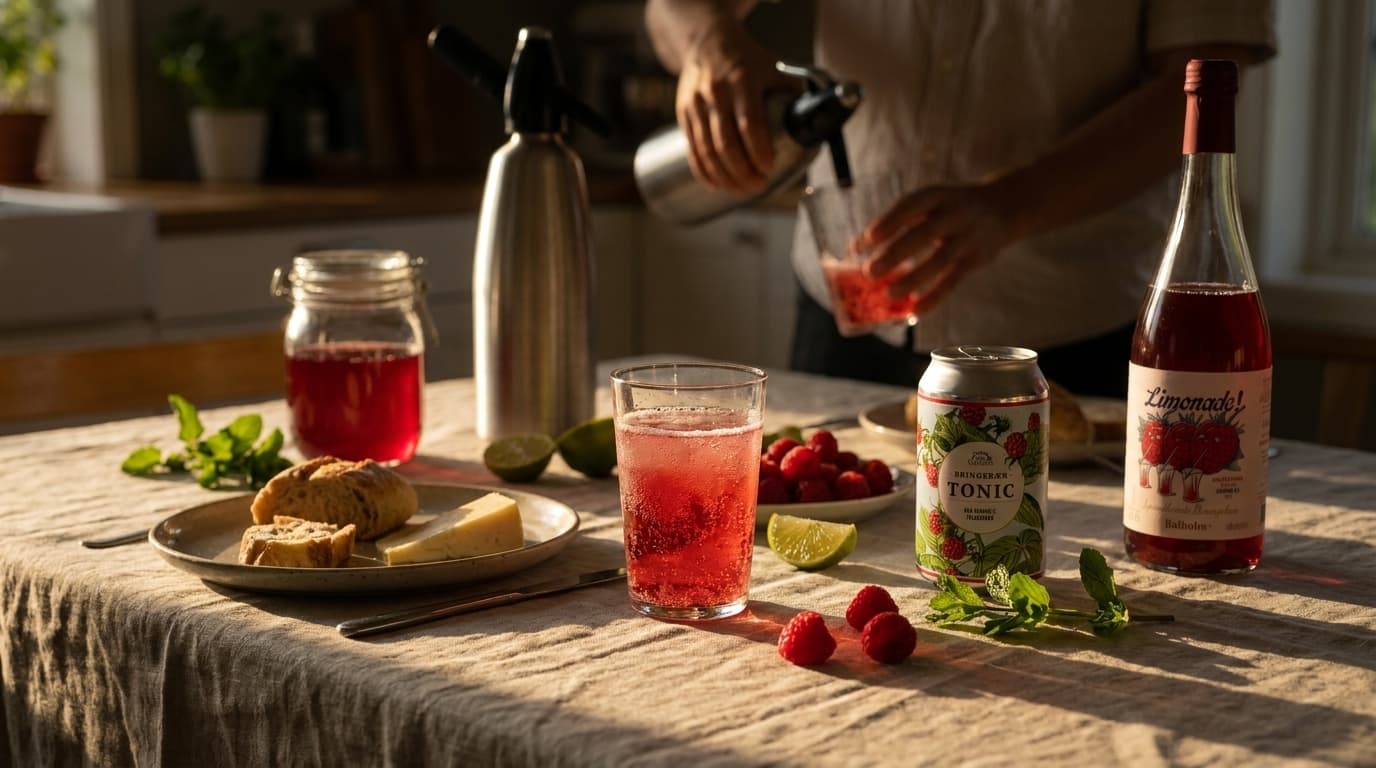
Attåt Hard Seltzer Bringebær (5%, 33 cl) represents the lightest end of the scale. With its modest alcohol percentage and distinct raspberry tartness, it works as a direct, uncomplicated aperitif. Here it is the fruit that speaks, supported by bubbles that make it extra refreshing. Perfect for spring's first outdoor evenings when you want something light and fresh.

Attåt Hard Seltzer Solbær (5%, 33 cl) takes the same low-alcohol concept but swaps the raspberry's bright sweetness for the blackcurrant's darker, more complex profile. The earthier tone makes it more interesting with food — think salads with feta cheese or smoked salmon. The blackcurrant has a natural depth that carries through the entire drink.
RYGR Ginger Viking Bringebær (6%, 33 cl) adds an extra layer with ginger's sharp warmth. This lifts the drink from simple fruitiness to something more sophisticated. The ginger gives a peppery edge that perfectly balances the raspberry's sweetness, creating a drink with more personality.

Three simple serving suggestions
The great thing about these drinks is that they require no complicated bartending. Here are three ways to elevate them:
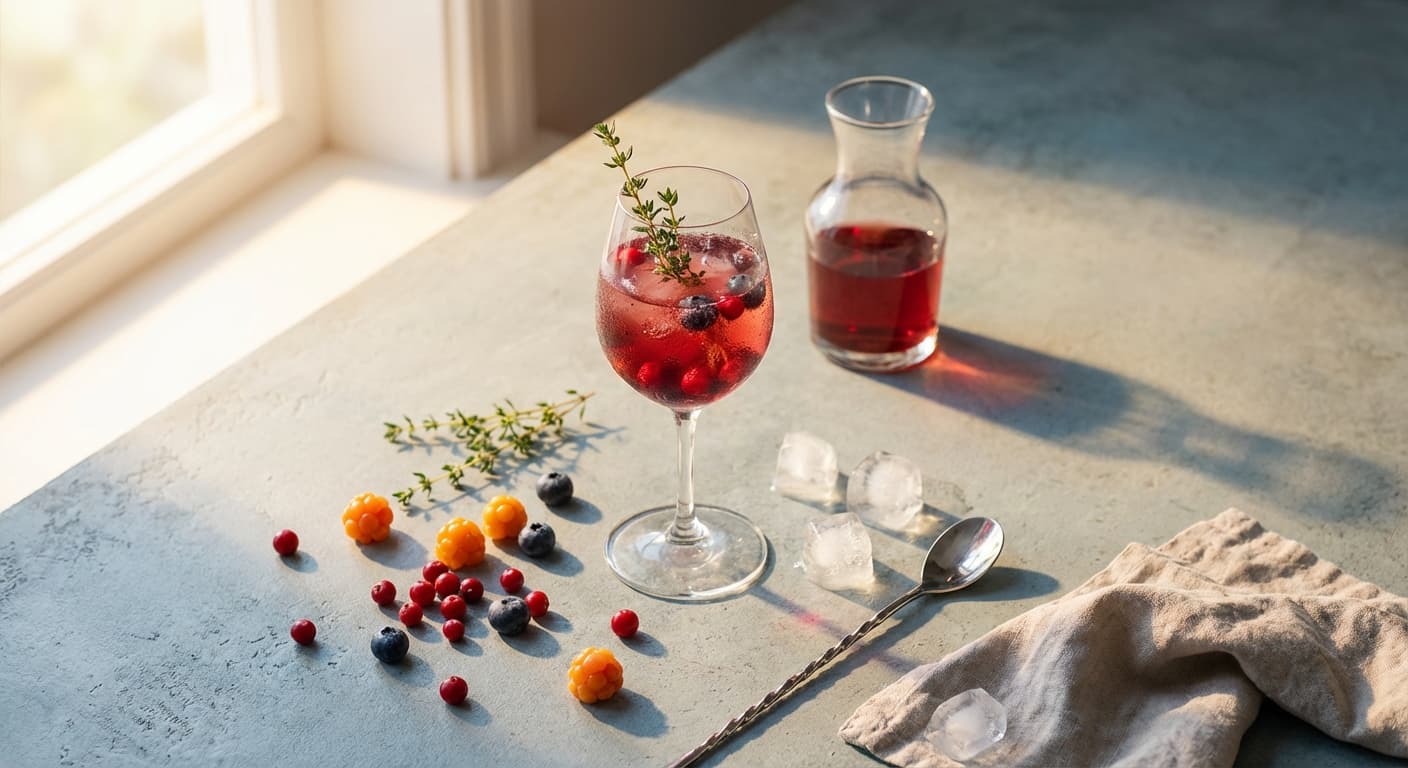
Classic and chilled: Pour the drink over plenty of ice in a large wine glass. Add a slice of lemon or a sprig of fresh mint. This is all you need for spring's first outdoor evenings. The ice dilutes the drink slowly as it melts, keeping it cold throughout the entire aperitif hour. Simple, elegant, and effective.
With tonic: Mix the drink with a good tonic in a 50/50 ratio. This adds extra fizz and a light bitterness that underscores the fruit's tartness. Particularly good with the blackcurrant variant, where the tonic's quinine highlights the berry's earthiness. Use a tonic with little sugar to keep the profile clean.
Spritz style: Use the drink as the base for a Nordic spritz. Mix two parts fruit drink with one part prosecco and top with a little sparkling water. Garnish with fresh berries if you have them. You then get a drink with more alcohol and complexity, but one that still stays light and fresh. This is the variant for when you want a little more ceremony.
The story behind the trend
This development is not happening in a vacuum. While the hard seltzer category grew explosively in the US a few years ago, Nordic producers have been more patient. Instead of simply copying American models, they have found their way to local ingredients that actually make sense within our flavor culture.
Norwegian berries and apples give these drinks an identity that feels genuine. This is not an attempt to imitate Italian aperitivo culture, but a distinct approach built on what we have here. There is something poetic in the fact that Nordic fruit — which for generations has been turned into juice and jam in Norwegian kitchens — now takes on a new role in the glass. The same ingredients, but with a grown-up drive and a place in the aperitif ritual.

When should you choose them?
These drinks have their natural place when you want something light and appetite-stimulating before dinner, but they also work excellently as an easy drink throughout the evening. The low alcohol percentage means you can enjoy several without it becoming heavy.
Think spring lunch on the terrace, with friends dropping by for a quick drink before you head on, or as an accompaniment to light dishes such as asparagus, shellfish, or white fish. They also fit perfectly at that point in the evening when you want something in the glass but don't want the heaviness that wine or spirits bring.
With lower alcohol you also get the opportunity to extend the aperitif hour without it getting out of hand. You can actually take the time to talk, enjoy the food when it arrives, and let the drink be exactly what it should be: a gentle opening to the evening. It is not revolutionary, but it is precisely the kind of quiet innovation that most often makes the most sense when spring finally arrives.