
I've been grilling, frying, and slow-cooking meat for twenty years, but it took me a surprisingly long time to realize that the beer bottle in the fridge is just as important as the good oil. It was only when I used a stout in the marinade for entrecôte that I truly understood how beer's complexity can lift meat from "perfectly fine" to "what the hell just happened here?"
Let me be crystal clear: beer is not just liquid in a marinade. It's acid from hops that darkens the meat, sugar from malt that caramelizes during cooking, and yeast enzymes that actually break down muscle fibers and make the meat more tender. When you choose the right beer style for the right meat dish, magic happens.

Here are three concrete recipes where the beer isn't just along for the ride – it's absolutely essential.
Pork Neck in Stout Marinade with Onion and Thyme
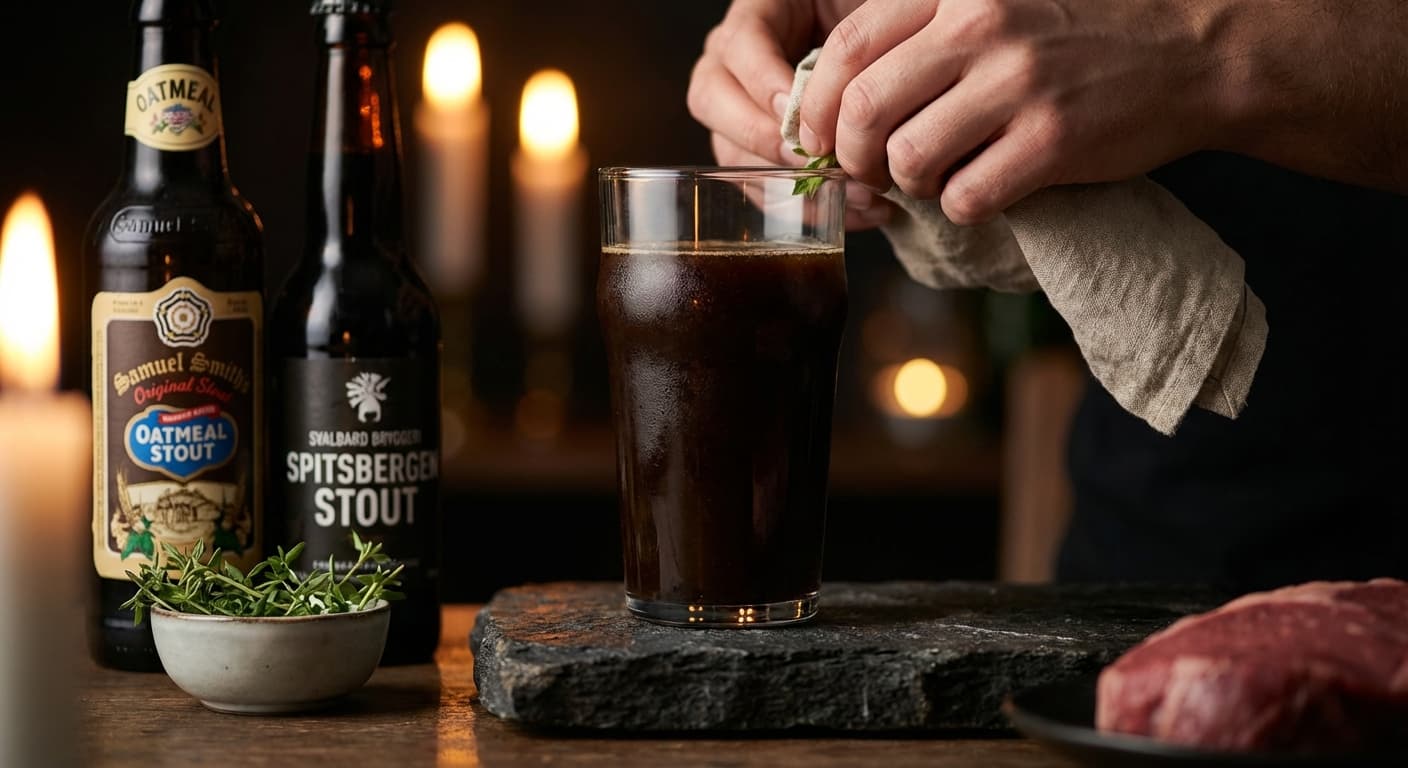
Pork neck is fatty, sweet, and needs contrast. A dark stout, such as Samuel Smith's Oatmeal Stout, provides the deep, roasted character that balances the fat without overpowering the meat. The oats in the beer add a silky-smooth texture to the marinade, and the subtle bitterness from dark malt cuts through the sweetness of the meat.
This is winter dinner at its finest – tender, juicy meat that almost falls apart, with a sauce so good you'll end up eating it with a spoon.
Ingredients (serves 4)
- 1 kg pork neck, cut into 3–4 cm thick slices
- 33 cl Samuel Smith's Oatmeal Stout
- 3 tbsp soy sauce
- 2 tbsp dark honey
- 4 cloves garlic, crushed
- 4 sprigs fresh thyme
- 1 red onion, roughly chopped
- Salt and pepper
Method
- Mix the beer, soy sauce, honey, garlic, thyme, and onion in a large zip-lock bag or ovenproof dish.
- Add the meat, turn well, and let it marinate for a minimum of 4 hours, preferably overnight.
- Remove the meat and pat it lightly dry (to prevent burning). Reserve the marinade.
- Sear the meat over medium-high heat in a frying pan or on the grill until it has a good color on both sides.
- Transfer to a roasting pan, pour over the marinade, and let it simmer in the oven at 160°C for about 1.5 hours until the meat is tender and almost falling apart.
- Reduce the cooking juices in a pan over high heat until syrupy to make a sauce.

Serve with mashed potatoes that soak up the dark, sweet sauce – or with sauerkraut if you want something tart as a contrast.
Lamb Shank with Dark Stout, Dates, and Spices
Lamb shank is intense, almost gamey in flavor, and needs something that both lifts and amplifies its character. A dark stout – with its notes of caramel, coffee, and dark fruit – is perfect. I often use Samuel Smith's Oatmeal Stout here too, but if you can find a powerful imperial stout like Svalbard Bryggeri Spitsbergen Stout, you'll get even more depth.
The lamb's distinctive character deserves something that matches its complexity. Here it's important that the beer isn't too hop-heavy – you want that warm malt sweetness to meet the lamb halfway.
Ingredients (serves 4)
- 4 lamb shanks
- 33 cl dark stout (Samuel Smith's Oatmeal Stout or Svalbard Bryggeri Spitsbergen Stout)
- 10 dates, pitted
- 2 tbsp tomato paste
- 2 tbsp balsamic vinegar
- 1 tbsp smoked paprika
- 1 tbsp coriander seeds, crushed
- 3 cloves garlic
- 2 dl good beef stock
- Salt and pepper
Method
- Brown the lamb shanks thoroughly in a large cast-iron pot with a little oil – you want deep, dark crusts.
- Remove the meat, then mix the beer, dates, tomato paste, balsamic vinegar, spices, garlic, and stock in the pot.
- Return the lamb shanks, cover with a lid, and let them simmer in the oven at 150°C for 2.5–3 hours until the meat falls off the bone.
- Remove the meat and reduce the sauce vigorously on the stovetop until thick and glossy.

The sharp tartness of the tomato paste and balsamic vinegar, combined with the sweet date-and-beer sauce, is absolutely wonderful against the lamb's robust flavor. Serve with couscous or roasted root vegetables.
Chicken Thighs in IPA Marinade with Citrus and Chili
Now we move into the lighter corner. IPA – with its fresh bitterness, citrus aromatics, and floral hops – is made for chicken. Here it's not about tenderizing (chicken thighs are already tender), but about adding layers of flavor that make the juicy meat more exciting.
I often use a West Coast IPA with a distinct citrus and floral character, such as Stigbergets West Coast IPA. You want a hop profile that doesn't get drowned out by malt – chicken can handle bitterness, but also needs freshness.
Ingredients (serves 4)
- 8 chicken thighs, skin-on
- 33 cl Stigbergets West Coast IPA
- Zest and juice of 1 lime and 1 orange
- 2 tbsp olive oil
- 1 red chili, finely chopped
- 1 tbsp Dijon mustard
- 2 cloves garlic, pressed
- 1 tsp flaky salt
Method
- Mix the beer, citrus zest and juice, oil, chili, mustard, and garlic.
- Place the chicken thighs in the marinade and let them sit for at least 2 hours (preferably 4).
- Remove the chicken and pat the surface lightly dry (you want crispy skin).
- Cook skin-side down over medium-high heat in a frying pan until the skin is golden brown and crispy.
- Turn and cook through, about 6–7 minutes per side, or finish in the oven at 200°C for 15 minutes.
- Pour a little of the remaining marinade over just before serving for extra freshness.

The sharp citrus and the heat of the chili combined with the hop bitterness cut through the fat and make this a summery winter dish – if that makes sense. Perfect for a weekend when you want something simple, yet a little special.
Why Beer Works So Well in a Marinade
Here's the science in simple terms: acid from hops helps break down meat fibers. Sugar from malt caramelizes during cooking and gives you that good, dark crust. Alcohol dissolves fat-soluble flavor compounds that would otherwise never penetrate the meat. And yeast enzymes – especially in unfiltered beers – keep working even in the fridge.
Dark beers give deep, roasted complexity. IPAs give freshness and floral aroma. Wheat beer (even though I didn't include it in the recipes above) gives a silky-smooth mouthfeel and citrus notes – perfect for light meats like turkey or pork loin.
I've experimented with everything from tart sour beers to heavy imperial stouts, and every time I learn something new about how beer and meat speak to each other. It's not about drowning the meat in beer, but about finding that balance where the beer flavor lifts without overpowering.
Next time you're standing with a spare beer in the fridge wondering what to make for dinner, think marinade before you think glass. The meat will thank you.