
It was a Sunday in San Francisco a couple of years ago. I was standing in a small kitchen in the Mission District, making breakfast for some friends. Suddenly my hand slipped as I was screwing the cap back onto a bottle of bourbon – and a solid splash ended up in the maple syrup I was about to pour over the pancakes. I froze. Waited for someone to shout that I'd ruined breakfast.
No one said a thing. They ate. And asked for more.
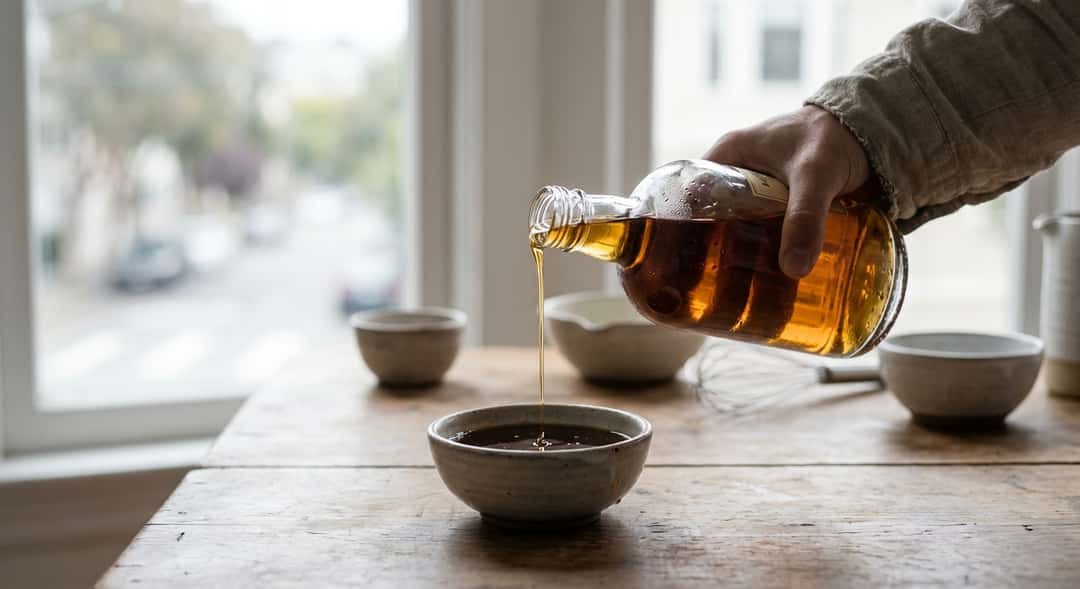
That moment changed how I think about brunch. Because why should whisky – this complex, aroma-rich spirits we so reverently sip in the evening – be forbidden territory at the breakfast table? The Japanese have long had their highball with lunch. The Scots have never been afraid to start the day with character. And now, in the middle of a Norwegian January weekend, it's time we did the same.
When Scrambled Eggs Get Company
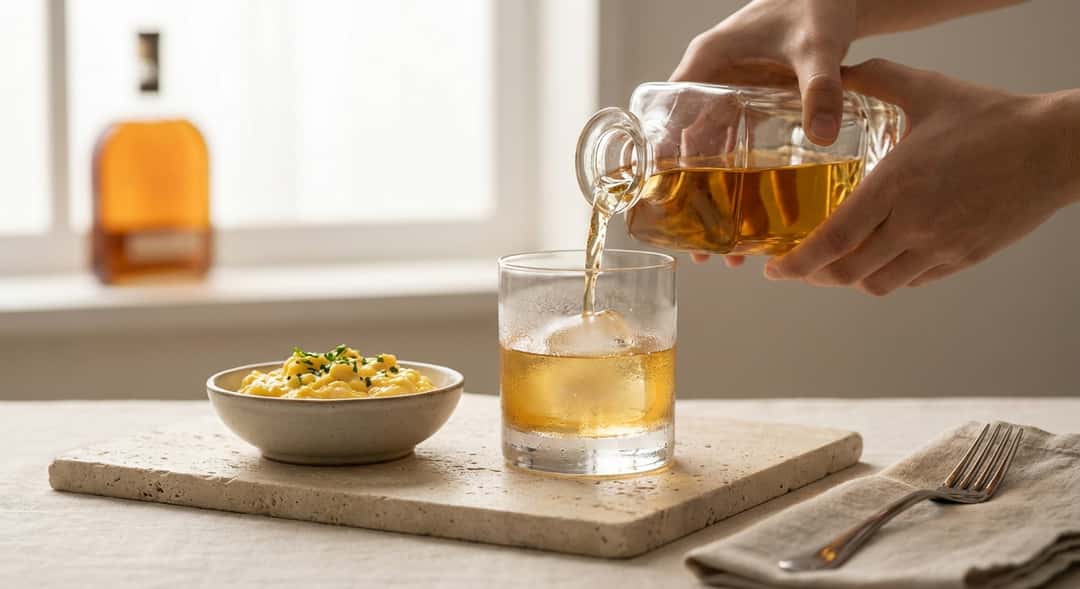
Let's start with the obvious: scrambled eggs. That creamy, velvety mass that can be either a masterpiece or a sad rubber lump depending on who's standing at the stove. The key lies not just in the technique – low heat, patience, a good knob of butter – but in what comes after.
I've worked my way through to three variations that actually elevate scrambled eggs from everyday food to something you look forward to on a Saturday morning:
The Scottish smoke bomb: Take a lightly smoked whisky – preferably a balanced Islay or Highland variant – and drip a small teaspoon into the butter before you pour in the eggs. The smoke unfolds like a beautiful backdrop against the mildness of the eggs. Top with coarsely chopped dill and flaky salt. Serve with toasted sourdough bread that has been spread with the same whisky butter.
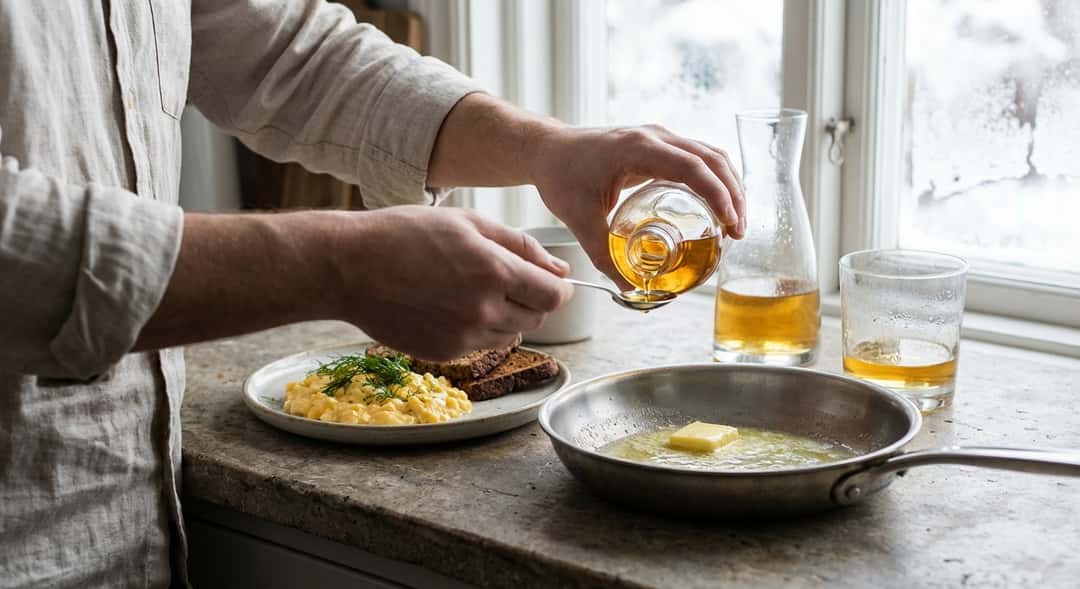
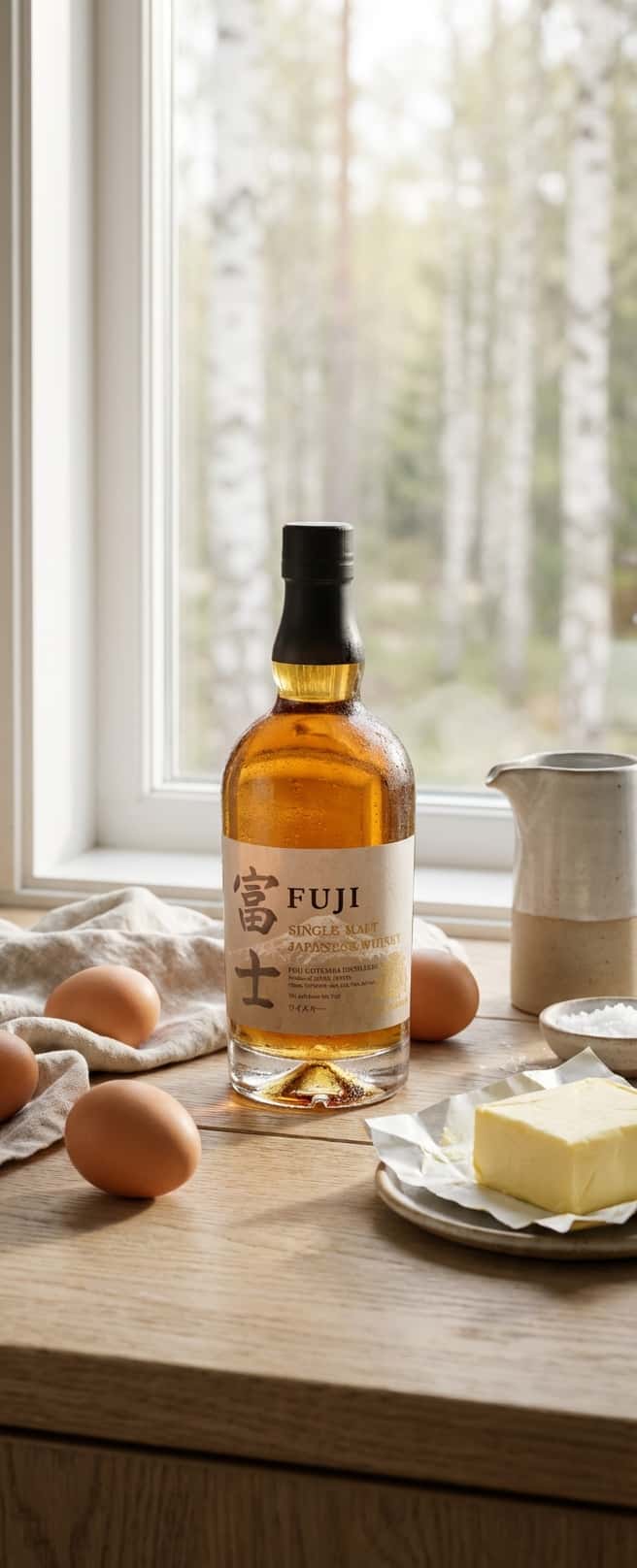
The Japanese elegance: Here the milder, often slightly sweeter character of Japanese whisky comes into its own. Blend half a tablespoon of Fuji Single Malt Japanese Whisky (46%, 70cl) into a classic hollandaise. The subtle fruitiness and warmth of the whisky play together with the egg yolks and butter in a way that makes you suddenly understand why the Japanese have their own word for umami. Pour this sauce over poached eggs and crispy bacon.
The American bomb: Bourbon and maple syrup are no new combination, but few have discovered how well it works directly in the food. Use a robust bourbon – I often go for something like Wild Turkey 101 Kentucky Straight Bourbon (50%, 70cl) – and let a tablespoon sit in the maple syrup for 10 minutes before drizzling it over the scrambled eggs. The caramelised oak flavour from the bourbon amplifies the maple syrup's deep sweetness, while the spice balances the richness of the eggs.
The Hollandaise Revolution
Hollandaise is the sauce that intimidates people. For many it brings to mind the thick, clammy mass from the hotel buffet. But a proper hollandaise – airy, silky smooth, with just the right amount of acidity – is a revelation. And it handles whisky better than you'd think.
The trick lies in the balance. You don't want to overwhelm the delicate egg yolk flavour, but you want enough character for the whisky to make a real difference. I recommend:
- For classic eggs Benedict: a milder Scottish single malt or a bourbon with a moderate alcohol percentage
- For smoked salmon: go for a lightly smoked whisky that matches the character of the fish
- For grilled asparagus: a sherry-matured whisky with nutty notes
Whisk one tablespoon of whisky into 200 ml of sauce after removing it from the heat. The sauce still contains alcohol; resting it for a couple of minutes does not make it alcohol-free. Omit the whisky for an alcohol-free portion.
The Butter That Changes Everything
Here is the simplest trick that will change your brunch game forever: whisky butter.
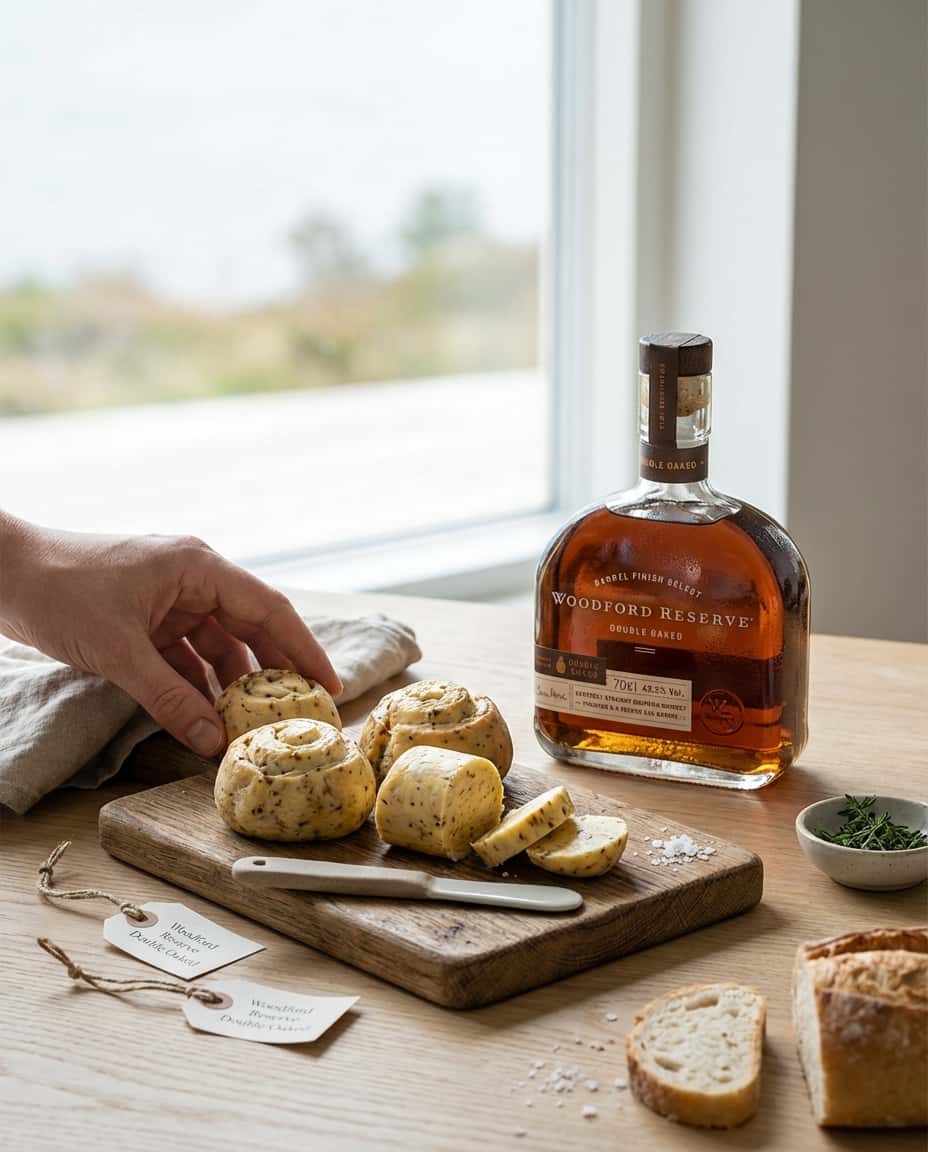
Leave a good, unsalted butter (preferably Norwegian) on the kitchen counter until it is soft. Whisk in one tablespoon of whisky per 100 grams of butter, along with a pinch of sea salt. Roll it in baking paper into a log and let it firm up in the fridge.
This butter works with:
- Freshly made waffles or pancakes
- Coarse bread that has just come out of the oven
- Melted over fried bacon (yes, really)
- As a topping on warm scones
I often make three variations at the same time: one with Woodford Reserve Double Oaked Kentucky Straight Bourbon (43%, 70cl) and cinnamon for the sweet, one with smoked Scottish and sea salt for the savoury, and one with Japanese whisky and a little orange zest for the one that works equally well with both.
A Few Rules for the Road
After a couple of years of experimenting, I've settled on some basic principles:
-
Less is more: You're not making a drink, you're making food. The whisky should be a discreet guest, not the loud guy who takes over the whole party.
-
Match intensity: Bold, smoky food can handle smoky whisky. Mild, creamy dishes want something more elegant.
-
Temperature: Heating changes both alcohol content and aroma. The amount of alcohol remaining depends on cooking time and method; brief heating does not make a dish alcohol-free.
-
Quality matters: There's no reason to use a 20-year-old single malt in your scrambled eggs, but a cheap blended whisky with sharp edges will give sharp edges in the food too.
-
Test first: Try a micro version before you cook for eight people. Some whiskies simply don't work in food.
Back to the Mission District
That weekend in San Francisco, after the accidental splash into the maple syrup, ended with us sitting around the kitchen table well into the afternoon. We tested bourbon in the orange juice (worked), whisky in the fresh buttercream for cinnamon rolls (worked surprisingly well), and even a dash in the grill sauce for the bacon (didn't work – lesson learned).
What I learned that day was not that whisky belongs in all food. But that when it works – when the balance is there, when the intensities match, when you've dared to be curious – something magical happens.
So next Saturday, when you're standing at the stove with a knob of butter in the pan and the eggs ready in the bowl, bring a bottle from the cupboard. Not the one you're saving. The one you actually like the taste of. And drip carefully.
The scrambled eggs will thank you.