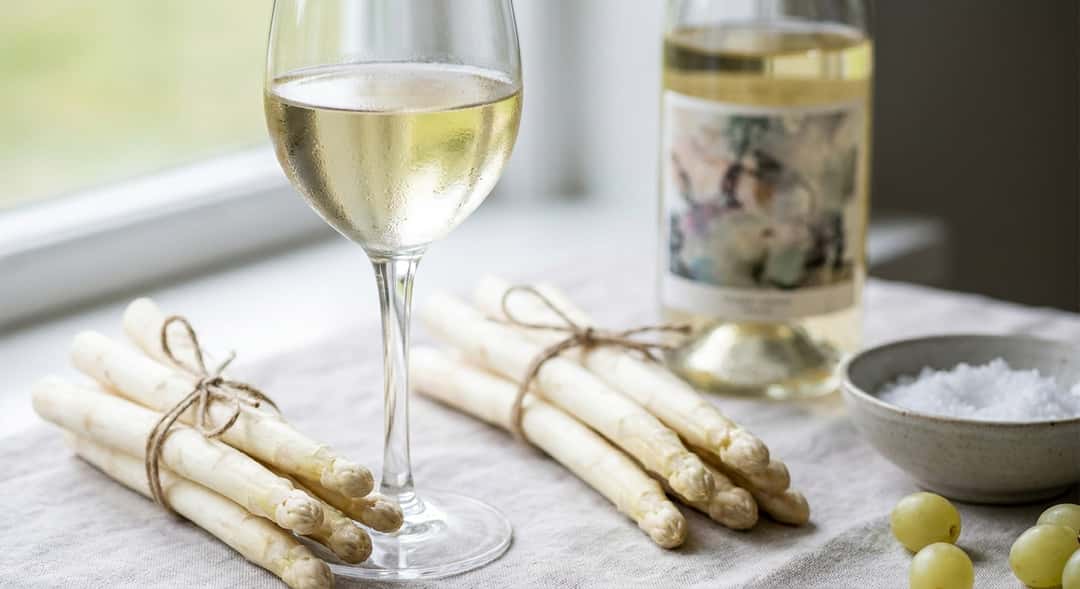

There is something almost ritualistic about the first white asparagus spears that appear in the vegetable display each spring. They are pale, thick, and a little arrogant – as if they know they are only here for a few weeks and that you are lucky to be buying them. And it is precisely that quality that makes them one of the year's most exciting ingredients to work with in the glass.
Because white asparagus is not easy to match with wine. It is not simply "green and fresh" as many people believe. The white variety – harvested underground to avoid sunlight and chlorophyll development – has a completely different taste profile: earthy, almost creamy, with a mild bitterness and a distinctive minerality. Cook them correctly and it is almost like eating concentrated spring. For the wine, that means you cannot take any shortcuts.
Why White Asparagus Is Wine's Worst Enemy – and Best Challenge
There is a reason sommelier exams almost always raise asparagus as a difficult ingredient: it contains a range of organic compounds – including aspartic acid and mercaptans – that can hit back hard against wines with too much oak, too much alcohol, or too much residual sweetness. The result can taste metallic, bitter, or simply flat.
The rule of thumb is simple: acidity is your friend. Tannins and oak are your enemy. And alcohol should be kept in check.
It is not more complicated than that. But within that space there are actually many exciting choices.
Grüner Veltliner: The Classic Answer
Ask an Austrian chef what he wants to drink with white asparagus, and the answer comes before you have finished asking the question: Grüner Veltliner. And he is right.
Grüner Veltliner from Austria has a completely unique combination of fresh acidity, white pepper, herbaceousness, and light minerality that works as if the grapes were bred specifically for white asparagus. It is possible they were. The characteristic peppery spice in the wine – often described as white pepper or radish – mirrors the asparagus's earthy, slightly sharp flavour in a way that is almost mathematically elegant.
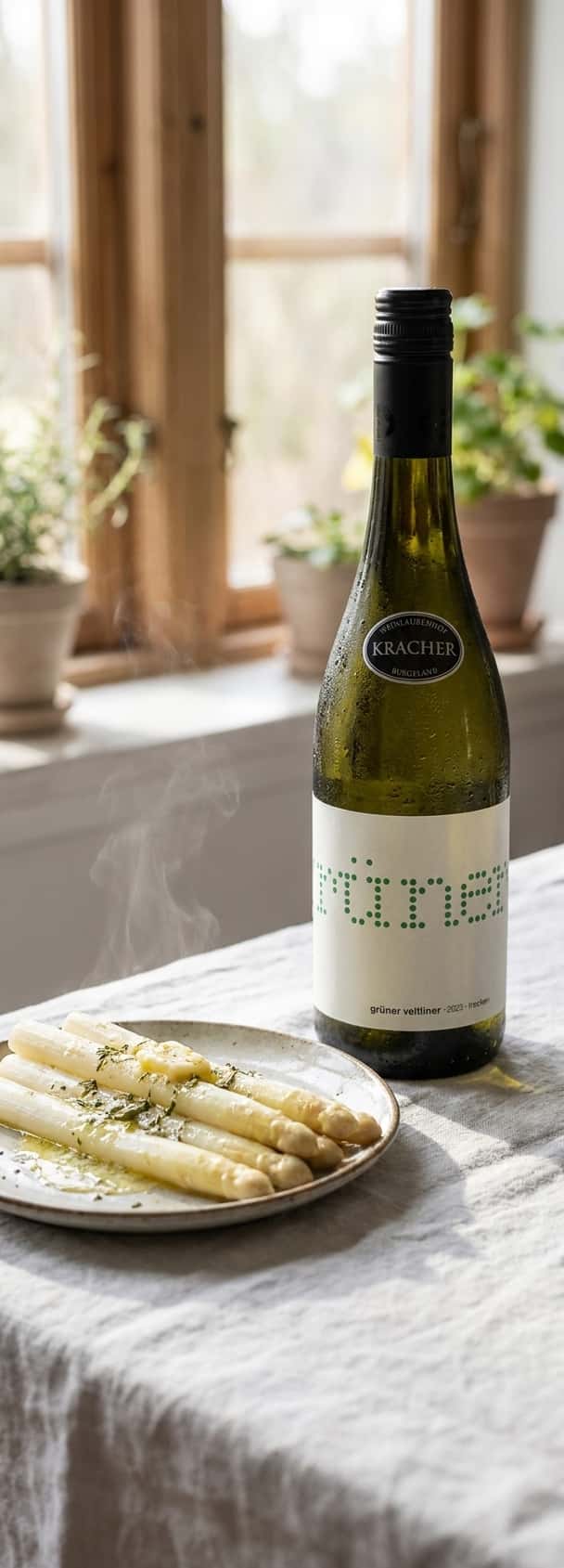
A light and fresh example is Kracher Grüner Veltliner 2023, which offers precise white pepper and citrus without taking up too much space – a good choice if you are serving the asparagus simply with butter and hollandaise. If you want a little more depth and minerality, Bründlmayer Kamptal Grüner Veltliner Terrassen 2025 from the Kamptal region is a step up: here there is more texture and length, which can handle asparagus served with ham and egg, as is done classically in Germany and Alsace.
For those who want something more rustic and lively, Meinklang Grüner Veltliner Heideboden 2025 is interesting. Meinklang farms biodynamically, and the wine has a certain natural herbaceousness and mineral depth that suits simpler preparations – for example steamed asparagus with olive oil and lemon.
Muscadet: The Underrated Hero from Loire
Grüner Veltliner is the obvious answer. But there is another answer that many people forget, and which can actually delight you just as much: Muscadet from the Loire Valley in France.
Muscadet is made from the Melon de Bourgogne grape, and the best versions – especially those that have spent a long time on yeast lees (sur lie) – develop a creamy, almost bread-like texture beneath the fresh acidity. It is precisely that texture that makes them a dream partner for white asparagus.
Imagine the asparagus served with a classic beurre blanc – a butter sauce with white wine and shallots. A Muscadet sur lie will then lift the entire dish by mirroring the sauce in the glass. That is not magic. That is chemistry.
Bretonnieré Muscadet Sèvre et Maine Sur Lie 2024 is a fresh and accessible choice with fine minerality and a hint of yeast that makes it especially food-friendly. If you want to try a more complex variant, there are Muscadets from cru regions such as Clisson and Gorges that have been aged for far longer and can have an almost Burgundy-like depth – without the price tag being anywhere near that of Bourgogne.
Other White Wines That Deserve a Try
The world does not stop at Austria and Loire. Some other wines that make their mark with white asparagus:
Alsace Pinot Gris (dry): Alsace is practically a neighbour to the German asparagus districts, and a dry Pinot Gris from the region has just enough body and smoky minerality to meet the asparagus halfway.
German Silvaner: Underrated and rarely mentioned, but Silvaner from Franken – served in the characteristic flat Bocksbeutel bottles – is almost tailor-made for the region where white asparagus is a national sport. Low alcohol, clean acidity, earthy mid-palate.
Chablis (unoaked): Unoaked Chablis is another strong candidate. The steely, almost limestone-driven minerality of a Premier Cru from Chablis is as if made for the asparagus's length and bitterness. Just be sure to avoid oak-exposed versions – they will clash.
What You Should Avoid
For the record: a short list of what does not work, and why.
Oaky Chardonnay: Butter against butter may sound logical, but the oak flavour collides with the asparagus's bitterness and produces a heavy, almost cloying experience.
Sauvignon Blanc with high alcohol: Some versions from New Zealand or California – full-bodied, tropical – have too much fruit sweetness and too little acidity to cleanse the palate.
Riesling: Both dry and off-dry styles can work. Choose around the accompaniments: lemon and a light dressing often favour freshness, while a rich sauce may handle more body. Taste the wine with the food.
Red wine: Tannins and asparagus. It is like mixing oil and water. The exception is possibly a lightly chilled Pinot Noir from Alsace, but that is more of a curiosity than a recommendation.
The Small Philosophy Behind the Pairing
Asparagus season lasts only a few weeks. There is something Buddhist about white asparagus – its beauty is partly conditioned by its transience. And precisely for that reason I think it is worth making a little effort with the wine in your glass.
It is not about spending a lot of money or impressing your guests. It is about understanding what the ingredient wants to say – and finding a wine that listens. A fresh Grüner Veltliner at 150 kroner does the job just as well as an expensive Burgundy, if you know what you are doing.
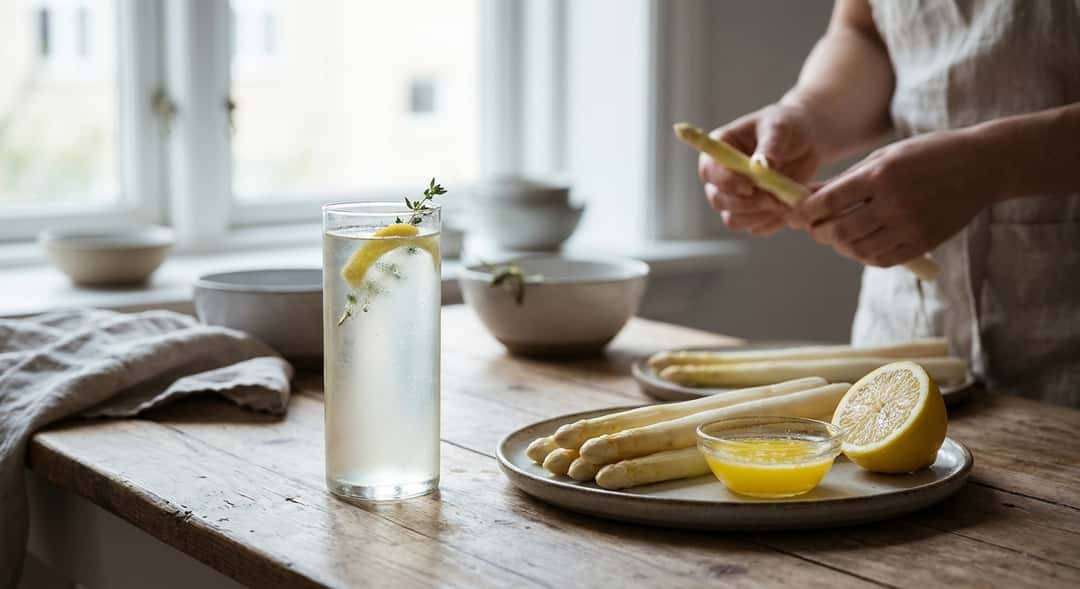
Sit down, peel the asparagus with care, cook them until they are just tender – no more – and open a bottle that understands what spring actually tastes like.
It is not more complicated than that.