
The summer of 1998, my grandmother ran out of mint leaves in the middle of a garden drinks session. She had invited half the neighbourhood, spent a small fortune on tonic, and stood there with gin, ice, and panic. Then she glanced out at her kitchen garden, picked a handful of flat-leaf parsley, squeezed it between her fingers, and dropped it into the glasses. The guests talked about that drink for months afterwards.
That was the first time I understood that herbs are not just garnish. They are flavour amplifiers, aroma providers, texture creators – and the best of them are already growing on the kitchen counter or in the pots outside the door. Now, as spring begins to show itself and we long for freshness in the glass, it is time to give kitchen garden herbs the role they deserve in the home bar.
Why kitchen garden herbs work better than you think
It is all about volatility. When you crush a parsley stem between your fingers, you release essential oils that rise up and meet the nose before the flavour hits the tongue. It is that duo – aroma and taste at the same time – that makes a simple gin and tonic suddenly feel complete.
Most drinks we make at home are missing one layer: depth. We have acidity from citrus, sweetness from tonic or syrup, bitterness from gin or vermouth. But we forget the green, the herbal, the element that makes all the other flavours talk to each other instead of shouting separately.
Herbs also give texture to the experience. When you see green leaves and stems through the ice, when you smell them before the glass reaches your mouth, when the aroma mingles with the condensation droplets on the outside of the glass – then you are not just drinking a drink, you are experiencing it.
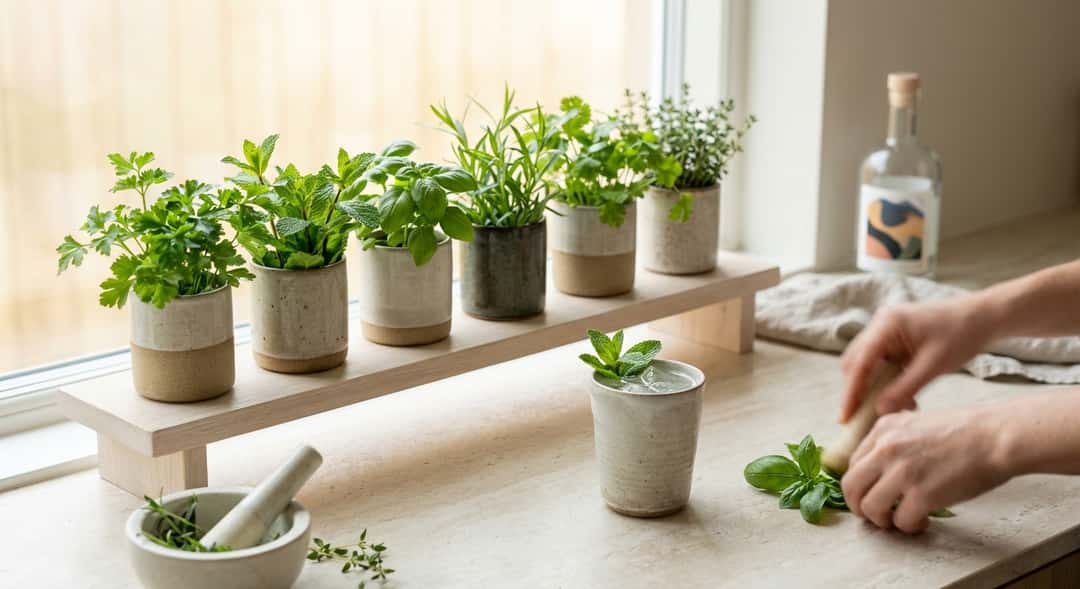
Six herbs, six personalities
Parsley is the quiet hero. Many think of it as decoration, but flat-leaf parsley has a fresh, lightly peppery power that balances heavy gins perfectly. Use the whole stem, not just the leaves – that is where the most intense aroma sits. It has a clean, green flavour that does not compete but lifts. Works brilliantly with Brennevinsgrova Botanisk Gin, which already has a Nordic, earthy character that needs something fresh to play against.
Mint is everyone's favourite for a reason, but stop using it only for mojitos. Try clapping it – not crushing! – between your hands before placing it in a glass with vodka, a little lime juice, and sparkling water. The aroma becomes almost meditative. Its sweet, mentholated profile suits clean, neutral spirits best, such as Purity Vodka Super 17 Premium, where the herb can shine without competition. Mint is also perfect right now in the spring season, when we long for something that feels refreshing and light.
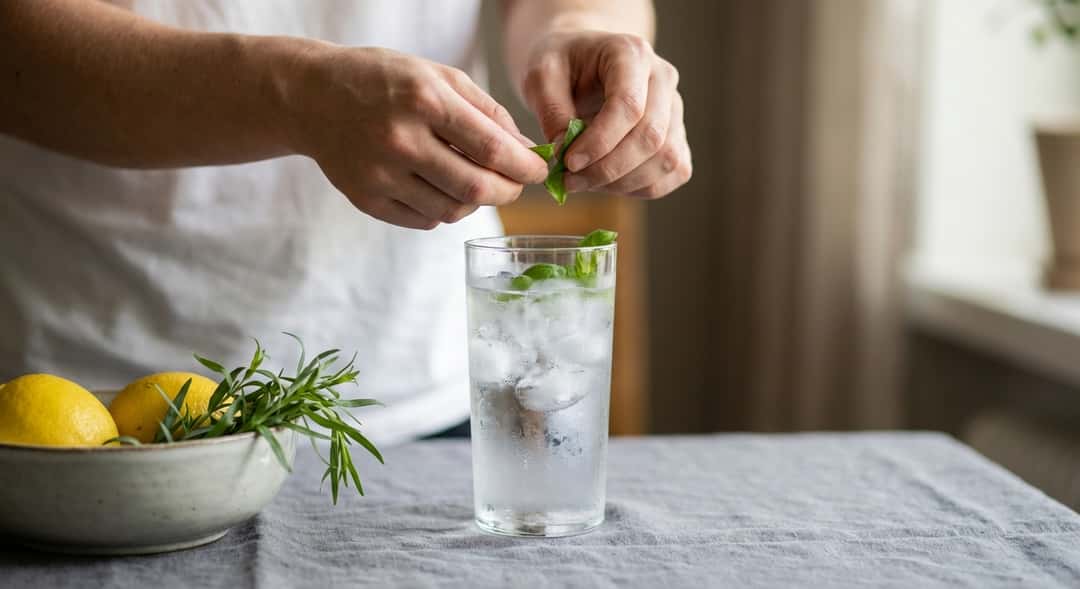
Basil has the sweetest, most spiced aroma of the group. It wants something to play with – try basil with strawberry and white vermouth, or together with grapefruit and tonic. The key is to gently tear the leaves between your fingers before they go into the glass, so the cells burst and the oils are released. Basil also has an almost anise-like undertone that adds depth to simple longdrinks.
Tarragon is the most underrated. It has a liquorice-like, slightly anise-tinged profile that works fantastically with sour drinks. Muddle a small bunch of tarragon with lemon juice and gin, let it sit for a minute, then strain and top with tonic. Suddenly you have something that resembles a sophisticated aperitif. Tarragon is also more robust than you might think – it tolerates slightly rougher handling than basil.
Coriander divides people into two camps, but if you belong to those who love it, this is the herb's great moment. The root and stem parts actually have more depth than the leaves – chop them finely, press them lightly in the bottom of the glass with a little sugar syrup, and build a vodka-citrus drink on top. The aroma is complex, citrus-forward, entirely unique. Coriander also has an almost soapy freshness that can seem polarising, but in the right dose it is magical.
Thyme is the most patient herb. It needs a little warmth or agitation to wake up. Place a few sprigs in the bottom of a glass, rub them gently with a spoon or muddler, then pour cold gin and tonic over. Warm, slightly resinous, almost forest-like. It is almost like drinking a walk in the woods. Thyme is also the herb that lasts longest in the glass – the aroma builds as you drink.
Three recipes you can make right now
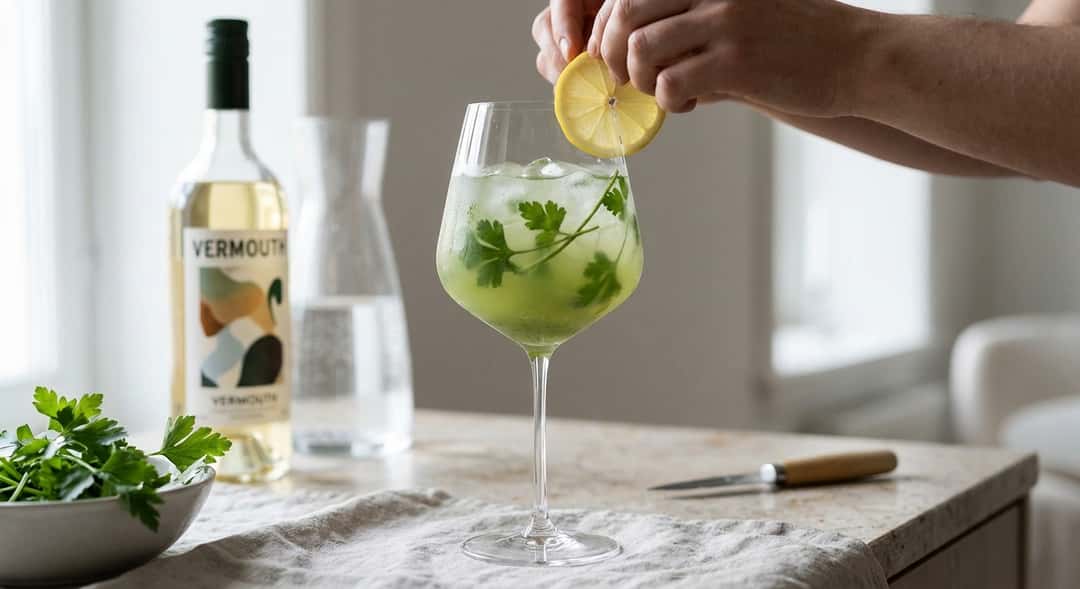
Parsley Spritz
This is spring's lightest aperitif. Fresh, green, almost as drinkable as water – but with a complexity that makes you take another sip. Perfect for a late afternoon on the terrace when the sun finally starts to warm things up.
Ingredients:
- 1 handful of flat-leaf parsley (whole stems)
- 6 cl white vermouth
- 8 cl sparkling water
- 1 slice of lemon
- Ice
Method:
- Place the parsley in the bottom of a large wine glass.
- Gently squeeze the stems with the back of a spoon.
- Fill the glass with ice.
- Pour in the vermouth, then the sparkling water.
- Stir gently once.
- Place the lemon slice on top.
Basil-Strawberry Smash
This is the most sensory of the three. The sweetness of the strawberries, the spice of the basil, the botanicals of the gin – everything melts together into something that tastes like early summer. It is a drink that requires a little more effort, but rewards you with layer upon layer of flavour.
Ingredients:
- 4–5 basil leaves
- 3 ripe strawberries
- 5 cl gin
- 2 cl freshly squeezed lemon juice
- 1 cl honey syrup (honey + water 1:1)
- Ice
Method:
- Place the strawberries and basil in a shaker.
- Press gently with a muddler or the back of a spoon – you want texture, not mush.
- Add gin, lemon, and syrup.
- Fill with ice and shake for 10 seconds.
- Strain into a glass filled with crushed ice.
- Garnish with a basil leaf and half a strawberry.
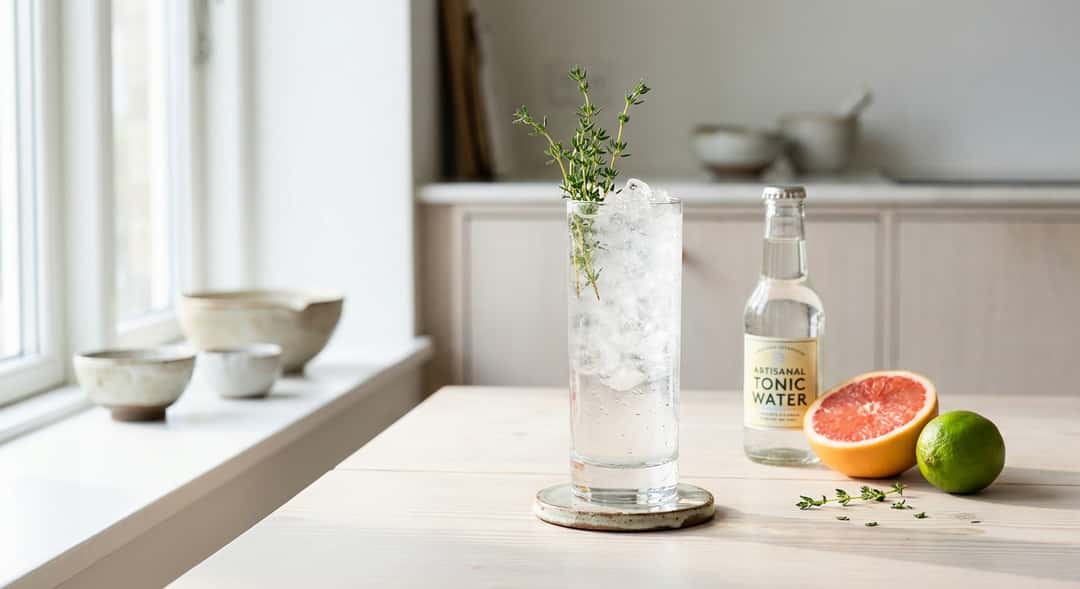
Thyme-Citrus Highball
This drink builds as you drink it. The first sip is fresh and tart, the second is herbal, the third is everything at once. It is almost as if the glass changes along the way – the thyme needs time to release its aromas.
Ingredients:
- 3–4 thyme sprigs
- 5 cl vodka
- 2 cl grapefruit juice
- 1 cl lime
- Tonic
- Ice
Method:
- Rub the thyme sprigs between your hands and place them in a tall glass.
- Fill with ice.
- Pour in vodka, grapefruit, and lime.
- Top with tonic.
- Stir once, and let the thyme have time to release its aromas.
The three rules for herb drinks at home
1. Handle herbs gently. Crushing releases oils without destroying the structure. Chopped herbs become green flecks in the glass – not pretty, and the flavour becomes uneven. You want the aroma, not a green soup.
2. Smell before you use. Clap the herb between your hands, rub it between your fingers, wake it up. You should be able to smell it on your fingers before it hits the drink. If you cannot detect the aroma on your fingers, you have not released enough oils. This is also a good test of whether the herb is fresh enough – old mint smells like almost nothing.
3. Less is more. Start with one small handful. Herbs are not the main ingredient, they are amplifiers. Too much parsley becomes grassy, too much mint becomes toothpaste, too much basil becomes almost soapy. You can always add more, but you cannot take it away.
Why this works better than fancy syrups
I have nothing against a good herb syrup, but most homemade syrups end up tasting more of sugar than of the herb. When you use fresh herbs directly in the glass, you get the raw, unfiltered aroma – the one that actually reminds you of the garden, not of a factory.
There is also something visually satisfying about seeing green leaves and stems through the ice. It signals freshness, care, that someone has taken the time. And in an era where most drinks we are served look identical, it is liberating to make something that actually looks as though it is made from real ingredients.
Your kitchen garden is the best bartender assistant you have. It never asks questions, it costs almost nothing, and it makes every drink you make a little better than it was before. Now that spring is here, it is the perfect time to start experimenting. Pick a handful of something green, crush it between your fingers, and see what happens. The worst that can happen is that you learn something new. The best that can happen is that you make something the guests talk about for months.