
When the temperature outside drops, there's something contradictorily enticing about serving something ice-cold at the table. Not talking about sorbets between courses – I mean the wine itself, frozen to an airy, half-frozen texture that is both refreshing and sophisticated. It's a technique with a long tradition in Southern Europe, but one that still surprises Nordic guests when they first encounter it.
It's not about throwing a bottle in the freezer and hoping for the best. To succeed with frozen drinks, you need to understand why alcohol behaves differently from water as the temperature drops. And you need to know which drinks can handle the treatment – and which ones become something entirely new when frozen.
The freezing point of alcohol – the science behind the technique
Pure water freezes at 0°C, but alcohol is a completely different story. Ethanol only freezes at minus 114°C, something no home freezer can achieve. When you mix alcohol with other liquids, it lowers the freezing point proportionally to the alcohol content. A wine at 12% freezes at around minus 5°C, while a port wine at 20% requires even colder temperatures.
A home freezer at around −18°C can turn wine into a hard, ice-rich mass. Alcohol, sugar, temperature and scraping determine the texture; soft granita does not happen automatically. Scrape during freezing and let a hard mixture soften briefly before serving.
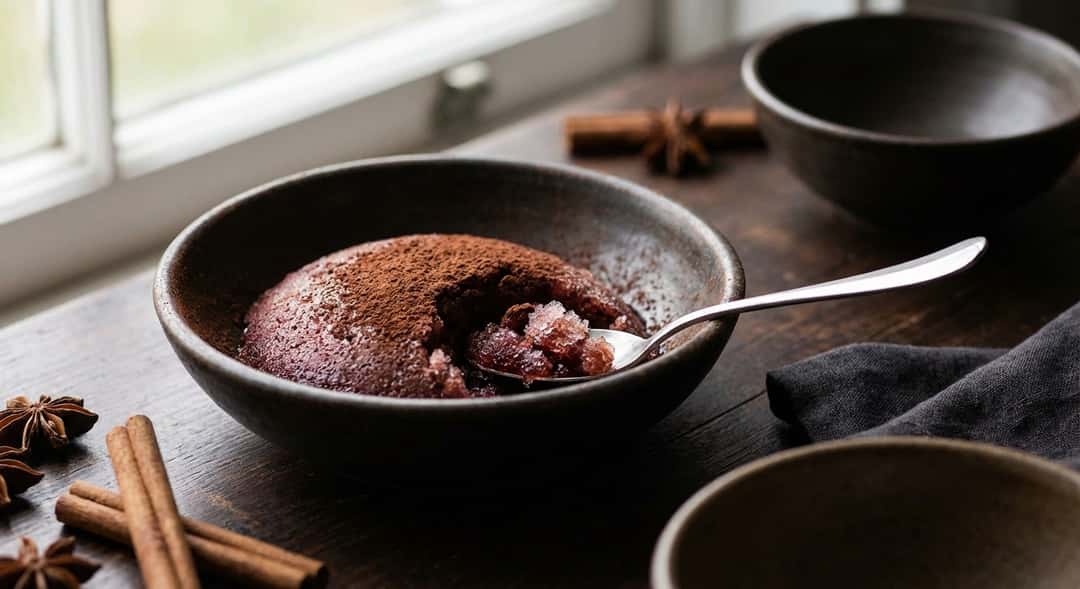
The difference between a failed block of ice and an elegant granita lies in the technique. You need to scrape the mixture at regular intervals while it freezes. It's this scraping that breaks up the ice crystals and gives the airy, snow-like texture that makes frozen drinks so appealing.
Port wine granita – winter's elegant ice drink
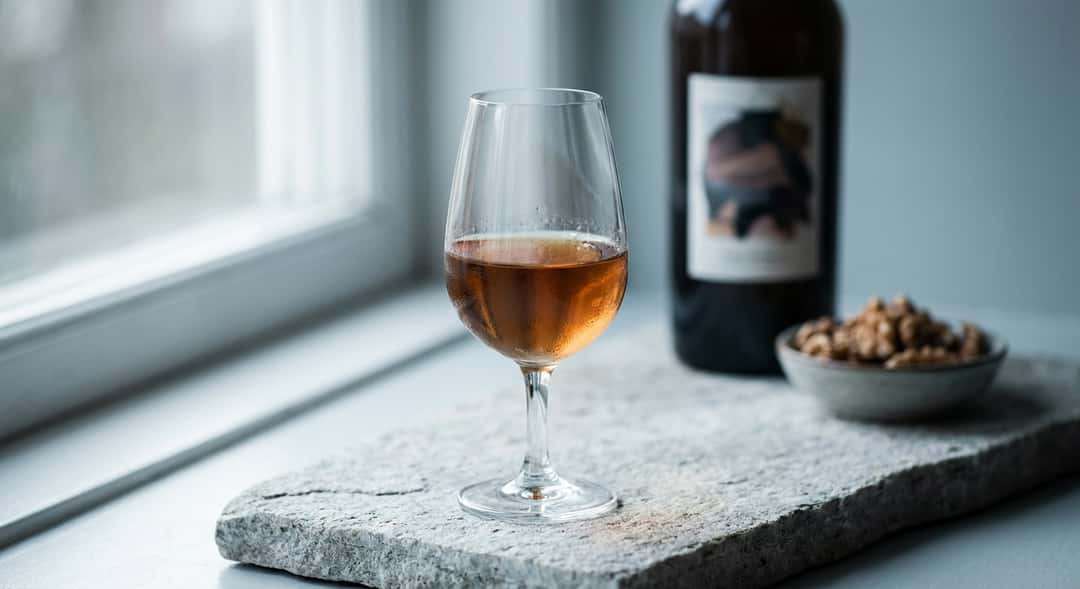
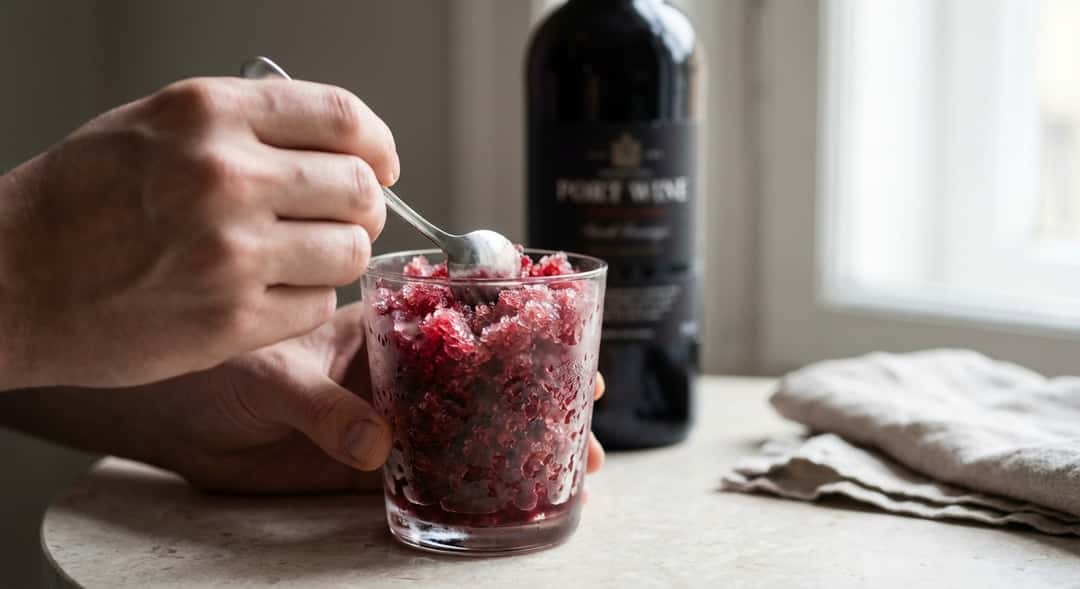
One of the most accessible techniques is port wine granita. This is a frozen dessert drink that pairs perfectly with dark chocolate, blue cheese, or simply as a refreshing finale to a heavy winter meal. The sweet, fruit-driven character of port wine becomes more balanced when frozen – the cold tempers the sweetness and brings out the fruit flavors.
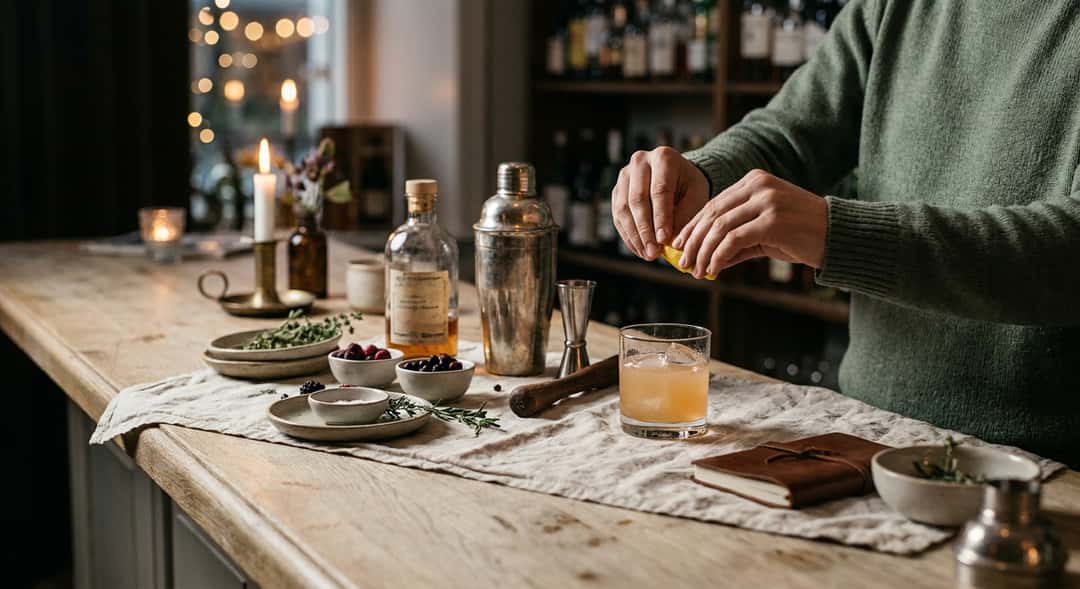
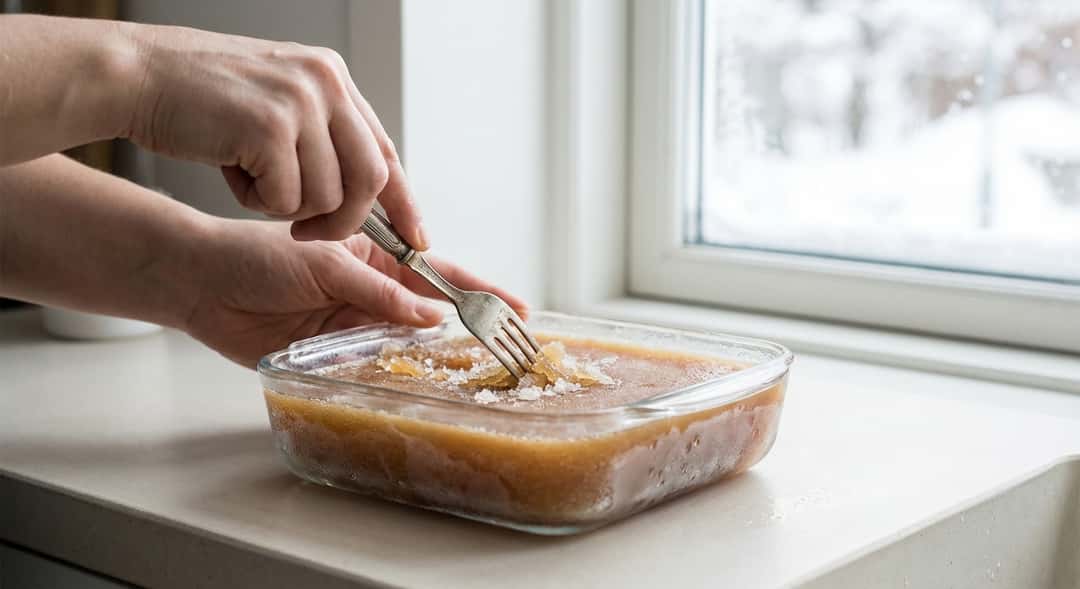
The basic recipe is simple: Take a tawny port wine, dilute it lightly with water (roughly 2:1, port wine to water), and add a dash of lemon juice to balance the sweetness. Pour the mixture into a shallow dish and place it in the freezer. Every 30 minutes – for two to three hours – use a fork to scrape and whisk the mixture. It's this scraping that gives granita its characteristic, snow-like texture.
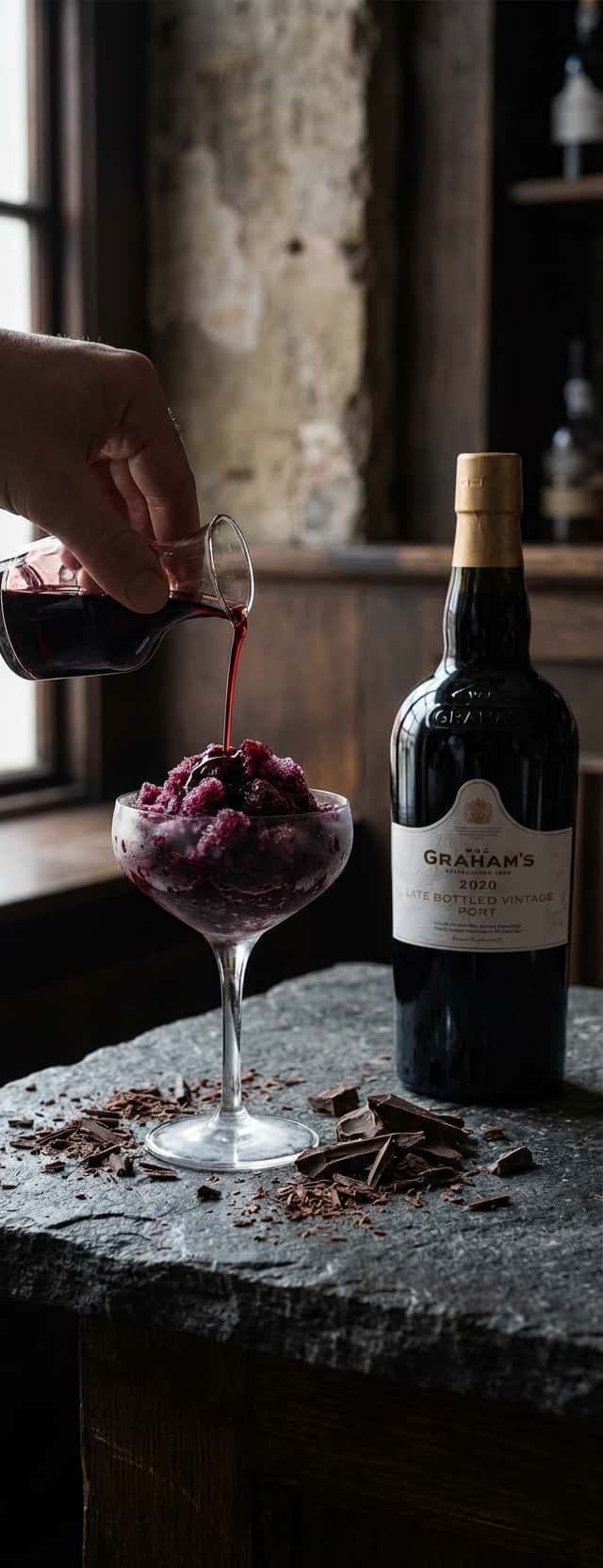
A Late Bottled Vintage port wine can be a good starting point – it has enough structure to handle the dilution, but isn't so expensive that you'll hesitate to experiment. Graham's Late Bottled Vintage 2020 is a solid choice with rich fruit and just enough tannins to balance the sweetness in granita form. It comes in both 75 cl and smaller bottles if you want to test the concept first.
Serving tip: Spoon the granita into small cocktail glasses and drizzle a little extra port wine over the top just before serving. Garnish with grated dark chocolate or a thin slice of orange. The visual element matters – the contrast between the frozen texture and the liquid port wine drop creates a beautiful layered effect.
Sgroppino – Venice's forgotten treasure
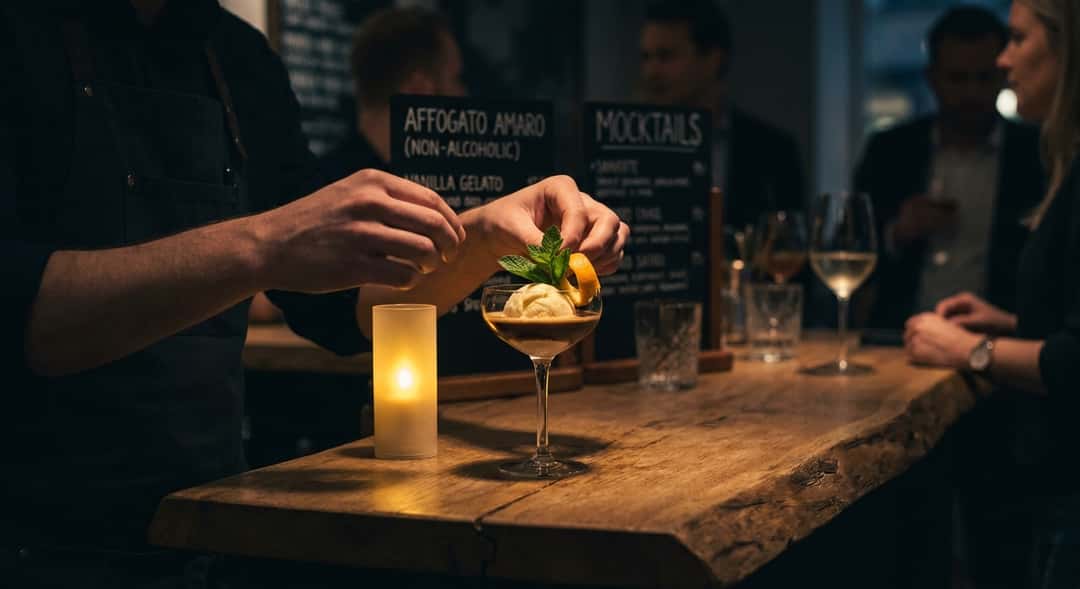
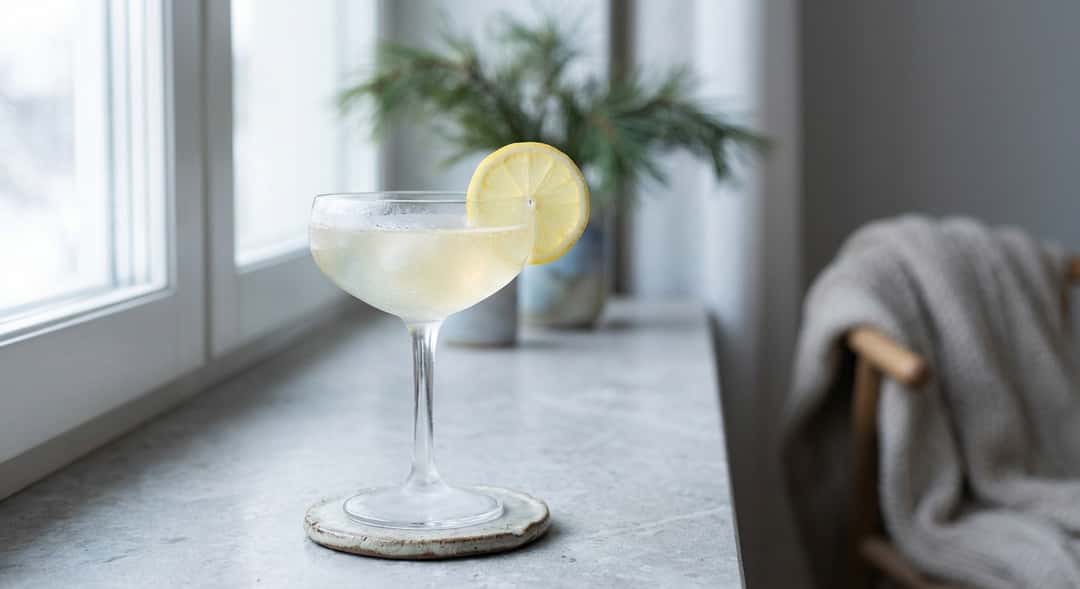
In Venice, generations have ended dinner with sgroppino, a simple but brilliant combination of lemon sorbet, prosecco, and vodka or grappa. The result is a light, frothy drink that both cleanses the palate and provides a refreshing finish. It's a drink that feels just as natural after a heavy winter stew as after a summery seafood dinner.
The technique is simpler than you think: Mix three parts lemon sorbet with two parts prosecco and one part vodka. Blend it all together until you get a smooth, creamy consistency – it should resemble soft-serve ice cream more than a cocktail. Serve immediately in chilled champagne coupes.
The trick is not to let it sit. Sgroppino separates quickly, so mix just before serving. Some add an egg white for extra body, but that's a matter of taste. Personally, I prefer the pure version – it doesn't need any more complexity.
There are variations with other sorbets too. Mango sgroppino with white rum is popular in the Caribbean, while raspberry sgroppino with champagne is an elegant twist. But the classic lemon version is hard to beat when it comes to purity and balance.
Vermouth slush – the underrated surprise
Vermouth may not be the first thing you think of when it comes to frozen drinks, but its floral, herb-rich profile works surprisingly well in half-frozen form. A white vermouth like Martini Bianco or Martini Extra Dry can be frozen into a slush that pairs with white porridge, creamy pasta, or even raw shellfish.
The method is identical to port wine granita: Dilute vermouth with a little water or bitter lemon (roughly 3:1), add a splash of lemon, and scrape with a fork every 30 minutes in the freezer. The herbal, slightly bitter character of vermouth becomes even more pronounced when frozen, so it's important to balance it with citrus or a little honey.
Martini Extra Dry works particularly well in this context – the dry, botanical profile handles the cold and becomes more pronounced when frozen. It's a drink that makes guests ask: What is this? And that's exactly the reaction you want.
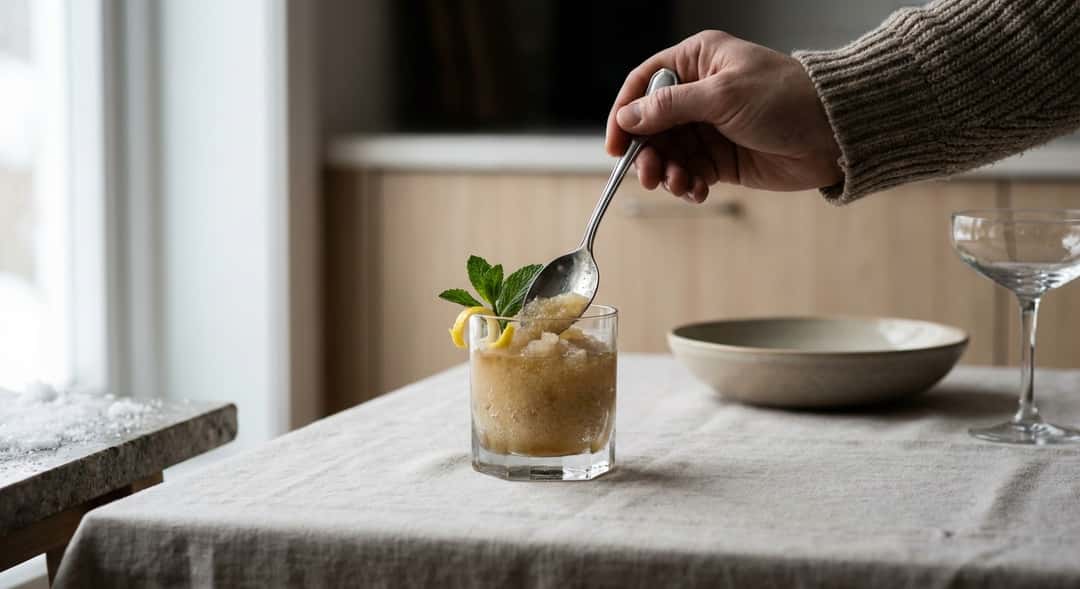
Serve vermouth slush in a low glass with a sprig of fresh mint or grated lemon zest. It works just as well as an aperitif before dinner as it does as an intermezzo. In Italy it's often served between the primo and secondo – it cleanses the palate and prepares you for the next course.
Practical tips for succeeding at home
Choose the right container: A flat, wide dish is better than a deep box. The larger the surface area, the faster the liquid freezes, and the easier it is to scrape. A square glass dish works perfectly.
Don't forget to scrape: It's the scraping that creates the texture. Skip this, and you'll end up with a hard block of ice. Set an alarm on your phone every 30 minutes. It sounds labor-intensive, but it only takes a minute each time.
Balance sweet and sour: Frozen drinks need more acidity than you'd think. Cold suppresses flavor, so be generous with lemon or lime. A rule of thumb is to add twice as much citrus as you would in a regular drink.
Serve quickly: Half-frozen drinks melt fast. Have your guests ready and the glasses cold. I usually put the glasses in the freezer 30 minutes before serving.
Experiment with alcohol levels: The higher the alcohol content, the longer it takes to freeze. Madeira, sherry, and pineau des Charentes are all interesting candidates for granita treatment. A Sandeman Fine Tawny or an Arcus Malmsey Madeira 5 Years Old can yield completely different taste profiles than classic port wine.
Test before you serve: Always taste before serving. Cold suppresses flavor significantly, so what tastes balanced at room temperature can seem flat when frozen. Adjust with more citrus or a drop of honey if needed.
When do frozen drinks work best?
Frozen alcoholic drinks aren't just for summer. They work fantastically as a refreshing break in the middle of a heavy winter meal – think braised oxtail, hearty game stew, or a rich cheese course. The cold, half-frozen texture cleanses the palate and prepares you for the next course.
In Sicily, granita is traditionally served at breakfast, but in a Nordic context they work better as an aperitif, intermezzo, or dessert drink. The most important thing is to think in contrasts: When the food is heavy and warm, you offer something light and cold. When the flavors are intense and complex, you need something refreshing and clean.
I've served port wine granita after a hearty lamb stew to great response. The sweet, frozen texture balances the salty, rich food perfectly. And sgroppino works just as well after a wintry cheese course as after a summery seafood dinner.
Start simple, grow bold
My recommendation is to begin with port wine granita. It's a safe technique with predictable results, and most people have the ingredients at home. Once you've mastered the basic principle – freeze, scrape, balance – you can experiment further with sherry, marsala, Madeira, or even sweet white wines.
There's something liberating about serving something unexpected. When guests expect mulled wine or hot chocolate, you hand them a glass of frozen port wine with a hint of chocolate. It's the kind of surprise that makes a dinner memorable. And that's exactly what we're after when we invite people over – not perfection, but experiences they remember.