
There is something strangely liberating about opening a bottle of wine that almost no one at the table has heard of. Not because unfamiliar equals better — but because it opens up a conversation about places, people, and tradition that goes far deeper than "it tastes good." Greek white wine is exactly that: a category filled with personality, terroir, and history, which is finally beginning to receive the Norwegian attention it deserves.
A few years ago, Greek wine on Norwegian restaurant menus was almost synonymous with retsina and sun-scorched holiday memories. Today it is different. New generations of Greek winemakers — many educated in Bordeaux, Burgundy, or California — have returned home and begun showing the world what Greece can actually achieve. And it is impressive.
Assyrtiko: volcanic power from Santorini

When talking about Greek white grape varieties, it is impossible to overlook Assyrtiko. The grape's home is Santorini — an island where the vineyards do not look like vineyards. The vines are trained into low basket shapes called kouloura, an ancient technique that protects the grape from the constant Meltemi wind. Beneath them: volcanic ash and pumice from one of history's greatest eruptions, which shaped the island more than 3,600 years ago.
The fingerprint of that terroir sits in the glass. Assyrtiko from Santorini has a minerality that is almost saline, an acidity that cuts through the richest of dishes, and a freshness that holds even at 13–14 percent alcohol. Flavors of citrus, white peach, flint, and sea salt. It is a wine that understands what Norwegian summer seafood is all about.
Gaia Thalassitis Assyrtiko 2024 is a fine example of what the island can deliver in its purest form. Gaia is one of the most respected wineries on Santorini, and Thalassitis — named after the Greek word for sea — is exactly that: a wine that tastes of the Aegean. Pure, crisp, and unapologetic. The grapes are hand-picked from old vines and fermented in stainless steel to preserve the characteristic minerality.
For those who want to experience Assyrtiko from the mainland, Kir-Yianni The North Assyrtiko 2025 is worth noting. Kir-Yianni is based in Naoussa in northern Greece and produces a style that is slightly rounder and fruitier than the Santorini versions, but with the characteristic acidity intact. Here there is more green apple and lemon zest, and a texture that makes the wine incredibly versatile with food.
Assyrtiko is now also grown outside Santorini with great success — from Macedonia in the north to Crete in the south. Common to all is the high natural acidity and the ability to retain freshness even in warm summers. It is a grape variety made for the climate it grows in, and one that delivers consistently year after year.
Malagousia: the fragrant comeback grape
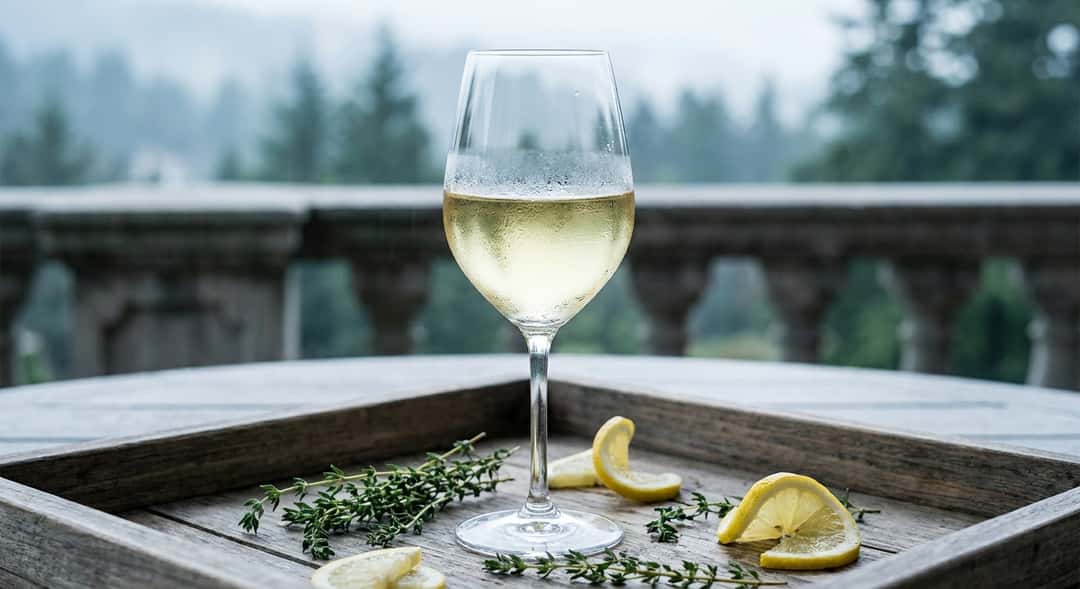
Malagousia was a rare grape revived through dedicated work by Greek wine producers. Vangelis Gerovassiliou played an important role in that revival while working at Porto Carras, and later developed it further at his estate in Epanomi.
It is a wine that smells of spring and summer at the same time: fresh bergamot, rose petals, white blossom, and a hint of mango and peach. On the palate it is fuller than Assyrtiko, with a soft, almost oily texture that makes it incredibly good with spiced food. Think grilled vegetables with harissa, white fish with lemon butter, or a hearty hummus with roasted chickpeas.
Gerovassiliou Malagousia Single Vineyard 2025 is the reference bottle. Produced from a single vineyard in Epanomi, this is a wine that combines fragrance and drive in a way that makes it difficult to put the glass down. Gerovassiliou is the man who saved the grape — and his version remains the most precise and complex interpretation of it.
For those who want to explore the style from another producer, Alpha Estate Malagousia Turtles 2024 from Macedonia is an aromatic and accessible alternative. Alpha Estate is known for precision work in the vineyard, and the Turtles range is made to be drunk young and fresh — right now, for summer barbecue evenings. A little more tropical fruit and a little less blossom than Gerovassiliou, but with the same inviting texture.
Malagousia is also a grape variety that tolerates a little experimentation. Some producers allow it to ferment on the skins to give more structure and depth — a style that pairs well with heartier dishes and cheeses.
Moschofilero: pink grape, white wine, floral charm
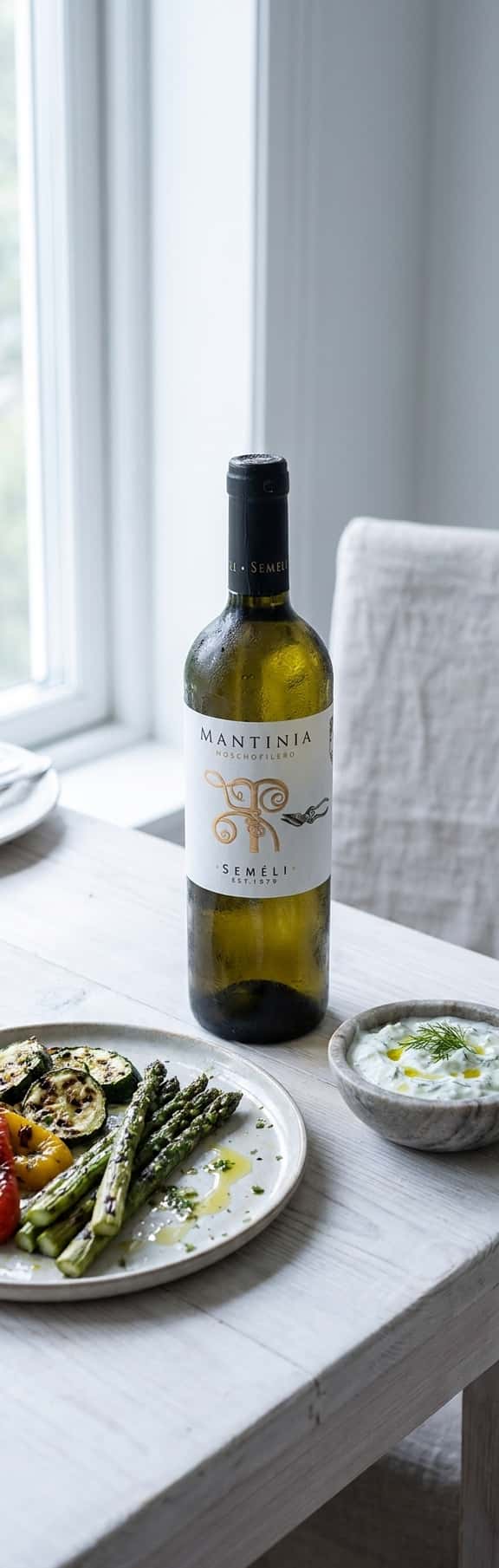
Moschofilero is perhaps the most misunderstood of the three. The grapes are actually light pink, but the wine they produce is white — or sometimes a light rosé. It grows in the highland region of Mantinia on the Peloponnese, more than 650 metres above sea level, and the cool mountain air means the grapes retain a freshness and crispness that is entirely distinctive.
Flavor and aroma: roses, lychee, violets, and lime. A wine that almost smells like perfume, but in the glass is elegant, dry, and light. It is a natural choice with Greek food — of course — but it is equally at home with Norwegian summer food: a cold salmon mousse, steamed mussels with white wine and thyme, or simply grilled asparagus with parmesan.
Seméli Mantinia Moschofilero 2024 is a classic and reliable introduction to the grape's world. Light, fresh, and accessible in price — the kind of bottle you happily buy two of for a summer picnic or a relaxed barbecue evening with friends.
The Mantinia region is one of Greece's highest-altitude wine regions, and you can tell in the glass. The long, cool growing season gives the grape time to develop complex aromas without losing acidity. It is a combination that is rare and valuable — and one that makes Moschofilero one of Europe's most original white grape varieties.
Why right now?
Greek white wine suits the Norwegian summer better than many people think. We are talking about wines made to be drunk in the heat, with food from the sea, from the land, and from the grill. Assyrtiko's minerality is made for seafood. The aromatic power of Malagousia works with herbs and spices. Moschofilero's floral lightness is perfect for dishes where you do not want the wine to steal the show.
It is also a category that offers good value for money. While Burgundy wines and Châteauneuf-du-Pape rise in price every year, many Greek producers maintain their quality level without matching the same prices — yet.
Greece has experienced a quiet but strong wine renaissance over the past decade. Young winemakers are experimenting with natural fermentation, skin contact, and biodynamic methods — without losing touch with their own unique grape varieties and terroir. It is a development that makes the category exciting to follow going forward.
| Grape variety | Region | Style | Pairs with |
|---|---|---|---|
| Assyrtiko | Santorini / northern Greece | Crisp, mineral, saline | Seafood, white fish, oysters |
| Malagousia | Epanomi / Macedonia | Aromatic, full-bodied, floral | Grilled vegetables, spiced food |
| Moschofilero | Mantinia, Peloponnese | Light, rose-like, fresh | Shellfish, salads, tapas |
Next time you are planning the summer's drinks selection, it may be worth looking a little further south and east than usual. The Greek white wines are waiting — patient and underrated, just as the best summer discoveries tend to be.