
It is May, the grill is out, and someone has already opened a bottle of pink wine. But which one? Because rosé is not just rosé. There are as many styles as there are grill masters, and the choice between a pale-pink Provence classic and a sharp-acidic Iberian can actually make a big difference to what tastes best on the plate.
Let us dispel the myth once and for all: rosé is not a "light" wine without much character. It is a wine with many faces – and that is precisely what makes it exciting.
The Provence style: when elegance meets grill smoke

Côtes de Provence remains the reference point for the classic summer rosé. You recognise it by its pale salmon colour – almost translucent, as if the wine is reluctant to show itself off. The taste is dry, with hints of dried strawberry, mandarin, and white flowers. It is rarely particularly fruity or sweet, but rather mineral and long in the aftertaste.
Miraval Côtes de Provence Rosé 2025 is a fine example of this style: elegant, fresh, and with the typical Provence lightness that makes it effortlessly drinkable both on its own and with food. The blend of grenache, cinsault, and rolle produces a wine with a delicate floral aroma, hints of peach, and a clean, dry finish. It pairs beautifully with grilled chicken skewers, light salads, and feta-based dishes. It is no coincidence that this wine has become one of the world's best-selling rosés – it appeals to a broad audience without losing its identity.
For those who want a little more depth and complexity, Clos Cibonne Tradition Côtes de Provence Cru Classé Tibouren Rosé 2021 is an interesting step up. It is made from the rare grape variety tibouren, which is almost exclusive to the Var coast in Provence. Tibouren gives a slightly more herbal and tannin-rich profile than grenache-based wines – think of a Provence rosé that has read a few extra books. The same elegance, but with more to say. With lamb on the grill, this is an excellent choice.
Spain: the freshness that surprises
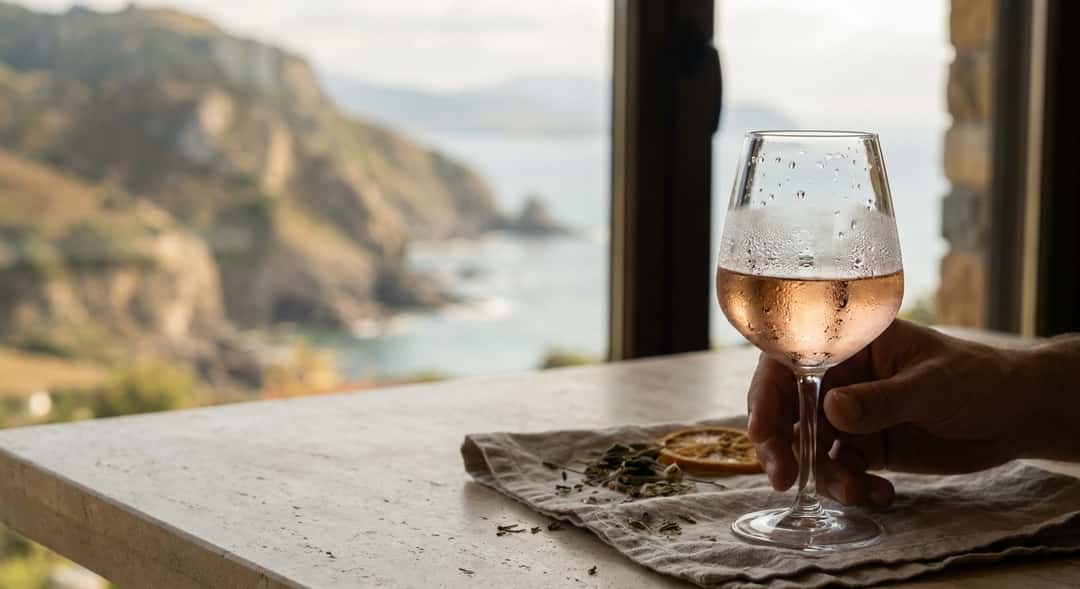
If you are grilling fish, shellfish, or light tapas dishes, it is worth looking south-west. The Basque txakolina is perhaps the most underrated rosé style you can find right now.
Inazio Urruzola Txakolina Rosé 2023 is good proof of this: low alcohol (11%), tart and with a touch of natural sparkling freshness and flavours of citrus, red apples, and a hint of saltwater from the Atlantic coast. It is almost like a little aperitif in itself – and it goes hand in glove with grilled squid, prawns, or a simple avocado salad. The price is not off-putting either, and it is easy to like even for those who are not usually big rosé fans.
The txakolina grape variety hondarrabi beltza gives this wine a completely different texture from the Provence rosé – more electric, more immediate. If the Provence rosé is a calm sunset over the Mediterranean, the txakolina is a cold dip in the Atlantic. Both are wonderful, just in different ways.
Rosé with Norwegian branding
Arne & Carlos Hyggerosé is marketed with distinctive Norwegian branding. Its fruity style can be tried with simple grilled dishes such as burgers and sausages. Check the label for the wine’s origin and current vintage.
This is "hygge in a glass" in the truest sense of the word: no demands, just enjoyment. For burgers, sausages, and the honest everyday grill, this is a safe and pleasant choice.
What ends up on the grill – and what should you choose?

Here is a quick overview that makes it easy to choose:
Chicken and white meat: Go for the Provence style. The pale, dry character matches without overpowering. Miraval is a safe and good choice.
Fish and shellfish: Txakolina wins here. The acidity and sparkling freshness bring out the flavour of the sea in a way the Provence rosé is almost too mild to achieve.
Lamb and red meat: Surprise yourself with a rosé with a little more body – such as Clos Cibonne Tibouren. It can handle more flavour on the plate and holds up well against bold marinades.
Vegetables and salads: Here anything goes. Miraval, txakolina, or even a lighter Italian rosato all work beautifully.
Burgers and sausages (the honest weekend grill): Arne & Carlos Hyggerosé. No discussion.
Colour is not the most important thing – but it tells you something
A common misconception is that dark rosé means sweet rosé. That is not necessarily true. The colour comes from how long the grape skins have been in contact with the juice during production – not from the sugar level. A dark, salmon-pink Tavel from the Rhône can be bone dry, while a pale-pink Provence rosé can have a hint of residual sweetness.
Use the colour as a clue, but always trust the region and production style more. Feel free to ask in the store if you are unsure – there is no shame in wanting to know what you are buying.
Temperature: the forgotten factor
Rosé is best served between 8 and 12 degrees. Too cold, and you lose the aromas. Too warm, and you are left with a limp, alcohol-heavy experience. An hour in the fridge is usually enough – and remember to take it out ten minutes before serving if it is really cold outside.
A good rule of thumb: the lighter and fresher the wine (such as the txakolina), the colder it can be served. More complex Provence rosés deserve to open up a little and will thank you for the extra degrees.
And if you forgot to chill the wine in time? A bucket of ice and water chills a bottle in under 15 minutes. Much faster than the fridge alone.
Rosé is not a compromise – it is a choice
Rosé for the weekend grill is not a question of choosing the prettiest bottle or the wine everyone is talking about. It is about matching the style to the food and the mood. Get it right, and you will discover that pink wine is actually one of the most versatile things you can find in the glass – from aperitif to dessert, and absolutely everything in between at the grill.
So next time someone asks "isn't rosé just for people who don't know what they want?", you can lean back calmly in the garden chair and say: "No. It is for people who know exactly what they want."