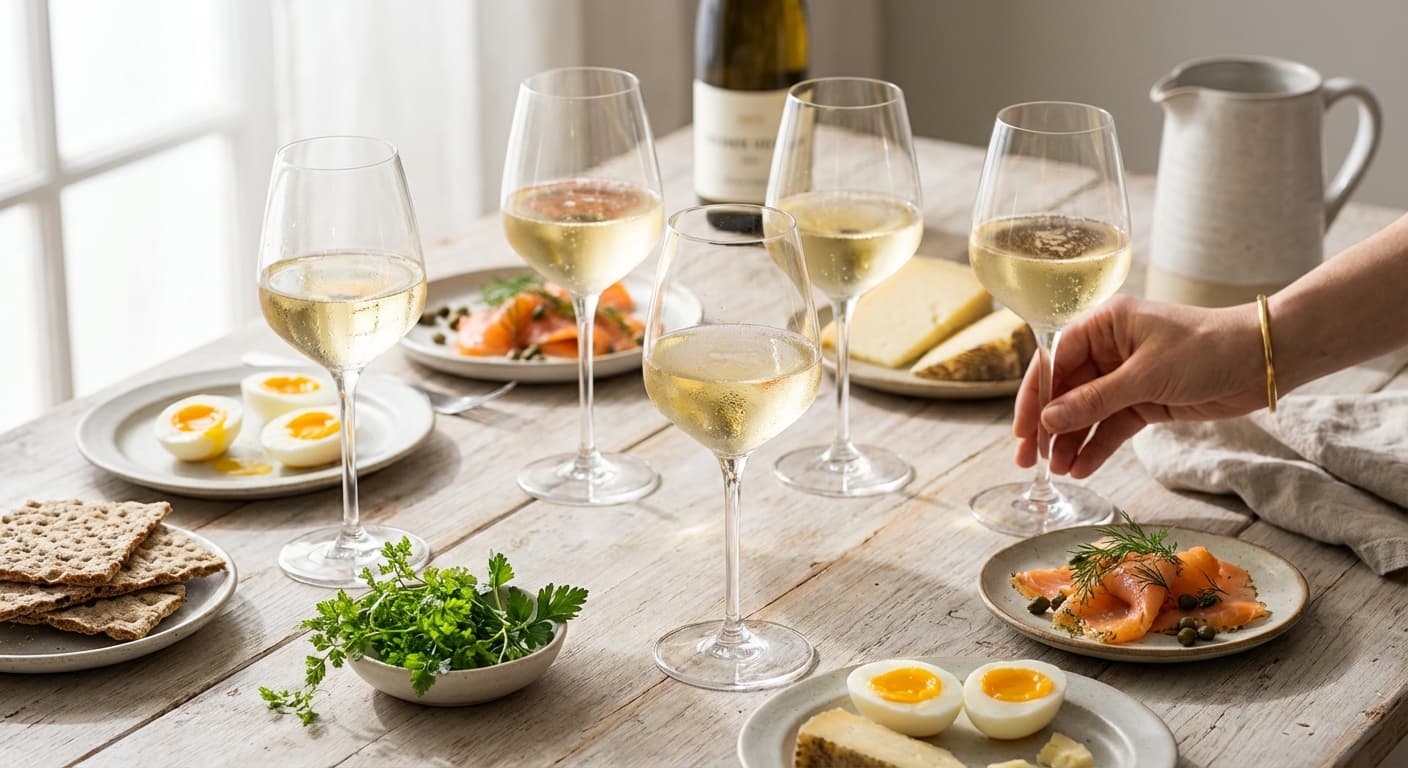

There is something special about the Easter brunch. The table is set with everything at once – soft-boiled eggs with golden yolks, silky smoked salmon, creamy mayonnaise, capers, crispy crispbread, and a half-ripened sheep's cheese that smells of mountains and time. It is a meal that does not call for a heavy red wine or a pompous Bourgogne. It calls for freshness, acidity, and a little finesse. It calls for white wine.
But which one? That is where things get interesting – and a little underappreciated as a topic. Many people instinctively reach for a Sauvignon Blanc from the Loire or a light Pinot Grigio, and that is not wrong. But the Easter brunch deserves a little more thought than that. Below you will find six wines from regions and grape varieties that are often overlooked, yet fit the classic Easter buffet table like a glove.

Riesling from Rheingau – the elegance you didn't know you needed
Riesling is perhaps white wine's most underrated grape variety in a brunch context. Imagine a wine with a crisp acid structure, floral aroma, and a leisurely minerality – that is exactly what cuts through the fat in smoked salmon and cleanses the palate between each egg.
Kloster Eberbach Riesling Trocken 2024 is a fine example of what Rheingau can offer at the lighter end of the scale. Dry, aromatic, and with a freshness that recalls green apple and lemon zest – this is a wine that does not try to dominate the table, but rather to lift it. At 11% alcohol, it is also a sensible choice early in the day.
There is something almost meditative about taking a sip of this wine between bites of smoked salmon. The acidity cuts through the fat, while the floral aroma dances around dill and lemon. And when you take a bite of a soft-boiled egg with a little salt and pepper, it is as if the wine was designed for exactly that moment.
Soave Classico – Italy does it quietly and right
The Garganega grape from the Soave region in Veneto is the kind of white wine that sits low and works hard. It is not boisterously fruity, not excessively mineral – it is simply harmonious. A good Soave Classico has something nutty and floral about it, with a delicate bitterness in the aftertaste that works surprisingly well against egg yolk.
Tamellini Le Bine de Costiola Soave Classico 2023 is a specimen from Soave's inner core area, vinified from old vines that give the grape concentration without the wine losing its light elegance. Here there are white flowers, green herbs, and a creamy texture that embraces a good homemade mayonnaise as if the two were made for each other.
It is the light bitter note in the aftertaste that makes this wine so interesting with Easter brunch. It balances the creamy texture of mayonnaise and eggs, while the nutty character finds a friend in crispy crispbread and cheese. This is a wine that does not shout, but that makes you want another sip – and another bite.

Alsace Sylvaner – the underdog hero
Sylvaner is the grape variety nobody talks about, and that is almost a shame. In Alsace, especially in the hands of producers who cultivate old vines, Sylvaner can produce wines with an herbaceous, slightly earthy character and an acidity that is soft but purposeful. It is not a wine that shouts. It whispers – and that is exactly what we want at brunch.
Ostertag Sylvaner Vieilles Vignes 2021 is made from old vines and has the depth that older plants provide. Here there is white pepper, green herbs, fennel, and a light citrus note that makes the wine work brilliantly with capers, mustard, and herb cream on a rye bread. A wine for those who want to surprise their guests – and themselves.
There is something almost magical about how this wine finds its tone with capers and mustard. The herbaceous character mirrors the green elements on the table, while the soft acidity holds everything together without becoming dominant. And when you take a bite of smoked salmon with a little horseradish, it is as if the wine brings all the flavors to life.
Jura white wine – oxidative nerve and natural acidity
Jura is one of the wine world's most exciting and distinctive corners, and the white wines from here – made from Savagnin or Chardonnay – have an oxidative character that leaves deep flavor impressions. There is something nutty, slightly brett, almost salty about them, and that character works wonders against mature cheeses.
Carlines Trémoulette Côtes du Jura 2021 is a structured, complex white wine with what seems like a natural affinity for strong cheese. Against a half-ripened sheep's cheese or a well-aged Comté, this is a combination that will bring the table to a momentary standstill. The fresh acidity maintains the balance, but it is the deep, almost umami-like character that truly sings.
This is not a wine for everyone – but for those who love it, it is love at first sip. The oxidative character can seem unfamiliar at first, but when you pair it with a robust cheese or a bite of richly flavored smoked salmon, you suddenly understand what Jura is all about. It is depth, it is complexity, and it is a wine that makes you want to talk about it.

Mosel Riesling Feinherb – a touch of sweetness, a lot of magic
Off-dry Riesling wines from Mosel are one of the drink world's most underrated brunch options. The small residual sugar that the Feinherb style provides is not sweet in an annoying sense – it is soft, and it acts as a bridge between acidity and fruit in a way that is almost meditative over a plate of smoked salmon.
Markus Molitor Haus Klosterberg Riesling Feinherb 2023 is a lovely example from one of Mosel's most acclaimed producers. Low alcohol (10%), fresh acidity, aromas of peach, apricot, and slate stone. Let your guests close their eyes and guess – no one will believe this is a wine that does not cost a fortune. With smoked salmon, horseradish, and dill, this is close to a perfect combination.
It is the balance in this wine that makes it so special. The slight sweetness tames the horseradish just enough, while the acidity keeps everything fresh and lively. And when you take a sip between bites of salmon, it is as if the wine rinses the palate clean and prepares you for the next bite. This is a wine that makes you want to eat more – and that is perhaps the finest compliment you can pay a brunch wine.

Alsace Pinot Blanc – the broad, welcoming favorite
Pinot Blanc is perhaps Alsace's most inclusive grape. It is not intense, not demanding – it is warm and round with a freshness that makes it versatile at a brunch table with many elements. It works with eggs, it works with salmon, it handles a little fat and a little salt, and it is rarely expensive.
Markus Molitor Haus Klosterberg Pinot Blanc 2023 has a lovely structure with aromas of pear, white flowers, and light vanilla. The texture is silky smooth – which makes it especially pleasant with a soft egg on an open sandwich. If you want one wine that everyone at the table will enjoy, this is it.
There is something safe and welcoming about this wine. It is not challenging, it is not complicated – it is simply good. And sometimes that is exactly what you need. When the table is full of different flavors and textures, it is good to have a wine that works with everything. A wine that lets you relax and enjoy the meal without thinking too much.
One thing all six have in common
Acidity. Acidity is the secret behind a good brunch wine. Not tannins, not heavy oak barrels, not powerful fruit – but the fresh, cleansing, mouth-rinsing acidity that makes you want another bite, and another sip, and another bite again.
The Easter brunch is one of the year's most enjoyable meals, and it deserves a well-considered wine in the glass. Not necessarily the most expensive, not necessarily the most famous – but the right one. And with six good options from Rheingau, Soave, Alsace, Jura, and Mosel, you have more than enough to choose from.
Happy Easter, and enjoy your glass.