
The story begins on an autumn Saturday in 1943, in the middle of rationing and scarcity. A great-grandmother stood at the stove with the last blackcurrants from the garden, preserved them in small jars, and thought: This has to last all winter. But one evening in February, when the spirits were gone and the guests were already on their way, she shook two spoonfuls of jelly into a cup of warm water and a splash of homemade apple cider. The rest is family history.
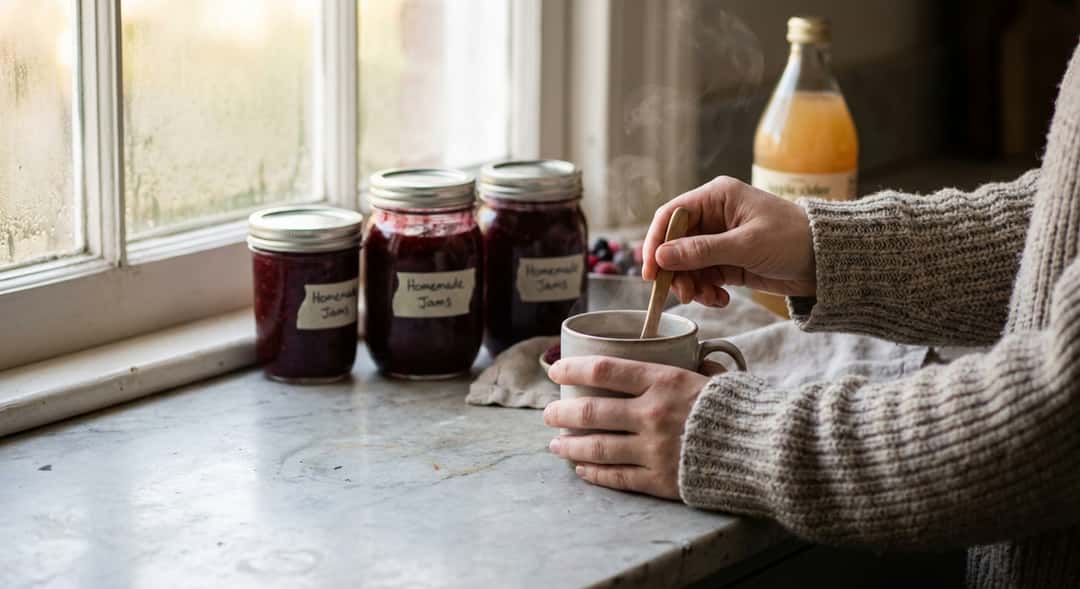
Even though today we lack neither spirits nor jam, the principle is just as practical: those jars sitting in the fridge — a little too sour, a little too sweet, a little too forgotten — can become winter's best ingredient.
From the cupboard to the glass
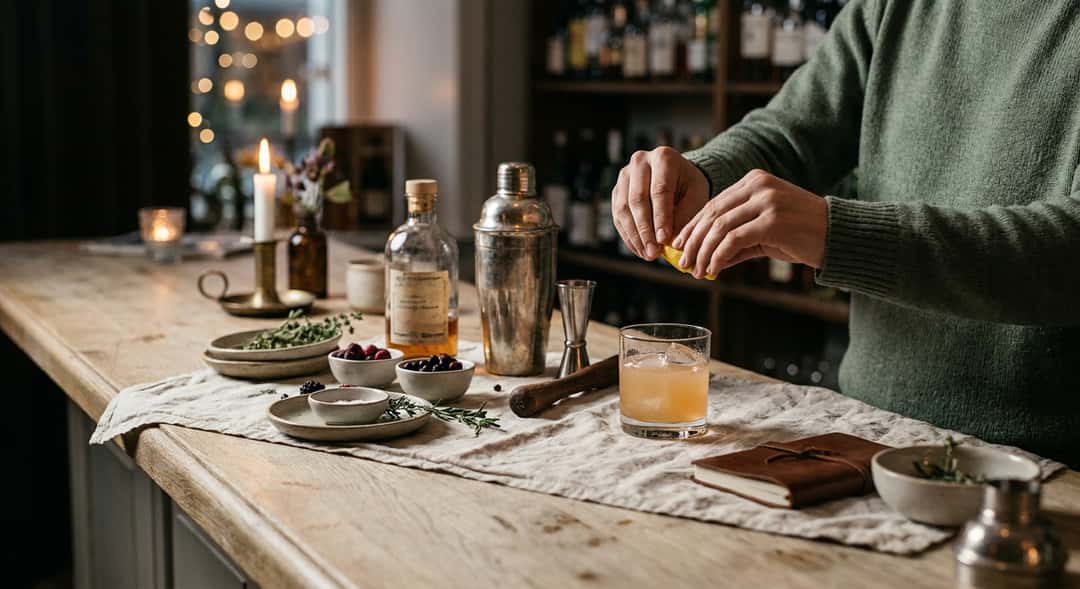
There is something liberating about thinking of jam as a spirits base rather than a spread. You skip the rigid recipe, can adjust the sweetness to taste, and end up with a drink that tastes of something more than just alcohol and sugar. Berries have tartness, depth, complexity — exactly what a warm toddy needs when the February light finally begins to return.
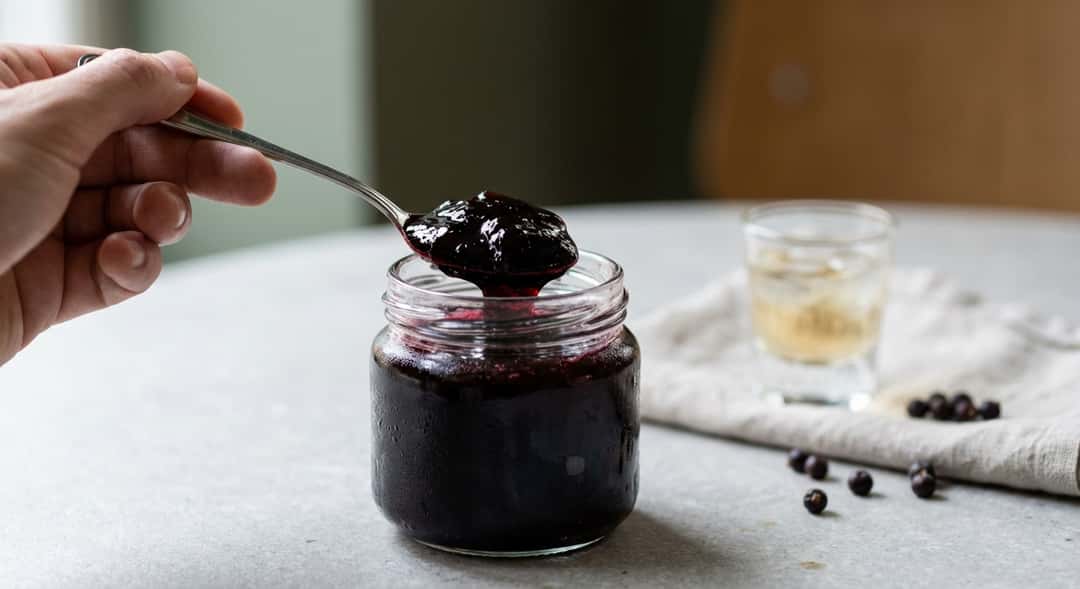
The great thing about berry jam is that it already contains pectin and often spices. Homemade raspberry jam with a hint of vanilla? Perfect for a simple hot toddy with rum. Lingonberry with cloves? Mix it with gin, warm water and a slice of orange. Blackcurrant jelly? It was almost made to meet aquavit.
And unlike industrial syrup, you get texture. There is something satisfying about watching the berry pieces sink in the glass, about feeling that the drink has body, weight, history.
Four recipes that give jam a new life
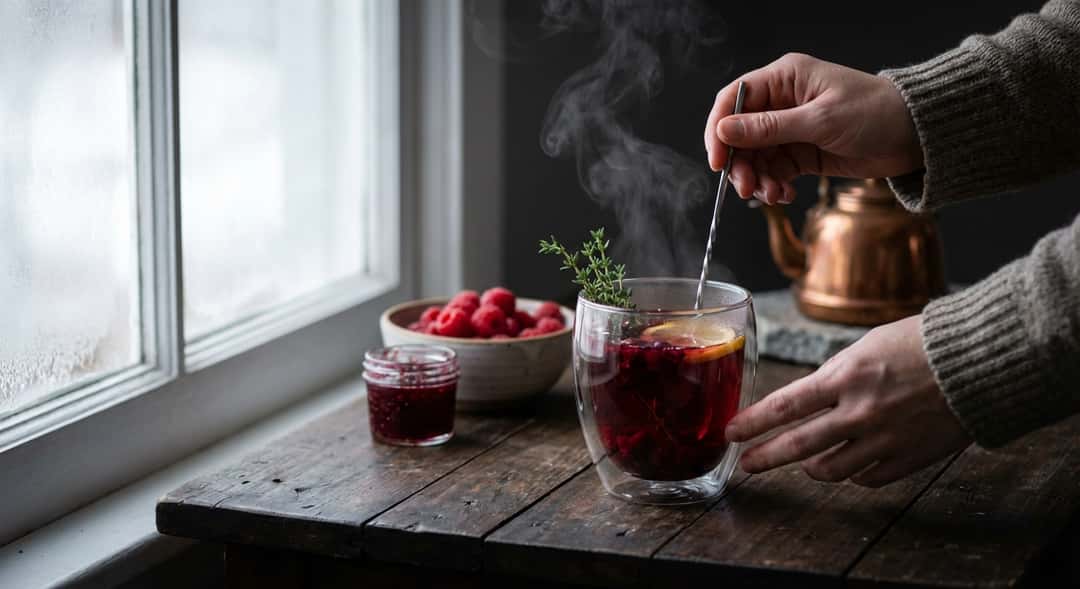
1. Raspberry toddy with rum
This one is simple, warm and surprisingly elegant. Perfect for the cabin's first evening of winter, when you want something that warms you up quickly.
Ingredients:
- 2 tbsp homemade raspberry jam
- 4 cl dark rum
- 1.5 dl hot water (not boiling)
- 1 slice of lemon
- 1 small sprig of thyme (optional)
Method:
- Place the jam in the bottom of a heatproof glass.
- Pour over the rum and stir until the jam begins to dissolve.
- Top up with hot water and stir gently.
- Top with lemon and thyme.
- Leave for 30 seconds before drinking — thyme needs a little time.
Tip: If your jam is very sweet, reduce to 1 tablespoon and increase the amount of water slightly.
2. Blackcurrant aquavit warmer
Norwegian aquavit meets Norwegian blackcurrants — it is almost illegally good. This drink has a depth that is reminiscent of old farmhouse cooking, but with a modern twist.
Ingredients:
- 1.5 tbsp blackcurrant jelly
- 4 cl aquavit (one with caraway and dill, such as Berunuten Akevitt, works brilliantly)
- 1 cl lemon juice
- 1 dl hot water
- Fresh blackcurrants or frozen blueberries for garnish
Method:
- Dissolve the jelly in the bottom of the glass with the lemon juice.
- Pour in the aquavit and stir.
- Top up with hot water.
- Stir gently and top with a few berries.
Variations: Replace half the water with warm apple juice for a softer, more Christmassy version.
3. Lingonberry gin aperitif (cold version)
Not all winter drinks need to be warm. This chilled aperitif is perfect for a cabin lunch, when you want something that awakens the appetite after a long ski trip.
Ingredients:
- 1 tbsp lingonberry jam
- 4 cl gin
- 2 cl dry vermouth
- 8 cl tonic water
- Ice
- Grated orange zest
Method:
- Stir the jam with the gin in a glass until well combined.
- Fill the glass with ice.
- Pour over the vermouth and tonic.
- Stir lightly and top with orange zest.
The result is a kind of Nordic spritz — tart, slightly bitter, with the characteristic lingonberry note that cuts through the gin's botanicals. It has something of the same elegance as an Italian aperitivo, but with a distinctly Scandinavian signature.
4. Double raspberry topper (float style)
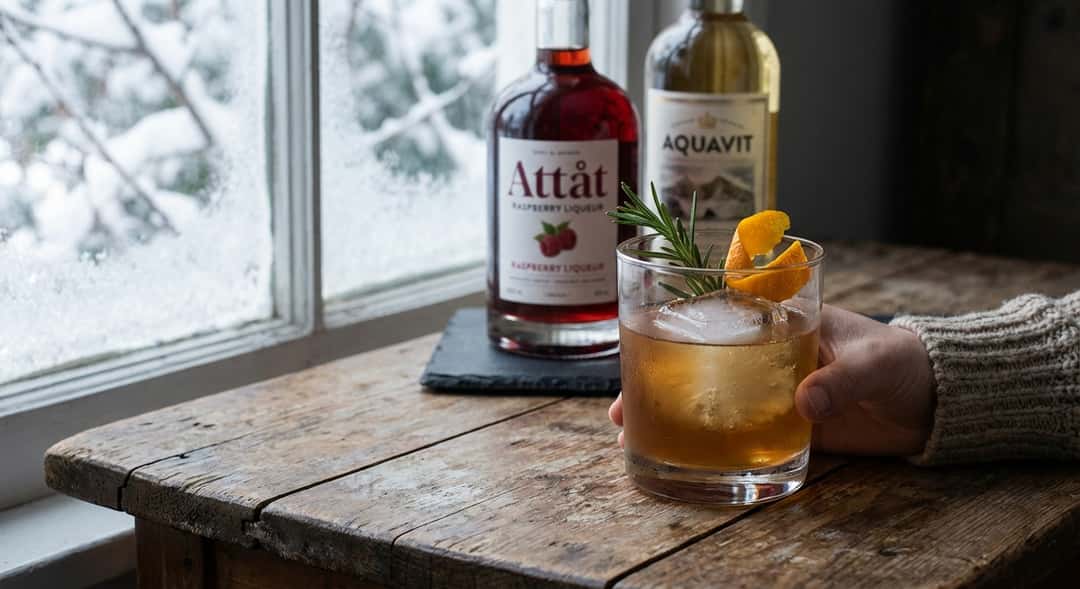
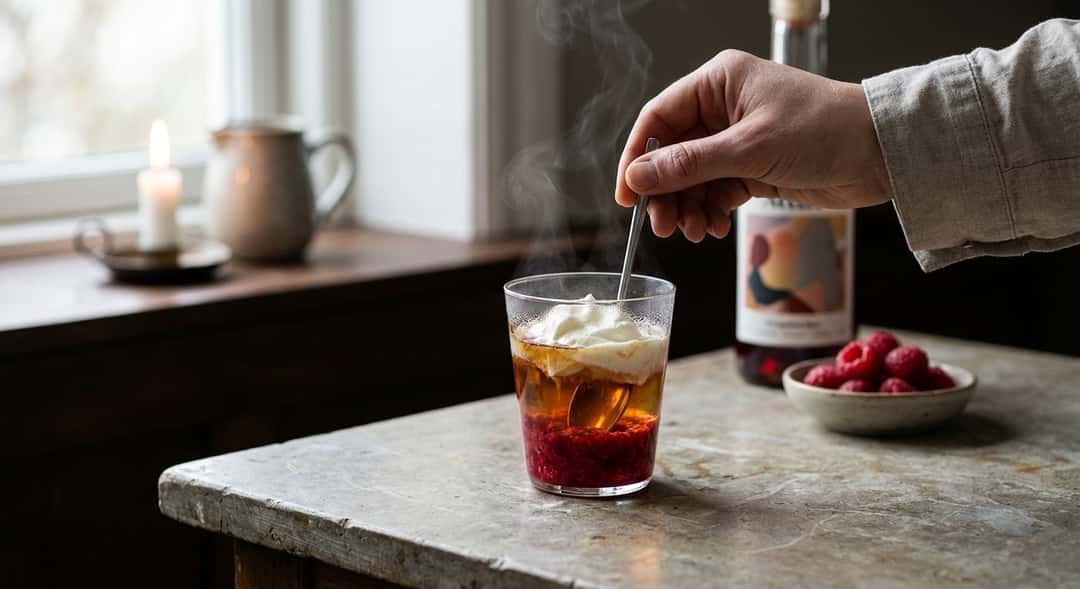
If you have Attåt bringebærlikør at home, you can create a double raspberry experience that sits somewhere between dessert and digestif. This is the drink for the late evening, when the conversation has grown deeper and the fire in the hearth has burned down to embers.
Ingredients:
- 1 tbsp raspberry jam
- 3 cl Attåt bringebærlikør
- 2 cl cognac
- 1 dl warm, weak espresso or strong tea
- A little lightly whipped cream (optional, but recommended)
Method:
- Dissolve the jam in the bottom of the glass.
- Pour over the liqueur and cognac, stir well.
- Top up with warm coffee or tea.
- Top with a thin layer of loosely whipped cream.
This drink is rich, warm and almost dangerously easy to drink. Perfect for a late evening by the fireplace.
Jam as a flavor adjuster
The great thing about this approach is that you can use the jam as a kind of natural syrup — a flavor adjuster that both sweetens and adds fruitiness and complexity. Is the drink too strong? Add another spoonful. Too sweet? Turn up the tart element with more lemon or tonic.
And unlike industrial syrup, you get texture. There is something satisfying about watching the berry pieces sink in the glass, about feeling that the drink has body, weight, history.
What goes with what?
A simple rule of thumb:
Raspberry loves dark rum, cognac and vanilla notes. Raspberry's natural sweetness and tartness balance the heavy, caramelized character of dark spirits.
Blackcurrant pairs with Nordic spirits — aquavit, gin with juniper, vodka. Blackcurrant's intense, almost wine-like character can stand up to bold flavors and spices.
Lingonberry handles bitter elements: vermouth, Campari, tonic. Lingonberry's sharp tartness cuts through the bitterness and creates balance.
Strawberry (if you have it) works surprisingly well with light rum and lime. Strawberry's mild, sweet profile needs a little extra acidity to lift it.
And remember: homemade jam varies wildly in sweetness and tartness. Start with less, taste as you go, adjust. Experimenting is allowed.
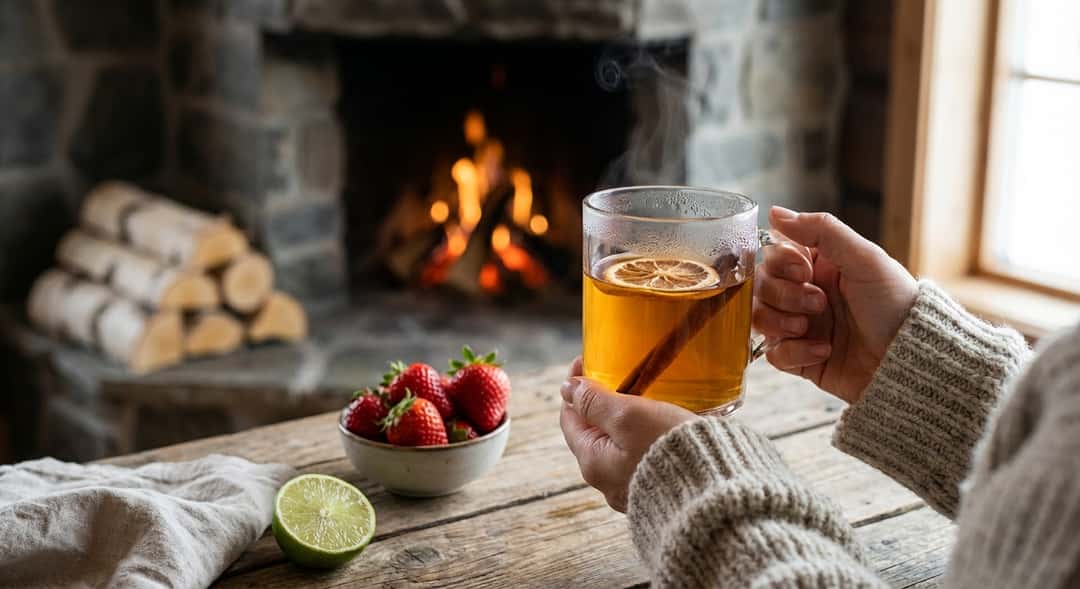
When the winter cabin becomes a laboratory
There is something almost scientific about standing in the kitchen on a February evening, with three jars of jam and a collection of bottles in front of you, thinking: What happens if I mix this with that? It is a little reminiscent of the classic aperitif traditions of northern Italy, where each village has its own bitters, its own spirits, its own recipe — often based on what grew in the garden.
We have raspberries, blackcurrants, lingonberries. We have aquavit, gin, rum. And we have winter evenings that need warmth, color, flavor.
Perhaps it is time to look at those jars in the fridge with fresh eyes. Not as something left over, but as something waiting to become something else. Something better. Something that tastes of winter, of the cabin, of the simple craft that suddenly becomes luxury when you get it just right.
Because that is what happens when you take something everyday — a jar of jam, a bottle of spirits, a little hot water — and give it attention. Suddenly it is no longer just a drink. It is a story, a tradition, a way of preserving what would otherwise be forgotten.
And that is perhaps the finest thing about the winter cabin: that it gives us time to experiment, to try and fail, to discover that the best does not always come from the store, but from what we already have.